
Adolfo Bioy Casares (1914–1999)
Author of The Invention of Morel [novella]
About the Author
Adolfo Bioy Casares has collaborated with Jorge Luis Borges on a number of works. They compiled Anthology of Fantastic Literature (1940), a documentation of the development of Spanish American suprarealism, and Six Problems for Don Isidro Parodi (1981), a playful and inventive variation on the show more theme of the detective who cannot visit the scene of the crime. Bioy Casares's numerous works are characterized by intelligence and a sense of playful fantasy. The Invention of Morel (1953), concerns a scientist's illusions about immortality. Asleep in the Sun is a bizarre tale written in an epistolary form. Ultimately the recipient of the letter is left to wonder whether, in fact, the puzzle has any solution or whether, like much of Bioy Casares's and Borges's work, it is an inside joke between author and reader. (Bowker Author Biography) show less
Image credit: Originally uploaded by Daneri, but ended up on the wrong author page. Moved to correct one.
Works by Adolfo Bioy Casares
La Invención y la trama. Tomo II 3 copies
Venetian Masks 1 copy
Obras completas: Cuentos 1 copy
Morel’s Invention 1 copy
Descanso de caminantes 2001 1 copy
Paginas de Adolfo Bioy Casares (Coleccion Escritores Argentinos de Hoy) (Spanish Edition) (1985) 1 copy
The Other Adventure 1 copy
Morelův vynález 1 copy
Associated Works
The Big Book of Science Fiction: The Ultimate Collection (2016) — Contributor — 521 copies, 8 reviews
A Hammock Beneath the Mangoes: Stories from Latin America (1991) — Contributor — 162 copies, 3 reviews
Robert Louis Stevenson: An Anthology Selected by Jorge Luis Borges and Adolfo Bioy Casares (2017) — Editor — 13 copies
Confesiones de escritores, escritores latinoamericanos : los reportajes de The Paris Review (1996) — Contributor — 5 copies
Die Geschichtenerzähler: Neues und Unbekanntes von Allende bis Zafón (suhrkamp taschenbuch) (2008) — Contributor — 5 copies
Tagged
Common Knowledge
- Canonical name
- Bioy Casares, Adolfo
- Other names
- BIOY CASARES, Adolfo
Miranda, Javier
Sacastru, Martin - Birthdate
- 1914-09-15
- Date of death
- 1999-03-08
- Gender
- male
- Education
- Universidad de Buenos Aires
- Occupations
- writer (fiction)
journalist
translator
editor
poet
critic (show all 7)
librarian - Awards and honors
- Gran Premio de Honor of SADE (1975)
French Légion d'honneur (1981)
Illustrious Citizen of Buenos Aires (1986)
Premio Miguel de Cervantes (1990)
Primer Premio Municipal de Literatura (1941)
Diamond Konex Award of Literature (1994) - Relationships
- Ocampo, Silvina (spouse)
Bioy, Adolfo (parent) - Nationality
- Argentina
- Birthplace
- Buenos Aires, Argentina
- Places of residence
- Buenos Aires, Argentina
- Place of death
- Buenos Aires, Argentina
- Burial location
- La Recoleta Cemetery, Buenos Aires, Argentina
- Map Location
- Argentina
Members
Discussions
The Invention of Morel in The Weird Tradition (November 2024)
Reviews
This is enticingly vague and atmospheric at first, but I quickly became uneasy on behalf of, and then about, the fugitive. As some things become clearer, others become less so, prompting complex, and often paradoxical, philosophical questions. When you can't trust your senses, what is truth, and how do you know if you are dead, dreaming, hallucinating, or mad? When nothing makes sense, and cause doesn’t seem to lead to the expected effect, how do you make decisions, or are you a mere show more plaything of malign gods or Fate?
Add to that the obsessive desire (he calls it “love”) of an apparently unattainable woman and it sounds overloaded. It’s not. Approaching the midpoint, I was underwhelmed. But then Bioy carefully pulled out all the stops: I was bombarded by a bewildering cacophony of the “adverse miracle”. I lived the story. Wonderful.
The English title can be interpreted in two ways. There’s truth in both.
Image: Faustine watching the sunset. One of Norah Borges de Torre’s illustrations.
Avoid spoilers
The brilliance and unsettling joy of this book is in thinking alongside the fugitive, trying to work out what is going on, how, and why: questioning your sanity as the impossible begins to seem merely improbable and even likely. As you gradually figure it out, you have to unravel, rewind, and analyse all your assumptions, not just about the story, but the very fabric of reality.
I'm glad Bioy kept it short, despite the many ways he could have expanded it: that way we each invent our own Morel.
A few thoughts:
• The first person, present tense creates an immediacy and immersion in a conventional chronology. That turns out to be cleverly at odds with that of the story.
• As early as page 11, Bioy plants major clues. The people dancing on the hill, “their clothes are from another era”, are dismissed as eccentric. I fell for that misdirection for a while.
• The name Faustine comes from the Latin for “fortunate one”, but I expect most readers think of Faust’s bargain with the Devil, as I assume was Bioy’s intent.
• Morel raises the question of recording without consent, but what about the fugitive following Faustine, and even sleeping under her bed, observing and listening. At that point, he knows enough to say “I am now able to view Faustine dispassionately, as a simple object”. Object? My instinct is to object, but if she has no consciousness, it shouldn’t matter. However, applying similar logic to online images is trickier.
• Goldfish famously have very short memories. The replenished fishtank, even though they weren’t goldfish, was a nice touch. It echoed the pain of the fugitive watching the endless repetition of others, while for him, each moment was unique.
• Morel and the fugitive initially seek a form of life after death in different ways: Morel via his invention, and the fugitive by the diary he thinks will prove his innocence. But the fugitive is seduced by Faustine and the invention of Morel. Is that a happy ending?
• This was written in 1940, but Bioy is envisaging something far more advanced than a 3D hologram.
Image: "Double Exposure Love" by Alexander Lefler (Woman and man's shadowy faces overlapping to create a more solid composite) (Source)
Quotes - spoilers
• “They were not two copies of the same book, but the same copy twice.”
• “Faustine lives only in this image, for which I do not exist.” [The most extreme form of unrequited love.]
See also - spoilers
• From quite early on, I was thinking of The Sixth Sense.
• There are more similarities with HG Wells’ 1896 novel, The Island of Doctor Moreau than just the surnames.
• I gather this has been filmed, but I don’t want to watch as poor special effects and cinematography would ruin it. It could make a good episode of Black Mirror, except that Charlie Brooker writes or commissions all the stories himself.
Borges
Bioy, as he liked to be known, was a protégé, collaborator, and friend of the slightly older, fellow Argentinian writer, Borges. This was his first “successful fiction”, aged only 26. In the prologue, Borges writes, of the book dedicated to him:
“To classify it as perfect is neither an imprecision nor a hyperbole.”
Image: Empty shoes by a puddle whose reflection shows a couple wearing the shoes. Surreal photo by Olaf Bathke. (Source)
See also
There are additional links in the spoilered section, but their titles are spoilers.
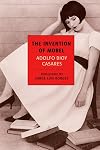
• The cover photo is of actor Louise Brooks, a literary inspiration for this novella. See also Louise Brooks Society.
• On the first page, and several times afterwards, the fugitive praises Malthus and wants to write a book promoting his ideas. I reviewed his An Essay on the Principle of Population with Swift’s A Modest Proposal HERE.
• In Poe’s The Pit and the Pendulum, a solitary man is battling not just to stay alive but also to work out what's going on, whether death would be easier, and questioning his sanity. In other respects, it’s quite different. See my review HERE.
• Bélidor was an engineer, specialising in hydraulics and ballistics. The fugitive pockets a book Bélidor wrote.
• It’s impossible to read of a man, apparently unjustly tried and sentenced, battling unknown forces, without thinking of Kafka, especially The Trial, which I reviewed HERE.
• The opening makes you wonder if it will be like Robinson Crusoe. But it's not.
• In Jay Parini’s delightful memoir, Borges and Me, Borges mentions his admiration of this book. See my review HERE.
• One of Borges’s early stories has a character with a similar name: The Cruel Redeemer of Lazarus Morell. It's about a bid for freedom. I reviewed it HERE.
• I’ve reviewed all of Borges’s Collected Fictions HERE.
• Casares explores similar themes, with a similar sort of twist, in his short story, Venetian Masks, which I reviewed HERE. However, I think Morel is far superior, so if you only read one, make it this.
Quotes
There are more in the spoilered section.
• “Plants, grasses, and flowers overtake each other with more urgency to be born than to die, each one invading the time and place of the others in a tangled mass.”
• “Hope is everything I must fear.”
• “The effort needed to kill myself was superfluous now, because with Faustine gone not even the anachronous satisfaction of death remained.”
• “Troops with rented uniforms and deadly aim.” show less
Add to that the obsessive desire (he calls it “love”) of an apparently unattainable woman and it sounds overloaded. It’s not. Approaching the midpoint, I was underwhelmed. But then Bioy carefully pulled out all the stops: I was bombarded by a bewildering cacophony of the “adverse miracle”. I lived the story. Wonderful.
The English title can be interpreted in two ways. There’s truth in both.
Image: Faustine watching the sunset. One of Norah Borges de Torre’s illustrations.
Avoid spoilers
The brilliance and unsettling joy of this book is in thinking alongside the fugitive, trying to work out what is going on, how, and why: questioning your sanity as the impossible begins to seem merely improbable and even likely. As you gradually figure it out, you have to unravel, rewind, and analyse all your assumptions, not just about the story, but the very fabric of reality.
I'm glad Bioy kept it short, despite the many ways he could have expanded it: that way we each invent our own Morel.
A few thoughts:
• The first person, present tense creates an immediacy and immersion in a conventional chronology. That turns out to be cleverly at odds with that of the story.
• As early as page 11, Bioy plants major clues. The people dancing on the hill, “their clothes are from another era”, are dismissed as eccentric. I fell for that misdirection for a while.
• The name Faustine comes from the Latin for “fortunate one”, but I expect most readers think of Faust’s bargain with the Devil, as I assume was Bioy’s intent.
• Morel raises the question of recording without consent, but what about the fugitive following Faustine, and even sleeping under her bed, observing and listening. At that point, he knows enough to say “I am now able to view Faustine dispassionately, as a simple object”. Object? My instinct is to object, but if she has no consciousness, it shouldn’t matter. However, applying similar logic to online images is trickier.
• Goldfish famously have very short memories. The replenished fishtank, even though they weren’t goldfish, was a nice touch. It echoed the pain of the fugitive watching the endless repetition of others, while for him, each moment was unique.
• Morel and the fugitive initially seek a form of life after death in different ways: Morel via his invention, and the fugitive by the diary he thinks will prove his innocence. But the fugitive is seduced by Faustine and the invention of Morel. Is that a happy ending?
• This was written in 1940, but Bioy is envisaging something far more advanced than a 3D hologram.
Image: "Double Exposure Love" by Alexander Lefler (Woman and man's shadowy faces overlapping to create a more solid composite) (Source)
Quotes - spoilers
• “They were not two copies of the same book, but the same copy twice.”
• “Faustine lives only in this image, for which I do not exist.” [The most extreme form of unrequited love.]
See also - spoilers
• From quite early on, I was thinking of The Sixth Sense.
• There are more similarities with HG Wells’ 1896 novel, The Island of Doctor Moreau than just the surnames.
• I gather this has been filmed, but I don’t want to watch as poor special effects and cinematography would ruin it. It could make a good episode of Black Mirror, except that Charlie Brooker writes or commissions all the stories himself.
Borges
Bioy, as he liked to be known, was a protégé, collaborator, and friend of the slightly older, fellow Argentinian writer, Borges. This was his first “successful fiction”, aged only 26. In the prologue, Borges writes, of the book dedicated to him:
“To classify it as perfect is neither an imprecision nor a hyperbole.”
Image: Empty shoes by a puddle whose reflection shows a couple wearing the shoes. Surreal photo by Olaf Bathke. (Source)
See also
There are additional links in the spoilered section, but their titles are spoilers.
• The cover photo is of actor Louise Brooks, a literary inspiration for this novella. See also Louise Brooks Society.
• On the first page, and several times afterwards, the fugitive praises Malthus and wants to write a book promoting his ideas. I reviewed his An Essay on the Principle of Population with Swift’s A Modest Proposal HERE.
• In Poe’s The Pit and the Pendulum, a solitary man is battling not just to stay alive but also to work out what's going on, whether death would be easier, and questioning his sanity. In other respects, it’s quite different. See my review HERE.
• Bélidor was an engineer, specialising in hydraulics and ballistics. The fugitive pockets a book Bélidor wrote.
• It’s impossible to read of a man, apparently unjustly tried and sentenced, battling unknown forces, without thinking of Kafka, especially The Trial, which I reviewed HERE.
• The opening makes you wonder if it will be like Robinson Crusoe. But it's not.
• In Jay Parini’s delightful memoir, Borges and Me, Borges mentions his admiration of this book. See my review HERE.
• One of Borges’s early stories has a character with a similar name: The Cruel Redeemer of Lazarus Morell. It's about a bid for freedom. I reviewed it HERE.
• I’ve reviewed all of Borges’s Collected Fictions HERE.
• Casares explores similar themes, with a similar sort of twist, in his short story, Venetian Masks, which I reviewed HERE. However, I think Morel is far superior, so if you only read one, make it this.
Quotes
There are more in the spoilered section.
• “Plants, grasses, and flowers overtake each other with more urgency to be born than to die, each one invading the time and place of the others in a tangled mass.”
• “Hope is everything I must fear.”
• “The effort needed to kill myself was superfluous now, because with Faustine gone not even the anachronous satisfaction of death remained.”
• “Troops with rented uniforms and deadly aim.” show less
Este libro es una fuente de placer inagotable, casi se lo podría calificar de adictivo. Sentarse a hacer la sobremesa de la cena con dos gigantes de la literatura en español y oírlos discurrir sobre los temas más banales y mezquinos es sin duda un placer culpable. Pero cuando se inspiran y dan cátedra sobre literatura universal, el placer es de los más elevados. Es claro, el protagonista absoluto es Borges, pero Bioy Casares es una dignísima segunda guitarra que lo interpela show more correctamente y, con el correr de los años, lo juzga de manera cada vez más implacable.
Lamentablemente este libro encontrará pocos lectores dispuestos a encarar 1600 páginas de diálogos y cotilleos entre dos personas indudablemente pedantes, antipáticas y, por momentos, misántropas. Pero la recompensa es enorme, no sólo porque Borges es 'literatura viviente' en la feliz expresión de Bioy Casares, sino porque la narrativa pinta tangencialmente un expresivo aguafuerte de la sociedad argentina en la segunda mitad del siglo XX. Esta obra colosal también representa la sepultura definitiva de todo el corpus literario y cultural parasitario que se generó alrededor de la figura de Borges conforme fue aumentando su fama: el propio Borges desautoriza de manera despiadada a prácticamente todos los miembros de su entorno. Nada ni nadie podrá ya arrogarse el papel de intérprete o decodificador de Borges, lo tenemos a él mismo en primera persona, oral, íntimo, con todas sus luces y sus sombras. Un libro imprescindible para todo amante de la literatura. show less
Lamentablemente este libro encontrará pocos lectores dispuestos a encarar 1600 páginas de diálogos y cotilleos entre dos personas indudablemente pedantes, antipáticas y, por momentos, misántropas. Pero la recompensa es enorme, no sólo porque Borges es 'literatura viviente' en la feliz expresión de Bioy Casares, sino porque la narrativa pinta tangencialmente un expresivo aguafuerte de la sociedad argentina en la segunda mitad del siglo XX. Esta obra colosal también representa la sepultura definitiva de todo el corpus literario y cultural parasitario que se generó alrededor de la figura de Borges conforme fue aumentando su fama: el propio Borges desautoriza de manera despiadada a prácticamente todos los miembros de su entorno. Nada ni nadie podrá ya arrogarse el papel de intérprete o decodificador de Borges, lo tenemos a él mismo en primera persona, oral, íntimo, con todas sus luces y sus sombras. Un libro imprescindible para todo amante de la literatura. show less

Fantasy as it became widely known and commercialized during the second half of the 20th Century, on the derivative heels of Tolkien -- with its abundant swords and sorcerers, redundant quests and ubiquitous good v. evil schlock — does not exist among the refined stories of The Book of Fantasy. Rather, fantasies of a more ancient order in fiction, focused on the uncanny, macabre, or sometimes just plain weird, haunt the peculiar pages of this supernaturally redolent anthology
Like "The Man show more Who Collected the First of September, 1973," by Tor Åge Bringsværd, a bizarre tale about an ultra-obsessed man — a veritable hoarder of facts — who filled his home for years with stacks of news clippings to the rafters, all of them published on September 1st, 1973. For the remainder of his life, as the man considered only that day and nothing but that day, his future and his past, beyond that day, ceased to exist.
The anthology was edited by three of Argentina's luminaries, Jorge Luis Borges, and the lesser known Silvina Ocampo and Adolfo Bioy Cesares (the latter's novels, The Invention of Morel and Asleep in the Sun, have been reissued by NYRB Classics). They were three good friends who'd meet and discuss good literature, in particular stories that were strange, and from their conversations published their collaboration, The Book of Fantasy, in 1940 (and then revised it in 1965 and again in 1976), at which times they added more contemporary stories -- yet stories that still retained the editors' "old school" conceptions of "fantasy" or "fantastic literature" — to their collection, and it has remained in print ever since.
Several of the stories are so short that today they could be classified as flash fiction: a couple sentences, a paragraph or two, less than a single page at most, like this gem below, "Eternal Life," by James George Frazer:
A fourth story, taken down near Oldenburg in Holstein, tells of a jolly dame that ate and drank and lived right merrily and had all that heart could desire, and she wished to live always. For the first hundred years all went well, but after that she began to shrink and shrivel up, till at last she could neither walk nor stand nor eat nor drink. But die she could not. At first they fed her as if she were a little child, but when she grew smaller and smaller they put her in a glass bottle and hung her up in the church. And there she still hangs, in the church of St Mary, at Lübeck. She is as small as a mouse, but once a year she stirs.
My favorite story from The Book of Fantasy is "Being Dust" by Santiago Dabove, an account of an unfortunate man who maintains consciousness long after a paralyzing fall from a horse on a remote road; his mind — and especially his perceptual acuity in creative problem solving — remains intact: "What a strange plant my head is ... I wanted to be a tobacco plant so that I wouldn't need to smoke!" And even though his eye sockets are now cave-like hollows, he can still see, and he feels a "tingling sensation" inside what's left of the husk of his rotted torso, and accurately assesses that he "must have an ants' nest somewhere near my heart," still so attuned as he is to his own flesh even as it disintegrates into molecules in the mud over many months.
In the introduction to the 1988 edition, Ursula K. Leguin rightly calls the selections made by the editors "idiosyncratic" and "eclectic". For every Poe or Hawthorne that was included, there's a Macedonio Fernandez ("Tantalia") or Manuel Peyrou ("The Bust"); or for every Kipling or Tolstoy, an Arturo Cancela and Pilar de Lusarreta (co-authors of the outstanding "Fate is a Fool"), as well as many more lesser known writers, to satisfy even the most hardcore connoisseurs of the arcane. It's an exceptional anthology, full of surprising and delightful discoveries, and an intriguing glimpse at the stories that, once upon a time, wowed Jorge Luis Borges and two of his good fellow author friends. show less
Like "The Man show more Who Collected the First of September, 1973," by Tor Åge Bringsværd, a bizarre tale about an ultra-obsessed man — a veritable hoarder of facts — who filled his home for years with stacks of news clippings to the rafters, all of them published on September 1st, 1973. For the remainder of his life, as the man considered only that day and nothing but that day, his future and his past, beyond that day, ceased to exist.
The anthology was edited by three of Argentina's luminaries, Jorge Luis Borges, and the lesser known Silvina Ocampo and Adolfo Bioy Cesares (the latter's novels, The Invention of Morel and Asleep in the Sun, have been reissued by NYRB Classics). They were three good friends who'd meet and discuss good literature, in particular stories that were strange, and from their conversations published their collaboration, The Book of Fantasy, in 1940 (and then revised it in 1965 and again in 1976), at which times they added more contemporary stories -- yet stories that still retained the editors' "old school" conceptions of "fantasy" or "fantastic literature" — to their collection, and it has remained in print ever since.
Several of the stories are so short that today they could be classified as flash fiction: a couple sentences, a paragraph or two, less than a single page at most, like this gem below, "Eternal Life," by James George Frazer:
A fourth story, taken down near Oldenburg in Holstein, tells of a jolly dame that ate and drank and lived right merrily and had all that heart could desire, and she wished to live always. For the first hundred years all went well, but after that she began to shrink and shrivel up, till at last she could neither walk nor stand nor eat nor drink. But die she could not. At first they fed her as if she were a little child, but when she grew smaller and smaller they put her in a glass bottle and hung her up in the church. And there she still hangs, in the church of St Mary, at Lübeck. She is as small as a mouse, but once a year she stirs.
My favorite story from The Book of Fantasy is "Being Dust" by Santiago Dabove, an account of an unfortunate man who maintains consciousness long after a paralyzing fall from a horse on a remote road; his mind — and especially his perceptual acuity in creative problem solving — remains intact: "What a strange plant my head is ... I wanted to be a tobacco plant so that I wouldn't need to smoke!" And even though his eye sockets are now cave-like hollows, he can still see, and he feels a "tingling sensation" inside what's left of the husk of his rotted torso, and accurately assesses that he "must have an ants' nest somewhere near my heart," still so attuned as he is to his own flesh even as it disintegrates into molecules in the mud over many months.
In the introduction to the 1988 edition, Ursula K. Leguin rightly calls the selections made by the editors "idiosyncratic" and "eclectic". For every Poe or Hawthorne that was included, there's a Macedonio Fernandez ("Tantalia") or Manuel Peyrou ("The Bust"); or for every Kipling or Tolstoy, an Arturo Cancela and Pilar de Lusarreta (co-authors of the outstanding "Fate is a Fool"), as well as many more lesser known writers, to satisfy even the most hardcore connoisseurs of the arcane. It's an exceptional anthology, full of surprising and delightful discoveries, and an intriguing glimpse at the stories that, once upon a time, wowed Jorge Luis Borges and two of his good fellow author friends. show less
In Argentina, even the public art can be fabulous and haunting
A truly outstanding collection from the libraries of world literature, some ancient, mostly modern; ninety stories of fantasy and the fantastic with many familiar authors such as John Aubrey, J.G. Ballard, Ambrose Bierce, Ray Bradbury, Lewis Carroll, Jean Cocteau, James Joyce, Franz Kafka, Rudyard Kipling, Leo Tolstoy, Voltaire, Edith Warton, Oscar Wilde and Evelyn Waugh. For the purposes of my review I will focus on one tale I show more found especially fascinating from an Argentinian author I’ve recently come to dearly love. Here is my write-up. Spoiler Alert: my analysis covers the entire story, beginning to end.
THE SQUID IN ITS OWN INK by Adolfo Bioy Casares (written about 1950)
Remarkable Event: “More happened in this town during the last few days than in the whole of the rest of its history.” So begins the tale told by our first-person narrator, a schoolteacher who’s lived in this town all his life, telling us of an event clearly more noteworthy in the town's 100 year history than even an Indian attack, bouts of cholera or civic pageants. Not even close. What is it? He informs us of a number of strange happenings leading up to the shocking discovery but as to what it is exactly, we are kept in suspense for most of the story.
Bibliophile: Our twenty-something schoolteacher is proud to share how he devours books, loves books, reads everything he can get his book loving hands on since his goal and objective is culture. He also does some writing on the side and ultimately wants to be seen not only as an accomplished author but a highly cultured member of the community, somewhat similar to an older gentleman much looked up to in the town, pillar of local society, one Juan Camargo. Love the way Bioy Casares has a youthful lover of books as his narrator, the kind of person most readers of literature around the world can identify with.
Missing: Juan Camargo lives in a real chalet with a lawn and flower gardens in his large front yard. Every spring and summer, water from a sprinkler twirls around in the garden, nonstop, keeping the grass green and the flowers fresh. But something unexpected happens: the sprinkler is missing. That’s right – it’s time to water the gardens and lawn and the sprinkler is nowhere to be seen. The narrator and all his buddies at the local bar figure there must be a very specific reason why no sprinkler. As the narrator sites, eventually he and his mates uncovered something “about which little was natural and which turned out to be quite a surprise.” Ah, foreshadowing. As readers, when we likewise discover this unnatural thing, we are also a little surprised. Actually, I myself was quite surprised, even somewhat stunned. Anyway, now we are into the story and have plenty of reason to keep turning the pages.
The Plot Thickens: Would Juan carelessly cut off the water? Impossible. Juan is an exceptional man with old fashion ideas on what should always be done to keep things in order. Since he and his wife, doña Remedios rarely tolerate strangers, the only other person who ever goes in and out of their chalet is godson don Tadeito, a quiet boy who also happens to be a student in the narrator’s primary school class. Then that very next day after the missing sprinkler, the narrator hears a knock at 2:00 in the afternoon, siesta time, at his apartment door. It’s don Tadeito who asks him for first, second and third year textbooks. Why this request? Don Tadeito simply answers that Godfather asks. And the next day, a similar knock and request, only this time don Tadeito asks for fourth and fifth year textbooks. Same question; same response: Godfather wants them.
Master Plan: As expected, the conversation at the bar is abuzz with the missing sprinkler and now the requests for all those textbooks. What is going on here? The whole crew gathers round a table; the brassy voice of Don Pomponio suggests they form a committee and go ask Juan Camargo himself for an explanation. Aldini has a better idea: the narrator should suggest don Tadeito spy on his Godfather and doña Remedios and report back to him what he hears. So, next visit by don Tadeito for more textbooks, the narrator tells the boy what he should do. The boy quietly agrees.
Revelation: On his next visit to his teacher, don Tadeito recites in a soft monotone how Godfather and doña Remedios now have a new guest living in the shed in their backyard, a special gust for special reasons needing water to keep himself alive. And what are these special reasons? Though a series of pointed questions, the narrator comes to understand this special guest is from another planet and not only did he need water for his health, he needed textbooks to learn more about planet earth so he could best communicate with the people who have the power to drop the atomic bomb. He comes from a planet that knows about many worlds who have dropped atomic bombs and thereby destroyed themselves. And he also knows the earth dropping an atomic bomb could set off a possible chain reaction destroying his own planet. The visitor came as a friend and liberator and was asking for Godfather's help.
Philosophy: Realizing all his buddies at the bar will never believe his report on such a piece of science fiction, he brings don Tadeito to repeat what he overheard himself from Juan Camargo. The boys listen in widemouthed astonishment, prompting much philosophizing and theorizing about the human race working problems out with or without help from an alien. Their debate ends with a call to action but, by the time they all reach Juan Camargo's chalet, water is twirling from the sprinkler in the front yard. It appears a decision has already been made about keeping the visitor from another planet alive.
Coda: One of the many features I find both captivating and charming about this Adolfo Bioy Casares tale is how, as it turns out, the fate of the entire planet depends on a decision made by an older gentleman and his wife. In a way, they could be any older couple, anywhere on the globe. And, true to form, since they were the hosts of the stranger and the ones the stranger asked directly for help, they didn’t consult anybody else but simply make the decision themselves.
Author of the fantastic, Adolfo Bioy Casares of Argentina show less
Lists
Awards


You May Also Like


Associated Authors
Statistics
- Works
- 114
- Also by
- 23
- Members
- 8,556
- Popularity
- #2,811
- Rating
- 3.8
- Reviews
- 204
- ISBNs
- 596
- Languages
- 20
- Favorited
- 12
