
Manuel Puig (1932–1990)
Author of Kiss of the Spider Woman
About the Author
Author Manuel Puig was born in General Villegas, Argentina on December 28, 1932. Betrayed by Rita Hayworth (1968) is an innovative novel narrating through a variety of techniques the story of a young Argentine boy who lives vicariously through the movies. Puig uses the phenomenon of compulsive show more movie-going as a symbol for alienation and escape from reality. Heartbreak Tango (1969) evokes the spiritual emptiness of the Argentine provincial life in the 1930s and the vulgarity of popular music and the soap opera. His best known work, Kiss of the Spider Woman (1979), was adapted as a film in 1985 and as a Broadway musical in 1993. He died of a heart attack on July 22, 1990. (Bowker Author Biography) show less
Works by Manuel Puig
Associated Works
A Hammock Beneath the Mangoes: Stories from Latin America (1991) — Contributor — 162 copies, 3 reviews
My Deep Dark Pain Is Love: A Collection of Latin American Gay Fiction (1983) — Contributor — 73 copies, 1 review
Confesiones de escritores, escritores latinoamericanos : los reportajes de The Paris Review (1996) — Contributor — 5 copies
Tagged
Common Knowledge
- Canonical name
- Puig, Manuel
- Legal name
- Puig Delledonne, Juan Manuel
- Birthdate
- 1932-12-28
- Date of death
- 1990-07-22
- Gender
- male
- Education
- Universidad de Buenos Aires (Architecture)
- Occupations
- film archivist
editor
novelist
dishwasher
scriptwriter - Organizations
- Frente de Liberación Homosexual (cofounder)
- Relationships
- Delledonne, María Elena (mother)
Puig, Baldomero (father) - Cause of death
- heart attack
- Nationality
- Argentina
- Birthplace
- General Villegas, Buenos Aires, Argentina
- Places of residence
- General Villegas, Buenos Aires, Argentina (birth)
Cuernavaca, Morelos, Mexico (death)
Buenos Aires, Argentina
New York, New York, USA - Place of death
- Cuernavaca, Morelos, Mexico
- Burial location
- Cuernavaca, Morelos, Mexico
Cementerio de la Plata, Buenos Aires, Capital Federal, Argentina - Associated Place (for map)
- Argentina
Members
Discussions
Group Read, April 2021: Heartbreak Tango in 1001 Books to read before you die (June 2021)
Reviews

Argentina born author Manuel Puig doesn’t shy away from experimentation. His best known work, Kiss of the Spider Woman, has no traditional first person or objective third person narrator; rather the novel consists of a dialogue between two prison inmates punctuated by stream-of-consciousness along with a few references to classified government reports.
Eternal Curse on the Reader of These Pages goes even further in the direction of novel as dialogue: other than a handful of letters and a show more job application tucked in at the conclusion, its entire 230-pages contain a succession of conversations between two men: Juan José Ramirez, a 74-year-old former political prisoner in Argentina who has a failing memory and is confined to a wheelchair, and Larry John, a divorced 36-year-old native of New York City and former college history instructor who is hired to push Mr. Ramirez around the city a few times each week.
One further note on style: there are no character attributions, that is, there are no Mr. Ramirez said or Larry said nor are there the usual quotation marks - instead the left hand side of each page is filled with dashes (-) to indicate a change of speaker. In this way Mr. Puig gives a reader the feeling she or he is standing next to the two men, overhearing their verbal exchange. This novel would make an excellent candidate for a Masterpiece Theater-style series - the producers could simply use the book's exact words from beginning to end.
For a number of years Manuel Puig lived in New York City. Eternal Curse is the one and only novel he wrote in English. Here’s the opening: its December 1977, in Greenwich Village, the location of the rehabilitation center where Mr. Ramirez is currently a resident, having been placed there by a human rights organization. Larry, who suffers from bouts of depression and has been working menial jobs, mostly part-time, for the past several years is now wheeling Mr. Ramirez through Washington Square. The older man begins asking the younger man a series of probing questions, to which Larry replies: “I’m paid to push your wheelchair, not give you my philosophy of life.”
But shortly thereafter, following a round of deeply personal inquiries posed by the old Argentinean, sharing his philosophy of life is exactly what Larry winds up doing, which proves the alchemy to bind the two men in the coils of a tight, unsettling connection.
Both Larry and Mr. Ramirez are susceptible to what nowadays we term codependency: as a boy, Larry was abused both emotionally and physically by his father and now yearns for a wholesome relationship with a father figure; Mr. Ramirez is racked by guilt over the suffering and death he caused his son back in Argentina. And to add fuel to the psychoanalytic fire, at different points the two men slide into role playing and speak directly to one another as father and son.
Yet again another aspect of their relationship is the whole issue of honesty. Is Larry being honest when he admits he killed a Vietnamese civilian when fighting in the army in Vietnam? Did he murder an older man during a savage struggle in a dilapidated Greenwich Village apartment building? In his turn, is Mr. Ramirez telling the truth or bending the truth about how much he remembers of his life in Argentina or how reliable his memory regarding more recent events? Such uncertainties add depth and tension as the men play out their respective parts in the unfolding tragicomedy.
Eventually we discover the origin of the book’s disquieting title. Given the opportunity to finally have access to the journal Mr. Ramirez kept while a prisoner in an Argentine dungeon, Larry reads the very first line: “Eternal curse on the reader of these pages.” Deeper into the conversation, Larry makes the bold statement the old man in the wheelchair must have been a terror on his feet. Juan José Ramirez reacts sharply: “There’s no proof of that . . . none at all. There will never be.” One can detect a hint of defensiveness, perhaps alluding to the fact that he was himself an instigator of terror and torture prior to a reversal of fortune wherein he became the one tortured.
Reading a book where plot, character, mood, setting are all developed through dialogue is a unique and somewhat unusual experience. Not nearly as peculiar as reading A Void by George Perec, a novel written without using the letter “e” but it’s a close cousin.
A psychological tale with Freudian and Oedipal overtones, Eternal Curse may bring to mind Samuel Beckett or Jean-Paul Sartre, most especially, at least for me, Sartre’s No Exit, a play where three people, two women and a man, sit in a room in the afterlife and discover hell is other people. In Manuel Puig’s novel, two men reach a similar conclusion right here on earth. show less
Eternal Curse on the Reader of These Pages goes even further in the direction of novel as dialogue: other than a handful of letters and a show more job application tucked in at the conclusion, its entire 230-pages contain a succession of conversations between two men: Juan José Ramirez, a 74-year-old former political prisoner in Argentina who has a failing memory and is confined to a wheelchair, and Larry John, a divorced 36-year-old native of New York City and former college history instructor who is hired to push Mr. Ramirez around the city a few times each week.
One further note on style: there are no character attributions, that is, there are no Mr. Ramirez said or Larry said nor are there the usual quotation marks - instead the left hand side of each page is filled with dashes (-) to indicate a change of speaker. In this way Mr. Puig gives a reader the feeling she or he is standing next to the two men, overhearing their verbal exchange. This novel would make an excellent candidate for a Masterpiece Theater-style series - the producers could simply use the book's exact words from beginning to end.
For a number of years Manuel Puig lived in New York City. Eternal Curse is the one and only novel he wrote in English. Here’s the opening: its December 1977, in Greenwich Village, the location of the rehabilitation center where Mr. Ramirez is currently a resident, having been placed there by a human rights organization. Larry, who suffers from bouts of depression and has been working menial jobs, mostly part-time, for the past several years is now wheeling Mr. Ramirez through Washington Square. The older man begins asking the younger man a series of probing questions, to which Larry replies: “I’m paid to push your wheelchair, not give you my philosophy of life.”
But shortly thereafter, following a round of deeply personal inquiries posed by the old Argentinean, sharing his philosophy of life is exactly what Larry winds up doing, which proves the alchemy to bind the two men in the coils of a tight, unsettling connection.
Both Larry and Mr. Ramirez are susceptible to what nowadays we term codependency: as a boy, Larry was abused both emotionally and physically by his father and now yearns for a wholesome relationship with a father figure; Mr. Ramirez is racked by guilt over the suffering and death he caused his son back in Argentina. And to add fuel to the psychoanalytic fire, at different points the two men slide into role playing and speak directly to one another as father and son.
Yet again another aspect of their relationship is the whole issue of honesty. Is Larry being honest when he admits he killed a Vietnamese civilian when fighting in the army in Vietnam? Did he murder an older man during a savage struggle in a dilapidated Greenwich Village apartment building? In his turn, is Mr. Ramirez telling the truth or bending the truth about how much he remembers of his life in Argentina or how reliable his memory regarding more recent events? Such uncertainties add depth and tension as the men play out their respective parts in the unfolding tragicomedy.
Eventually we discover the origin of the book’s disquieting title. Given the opportunity to finally have access to the journal Mr. Ramirez kept while a prisoner in an Argentine dungeon, Larry reads the very first line: “Eternal curse on the reader of these pages.” Deeper into the conversation, Larry makes the bold statement the old man in the wheelchair must have been a terror on his feet. Juan José Ramirez reacts sharply: “There’s no proof of that . . . none at all. There will never be.” One can detect a hint of defensiveness, perhaps alluding to the fact that he was himself an instigator of terror and torture prior to a reversal of fortune wherein he became the one tortured.
Reading a book where plot, character, mood, setting are all developed through dialogue is a unique and somewhat unusual experience. Not nearly as peculiar as reading A Void by George Perec, a novel written without using the letter “e” but it’s a close cousin.
A psychological tale with Freudian and Oedipal overtones, Eternal Curse may bring to mind Samuel Beckett or Jean-Paul Sartre, most especially, at least for me, Sartre’s No Exit, a play where three people, two women and a man, sit in a room in the afterlife and discover hell is other people. In Manuel Puig’s novel, two men reach a similar conclusion right here on earth. show less
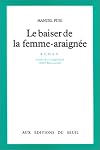
Two men share a prison cell, the homosexual Molina imprisoned for "corruption of minors", and the revolutionary Valentin. They appear as polar opposites--Molina is ultra-effeminate and completely given to the typically "female" concerns with love and romance, while Valentin suppresses his emotions because only the combat for society matters, not the private life. Neither understands the other and yet gradually they become closer, so much so that each one ends up doing something "outside" his show more own character, for the sake of the other.
This is very much a study of homosexuality and gender where the political moment, Argentina's leaden, fascist seventies, only serves as a pretext to bring together in extended intimate dialogue people who would never be capable of it otherwise. Valentin seems to get the most out of the exchange, to have been nothing less than enlightened. One would like to think that Molina, in turn, was strengthened by Valentin's acceptance but this is less clear to me.
Puig's voluminous footnotes on the psychoanalitical and philosophical studies of homosexuality and gender are a pointer but also an obstacle. What is happening to the two men is outside "theory", which is dismally dated anyway.
Molina understands himself as a woman and refers to himself often in the female gender. He does not fall in love with homosexuals, only "real" men. It's interesting how at different times both characters express the more open, progressive view of the genders--for instance, Molina retorting that there is nothing wrong with being sensitive and gentle "like a woman" and that the world would be a better place if men were more "like women"; but later, it's Valentin who protests against Molina's notion that it's right, "womanly", to suffer in a relationship (including intercourse), that being humiliated is natural. Molina's influence makes Valentin gentler, and Valentin's makes Molina fight.
A beautiful book show less
This is very much a study of homosexuality and gender where the political moment, Argentina's leaden, fascist seventies, only serves as a pretext to bring together in extended intimate dialogue people who would never be capable of it otherwise. Valentin seems to get the most out of the exchange, to have been nothing less than enlightened. One would like to think that Molina, in turn, was strengthened by Valentin's acceptance but this is less clear to me.
Puig's voluminous footnotes on the psychoanalitical and philosophical studies of homosexuality and gender are a pointer but also an obstacle. What is happening to the two men is outside "theory", which is dismally dated anyway.
Molina understands himself as a woman and refers to himself often in the female gender. He does not fall in love with homosexuals, only "real" men. It's interesting how at different times both characters express the more open, progressive view of the genders--for instance, Molina retorting that there is nothing wrong with being sensitive and gentle "like a woman" and that the world would be a better place if men were more "like women"; but later, it's Valentin who protests against Molina's notion that it's right, "womanly", to suffer in a relationship (including intercourse), that being humiliated is natural. Molina's influence makes Valentin gentler, and Valentin's makes Molina fight.
A beautiful book show less

Molina is in jail for lewd conduct with a minor. Valentín is a political prisoner. To pass the time, the former tells the latter a series of plots from movies. In between movie sessions they discuss their lives on the outside, take care of each other when they're sick, and slowly become friends.
It's a rather simple story: easy to follow, fun to read and very exciting. The pace varies between the (comparatively) dense movie synopses and the page-turning back-and-forth conversations between show more the young radical and the older gay man. Around halfway through the novel you start to get some information about how the two men came to cohabitate the jail cell, and the things you learn add a great deal of tension to the whole situation. Puig makes the conversations feel like real conversations between two regular people, using ellipses to represent silences, constant voseo (vos sos instead of tú eres, typical of Argentine Spanish) and colloquial language that doesn't stray too far into vulgarities; something like what you might expect of a conversation between two people from different walks of life who are in prison together. The movies Molina tells Valentín are nicely related to the story. It's not too obvious, it's not like they simply retell or predict what's happening in the jail cell, but they do relate to what's happening between the two men. This technique of cinema exegesis was fun. I enjoyed reading movies as told by one man to another as they passed the time. They'd take breaks and Valentín would interject here and there, and they'd also talk about how they were going to divide the movies up so that they'd best occupy their time in the cell.
I once started reading this book and couldn't get through the first movie summary about a woman who feels a strange attraction to a panther in the zoo. I think I was just busy and had something else I really wanted to read. Looking back on it, it's hard to believe that I put this book down. Once you get going it's a hard book to set aside. It's both a page-turner and a serious, thoughtful book. Some might say it's an especially compelling mix of elements of high, literary culture on the one hand, and low, popular/Hollywood culture on the other. I know this book is quite famous and was made into a critically-acclaimed movie (coming full circle, I suppose, since so much of the book is about movies); I certainly think it deserves it. One other thing that I found particularly interesting about it was its depiction of life in Argentine prisons. I'd read in other books about prisoners receiving supplies from the outside, but it was interesting to see just how important that that stuff (food, mostly) is to people in jail. Molina receives care packages from his mother when she comes to visit him, and he then takes them back to the cell and shares his bounty with Valentín. That food from the outside is so delicious, and makes such a big difference in their life in jail. They reminded me of how I used to feel when I got care packages in the mail when I was in the Peace Corps. The mail comes, you open up the package, and you've suddenly got a bounty of beef jerky, American candy, fruit leather and other delicious specialty snack foods! It wasn't like my everyday food was horrible or anything, and it was certainly incomparably better than the slop Molina and Valentín eat in this book. Still, though, that opportunity to taste the foods you can't access on an everyday basis is really exciting, and I thought the author did a good job of representing it. show less
It's a rather simple story: easy to follow, fun to read and very exciting. The pace varies between the (comparatively) dense movie synopses and the page-turning back-and-forth conversations between show more the young radical and the older gay man. Around halfway through the novel you start to get some information about how the two men came to cohabitate the jail cell, and the things you learn add a great deal of tension to the whole situation. Puig makes the conversations feel like real conversations between two regular people, using ellipses to represent silences, constant voseo (vos sos instead of tú eres, typical of Argentine Spanish) and colloquial language that doesn't stray too far into vulgarities; something like what you might expect of a conversation between two people from different walks of life who are in prison together. The movies Molina tells Valentín are nicely related to the story. It's not too obvious, it's not like they simply retell or predict what's happening in the jail cell, but they do relate to what's happening between the two men. This technique of cinema exegesis was fun. I enjoyed reading movies as told by one man to another as they passed the time. They'd take breaks and Valentín would interject here and there, and they'd also talk about how they were going to divide the movies up so that they'd best occupy their time in the cell.
I once started reading this book and couldn't get through the first movie summary about a woman who feels a strange attraction to a panther in the zoo. I think I was just busy and had something else I really wanted to read. Looking back on it, it's hard to believe that I put this book down. Once you get going it's a hard book to set aside. It's both a page-turner and a serious, thoughtful book. Some might say it's an especially compelling mix of elements of high, literary culture on the one hand, and low, popular/Hollywood culture on the other. I know this book is quite famous and was made into a critically-acclaimed movie (coming full circle, I suppose, since so much of the book is about movies); I certainly think it deserves it. One other thing that I found particularly interesting about it was its depiction of life in Argentine prisons. I'd read in other books about prisoners receiving supplies from the outside, but it was interesting to see just how important that that stuff (food, mostly) is to people in jail. Molina receives care packages from his mother when she comes to visit him, and he then takes them back to the cell and shares his bounty with Valentín. That food from the outside is so delicious, and makes such a big difference in their life in jail. They reminded me of how I used to feel when I got care packages in the mail when I was in the Peace Corps. The mail comes, you open up the package, and you've suddenly got a bounty of beef jerky, American candy, fruit leather and other delicious specialty snack foods! It wasn't like my everyday food was horrible or anything, and it was certainly incomparably better than the slop Molina and Valentín eat in this book. Still, though, that opportunity to taste the foods you can't access on an everyday basis is really exciting, and I thought the author did a good job of representing it. show less

Now here’s a Latin American novel that I would heartily recommend. Despite the fact that it deals with their endless fascination with what they term as ‘love’ (cf. Love in the Time of Cholera), it is written in the most individual style that I’ve yet come across from this area of the world.
Typically, works off the 1001 Books list from the continent of South America are either saccharine sop-fests of the likes of Allende (see here and here), metaphysical romps beyond the bounds of show more mortal comprehension (see Borges here and Paz here) or a combination of the two (see Garcia Marquez here).
It’s therefore extremely refreshing to see an author use some experimentation and actually play with the novel. Whatever else Puig must have experienced while writing this, he surely must have had moments of great delight. The vast array of viewpoints, styles, genres and approaches to chronology must have been great fun to put together.
The result is a novel about unrequited love (“What else?” I hear the Latino crowd say!) which intrigues the reader from the get go. Until the very end, you’re never actually sure how events have really unfolded, and it’s tantalising enough to tempt you to immediately start reading again.
I read the novel aloud to Mrs Arukiyomi (we always have one book like this on the go). However, because of the wide array of literary styles, this is not the ideal way to access the novel. Don’t do audio, read this off the page and be ready for a tale of young love and shattered ideals. show less
Typically, works off the 1001 Books list from the continent of South America are either saccharine sop-fests of the likes of Allende (see here and here), metaphysical romps beyond the bounds of show more mortal comprehension (see Borges here and Paz here) or a combination of the two (see Garcia Marquez here).
It’s therefore extremely refreshing to see an author use some experimentation and actually play with the novel. Whatever else Puig must have experienced while writing this, he surely must have had moments of great delight. The vast array of viewpoints, styles, genres and approaches to chronology must have been great fun to put together.
The result is a novel about unrequited love (“What else?” I hear the Latino crowd say!) which intrigues the reader from the get go. Until the very end, you’re never actually sure how events have really unfolded, and it’s tantalising enough to tempt you to immediately start reading again.
I read the novel aloud to Mrs Arukiyomi (we always have one book like this on the go). However, because of the wide array of literary styles, this is not the ideal way to access the novel. Don’t do audio, read this off the page and be ready for a tale of young love and shattered ideals. show less
Lists
Five star books (1)
To Read (1)
A Novel Cure (1)
Latin America (1)
1970s (1)
DELETE (1)
Reading Globally (1)
Awards


You May Also Like


Associated Authors
Statistics
- Works
- 29
- Also by
- 9
- Members
- 5,050
- Popularity
- #4,956
- Rating
- 3.8
- Reviews
- 91
- ISBNs
- 311
- Languages
- 17
- Favorited
- 14