
John Peyton Cooke
Author of Torsos
About the Author
Image credit: John Peyton Cooke
Series
Works by John Peyton Cooke
Associated Works
Tagged
Common Knowledge
- Birthdate
- 1967
- Gender
- male
- Nationality
- USA
- Birthplace
- Amarillo, Texas, USA
- Places of residence
- Laramie, Wyoming, USA
New York, New York, USA
Toronto, Ontario, Canada
London, England, UK
Los Angeles, California, USA - Associated Place (for map)
- USA
Members
Reviews

A compelling story of character growth and coming of age. The main character, Jesse, is ego centered and almost sociopathic when we first meet him as he tries to meet his basic needs with no regard for who is hurt, or has to be killed, in order for him to have what he needs/wants. Ultimately he gives himself up to another for their pleasure in order to gain his basic necessities.
Somehow, by inches at a time, he changes. He finds personal values, the ability to love and be loved, trust and show more be trusted, and basically his sense of humanity. He even becomes a cop and a positive contributor to society at large.
However, as his murderous past is about to be revisited we find his growth and development might not be complete. His respect for others seems to just be superficial and his inner turmoil is at odds with his new career and values. We begin to discover how Jesse became so conflicted, what horrors in his childhood led him to run away and gave him such a childlike need for others to provide for him with little to no regard for their own needs.
Basically Jesse is someone we aren't supposed to like. We aren't supposed to sympathize with his carnal nature. He can't be "the hero" of this story because he committed murder(s). Somehow though John Peyton Cooke makes you see Jesse empathetically and we begin to see that though the murders are truly unjustified, maybe he has grown and rehabilitated himself through acts of self-sacrifice and committing himself to a life, his calling, of being a good cop and doing good works.
If you think what would have happened if he had been arrested right after the last murder and connected to all the others - no one would have cared about how he became so contemptuous of others - they just would have seen the acts and wanted justice. But John Peyton Cooke is able to make that quick justice seem the real crime because here we see a person can continue to grow and develop even after committing heinous deeds. In Jesse's case he could be said to just have been "acting out" and once the rage and self-hatred were ruptured he was able to move on and begin healing.
But what about the people he killed? Where are their rights? Where is their ability to grow and develop? Is Jesse's evolution enough to justify what happened, what he did? This is not an easy story to digest and isn't going to leave you satisfied with things at the conclusion. But the questions you are left with are good ones. Things we should think about. I don't what John Peyton Cooke's goals were when writing this book, but if he wanted to question the death penalty and out justice system in general, he met his goal. If he wanted to make people see that there can be redemption even for those that have fallen as far as you can fall, the he met his goal.
Bottom line - don't read this for escapism from life, read it to challenge yourself to value life more for what potentials are still out there for all of us as long as we live our lives. show less
Somehow, by inches at a time, he changes. He finds personal values, the ability to love and be loved, trust and show more be trusted, and basically his sense of humanity. He even becomes a cop and a positive contributor to society at large.
However, as his murderous past is about to be revisited we find his growth and development might not be complete. His respect for others seems to just be superficial and his inner turmoil is at odds with his new career and values. We begin to discover how Jesse became so conflicted, what horrors in his childhood led him to run away and gave him such a childlike need for others to provide for him with little to no regard for their own needs.
Basically Jesse is someone we aren't supposed to like. We aren't supposed to sympathize with his carnal nature. He can't be "the hero" of this story because he committed murder(s). Somehow though John Peyton Cooke makes you see Jesse empathetically and we begin to see that though the murders are truly unjustified, maybe he has grown and rehabilitated himself through acts of self-sacrifice and committing himself to a life, his calling, of being a good cop and doing good works.
If you think what would have happened if he had been arrested right after the last murder and connected to all the others - no one would have cared about how he became so contemptuous of others - they just would have seen the acts and wanted justice. But John Peyton Cooke is able to make that quick justice seem the real crime because here we see a person can continue to grow and develop even after committing heinous deeds. In Jesse's case he could be said to just have been "acting out" and once the rage and self-hatred were ruptured he was able to move on and begin healing.
But what about the people he killed? Where are their rights? Where is their ability to grow and develop? Is Jesse's evolution enough to justify what happened, what he did? This is not an easy story to digest and isn't going to leave you satisfied with things at the conclusion. But the questions you are left with are good ones. Things we should think about. I don't what John Peyton Cooke's goals were when writing this book, but if he wanted to question the death penalty and out justice system in general, he met his goal. If he wanted to make people see that there can be redemption even for those that have fallen as far as you can fall, the he met his goal.
Bottom line - don't read this for escapism from life, read it to challenge yourself to value life more for what potentials are still out there for all of us as long as we live our lives. show less

Mucha gente podía haber querido eliminar a un chapero como Eddie Andrassy. Eddie podía haber sido el blanco de cualquiera: chulos rivales, gángsters, camellos o un cónyuge celoso. Pero eso no explica que su cuerpo quedara reducido a un torso mutilado y sin cabeza. Eddie es la primera víctima del «asesino de los torsos» de Cleveland, al menos eso cree el inspector de la brigada de homicidios Hank «Lucky» Lambert.
Pero, desde luego, no va a ser el último. A medida que van apareciendo show more cadáveres grotescamente desfigurados y que las presiones políticas y personales aumentan, Hank se da cuenta de que su buena suerte se está terminando… Torsos, de John Peyton Cooke, es una brillante novela de suspense basada en los crímenes de un autor de asesinatos múltiples que sumió a la ciudad en una pesadilla.
Se trata del Cleveland de los años treinta, donde Eliot Ness, el flamante enemigo del hampa que quería imponer la ley a una inestable población de vagabundos y delincuentes, ve que la ciudad se convierte en campo abierto para los perversos y crueles placeres de un hombre. show less
Pero, desde luego, no va a ser el último. A medida que van apareciendo show more cadáveres grotescamente desfigurados y que las presiones políticas y personales aumentan, Hank se da cuenta de que su buena suerte se está terminando… Torsos, de John Peyton Cooke, es una brillante novela de suspense basada en los crímenes de un autor de asesinatos múltiples que sumió a la ciudad en una pesadilla.
Se trata del Cleveland de los años treinta, donde Eliot Ness, el flamante enemigo del hampa que quería imponer la ley a una inestable población de vagabundos y delincuentes, ve que la ciudad se convierte en campo abierto para los perversos y crueles placeres de un hombre. show less
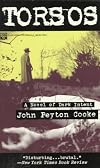
Torsos, a fictionalized account of the first modern serial killer, dubbed "the Torso Killer" by the newspapers, is the third novel from John Peyton Cooke. The Torso Killer stalked the poor sections of Cleveland, Ohio in the 1930s; Cooke does a respectable job of tapping the vein mined so successfully by James Ellroy: writing a noir crime novel that convincingly blends period detail and actual historical figures. While his writing is not up to Ellroy at his best (The Black Dahlia, White Jazz, show more American Tabloid), Cooke does show promise of developing his own unique variant on the genre. (He was only 26 when Torsos was first published in England.)
Hank Lambert is a homicide detective (and one of the few honest cops on the corruption-riddled Cleveland police force) who catches the squeal for a grisly discovery: the naked, emasculated and decapitated bodies of the Torso Killer's first two victims. Though the severed genitals are found near the bodies, the heads are not. Lambert, teamed initially with a senior partner, soon becomes the leading detective on the case after his partner is demoted to traffic duty by Cleveland's new director of Public Safety, Eliot Ness. Ness, who came up with the idea of two-way radios in every police car to facilitate closer, easier and faster communication between patrolling officers and their precinct, is a reform-minded crusader with an eye on a future political career. Ness's first act as Director of Public Safety is to sweep the Cleveland police department of all corrupt cops; Lambert feels that, in the case of his partner, at least, Ness is a little over-zealous.
New bodies, some of them only headless torsos, turn up with alarming frequency as the years go by with no new leads unearthed. Lambert, who has a wife and children and who is also in the closet, happens to get the closest thing resembling real leads on the case by virtue of the fact that he occasionally pays male hustlers for sex. Lambert soon forms a relationship with an angelic-looking, 19 year-old hustler named Danny Cottone, who knows two of the Torso Killer's victims, and, eventually, unwittingly turns tricks for the killer himself. Ness, who had no police training and seldom carried a gun, takes over the investigation in an effort to "make good" for his political patrons. With Ness taking an active role, the case gets more newspaper coverage, but no fresh angles: heat is brought to bear on the case, but no light.
Torsos presents a killer patterned after the best guesses of Ness and subsequent criminologists (such as Colin Wilson): one who is well-off, owns his own house, possesses great strength, and is homosexual. Ness was convinced that the killer's sexuality was what caused him to kill (much in the same way he believed that Leopold and Loeb's homosexuality made them amoral killers), and that he was the scion of a well-to-do family. (In this instance, the Torso Killer is reminiscent of Jack the Ripper: one hotly-contested theory, first propounded by Dr. Thomas Stowell in a 1970 issue of The Criminologist, is that Jack the Ripper was Prince Albert ["Eddie"] Victor, Duke of Clarence: grandson of Queen Victoria and eldest son of King Edward VII of England, who was apparently homosexual and was rumored to have died horribly of syphilis.) Killer of anywhere from twelve to forty people, depending on which source you believe, the Torso Killer preyed primarily on young men from the dregs of society: either homeless transients, or part of the criminal underworld. (This is one reason why identification of the victims proved to be so difficult.) With the Great Depression just beginning to come to an end, the Torso Killer had a distressing number of potential victims to choose from.
Cooke does a mostly successful job of dramatizing this engrossing (and gross) case. His language is raw, as befits the subject matter, and he paints convincing pictures of both police work driven more by political considerations than genuine concern for human life and the marginalized homosexual underground which, thanks to the Depression, had far more members than many people would care to admit. While Torsos does get a little sluggish in spots, these spells don't last for long. Cooke also manages to produce both a well-written "normal" sequence of gay sex as well as an episode of extremely bizarre sex that owes much to the writings of the Marquis de Sade: even readers of Gary Jennings, William S. Burroughs and Philip José Farmer are likely to be shocked. Thanks to the fact that this is a work of fiction, Cooke is able to do something that criminal investigation could not: provide a definite end to the Torso Killer's career. In this instance, perhaps, Torsos is more satisfying than real life. show less
Hank Lambert is a homicide detective (and one of the few honest cops on the corruption-riddled Cleveland police force) who catches the squeal for a grisly discovery: the naked, emasculated and decapitated bodies of the Torso Killer's first two victims. Though the severed genitals are found near the bodies, the heads are not. Lambert, teamed initially with a senior partner, soon becomes the leading detective on the case after his partner is demoted to traffic duty by Cleveland's new director of Public Safety, Eliot Ness. Ness, who came up with the idea of two-way radios in every police car to facilitate closer, easier and faster communication between patrolling officers and their precinct, is a reform-minded crusader with an eye on a future political career. Ness's first act as Director of Public Safety is to sweep the Cleveland police department of all corrupt cops; Lambert feels that, in the case of his partner, at least, Ness is a little over-zealous.
New bodies, some of them only headless torsos, turn up with alarming frequency as the years go by with no new leads unearthed. Lambert, who has a wife and children and who is also in the closet, happens to get the closest thing resembling real leads on the case by virtue of the fact that he occasionally pays male hustlers for sex. Lambert soon forms a relationship with an angelic-looking, 19 year-old hustler named Danny Cottone, who knows two of the Torso Killer's victims, and, eventually, unwittingly turns tricks for the killer himself. Ness, who had no police training and seldom carried a gun, takes over the investigation in an effort to "make good" for his political patrons. With Ness taking an active role, the case gets more newspaper coverage, but no fresh angles: heat is brought to bear on the case, but no light.
Torsos presents a killer patterned after the best guesses of Ness and subsequent criminologists (such as Colin Wilson): one who is well-off, owns his own house, possesses great strength, and is homosexual. Ness was convinced that the killer's sexuality was what caused him to kill (much in the same way he believed that Leopold and Loeb's homosexuality made them amoral killers), and that he was the scion of a well-to-do family. (In this instance, the Torso Killer is reminiscent of Jack the Ripper: one hotly-contested theory, first propounded by Dr. Thomas Stowell in a 1970 issue of The Criminologist, is that Jack the Ripper was Prince Albert ["Eddie"] Victor, Duke of Clarence: grandson of Queen Victoria and eldest son of King Edward VII of England, who was apparently homosexual and was rumored to have died horribly of syphilis.) Killer of anywhere from twelve to forty people, depending on which source you believe, the Torso Killer preyed primarily on young men from the dregs of society: either homeless transients, or part of the criminal underworld. (This is one reason why identification of the victims proved to be so difficult.) With the Great Depression just beginning to come to an end, the Torso Killer had a distressing number of potential victims to choose from.
Cooke does a mostly successful job of dramatizing this engrossing (and gross) case. His language is raw, as befits the subject matter, and he paints convincing pictures of both police work driven more by political considerations than genuine concern for human life and the marginalized homosexual underground which, thanks to the Depression, had far more members than many people would care to admit. While Torsos does get a little sluggish in spots, these spells don't last for long. Cooke also manages to produce both a well-written "normal" sequence of gay sex as well as an episode of extremely bizarre sex that owes much to the writings of the Marquis de Sade: even readers of Gary Jennings, William S. Burroughs and Philip José Farmer are likely to be shocked. Thanks to the fact that this is a work of fiction, Cooke is able to do something that criminal investigation could not: provide a definite end to the Torso Killer's career. In this instance, perhaps, Torsos is more satisfying than real life. show less
Lists
Awards


You May Also Like


Associated Authors
Statistics
- Works
- 10
- Also by
- 4
- Members
- 261
- Popularity
- #88,098
- Rating
- 3.5
- Reviews
- 5
- ISBNs
- 22
- Languages
- 1
