
Nene Gare (1919–1994)
Author of The fringe dwellers
Works by Nene Gare
Green gold 1 copy
Tagged
Common Knowledge
- Other names
- Wadham, Doris Violet May (birth name)
- Birthdate
- 1919-05-09
- Date of death
- 1994-05-29
- Gender
- female
- Education
- Adelaide Art School
Perth Technical School - Occupations
- writer
artist - Relationships
- Gare, Shelley (daughter)
- Nationality
- Australia
- Birthplace
- Adelaide, South Australia, Australia
- Places of residence
- Carnarvon, Western Australia, Australia
- Place of death
- Perth, Western Australia, Australia
- Associated Place (for map)
- Western Australia, Australia
Members
Reviews

It was disappointing to see a writer described at the Australian Dictionary of Biography as known for her empathy and friendliness, employing casual antisemitism in the form of a landlord's greed being attributed to being Jewish. (p.63) One comes across this in books published before the Holocaust, but it's rare to see it after its horrors were known, and even more surprising to see it in a book published in Melbourne, home to more Holocaust survivors than any other city in Australia.
I'm not show more surprised that this is out of print. show less
I'm not show more surprised that this is out of print. show less
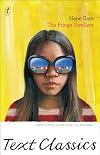
I was in outback Western Australia recently, interviewing someone about the lifestyle in their small mining township. After talking a little about the independence necessary in a place where your nearest supermarket involves a 450-mile round trip, he went on to praise the low crime rate and sense of community. ‘Despite the fact that we have quite a big Aboriginal community,’ he said, ‘we don't have much of a problem with petty crime.’
Interesting way to phrase it, I said….
It's the show more sort of casual remark you hear a lot. And I'm always surprised by how silent most Australian literature is on the subject – Aborigines are almost completely absent from works from [The Thorn Birds] to [Cloudstreet], [The Harp In The South] to [Oscar and Lucinda], [A Town Like Alice] to [The Slap].
This book is an interesting case. The author was white, but the book is an intimate portrait of an Aboriginal family living on the edge of a small town in Western Australia in the 1950s. It's the sort of act of ventriloquism that we've learnt to be suspicious of nowadays, and perhaps there are some readers who would find it faintly patronising. But it must have been revelatory when it was first published in 1961, and I still thought it was brilliantly and sensitively done. Nene Gare lived among Aborigines for many years, counting many as close friends at a time when this was rare (it's still not especially common for a lot of white Australians); her husband was later appointed Commissioner for Native Welfare, and one of the relative few that did not make the position look like a travesty.
The novel centres on the Comeaway family, who begin the story living in a humpy outside town, later move into council housing, and end up on a specially-built enclosure. This book lives or dies on the strength of its characters; luckily, they are brilliantly, complicatedly alive and they stop The Fringe Dwellers from being a grim, worthy kind of book and turn it into a much more interesting study which, apart from the social-historical interest, has all kinds of things to say about families and relationships and growing up.
The hero is the teenage Trilby Comeaway – awesome name – who rails desperately against a system that is horribly weighted against her. Unlike her parents, who battle on with amiable weariness, or her sister Noonah, who keeps her head down and tries to fit in, Trilby is filled with fury at the whole of society and everyone in it.
‘Some [whites] let you get closer than others, that's all. They still keep a line between us and them. And when you look at the way we live,’ her eyes swept over the room scornfully, like grey lightning, ‘you can't blame them, can you? Pigs live better than we do. I tell you I hate white people because they lump us all together and never give one of us a chance to leave all this behind. And I hate coloured people more, because most of them don't want a chance. They like living like pigs, damn them.’
Trilby's self-destruction is hard to watch and Gare takes things to a pretty dark place before the end. Still, this is that rare thing, a novel written to make a social point that never feels remotely preachy, full of anger but also full of warmth, and amusement, and love. show less
Interesting way to phrase it, I said….
It's the show more sort of casual remark you hear a lot. And I'm always surprised by how silent most Australian literature is on the subject – Aborigines are almost completely absent from works from [The Thorn Birds] to [Cloudstreet], [The Harp In The South] to [Oscar and Lucinda], [A Town Like Alice] to [The Slap].
This book is an interesting case. The author was white, but the book is an intimate portrait of an Aboriginal family living on the edge of a small town in Western Australia in the 1950s. It's the sort of act of ventriloquism that we've learnt to be suspicious of nowadays, and perhaps there are some readers who would find it faintly patronising. But it must have been revelatory when it was first published in 1961, and I still thought it was brilliantly and sensitively done. Nene Gare lived among Aborigines for many years, counting many as close friends at a time when this was rare (it's still not especially common for a lot of white Australians); her husband was later appointed Commissioner for Native Welfare, and one of the relative few that did not make the position look like a travesty.
The novel centres on the Comeaway family, who begin the story living in a humpy outside town, later move into council housing, and end up on a specially-built enclosure. This book lives or dies on the strength of its characters; luckily, they are brilliantly, complicatedly alive and they stop The Fringe Dwellers from being a grim, worthy kind of book and turn it into a much more interesting study which, apart from the social-historical interest, has all kinds of things to say about families and relationships and growing up.
The hero is the teenage Trilby Comeaway – awesome name – who rails desperately against a system that is horribly weighted against her. Unlike her parents, who battle on with amiable weariness, or her sister Noonah, who keeps her head down and tries to fit in, Trilby is filled with fury at the whole of society and everyone in it.
‘Some [whites] let you get closer than others, that's all. They still keep a line between us and them. And when you look at the way we live,’ her eyes swept over the room scornfully, like grey lightning, ‘you can't blame them, can you? Pigs live better than we do. I tell you I hate white people because they lump us all together and never give one of us a chance to leave all this behind. And I hate coloured people more, because most of them don't want a chance. They like living like pigs, damn them.’
Trilby's self-destruction is hard to watch and Gare takes things to a pretty dark place before the end. Still, this is that rare thing, a novel written to make a social point that never feels remotely preachy, full of anger but also full of warmth, and amusement, and love. show less
The Fringe Dwellers follows the shambolic Comeaway family as it moves from an Indigenous camp outside town to a housing estate. Set in remote Western Australia, the novel focuses mainly on 15-year-old Trilby. Recently arrived home from an aboriginal mission with her brother and sisters, she is angry, restless and perpetually in crisis. Trilby desperately kicks against what fate seems to hold in store for her - children, poverty, racism and a continuation of the chaos that descends once the show more Comeaways' friends and family join them in their new home. Nene Gare, a white woman writing in the early 1960s, takes a relatively progressive view of the Comeaway clan, detailing the problems created by entrenched racism and by policies of assimilation that persist more than half a century later. show less

As many readers will know, although there is a debate today about whether or not it is presumptuous for non-Aboriginal authors to speak on behalf of a culture they do not share, The Fringe Dwellers by non-indigenous author Nene Gare was a landmark novel when it was first published in 1961. Larissa Behrendt has just written a book called Finding Eliza in which she analyses the representation of Indigenous people in Australian literature, and I will be interested to see if she includes The show more Fringe Dwellers in her survey because, despite being first published in 1961, it’s still widely read today. (It was also adapted by Bruce Beresford into an internationally acclaimed film in 1986).
Distrusting fiction, Nene Gare (1919-1994) wrote The Fringe Dwellers based on her life experiences in rural Western Australia. Wikipedia tells me that from 1952-54, her husband Frank was a district officer with the Native Welfare Department in Carnarvon and later in the Murchison Region, and the family was based in Geraldton. Today, even the name of that department makes us cringe, but it was the friendships that Nene Gare made with Aboriginal families that inspired her to write her novel.
To read the rest of my review please visit https://anzlitlovers.com/2016/07/26/the-fringe-dwellers-by-nene-gare-read-by-sha... show less
Distrusting fiction, Nene Gare (1919-1994) wrote The Fringe Dwellers based on her life experiences in rural Western Australia. Wikipedia tells me that from 1952-54, her husband Frank was a district officer with the Native Welfare Department in Carnarvon and later in the Murchison Region, and the family was based in Geraldton. Today, even the name of that department makes us cringe, but it was the friendships that Nene Gare made with Aboriginal families that inspired her to write her novel.
To read the rest of my review please visit https://anzlitlovers.com/2016/07/26/the-fringe-dwellers-by-nene-gare-read-by-sha... show less
Lists
Awards

You May Also Like
Associated Authors
Statistics
- Works
- 7
- Members
- 110
- Popularity
- #176,728
- Rating
- 3.7
- Reviews
- 4
- ISBNs
- 17
- Languages
- 1