
Michael L. Perry
Author of Population: 485: Meeting Your Neighbors One Siren at a Time
About the Author
Works by Michael L. Perry
Roughneck Grace: Farmer Yoga, Creeping Codgerism, Apple Golf, and Other Brief Essays from on and off the Back Forty (2016) 50 copies, 13 reviews
Danger, Man Working: Writing from the Heart, the Gut, and the Poison Ivy Patch (2017) 22 copies, 2 reviews
Associated Works
Tagged
Common Knowledge
Members
Reviews
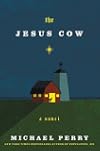
discovered Michael Perry quite a few years ago now when his wonderful memoir Population 485 came out and captivated me with its quiet paean to life in small town rural Wisconsin. Since then I've read just about everything he's written, enjoying my return trips into Perry's life, community, and acquaintances. With The Jesus Cow, Perry makes his first foray into fiction and he brings the same simple, intelligent, and homespun narration to this novel that he has employed to such good use in his show more non-fiction. His characters could just as easily be his neighbors as his fictional creations and that is half the charm of this book.
Harley Jackson is a quiet man. He works at a factory and continues to run beef cattle on the small portion of the family farm still left to him. When his dairy cow, Tina Turner, gives birth to a calf on Christmas Eve, he is startled and dismayed to see a clear picture of Jesus on the calf's side. Some people would consider this a miracle and trumpet it to all and sundry. Harley, on the other hand, is completely dismayed and tries to decide how to camouflage the inconvenient marking, from confining the calf to the barn to rubbing shoe polish over Jesus' face to try and make it less visible at least and invisible at best. It doesn't even occur to him to try and capitalize on the image, even though his best friend Billy suggests that cashing in would solve many of Harley's financial troubles, one of which is that local real estate developer, Klute Sorenson, has it out for him, wanting to get his hands on remaining 15 acres of Harley's farm and already owning the rest of the original is using the town's generally unenforced statutes to try and force Harley out. Preferring to avoid confrontation, Harley can and does put his head in the sand about the likely outcome of Klute's bullying and about the cow's miraculous mark until he has no choice but to face both situations. When Harley falls head over heels for a woman new to town, inviting her into his life, and then the calf escapes the barn and is spotted by the devout mail carrier, who promptly uploads a photo of the Jesus on its hide to the internet, life as Harley and the rest of the small town knows it explodes wide open.
On the surface, Perry has written an entertaining and folksy tale about the three ring circus media storm that results when Hollywood and rural Wisconsin collide but on a deeper level, he has penned an examination of the challenges facing small farming communities--development versus conservation, poverty, lack of funding for vital services, outsiders versus locals, and what success looks like among other issues. Harley is a lovely character, plain spoken and honest, not given to anything showy or unconsidered. The large cast of unusual secondary characters around him, best friend Billy who lives in a trailer on Harley's land, local junk yard owner Maggie, disgraced former academic and stubborn environmentalist Carolyn, developer and avid listener to cliched self-help business books Klute, his welder-artist girlfriend Mindy, and slick Hollywood agent Sloan are all fantastic and well developed and all are vital to the story in their own ways. As in his memoirs, Perry draws an appealing picture of place and the connections that people feel to it. His questions about faith, which weave through the whole of the story, are respectful and balanced as he shows both the sensational and vocal faith of many of the pilgrims clamoring to see the calf as well as the quiet, modest, and unpretentious faith of people in the community. And his very Midwestern sense of dry humor shines through in both small moments and the over the top ridiculous ones as well. The novel is well-paced, off-beat, and happily engrossing and those who have enjoyed his memoirs will appreciate the straightforward and entertaining way in which he has tackled his first work of fiction as well. show less
Harley Jackson is a quiet man. He works at a factory and continues to run beef cattle on the small portion of the family farm still left to him. When his dairy cow, Tina Turner, gives birth to a calf on Christmas Eve, he is startled and dismayed to see a clear picture of Jesus on the calf's side. Some people would consider this a miracle and trumpet it to all and sundry. Harley, on the other hand, is completely dismayed and tries to decide how to camouflage the inconvenient marking, from confining the calf to the barn to rubbing shoe polish over Jesus' face to try and make it less visible at least and invisible at best. It doesn't even occur to him to try and capitalize on the image, even though his best friend Billy suggests that cashing in would solve many of Harley's financial troubles, one of which is that local real estate developer, Klute Sorenson, has it out for him, wanting to get his hands on remaining 15 acres of Harley's farm and already owning the rest of the original is using the town's generally unenforced statutes to try and force Harley out. Preferring to avoid confrontation, Harley can and does put his head in the sand about the likely outcome of Klute's bullying and about the cow's miraculous mark until he has no choice but to face both situations. When Harley falls head over heels for a woman new to town, inviting her into his life, and then the calf escapes the barn and is spotted by the devout mail carrier, who promptly uploads a photo of the Jesus on its hide to the internet, life as Harley and the rest of the small town knows it explodes wide open.
On the surface, Perry has written an entertaining and folksy tale about the three ring circus media storm that results when Hollywood and rural Wisconsin collide but on a deeper level, he has penned an examination of the challenges facing small farming communities--development versus conservation, poverty, lack of funding for vital services, outsiders versus locals, and what success looks like among other issues. Harley is a lovely character, plain spoken and honest, not given to anything showy or unconsidered. The large cast of unusual secondary characters around him, best friend Billy who lives in a trailer on Harley's land, local junk yard owner Maggie, disgraced former academic and stubborn environmentalist Carolyn, developer and avid listener to cliched self-help business books Klute, his welder-artist girlfriend Mindy, and slick Hollywood agent Sloan are all fantastic and well developed and all are vital to the story in their own ways. As in his memoirs, Perry draws an appealing picture of place and the connections that people feel to it. His questions about faith, which weave through the whole of the story, are respectful and balanced as he shows both the sensational and vocal faith of many of the pilgrims clamoring to see the calf as well as the quiet, modest, and unpretentious faith of people in the community. And his very Midwestern sense of dry humor shines through in both small moments and the over the top ridiculous ones as well. The novel is well-paced, off-beat, and happily engrossing and those who have enjoyed his memoirs will appreciate the straightforward and entertaining way in which he has tackled his first work of fiction as well. show less
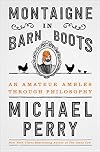
This is my first book by Michael Perry, but I loved Sarah Bakewell's book on Montaigne, “How to Live,” and have enjoyed the essays by Montaigne that I've read, and... it looked fun. But I was a little concerned that it would be too much “aww shucks humor” and too little about what Montaigne has to offer modern readers. And, in fairness, Michael Perry does take the spotlight a bit more than Michel Montaigne. But for me the balance between personal anecdote (a kidney stone attack led show more Perry to Montaigne) and philosophical pondering was just right. And I was delighted to find that his impetus in studying Montaigne is a desire to be a better person so that he can help make the world a better place – as he says, “jolting me out of my absentminded musing and into the recognition that through the examination of my imperfections I can better serve my obligations to others.”
A quick read, this is often laugh-out-loud funny, but also touching and thoughtful. And though he repeatedly reminds us that he is Not an “expert,” Perry's clearly read widely and deeply about Montaigne. Thanks to his references I've now added Roxane Gay's “Bad Feminist” and James Miller's “Examined Lives,” but, probably most valuably (and certainly most economically), I'm eager now to dive again into Montaigne's Essays. I don't suppose I'll ever read them all, but Perry's descriptions of a number of the essays are irresistible! show less
A quick read, this is often laugh-out-loud funny, but also touching and thoughtful. And though he repeatedly reminds us that he is Not an “expert,” Perry's clearly read widely and deeply about Montaigne. Thanks to his references I've now added Roxane Gay's “Bad Feminist” and James Miller's “Examined Lives,” but, probably most valuably (and certainly most economically), I'm eager now to dive again into Montaigne's Essays. I don't suppose I'll ever read them all, but Perry's descriptions of a number of the essays are irresistible! show less
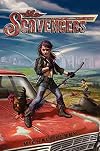
Love the language, especially the spoonerisms and word-play of Toad, but also the nicknames, the word-puzzles & brainteasers, the poems of [a:Emily Dickinson|7440|Emily Dickinson|https://images.gr-assets.com/authors/1626025785p2/7440.jpg], the invented language of Dookie and of the 'Patriotic Partnership' (for CornVivia, substitute Monsanto).
Love the characters; they're not overly complex, but neither are they stereotypical or simple. A family could have a rich discussion about the show more differences between each of them. And, for that matter, between Ford Falcon's parents and Laura Ingalls Wilder's parents, and also the respective challenges of survival they faced.
The first half of the book was a lot of world-building, and just a bit slow to me as I'm an experienced reader of these kinds of 'post-apocalyptic' stories. But the book is marketed to children, probably those aged 10-12 especially, and all that build-up is necessary (especially to less-experienced readers) for a full understanding of the very exciting second half, in which there's an exciting two-part quest and a revelation of all sorts of secrets.
The main reason I chose this was because the author is one of my very favorites, and I was not disappointed. It has hardly anything in common with his earlier non-fiction, but the man can write. Period.
---
Reread.
There needs to be a sequel so we learn (along with the young hero) more world-building, and so we see what she does next. (Perry has said he's working on it.)
"When a poem is just right, it's your own heart you hear talking."
Read poems just a few at a time "After the 4th poem or so, you're just swallowing cold tea."
(Men changed Emily Dickinson's poems before they published them?!/ Um, maybe?)
(Look up her poem *White Heat* aka *Dare you see a soul.*) show less
Love the characters; they're not overly complex, but neither are they stereotypical or simple. A family could have a rich discussion about the show more differences between each of them. And, for that matter, between Ford Falcon's parents and Laura Ingalls Wilder's parents, and also the respective challenges of survival they faced.
The first half of the book was a lot of world-building, and just a bit slow to me as I'm an experienced reader of these kinds of 'post-apocalyptic' stories. But the book is marketed to children, probably those aged 10-12 especially, and all that build-up is necessary (especially to less-experienced readers) for a full understanding of the very exciting second half, in which there's an exciting two-part quest and a revelation of all sorts of secrets.
The main reason I chose this was because the author is one of my very favorites, and I was not disappointed. It has hardly anything in common with his earlier non-fiction, but the man can write. Period.
---
Reread.
There needs to be a sequel so we learn (along with the young hero) more world-building, and so we see what she does next. (Perry has said he's working on it.)
"When a poem is just right, it's your own heart you hear talking."
Read poems just a few at a time "After the 4th poem or so, you're just swallowing cold tea."
(Men changed Emily Dickinson's poems before they published them?!/ Um, maybe?)
(Look up her poem *White Heat* aka *Dare you see a soul.*) show less

This tiny book is a gem. Reading Harold's ruminations really put me in his head, understanding his mindset. Not that I think he made the wisest choices, but i could see how he came to do as he did. Just about every page had a bit of homespun wisdom that I thought should be memorialized.
It's the middle of a very snowy winter, he and his wife have barely spoken since their daughter died years ago, the farm economy is in trouble, he's already sold off everything he could and the debts keep show more piling up. The only quibble i had with the story was the time frame. I couldn't really believe that it's been 20 years since their baby died and Harold is still blaming everything on that. OK, a second quibble: how could he not report his wife's death, and how could he think the investigators would be able to determine she died before him?
You're going to end up thinking maybe you should also just shove all your old junk off a cliff and end it all, but Perry tells us to find someone to talk to. Harold almost did. I could imagine the next chapter being Harold helping at the coffee shop. But nope. Don't do like Harold did.
Our small town library has had quite a few of Michael Perry's books donated over the years, so someone here finds his writing entertaining. I finally decided this book was small enough that I could find the time to read it & see what the attraction was. I'm glad I did. show less
It's the middle of a very snowy winter, he and his wife have barely spoken since their daughter died years ago, the farm economy is in trouble, he's already sold off everything he could and the debts keep show more piling up. The only quibble i had with the story was the time frame. I couldn't really believe that it's been 20 years since their baby died and Harold is still blaming everything on that. OK, a second quibble: how could he not report his wife's death, and how could he think the investigators would be able to determine she died before him?
You're going to end up thinking maybe you should also just shove all your old junk off a cliff and end it all, but Perry tells us to find someone to talk to. Harold almost did. I could imagine the next chapter being Harold helping at the coffee shop. But nope. Don't do like Harold did.
Our small town library has had quite a few of Michael Perry's books donated over the years, so someone here finds his writing entertaining. I finally decided this book was small enough that I could find the time to read it & see what the attraction was. I'm glad I did. show less
Lists
Awards


You May Also Like


Associated Authors
Statistics
- Works
- 23
- Also by
- 1
- Members
- 3,074
- Popularity
- #8,308
- Rating
- 3.9
- Reviews
- 205
- ISBNs
- 95
