
John Hildebrand
Author of Mapping The Farm: The Chronicle of a Family
About the Author
John Hildebrand teaches at the University of Wisconsin-Eau Claire.
Works by John Hildebrand
Associated Works
Tagged
Common Knowledge
- Birthdate
- 1949-05-18
- Gender
- male
- Education
- University of Michigan
University of Alaska - Occupations
- professor
Members
Reviews
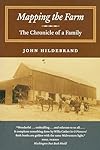
While the farming landscape has gone through a lot of changes since Hildebrand wrote this book a quarter of a century ago--the rise of organic farming, the viability (in some places) of smaller artisanal farms, the rising popularity of co-ops and farmers' markets, and a niche for some farmers in partnerships with farm-to-table restaurants--the core dilemmas inherent in farming and its US historical trajectory has not shifted that much. Americans are more out of touch with where their food show more comes from than ever, small and mid-size family farms operate at the edge of viability, and large agribusiness operates over an ailing food system (extraordinary yields and productivity at the producer end, and widespread hunger and unhealthy food options at the other). Hildebrand captures both the nitty-gritty of daily farm work as well as the broad changes that have swept through a single Minnesota region, reshaping land-use practices and livelihoods.
The narrative is filled with memorable vignettes but suffers from an overall murkiness of purpose. The title, for example, doesn't really capture what is going on here. Hildebrand wants to provide an alternative to the typical ways in which land is mapped (aerial surveys, land-use maps, etc.) by making us see the people on the land and the texture of the land itself. As he notes at one point, most of us see farmland only as we blast past it on a freeway, and "The anonymity of farmland is what makes it so easily converted to other purposes" (chiefly strip malls and butt-ugly housing developments. But the story here is scattered, the various members of the family sometimes hard to keep straight (a basic family tree would have been an enormous help), and the overall intent of this project isn't clear. It isn't really a re-mapping in even a metaphorical sense. He seems to want to avoid an elegiac tone, and yet that is probably the best characterization of the book. Maps are fundamentally tools designed to help us do something but it isn't clear what either Hildebrand or we are supposed to do with this remapped map. show less
The narrative is filled with memorable vignettes but suffers from an overall murkiness of purpose. The title, for example, doesn't really capture what is going on here. Hildebrand wants to provide an alternative to the typical ways in which land is mapped (aerial surveys, land-use maps, etc.) by making us see the people on the land and the texture of the land itself. As he notes at one point, most of us see farmland only as we blast past it on a freeway, and "The anonymity of farmland is what makes it so easily converted to other purposes" (chiefly strip malls and butt-ugly housing developments. But the story here is scattered, the various members of the family sometimes hard to keep straight (a basic family tree would have been an enormous help), and the overall intent of this project isn't clear. It isn't really a re-mapping in even a metaphorical sense. He seems to want to avoid an elegiac tone, and yet that is probably the best characterization of the book. Maps are fundamentally tools designed to help us do something but it isn't clear what either Hildebrand or we are supposed to do with this remapped map. show less
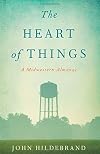
“The Heart of Things” is a delightful collection of musings on Midwestern (Wisconsin) living. Originally published as newspaper columns, these essays take the reader through the months, the seasons, and the days of life. Author John Hildebrand entertains the reader with reminiscences of church suppers and compost piles, possums and weasels, deer and turtles, fishing and hunting, urban architecture and rural solitude.
This is a book you can pick-up and read straight through, keep by your show more chair to peruse when the game is slow or, being organized by months, take just about a section a week throughout the year. The writing style is easy to ponder and enjoy. There are many quotes that hit home but I will just mention one. In the piece entitled “Church Supper” Hildebrand verbalizes the unassailable logic that “Who needs a fancy restaurant when you can go to an elementary school cafeteria and eat wholesome, no-frills food?” Not me. I have gone to those suppers and will appreciate the next one a little bit more. Now excuse me, I think I will reread this month’s entries.
I did receive a copy of this book for review. show less
This is a book you can pick-up and read straight through, keep by your show more chair to peruse when the game is slow or, being organized by months, take just about a section a week throughout the year. The writing style is easy to ponder and enjoy. There are many quotes that hit home but I will just mention one. In the piece entitled “Church Supper” Hildebrand verbalizes the unassailable logic that “Who needs a fancy restaurant when you can go to an elementary school cafeteria and eat wholesome, no-frills food?” Not me. I have gone to those suppers and will appreciate the next one a little bit more. Now excuse me, I think I will reread this month’s entries.
I did receive a copy of this book for review. show less
An intimate and affectionate history of a family farm in Minnesota, belonging to the author’s father- and mother-in-law, is also the history of The American Family Farm writ small. It was interesting enough to keep a reader’s attention from the early days of homesteading in the 19th century through the uncertainty of passing the farm down to a new generation in the 21st century. I had trouble keeping all the characters in the saga straight, and searched in vain for a family tree to look show more up the names and relationships. The dust jacket, brilliantly, unfolds into maps and illustrations which supplement the photos in the book – but that effect is so subtle that I didn’t realize until after I finished the book. No family tree is hiding in the dust jacket either. show less

Hilderbrand is writing stories about the history of his wife's family's farm in Southern MN. And stories about the present challenges facing the farm. I found them to be enjoyable, well-written tales and histories. There was a point early in the book when Hilderbrand talks about different images of the farm (overhead pictures, soil surveys, etc.), and I thought he was going to use each of those as the basis for a chapter ... or a different way of looking at the stories of the farm, but it show more didn't pan out that way, which was a bit of a disappointment for me. His research is well done, and the stories are engaging, especially for a population that has moved further and further from it's family farm roots. show less
Awards


You May Also Like


Associated Authors
Statistics
- Works
- 8
- Also by
- 1
- Members
- 203
- Popularity
- #108,638
- Rating
- 3.7
- Reviews
- 12
- ISBNs
- 16