

Noel Perrin (1927–2004)
Author of A Reader's Delight
About the Author
Noel Perrin is an essayist and author He is Adjunct Professor of Environmental Studies at Dartmouth College
Series
Works by Noel Perrin
Dr. Bowdler's Legacy: A History of Expurgated Books in England and America (1969) 112 copies, 2 reviews
A Passport Secretly Green 3 copies
Animal sounds 2 copies
A dog from heaven 1 copy
Associated Works
For the Love of Books: 115 Celebrated Writers on the Books They Love Most (1999) — Contributor — 479 copies, 4 reviews
The Adventures of Jonathan Corncob, Loyal American Refugee, Written by Himself (1787) — Editor — 44 copies, 1 review
Tagged
Common Knowledge
- Legal name
- Perrin, Edwin Noel
- Birthdate
- 1927-09-18
- Date of death
- 2004-11-21
- Gender
- male
- Education
- Williams College (BA|1949)
Duke University (MA|1960)
University of Cambridge (MA|Literature|1958) - Occupations
- essayist
professor
farmer - Organizations
- United States Army
Dartmouth College - Awards and honors
- Bronze Star
- Relationships
- Perrin, Blanche Chenery (mother)
Lindbergh, Anne Spencer (wife)
Lindbergh, Reeve (sister-in-law) - Nationality
- USA
- Birthplace
- New York, New York, USA
- Places of residence
- New York, New York, USA
Pelham Manor, New York, USA
Dartmouth, New Hampshire, USA
Thetford Center, Vermont, USA - Place of death
- Thetford Center, Vermont, USA
- Burial location
- Cremated
- Associated Place (for map)
- USA
Members
Reviews

The forty short essays in this collection, first published in the Washington Post, highlight books (and two poems) that the author feels have been unjustly overlooked. Perrin doesn’t claim that they are great books but that they are good books and worth reading. It’s not meant to be a canon; rather than “you should read these,” I felt as if he were telling me, “You might find something here to enjoy.”
I turned to this while in a reading slump, unable to decide what I wanted to show more read next. It was the perfect antidote. I’d only read one of the books Perrin chose, and I’d never heard of several. I may never read George Ade or some of the others Perrin highlights, but I came across a dozen or so that look interesting. That’s a good ratio for a collection avowedly one person’s taste.
More importantly, Perrin communicates the enjoyment that reading can bring. For that reason, the title is well-chosen. show less
I turned to this while in a reading slump, unable to decide what I wanted to show more read next. It was the perfect antidote. I’d only read one of the books Perrin chose, and I’d never heard of several. I may never read George Ade or some of the others Perrin highlights, but I came across a dozen or so that look interesting. That’s a good ratio for a collection avowedly one person’s taste.
More importantly, Perrin communicates the enjoyment that reading can bring. For that reason, the title is well-chosen. show less
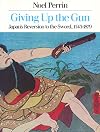
This is a fascinating short book about Japan and how it went from a nation with a substantial firearms industry and tradition to one which had almost totally abandoned them. It is very well written and an easy read with a bit of a breezy style that makes it a good book to finish in one sitting.

For me, the fascination with censorship is a combination of genuine concern with maintaining free expression, and unabashed hilarity at the ridiculousness of the censorship urge. It's not that I think powerful censors can't wreak havoc, but for some reason I also find them irresistably funny. Of the specifically censorship-related histories I've read thus far, I think these two elements come together best in Noel Perrin's Dr. Bowdler's Legacy: A History of Expurgated Books in England and show more America. Its narrow focus (it deals only with the book-expurgation movement, not obscenity laws, outright banning of books, censorship of the mails, the pornography industry, birth control, etc.) means more entertaining anecdotes and character studies, as well as a cohesive story which has a clear beginning, middle and, somewhat disingenuously, end. Perrin's book originally ended with the quasi-sanctimonious and obviously untrue assertion that we're moving beyond such silly pursuits as chopping up and disfiguring books; he then revised it in 1992 to say, more or less, "Oops! Apparently we haven't!"
But the unduly optimistic original ending is the least interesting element of the book. In its beginning pages, we become acquainted with early expurgators like Sir David Dalyrimple, Lord Hailes, who replaced mildly improper lines in Scottish songs of Protestant propaganda with lines of asterisks that suggest much more impropriety than was ever there to begin with:
"The Parson wald nocht have an hure [whore],
But twa, and they were bony,
The Viccar thought he was pure,
Behuifet to have as many;
The parish Priest, that brutal beist,
* * * * * * * * * * * * * "
What can the parish priest have been doing? It turns out he was only "tickling" some girls: much more boring than anyone would have imagined, staring at that line of asterisks.
The reader also learns stories of latter-day bowdlerism, such as the case in the late 1960's where some anonymous hack at Ballantine Books decided to put out an expurgated edition of Farenheit 451 - yes, the seminal anti-censorship novel of the 20th century - for schoolchildren who might be irrevocably damaged by reading the word "damn" or encountering a passage where fluff is removed from a human navel (this actually was censored from the expurgated edition). Then, in 1973, probably through some kind of administrative snafu, the adult copy of the novel disappeared, and the expurgated copy became the only one available!. I love the ludicrousness of this happening because of un-noticed carelessness on the part of some secretary or other. It's just like Bradbury's novel itself: nobody cares enough to actually read the books! Nobody noticed the expurgation until 1979, at which point Bradbury himself stormed Ballantine and demanded that they restore the book to the document he actually wrote. As Perrin writes, "Ballantine meekly agreed."
In between these two stories are a whole lot of even better ones, including entire chapters on Shakespeare, the Bible, dictionaries, poetry and prose. I eat this stuff up with a spoon. In the Shakespeare chapter, for example, there is the story of expurgator Francis Gentleman, who italicized offensive passages in Othello, with the thought that ladies and youths could just skip over the highlighted text. Ladies, youths, I ask you: even with the best of intentions, who among us could help skipping straight TO the italicized text and gobbling up the juicy bits? I mean, that's what italic text DOES. It grabs the eye. Probably my favorite story from the Shakespeare section, though, is that of the version edited by William Chambers and Robert Carruthers, which attempted to mark bowdlerizations with quotation marks, rather than merely replacing Shakespeare's words with their own and leaving them unmarked. In practice, this is truly hilarious; Chambers and Carruthers turn Shakespeare into some kind of over-the-top postmodern hipster egregiously addicted to air quotes. They replace this quote from Othello, for instance,
I hate the Moor;
And it is thought abroad that 'twixt my sheets
He has done my office
with this version:
I hate the Moor;
And it is thought abroad that "with my wife"
He has done "me wrong"
By which Iago probably meant that he found a merchant selling "fresh fish" down by the "Vinny's bar." The eagle has landed, Desdemona.
My favorite story from the Bible section of Dr. Bowdler involves a brilliant ploy by a censor who put all the dirty bits at the back of the book (it must have been quite a hefty portion, considering how many dirty bits the Bible contains) and then claimed that he wished everyone to look at those chapters relegated to the back, although he feared that the reader may find them dull, as they mostly had to do with old Jewish laws and other obscure subjects. But he assures the reader that, if they have the strength of character to struggle through, they will benefit morally from the exercise. Imagine the surprise of the one person who actually decided to read one of these ostensibly ultra-dry passages, upon turning to the given page and finding an account of an old man whose daughters decide to bear children by him! Ooh la la.
Other wonderful characters include the aptly-named Mrs. Trimmer, who trimmed down the Bible so her kiddies could read it, and James Plumptre, who had grand dreams of "cleansing" all the great dramatic works of literature for the English stage and being hailed by history as a literary hero on par with Shakespeare and Johnson, but faced the minor hurdle of a total lack of interest in his project, even at the height of the bowdlerism craze. Poor Mr. Plumtre.
Of course, there are more sweeping and significant insights in Dr. Bowdler's Legacy as well, like the insight afforded by the changing standards of different cultures, the different things that make us uncomfortable. And the persistent idea that rich/educated people are "stronger" and better able to handle obscenity than poor or uneducated people. But mostly, I devour this stuff because the histories of these individuals and systems are simultaneously horrifying, fascinating and, in their own ways, enchanting. show less
But the unduly optimistic original ending is the least interesting element of the book. In its beginning pages, we become acquainted with early expurgators like Sir David Dalyrimple, Lord Hailes, who replaced mildly improper lines in Scottish songs of Protestant propaganda with lines of asterisks that suggest much more impropriety than was ever there to begin with:
"The Parson wald nocht have an hure [whore],
But twa, and they were bony,
The Viccar thought he was pure,
Behuifet to have as many;
The parish Priest, that brutal beist,
* * * * * * * * * * * * * "
What can the parish priest have been doing? It turns out he was only "tickling" some girls: much more boring than anyone would have imagined, staring at that line of asterisks.
The reader also learns stories of latter-day bowdlerism, such as the case in the late 1960's where some anonymous hack at Ballantine Books decided to put out an expurgated edition of Farenheit 451 - yes, the seminal anti-censorship novel of the 20th century - for schoolchildren who might be irrevocably damaged by reading the word "damn" or encountering a passage where fluff is removed from a human navel (this actually was censored from the expurgated edition). Then, in 1973, probably through some kind of administrative snafu, the adult copy of the novel disappeared, and the expurgated copy became the only one available!. I love the ludicrousness of this happening because of un-noticed carelessness on the part of some secretary or other. It's just like Bradbury's novel itself: nobody cares enough to actually read the books! Nobody noticed the expurgation until 1979, at which point Bradbury himself stormed Ballantine and demanded that they restore the book to the document he actually wrote. As Perrin writes, "Ballantine meekly agreed."
In between these two stories are a whole lot of even better ones, including entire chapters on Shakespeare, the Bible, dictionaries, poetry and prose. I eat this stuff up with a spoon. In the Shakespeare chapter, for example, there is the story of expurgator Francis Gentleman, who italicized offensive passages in Othello, with the thought that ladies and youths could just skip over the highlighted text. Ladies, youths, I ask you: even with the best of intentions, who among us could help skipping straight TO the italicized text and gobbling up the juicy bits? I mean, that's what italic text DOES. It grabs the eye. Probably my favorite story from the Shakespeare section, though, is that of the version edited by William Chambers and Robert Carruthers, which attempted to mark bowdlerizations with quotation marks, rather than merely replacing Shakespeare's words with their own and leaving them unmarked. In practice, this is truly hilarious; Chambers and Carruthers turn Shakespeare into some kind of over-the-top postmodern hipster egregiously addicted to air quotes. They replace this quote from Othello, for instance,
I hate the Moor;
And it is thought abroad that 'twixt my sheets
He has done my office
with this version:
I hate the Moor;
And it is thought abroad that "with my wife"
He has done "me wrong"
By which Iago probably meant that he found a merchant selling "fresh fish" down by the "Vinny's bar." The eagle has landed, Desdemona.
My favorite story from the Bible section of Dr. Bowdler involves a brilliant ploy by a censor who put all the dirty bits at the back of the book (it must have been quite a hefty portion, considering how many dirty bits the Bible contains) and then claimed that he wished everyone to look at those chapters relegated to the back, although he feared that the reader may find them dull, as they mostly had to do with old Jewish laws and other obscure subjects. But he assures the reader that, if they have the strength of character to struggle through, they will benefit morally from the exercise. Imagine the surprise of the one person who actually decided to read one of these ostensibly ultra-dry passages, upon turning to the given page and finding an account of an old man whose daughters decide to bear children by him! Ooh la la.
Other wonderful characters include the aptly-named Mrs. Trimmer, who trimmed down the Bible so her kiddies could read it, and James Plumptre, who had grand dreams of "cleansing" all the great dramatic works of literature for the English stage and being hailed by history as a literary hero on par with Shakespeare and Johnson, but faced the minor hurdle of a total lack of interest in his project, even at the height of the bowdlerism craze. Poor Mr. Plumtre.
Of course, there are more sweeping and significant insights in Dr. Bowdler's Legacy as well, like the insight afforded by the changing standards of different cultures, the different things that make us uncomfortable. And the persistent idea that rich/educated people are "stronger" and better able to handle obscenity than poor or uneducated people. But mostly, I devour this stuff because the histories of these individuals and systems are simultaneously horrifying, fascinating and, in their own ways, enchanting. show less
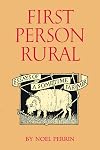
The Washington Post called him a rural essayist in their obituary for him, and said that his writing showed a well-furnished mind. I concur. This was an easy to read, but thought provoking and memorable collection of essays. There was not a lot of how-to information for the hands-on agrarian, but the arm-chair agrarian, as well as the real thing, will find the essays quite satisfactory. He writes about making maple syrup, building fences, making your own fence posts, butter-making, show more snow-mobiles, selling firewood, and the Vermont countryside, which, he says, will soon look just like New Jersey, only with hills. But he could have written with equal interest about almost any country related topic and he'd be worth reading.
According the Post, "Mr. Perrin taught American literature at Dartmouth for nearly 40 years and was an authority on modern poetry, particularly that of his fellow New England farmer, Robert Frost," and it shows in the polished paragraphs of his prose.
One of the marks of a good book, in my opinion, is that when you finish reading it you keep thinking about it. That's true of First Person Rural.
Another mark of a good book is that when you finish it you have added other books to your reading list, and that is also true of First Person Rural. My list is considerably longer, and you can get a glimpse of what it might look like and why over at Loganberry books, where they say that Perrin's
First Person Rural series contain some of the best gentleman farmer anecdotes ever.
If you like the writing of a Fadiman or E.B. White, you'll like the prose of Perrin. If you enjoy the countryside, including the inconveniences and paradoxes of a countryside where covered bridges rest on steel struts and country store owners spend an hour unwrapping packages of crackers to put them in a country barrel, you'll enjoy Perrin.
He only died about three years ago. I wish I had discovered him while he was still living. I would have liked to have written him a thank-you note. show less
According the Post, "Mr. Perrin taught American literature at Dartmouth for nearly 40 years and was an authority on modern poetry, particularly that of his fellow New England farmer, Robert Frost," and it shows in the polished paragraphs of his prose.
One of the marks of a good book, in my opinion, is that when you finish reading it you keep thinking about it. That's true of First Person Rural.
Another mark of a good book is that when you finish it you have added other books to your reading list, and that is also true of First Person Rural. My list is considerably longer, and you can get a glimpse of what it might look like and why over at Loganberry books, where they say that Perrin's
First Person Rural series contain some of the best gentleman farmer anecdotes ever.
If you like the writing of a Fadiman or E.B. White, you'll like the prose of Perrin. If you enjoy the countryside, including the inconveniences and paradoxes of a countryside where covered bridges rest on steel struts and country store owners spend an hour unwrapping packages of crackers to put them in a country barrel, you'll enjoy Perrin.
He only died about three years ago. I wish I had discovered him while he was still living. I would have liked to have written him a thank-you note. show less
Lists
Awards


You May Also Like


Associated Authors
Statistics
- Works
- 20
- Also by
- 6
- Members
- 1,396
- Popularity
- #18,408
- Rating
- 3.9
- Reviews
- 22
- ISBNs
- 49
- Languages
- 1