
Verlyn Klinkenborg
Author of Several Short Sentences About Writing
About the Author
Verlyn Klinkenborg comes form a family of Iowa farmers. He is a member of the editorial board of The New York Times and has written for The New Yorker, Mother Jones, and Harper's. He lives on a small farm in upstate New York.
Image credit: © 2005 Lindy Smith
Works by Verlyn Klinkenborg
A stone house in Utah 1 copy
Introduction to "Walden" 1 copy
Associated Works
Cache Lake Country: Life in the North Woods (1947) — Introduction, some editions — 221 copies, 4 reviews
Tagged
Common Knowledge
- Birthdate
- 1952
- Gender
- male
- Education
- Pomona College
Princeton University - Occupations
- newspaper editor
non-fiction writer - Organizations
- The New York Times
- Awards and honors
- Guggenheim Fellowship (2007)
National Endowment for the Arts Fellowship - Nationality
- USA
- Birthplace
- Meeker, Colorado, USA
- Places of residence
- Meeker, Colorado, USA
Osage, Iowa, USA
California, USA - Associated Place (for map)
- USA
Members
Reviews

"Now, then."
Verlyn Klinkenborg spent four years studying famous English naturalist Gilbert White's writings. I underlined half this book, taking weeks to read it, savoring it. I am tempted to write Mr. Klinkenborg, care of his publisher. I want to tell him, gushingly, all fan-girlish, how moved and spellbound I was by this work, a wonderment.
It takes its place, now and forever, as a beloved favorite among my favorites.
In a nutshell, or if you prefer, in a tortoise shell, Timothy is the show more observer of Mr. Gilbert White. The tables are turned. Both poetic and crass, she calls it like she sees it (Timothy was indeed a female, a fact unknown to White).
She is no anthropomorphic sweetie. Her voice is that a tortoise, a reptile, a hibernator, a sentient being that is distinctly not under the spell of human beings, those dear sweet misguided and obnoxious human beings and their hurly-burly 18th century lives in Selborne.
Like White, Timothy too, is a naturalist, records human species' oddities, rhythms and predictable schedules, is astounded by their awkward physical attributes, and puzzles over their behaviors. Everything so oddly different from Timothy's own.
There is a passage where Timothy wonders what would happen if she simply said, "Now, then" to Mr. White who has such a devoted interest in her, tenderly cares for her, and unlike with the other Selborne humans, they sometimes exchange a brief glance, recognizing mutual consciousnesses. If she did speak, though, how that would change the human perspective! She notes it would require "All the world to be rearranged."
Being an unwitting transplant from her Mediterranean home, she is always a transplant, an alien, a misfit, a survivor, living in a "tiny, miserable kingdom of one," without any kin during her long years in England from 1740 to 1794. 1794 is, when at last, she does not rise from her annual winter hibernation. White had died just the summer before, at age 72. One has the feeling that she was at least that old, having lived who knows how long on the coastal ancient Greek ruins in the south of Turkey, her native land, the land she was physiologically, ecologically bound with, before being swooped up by anonymous human hands and carried worlds away.
Here is a 10 minute interview with Klinkenborg about Timothy. He sounds like I had hoped he would! If Klinkenborg would have made the audiobook himself, I would want to buy, listen, and treasure it as well. Instead they used a female narrator and rightly so, avoiding heaping another injustice of ignorance onto Timothy:
https://www.loe.org/shows/segments.html?programID=06-P13-00006&segmentID=6
489 total GR reviews. Hmph. Not all wonderments are lauded, as would be just. show less
Verlyn Klinkenborg spent four years studying famous English naturalist Gilbert White's writings. I underlined half this book, taking weeks to read it, savoring it. I am tempted to write Mr. Klinkenborg, care of his publisher. I want to tell him, gushingly, all fan-girlish, how moved and spellbound I was by this work, a wonderment.
It takes its place, now and forever, as a beloved favorite among my favorites.
In a nutshell, or if you prefer, in a tortoise shell, Timothy is the show more observer of Mr. Gilbert White. The tables are turned. Both poetic and crass, she calls it like she sees it (Timothy was indeed a female, a fact unknown to White).
She is no anthropomorphic sweetie. Her voice is that a tortoise, a reptile, a hibernator, a sentient being that is distinctly not under the spell of human beings, those dear sweet misguided and obnoxious human beings and their hurly-burly 18th century lives in Selborne.
Like White, Timothy too, is a naturalist, records human species' oddities, rhythms and predictable schedules, is astounded by their awkward physical attributes, and puzzles over their behaviors. Everything so oddly different from Timothy's own.
There is a passage where Timothy wonders what would happen if she simply said, "Now, then" to Mr. White who has such a devoted interest in her, tenderly cares for her, and unlike with the other Selborne humans, they sometimes exchange a brief glance, recognizing mutual consciousnesses. If she did speak, though, how that would change the human perspective! She notes it would require "All the world to be rearranged."
Being an unwitting transplant from her Mediterranean home, she is always a transplant, an alien, a misfit, a survivor, living in a "tiny, miserable kingdom of one," without any kin during her long years in England from 1740 to 1794. 1794 is, when at last, she does not rise from her annual winter hibernation. White had died just the summer before, at age 72. One has the feeling that she was at least that old, having lived who knows how long on the coastal ancient Greek ruins in the south of Turkey, her native land, the land she was physiologically, ecologically bound with, before being swooped up by anonymous human hands and carried worlds away.
Here is a 10 minute interview with Klinkenborg about Timothy. He sounds like I had hoped he would! If Klinkenborg would have made the audiobook himself, I would want to buy, listen, and treasure it as well. Instead they used a female narrator and rightly so, avoiding heaping another injustice of ignorance onto Timothy:
https://www.loe.org/shows/segments.html?programID=06-P13-00006&segmentID=6
489 total GR reviews. Hmph. Not all wonderments are lauded, as would be just. show less
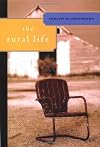
Klinkenborg writes about life in the country with humour, elegant prose and poetic imagery. He is a marvelous observer and every word seems just right. Take this passage about a late spring:
The signs of spring are thrown away, like unheeded hints. Robins mope in the lower branches of a thick-budded magnolia, waiting for the worms of open turf. The red-winged blackbird I heard in a treetop the other day sounded, somehow, like an asterisk. The chorus of birdsong is entirely different than it show more was a few weeks ago, but to me it lacks an objective correlative. The tip of a single crocus would do. The house is full of seedlings, especially basil seedlings, all of them at the two-leaf stage, but hooded and mum. The horses are shedding, and it looks like bad management on their part.
I couldn't write like that if I tried for a hundred years but Klinkenborg writes regularly like this for the New York Times. I get a kick out of the mental picture of some uptight suited lawyer in Manhattan reading his columns. It seems ironic that people who have no idea of real country life have access to his views while people who live in the real country can read them only when they are collected like this. However, maybe New Yorkers need this point of view more than those immersed in the country. show less
The signs of spring are thrown away, like unheeded hints. Robins mope in the lower branches of a thick-budded magnolia, waiting for the worms of open turf. The red-winged blackbird I heard in a treetop the other day sounded, somehow, like an asterisk. The chorus of birdsong is entirely different than it show more was a few weeks ago, but to me it lacks an objective correlative. The tip of a single crocus would do. The house is full of seedlings, especially basil seedlings, all of them at the two-leaf stage, but hooded and mum. The horses are shedding, and it looks like bad management on their part.
I couldn't write like that if I tried for a hundred years but Klinkenborg writes regularly like this for the New York Times. I get a kick out of the mental picture of some uptight suited lawyer in Manhattan reading his columns. It seems ironic that people who have no idea of real country life have access to his views while people who live in the real country can read them only when they are collected like this. However, maybe New Yorkers need this point of view more than those immersed in the country. show less
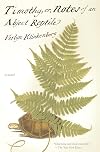
The author of Timothy might well have had more readers if he had not adopted Gilbert White's
unwelcome descriptor.
Timothy is actually an acute observer of humans, nature, and a fun and insightful philosopher.
I miss Timothy!
unwelcome descriptor.
Timothy is actually an acute observer of humans, nature, and a fun and insightful philosopher.
I miss Timothy!
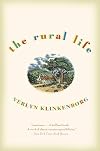
The Rural Life made this city girl almost want to move to a farm. It's a month-by-month journal of rural life, mostly on the author's upstate New York farm but also including some memories of the Iowa farm he grew up on along with others from time spent in the west. I found it charming and the language often beautiful. Here are some excerpts:
(from April) "The signs of spring are thrown away, like unheeded hints. Robins mope in the lower branches of a thick-budded magnolia, waiting for the show more worms of open turf. The red-winged black-bird I heard in a treetop the other day sounded, somehow, like an asterisk."
(from September) I planted the dark side of the garden in squash and pumpkins, and for a few weeks the seedlings grew and the race was on. The French pumpkins have ovetaken the butternut squash, and they are all bearing down in a dead heat on the hops arbor, where the hops have lapped the climbing roses."
(from September) Real frost will come tonight, and it will bring down the garden, which was doing a good job of bringing itself down already. We should stack wood or lift tomato cages or till ground for next year's garlic. Instead we'll sit in the autumn sunshine and enjoy being bone tired, harvesting our fatigue."
"harvesting our fatigue"...isn't that a wonderful phrase? show less
(from April) "The signs of spring are thrown away, like unheeded hints. Robins mope in the lower branches of a thick-budded magnolia, waiting for the show more worms of open turf. The red-winged black-bird I heard in a treetop the other day sounded, somehow, like an asterisk."
(from September) I planted the dark side of the garden in squash and pumpkins, and for a few weeks the seedlings grew and the race was on. The French pumpkins have ovetaken the butternut squash, and they are all bearing down in a dead heat on the hops arbor, where the hops have lapped the climbing roses."
(from September) Real frost will come tonight, and it will bring down the garden, which was doing a good job of bringing itself down already. We should stack wood or lift tomato cages or till ground for next year's garlic. Instead we'll sit in the autumn sunshine and enjoy being bone tired, harvesting our fatigue."
"harvesting our fatigue"...isn't that a wonderful phrase? show less
Awards


You May Also Like


Associated Authors
Statistics
- Works
- 18
- Also by
- 12
- Members
- 1,463
- Popularity
- #17,561
- Rating
- 3.9
- Reviews
- 35
- ISBNs
- 36