
Jane Brox
Author of Brilliant
About the Author
Works by Jane Brox
Associated Works
Tagged
Common Knowledge
- Birthdate
- 1956
- Gender
- female
- Occupations
- university professor
writer - Organizations
- Harvard University
Bowdoin College
Lesley University - Awards and honors
- New England Book Award for nonfiction
John Simon Guggenheim Foundation grant
National Endowment for the Arts grant
Massachusetts Cultural Council grant
Maine Arts Commission grant - Nationality
- USA
- Places of residence
- Brunswick, Maine, USA
- Associated Place (for map)
- Maine, USA
Members
Reviews

I probably added an extra half star because the Brox Farm, setting of this rural chronicle, is about ten miles up the road from my home. I also know that New England is one of the most difficult places in the country to farm, dues to the fact that rocks are one of its primary crops. But the author's seasonal diary is enhanced by the sharing of details about her family and how two generations have tried to sustain what their ancestors planted - adding, subtracting, and catering to a more show more suburban constituency. As in all of Jane Brox's works, the weather and the vistas, the fields and house and barn, the obsolete, rusting farm equipment and the updated farm stand, are all lovingly portrayed. The book is now thirty years old, and I plan to drive up and see what's still standing, hoping that the family and their farm have thrived, but dreading the likelihood that Brox herself may be as old now as her beloved parents and farmhands were in the book. show less

‘Brilliant’ is a pleasing accompaniment to [b:At Day's Close: Night in Times Past|722892|At Day's Close Night in Times Past|A. Roger Ekirch|https://images.gr-assets.com/books/1348957892s/722892.jpg|4067791], [b:The Prize: The Epic Quest for Oil, Money, and Power|169354|The Prize The Epic Quest for Oil, Money, and Power|Daniel Yergin|https://images.gr-assets.com/books/1403025725s/169354.jpg|163531], and [b:Why We Sleep: The New Science of Sleep and Dreams|36234689|Why We Sleep The New show more Science of Sleep and Dreams|Matthew Walker|https://images.gr-assets.com/books/1505329976s/36234689.jpg|55587034], popular histories of nighttime, oil, and sleep respectively. Brox turns the focus instead to unnatural light over the centuries in engaging, episodic fashion. It’s hard to grasp the full import of the changes that artificial light has wrought, and I’m not sure such a short book could ever do so. Although Brox’s perspective is largely US-centric, the book creditably addresses racial and geographical inequalities in access to light. It’s difficult to build a wholly coherent narrative from such a broad global transformation, so the memorable highlights of the book are somewhat scattered. I especially appreciated learning about the history of lighthouses, the first house to have electric lights requiring a coal boiler in the basement, the revolting process of rendering whale oil, and the World’s Columbian Exposition. Brox marshals an impressive range of sources and some lovely quotes, such as this on the 1965 New York blackout:
Indeed, by the end of the book I felt a little ambivalent about artificial light. A chapter on the Lascaux caves and another on light pollution are reminders of how costly our profligacy with light can be. Not that I don’t rely upon it to read past midnight, of course, and am certainly not about to give it up. Still, I loved Brox’s description of the Soft House idea:
The chapters on slow-paced rural electrification are less interesting, as to the European reader they merely demonstrate the baffling American reluctance to intervene in manifestly dysfunctional free markets. Otherwise, though, this is a fascinating compendium of light-related social insights. show less
The moonlight lay on the streets like thick snow, and we had a curious, persistent feeling that we were leaving footprints in it. Something was odd about buildings and corners in this beautiful light. The city presented a tilted aspect, and ever our fellow pedestrians, chattering with implacable cheerfulness, appeared foreshortened as they passed; they made us think of people running downhill. It was a bloc more before we understood: The shadows, for once, all fell in the same direction - away from the easterly, all-illuminating moon… We were in a night forest and for a change, home lay not merely uptown but north.
Indeed, by the end of the book I felt a little ambivalent about artificial light. A chapter on the Lascaux caves and another on light pollution are reminders of how costly our profligacy with light can be. Not that I don’t rely upon it to read past midnight, of course, and am certainly not about to give it up. Still, I loved Brox’s description of the Soft House idea:
A flexible network made of multiple, adaptable, and co-operative light-emitting textiles that can be touched, held, and used by homeowners, according to their needs. [...] Translucent moveable curtains along the perimeter convert sunlight into energy during the day, shading the house in summer and creating an insulating air layer in winter. Folded downward, a central curtain establishes a habitable off-the-grid energy harvesting room. Folded upward, this luminous curtain becomes a suspended soft chandelier.
The chapters on slow-paced rural electrification are less interesting, as to the European reader they merely demonstrate the baffling American reluctance to intervene in manifestly dysfunctional free markets. Otherwise, though, this is a fascinating compendium of light-related social insights. show less

The "social history" promised by the subtitle of Silence is pretty limited in scope. Author Jane Brox focuses particularly on two environments: prisons and monasteries. Despite a brief engagement with Thoreau and some short tangential passages about the development of silent reading, silence in Quakerism, and so forth, institutional penitence dominates the account.
The fourth of the five parts is dedicated especially to the social effects of gender on expectations of silence. An extensive show more discussion of female silencing and related judicial punishments leads into the women's particulars of incarceration and monasticism. Implicitly, silence is given to be a sign of obedient virtue in women for the history treated, but there is no clear sign of how any masculine silence compares or contrasts with it (let alone the silences imposed on exceptional gender and gender resistance).
Brox's prose is generally lucid and occasionally beautiful. The history is leavened with reflexive anecdotes regarding her research experience and significant digressions about architecture. A considerable portion of the book is given over to thoughts from and accounts of the twentieth-century celebrity monk Thomas Merton.
I learned some history in the course of this reading. It was surprising that I was a little less ignorant of the ancient and medieval aspects of monasticism than I was of the modern evolution of the US penitentiary. But in any case, I never really arrived at the understanding of the social role of silence that the subtitle indicated would be on offer. show less
The fourth of the five parts is dedicated especially to the social effects of gender on expectations of silence. An extensive show more discussion of female silencing and related judicial punishments leads into the women's particulars of incarceration and monasticism. Implicitly, silence is given to be a sign of obedient virtue in women for the history treated, but there is no clear sign of how any masculine silence compares or contrasts with it (let alone the silences imposed on exceptional gender and gender resistance).
Brox's prose is generally lucid and occasionally beautiful. The history is leavened with reflexive anecdotes regarding her research experience and significant digressions about architecture. A considerable portion of the book is given over to thoughts from and accounts of the twentieth-century celebrity monk Thomas Merton.
I learned some history in the course of this reading. It was surprising that I was a little less ignorant of the ancient and medieval aspects of monasticism than I was of the modern evolution of the US penitentiary. But in any case, I never really arrived at the understanding of the social role of silence that the subtitle indicated would be on offer. show less
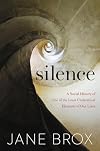
What do prisons and monasteries have in common? This is the unexpected and unusual premise of Jane Brox’s Silence. She recreates the history of prisons in England and America, and puts the reader in the place of a prisoner, to feel the punishment – endless years of it. Then she crosses over to Christian monasteries, showing why they exist at all, how they spread, and the extra severe burden placed on women in their own monasteries.
US prisons were designed to be hellish. Prisoners were show more hooded on their way in so they could not know where they were or the layout of the building. They stayed in their tiny cells, with little or no light, and nothing to read but the bible. Rehabilitation was a 20th century notion, all but abandoned today, as private sector prisons use inmates as slave labor, and have deals with their states to maintain them at least 90% full. So it is in the interest of both state and operator to keep the bodies coming back for more. Today, however, prisoners live together, eat together, and talk. Brox does not venture into this noisier state of affairs.
Instead, she focuses on Thomas Merton, a monk with a pencil and a typewriter. He wrote books on monastic life in the middle of the 20th century that not only became bestsellers, but were smuggled into prisons where inmates could put their own lives into perspective. This is a neat link of the two unlikely axes of this book. A disproportionate amount of Silence is handed over to him and his thoughts.
There is a large difference between the silence of prisons and that of monasteries. For all their silence, monasteries are communities of likeminded men, who choose to be there. They have daily routines that fill their lives. They sing hymns together. They just don’t chat. They signal a lot instead. That is very different from 19th century prisons, where men were sent to be punished. They were not allowed to make any noise, on pain of further punishment, had no community or even contact with other prisoners, and did not even know who their neighbors were. They were totally isolated. With little or nothing to do, they could and did go stir-crazy. Sending them back into complex and noisy society was an additional cruelty foisted upon them. That is the power of silence as punishment.
Brox does not delve much into the psyches of those who thrill to silence – those who go for weeks and months without uttering a word – and don’t even notice it. Think of lighthouse keepers, forest fire watchers, seal hunters, desert dwellers. As long as they are absorbed by their environment and their tasks within it, they are not just at peace, but flourish. She briefly mentions Thoreau, not much of a hermit, as he could still hear the churchbells from town.
Brox notes how a life of silence enhances the ability to hear and perceive. People hear details in a silent environment that are totally lost in a noisy one. When I first moved to New York City, I could discern more than twenty sources of sound just out the front door. Soon, it just became noise, and then, not even noticed. We lose a tremendous amount of processing in noise; there is much to be said for a life in a silent environment. On the other hand, forced, unwanted silence is killer for a social animal. Brox tries to bridge that gap, though she doesn’t lock it down.
David Wineberg show less
US prisons were designed to be hellish. Prisoners were show more hooded on their way in so they could not know where they were or the layout of the building. They stayed in their tiny cells, with little or no light, and nothing to read but the bible. Rehabilitation was a 20th century notion, all but abandoned today, as private sector prisons use inmates as slave labor, and have deals with their states to maintain them at least 90% full. So it is in the interest of both state and operator to keep the bodies coming back for more. Today, however, prisoners live together, eat together, and talk. Brox does not venture into this noisier state of affairs.
Instead, she focuses on Thomas Merton, a monk with a pencil and a typewriter. He wrote books on monastic life in the middle of the 20th century that not only became bestsellers, but were smuggled into prisons where inmates could put their own lives into perspective. This is a neat link of the two unlikely axes of this book. A disproportionate amount of Silence is handed over to him and his thoughts.
There is a large difference between the silence of prisons and that of monasteries. For all their silence, monasteries are communities of likeminded men, who choose to be there. They have daily routines that fill their lives. They sing hymns together. They just don’t chat. They signal a lot instead. That is very different from 19th century prisons, where men were sent to be punished. They were not allowed to make any noise, on pain of further punishment, had no community or even contact with other prisoners, and did not even know who their neighbors were. They were totally isolated. With little or nothing to do, they could and did go stir-crazy. Sending them back into complex and noisy society was an additional cruelty foisted upon them. That is the power of silence as punishment.
Brox does not delve much into the psyches of those who thrill to silence – those who go for weeks and months without uttering a word – and don’t even notice it. Think of lighthouse keepers, forest fire watchers, seal hunters, desert dwellers. As long as they are absorbed by their environment and their tasks within it, they are not just at peace, but flourish. She briefly mentions Thoreau, not much of a hermit, as he could still hear the churchbells from town.
Brox notes how a life of silence enhances the ability to hear and perceive. People hear details in a silent environment that are totally lost in a noisy one. When I first moved to New York City, I could discern more than twenty sources of sound just out the front door. Soon, it just became noise, and then, not even noticed. We lose a tremendous amount of processing in noise; there is much to be said for a life in a silent environment. On the other hand, forced, unwanted silence is killer for a social animal. Brox tries to bridge that gap, though she doesn’t lock it down.
David Wineberg show less
Lists
Awards


You May Also Like


Associated Authors
Statistics
- Works
- 8
- Also by
- 2
- Members
- 562
- Popularity
- #44,483
- Rating
- 3.6
- Reviews
- 11
- ISBNs
- 28