
Ethel Spector Person (1934–2012)
Author of Dreams of Love and Fateful Encounters: The Power of Romantic Passion
About the Author
Ethel S. Person is Professor of Clinical Psychiatry at the College of Physicians and Surgeons, Columbia University.
Image credit: Photo by Andrea Mohin for The New York Times
Works by Ethel Spector Person
Associated Works
Tagged
Common Knowledge
- Birthdate
- 1934-12-16
- Date of death
- 2012-10-16
- Gender
- female
- Education
- University of Chicago (BA|1956)
New York University College of Medicine (MD|1960) - Occupations
- psychiatrist
professor (clinical psychiatry) - Organizations
- Columbia University (Center for Psychoanalytic Training and Research)
Columbia University (College of Physicians and Surgeons) - Short biography
- Ethel Spector Person was born in Louisville, Kentucky. Her father Louis Spector owned a speakeasy, where she observed uninhibited, alcohol-fueled, sexually-charged behavior. Her mother Anna Zimmerman was a mathematician with a master’s degree, unusual for a woman at that time. Ethel earned a bachelor's degree from the University of Chicago in 1956 and a medical degree from New York University College of Medicine in 1960. She married three times, to engineer Allen Person; psychiatrist Barry Sherman; and lawyer Stanley Diamond.
Dr. Person became a psychiatrist and with her colleague Dr. Lionel Ovesey studied the development of transgender people. She also researched the role of sexual fantasies in people's lives, love triangles, and women's sexual needs.
Dr. Person wrote and edited several specialized studies of Freud. Many of her professional books and texts are still in use, including The American Psychiatric Publishing Textbook of Psychoanalysis, which she edited with Arnold M. Cooper and Glen O. Gabbard.
She was the co-editor of Women--Sex and Sexuality, with Catharine R. Stimpson (1980) and Passionate Attachments: Thinking About Love, co-edited with Willard Gaylin (1988). She also wrote for general interest publications, and was the author of four books accessible to general audiences: By Force of Fantasy: How We Make Our Lives, (1996); The Sexual Century (1999); Feeling Strong: The Achievement of Authentic Power (2002); and Dreams of Love and Fateful Encounters: The Power of Romantic Passion (2006). - Cause of death
- Alzheimer's disease
- Nationality
- USA
- Birthplace
- Louisville, Kentucky, USA
- Places of residence
- New York, New York, USA
- Associated Place (for map)
- USA
Members
Reviews

This was a wonderful book, an objective yet sympathetic and rich effort to look at romantic love as a psychological phenomenon, with many touching and fascinating insights.
On Freud's Group Psychology and the Analysis of the Ego (Contemporary Freud: Turning Points and Critical Issues) by Ethel Spector Person
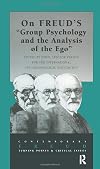
This is the sixth volume in the series "Contemporary Freud: Turning Points and Critical Issues," published with the International Psychoanalytical Association. Each book in the series presents a classic essay by Freud and discussions of the essay by prominent psychoanalytic teachers and analysts who differ in emphases and who come from different theoretical backgrounds and geographical locations.
Group Psychology and the Analysis of the Ego (1921) initiated new directions in psychoanalytic show more theorizing by dramatizing the inner valence of group life for the individual in terms of intrapsychic processes such as identification and the vicissitudes of the ego ideal. At a time of transition in psychoanalytic theory from one-person to two-person psychology, this text provides an opportunity to recall that Freud himself made this turn many decades ago. Nor is the work without wider significance: Freud presents an analysis of the roots of group identity, of the contagions of panic and fanaticism, and of the submission of the individual to the leader that has only gained cogency with each passing decade of the troubled twentieth century.
Following an introduction to the volume by Ethel Spector Person and a summary and abridgment of Freud's text by John Kerr, the contributors to this volume--Didier Anzieu, Robert Caper, Abraham Zaleznik, Andre Haynal, Ernst Falzeder, Yolanda Gampel, and Claudio Laks Eisirik--provide commentaries on Freud's work, explicating the multiple ways in which Freud's insights continue to illuminate the irrational dynamics to which all groups, including psychoanalytic institutions, are prey. Their essays place Freud's monograph in historical context, explore the ramifications of Freud's expansion of the intrapsychic world to account for group behavior, reconsider the distinctions between groups based on rational self-interest and what Bion called "basic assumption groups," and illuminate how trauma and the search for redeeming illusions shape the destinies of collectivities even in the face of the most determined efforts at imposing rationality. Serving as both an introduction to, and an elegant expansion of, Freud's text, this volume demonstrates the role of psychoanalytic hypotheses in obtaining deeper insight into the tectonic shifts in group psychology underlying today's mass society. show less
Group Psychology and the Analysis of the Ego (1921) initiated new directions in psychoanalytic show more theorizing by dramatizing the inner valence of group life for the individual in terms of intrapsychic processes such as identification and the vicissitudes of the ego ideal. At a time of transition in psychoanalytic theory from one-person to two-person psychology, this text provides an opportunity to recall that Freud himself made this turn many decades ago. Nor is the work without wider significance: Freud presents an analysis of the roots of group identity, of the contagions of panic and fanaticism, and of the submission of the individual to the leader that has only gained cogency with each passing decade of the troubled twentieth century.
Following an introduction to the volume by Ethel Spector Person and a summary and abridgment of Freud's text by John Kerr, the contributors to this volume--Didier Anzieu, Robert Caper, Abraham Zaleznik, Andre Haynal, Ernst Falzeder, Yolanda Gampel, and Claudio Laks Eisirik--provide commentaries on Freud's work, explicating the multiple ways in which Freud's insights continue to illuminate the irrational dynamics to which all groups, including psychoanalytic institutions, are prey. Their essays place Freud's monograph in historical context, explore the ramifications of Freud's expansion of the intrapsychic world to account for group behavior, reconsider the distinctions between groups based on rational self-interest and what Bion called "basic assumption groups," and illuminate how trauma and the search for redeeming illusions shape the destinies of collectivities even in the face of the most determined efforts at imposing rationality. Serving as both an introduction to, and an elegant expansion of, Freud's text, this volume demonstrates the role of psychoanalytic hypotheses in obtaining deeper insight into the tectonic shifts in group psychology underlying today's mass society. show less
You May Also Like


Associated Authors
Statistics
- Works
- 11
- Also by
- 1
- Members
- 391
- Popularity
- #61,940
- Rating
- 3.8
- Reviews
- 2
- ISBNs
- 48
- Languages
- 3
- Favorited
- 1