
Leigh A. Bortins
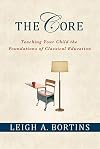
Author of The Core: Teaching Your Child the Foundations of Classical Education
About the Author
Leigh A. Bortins is the founder and CEO of Classical Conversations, Inc. and host of the weekly radio show, Leigh! for Lunch. She lectures about the importance of home education nationwide. She lives in West End, North Carolina.
Works by Leigh A. Bortins
Tagged
Common Knowledge
- Gender
- female
- Education
- University of Michigan
Gordon-Conwell Theological Seminary (DMin) - Occupations
- aerospace engineer
- Organizations
- Classical Conversations
- Places of residence
- Pinehurst, North Carolina, USA
- Map Location
- USA
Members
Reviews
When the wife checks out the book from the library to read and says that you will read it too, you pick it up and finish it in a night. That's just what homeschool dads do.
As part of the Classical Conversations (CC) community, we thought it was important to read the founder's thinking on what led her to embrace classical education. Nothing in this book is going to go into the CC model specifically, but elements of what CC does is expressed here. This isn't a book that sells CC to the reader, show more but to put forth why classical education should be embraced and what it looks like in the "from home" homeschool setting.
That is how the book is split up - the problem and the solution. Mixed in is Bortins' personal journey and what would lead her to develop CC. She identifies the problem of modern schooling, especially government schooling, and puts forth the case that the Prussian model isn't working. The fact that this was published in 201,0 and seeing the stats in the book paints a sad picture of what 15 more years and government lockdowns for two years have done to a majority of American schoolchildren. Bortins talks about the solution being the classical Western model and always at the foundation is the Christian worldview and the Bible as the foundational support. What the book doesn't do, and this is what I see in many classical education primer books, is make the case for WHY EXACTLY the classical model is the way to go. Mostly it's the embrace of it being classical (as in old and what was done before Horace Mann came onto the scene). However, I do have to realize that the audience is probably going to be moms and/or homeschool moms and so the theory is less important and the practical will be emphasized.
That is definitely what one gets in the second half of the book, and it covers the seven main subjects and the use of the trivium as understood by Dorothy Sayers. While the coverage isn't step by step, there is enough to build upon, and some good books cited that would help anyone get started or to check out the model further. The two sections, and especially this section, aren't divorced from each other, but there's still a touchpoint to discuss why the "from home" homeschooling is the way to think about it and what the classical model affords a child, a parent-teacher, and the holistic household.
Overall, this is a good primer, and it's nice that it's not just a sales book to pump Classical Conversations. That can all be done after reading the book or checking out other classical models and having the in-house conversations (hopefully not fighting) there. Final Grade - B show less
As part of the Classical Conversations (CC) community, we thought it was important to read the founder's thinking on what led her to embrace classical education. Nothing in this book is going to go into the CC model specifically, but elements of what CC does is expressed here. This isn't a book that sells CC to the reader, show more but to put forth why classical education should be embraced and what it looks like in the "from home" homeschool setting.
That is how the book is split up - the problem and the solution. Mixed in is Bortins' personal journey and what would lead her to develop CC. She identifies the problem of modern schooling, especially government schooling, and puts forth the case that the Prussian model isn't working. The fact that this was published in 201,0 and seeing the stats in the book paints a sad picture of what 15 more years and government lockdowns for two years have done to a majority of American schoolchildren. Bortins talks about the solution being the classical Western model and always at the foundation is the Christian worldview and the Bible as the foundational support. What the book doesn't do, and this is what I see in many classical education primer books, is make the case for WHY EXACTLY the classical model is the way to go. Mostly it's the embrace of it being classical (as in old and what was done before Horace Mann came onto the scene). However, I do have to realize that the audience is probably going to be moms and/or homeschool moms and so the theory is less important and the practical will be emphasized.
That is definitely what one gets in the second half of the book, and it covers the seven main subjects and the use of the trivium as understood by Dorothy Sayers. While the coverage isn't step by step, there is enough to build upon, and some good books cited that would help anyone get started or to check out the model further. The two sections, and especially this section, aren't divorced from each other, but there's still a touchpoint to discuss why the "from home" homeschooling is the way to think about it and what the classical model affords a child, a parent-teacher, and the holistic household.
Overall, this is a good primer, and it's nice that it's not just a sales book to pump Classical Conversations. That can all be done after reading the book or checking out other classical models and having the in-house conversations (hopefully not fighting) there. Final Grade - B show less
Informative book on the how tos of a classical education. Bortins explains in detail the grammar of each subject that she feels should be learned and why.
While I found the book informative and worth the read, I was surprised and disappointed at a couple of places. She included some stats comparing the number of engineers being produced in China compared to the U.S. While the numbers were much larger for China, they were proportionally the same as the U.S. when population was taken into show more account. Seeing how it was one of her arguments for why we need a classical education…
Another example that left me thinking I had been duped was at the end of a long narrative about how her family uses every day experiences to talk about science. At the end of a long day when her family was sleeping outside, her son supposedly awoke and said, "Look, Mom, the north star." She then writes, "I smiled as I looked to the north and saw the bright star…" Maybe her classical education has failed her at this point, or maybe the whole story was made up. The north star is hardly bright, even out in the country away from city lights. show less
While I found the book informative and worth the read, I was surprised and disappointed at a couple of places. She included some stats comparing the number of engineers being produced in China compared to the U.S. While the numbers were much larger for China, they were proportionally the same as the U.S. when population was taken into show more account. Seeing how it was one of her arguments for why we need a classical education…
Another example that left me thinking I had been duped was at the end of a long narrative about how her family uses every day experiences to talk about science. At the end of a long day when her family was sleeping outside, her son supposedly awoke and said, "Look, Mom, the north star." She then writes, "I smiled as I looked to the north and saw the bright star…" Maybe her classical education has failed her at this point, or maybe the whole story was made up. The north star is hardly bright, even out in the country away from city lights. show less
Informative book on the how tos of a classical education. Bortins explains in detail the grammar of each subject that she feels should be learned and why.
While I found the book informative and worth the read, I was surprised and disappointed at a couple of places. She included some stats comparing the number of engineers being produced in China compared to the U.S. While the numbers were much larger for China, they were proportionally the same as the U.S. when population was taken into show more account. Seeing how it was one of her arguments for why we need a classical education…
Another example that left me thinking I had been duped was at the end of a long narrative about how her family uses every day experiences to talk about science. At the end of a long day when her family was sleeping outside, her son supposedly awoke and said, "Look, Mom, the north star." She then writes, "I smiled as I looked to the north and saw the bright star…" Maybe her classical education has failed her at this point, or maybe the whole story was made up. The north star is hardly bright, even out in the country away from city lights. show less
While I found the book informative and worth the read, I was surprised and disappointed at a couple of places. She included some stats comparing the number of engineers being produced in China compared to the U.S. While the numbers were much larger for China, they were proportionally the same as the U.S. when population was taken into show more account. Seeing how it was one of her arguments for why we need a classical education…
Another example that left me thinking I had been duped was at the end of a long narrative about how her family uses every day experiences to talk about science. At the end of a long day when her family was sleeping outside, her son supposedly awoke and said, "Look, Mom, the north star." She then writes, "I smiled as I looked to the north and saw the bright star…" Maybe her classical education has failed her at this point, or maybe the whole story was made up. The north star is hardly bright, even out in the country away from city lights. show less
I've been very eager to get my hands on this book. I've never seen it on a good sale so I've always told myself, maybe later. Then I discovered the library had it, so I figured I'd pursue it there. This morning when I was headed to pick it up from the holds desk a friend listed it for sale on-line and I got very excited. I decided to borrow it from the library anyway just to see how excited I could get.
Well, I'm not excited anymore. I read The Conversation last week for review and knew I show more wanted to read The Core. (Think Core = Elementary, Question = middle, and Conversation = high school) I really enjoyed 'The Conversation' but I wasn't enthralled with The Core. It has the argument of what and why I'm doing what I am. But it doesn't have the meat that I was looking for.
In general I can tell you that I am extremely enthusiastic for the Classical Conversations Act & Facts History and Science Cards and love using them in our homeschool. I also have really enjoyed going through The Conversation and thinking toward the future with a lot of practical advice. Yet The Core left me unfulfilled and if you're trying to find a Classical Christian Education guide while considering the elementary primary years I do not think that this is it. I much prefer the Latin Centered Curriculum and The Well-Trained Mind, 3rd edition. Climbing Parnassus is next on my to-read list. show less
Well, I'm not excited anymore. I read The Conversation last week for review and knew I show more wanted to read The Core. (Think Core = Elementary, Question = middle, and Conversation = high school) I really enjoyed 'The Conversation' but I wasn't enthralled with The Core. It has the argument of what and why I'm doing what I am. But it doesn't have the meat that I was looking for.
In general I can tell you that I am extremely enthusiastic for the Classical Conversations Act & Facts History and Science Cards and love using them in our homeschool. I also have really enjoyed going through The Conversation and thinking toward the future with a lot of practical advice. Yet The Core left me unfulfilled and if you're trying to find a Classical Christian Education guide while considering the elementary primary years I do not think that this is it. I much prefer the Latin Centered Curriculum and The Well-Trained Mind, 3rd edition. Climbing Parnassus is next on my to-read list. show less
You May Also Like


Statistics
- Works
- 16
- Members
- 1,044
- Popularity
- #24,665
- Rating
- 4.0
- Reviews
- 6
- ISBNs
- 15
- Languages
- 1