

Christopher Hamlin
Author of Cholera: The Biography (Biographies of Diseases)
About the Author
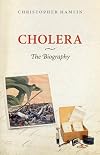
Christopher Hamlin is a professor of history as the University of Notre Dame. He is the author of Public Health and Social Justice in the Age of Chadwick: Britain, 18001854, and Cholera: The Biography.
Works by Christopher Hamlin
Tagged
Common Knowledge
- Gender
- male
- Short biography
- Christopher Hamlin is an historian of science, technology, and medicine, Professor in the Department of History and the Program in the History and Philosophy of Science at the University of Notre Dame and Honorary Professor at the London School of Hygiene and Tropical Medicine.
His research focuses broadly on the application of knowledge to public needs, mainly in areas relating to health. In nearly six dozen articles and several books, he has examined concepts of disease and disease causation, forensic science and expert disagreement, the assessment of water and air, the regulation of environmental nuisances, social epidemiology (focusing on issues of hunger and exposure), alternative agricultures, and cultural and religious concepts of nature. He is author of A Science of Impurity (1990), a history of concepts of water purity and purification, Public Health and Social Justice in the Age of Chadwick: Britain, 1800-1854 (1998), a history of the early public health movement, Cholera: the Biography (2009), which was honored as one of the British Medical Association's "Highly Commended" books in 2010, and More than HOT: A Short History of Fever (2014). Current projects include fever and hunger in the Celtic lands and a study of the natural theological foundations of ecological ideas.
http://nd.academia.edu/christopherham...
Members
Reviews

History is much more than naming Kings, Presidents, and Generals. In “Cholera : The Biography” Christopher Hamlin looks at the ‘life’ of the disease that came to be known as Cholera and along the way manages to show us the development of medical science over the last two hundred years. Before Cholera there was cholera, western medicines name for the “stomach flu”, a 24 hour bout of diarrhea. In 1817 British physicians serving in colonial India noticed a new cholera. It came on show more with a feeling of unease then came violent vomiting and diarrhea, muscle cramps, the patient’s skin became bluish and their heartbeat unsteady and, in most cases, they died. All with within a single day.
Western medicine, essentially the same medicine practiced by Hippocrates and Galen in ancient Greece, saw disease as the imbalance of the bodies “humors” brought on by foul odors, a change in the air, or, possibly, sin. Vomiting and diarrhea were good things, the body trying to restore balance. Cholera in India was obviously a result of “filth”, a catchall term for “not like us”. As cholera came closer to Paris and London, it became obvious, to the physicians of Paris and London, that the cause was less “filth” and more the judgement of God.
Hamlin covers the changing attitudes toward cholera, the evolving and devolving of cholera treatment by physicians as they groped for treatments and causes and fought to maintain their status and egos. He also looks at the range of government responses to the epidemics, dancing between protecting population and protecting trade.
Cholera was the subject of what was possibly the first “disease biography”, Norman Longmate’s “King Cholera : The Biography of a Disease”, in 1966 and it has been featured in other medical histories since then. I now understand why. It spans, and may have helped initiate, the scientific revolution in medical science. At the time Longmate wrote his work it was seen as a defeated disease. We had cures, we knew the cause of it, we had preventive measures that we knew worked. However the physicians of 1817 also knew that disease was brought on by foul odors, a change in the air, or, possibly, sin. Advances in medical science have changed 1960s ideas almost as much as 1960s science changed 1817 ideas.
Hamlin’s writing is often fun to read, as when he is explaining how the authorities believed that since “a feeling of unease” was the first symptom reported they believed that a “feeling of unease” may actually be the cause of cholera. “Worry about fear (or fear of worry) was often at the heart of these {governments}efforts. You might make hysteria a crime, as McGrew notes of Russia, but any attempt to stop it would cause it.” A little science background helps but is not really necessary. At times having a strong stomach helps, there is much discussion of fecal-oral transmission and, obviously, diarrhea.
I learned quite a bit about the advancement of science in the 19th and 20th centuries from this book. Even better I came to understand the present day better after Hamlin compared the debate over the causes of cholera to the climate change debate. Neither side is likely to be convinced until the other essentially proves a negative. “Cholera : The Biography” is perhaps the most enlightening history I have read in the last year. show less
Western medicine, essentially the same medicine practiced by Hippocrates and Galen in ancient Greece, saw disease as the imbalance of the bodies “humors” brought on by foul odors, a change in the air, or, possibly, sin. Vomiting and diarrhea were good things, the body trying to restore balance. Cholera in India was obviously a result of “filth”, a catchall term for “not like us”. As cholera came closer to Paris and London, it became obvious, to the physicians of Paris and London, that the cause was less “filth” and more the judgement of God.
Hamlin covers the changing attitudes toward cholera, the evolving and devolving of cholera treatment by physicians as they groped for treatments and causes and fought to maintain their status and egos. He also looks at the range of government responses to the epidemics, dancing between protecting population and protecting trade.
Cholera was the subject of what was possibly the first “disease biography”, Norman Longmate’s “King Cholera : The Biography of a Disease”, in 1966 and it has been featured in other medical histories since then. I now understand why. It spans, and may have helped initiate, the scientific revolution in medical science. At the time Longmate wrote his work it was seen as a defeated disease. We had cures, we knew the cause of it, we had preventive measures that we knew worked. However the physicians of 1817 also knew that disease was brought on by foul odors, a change in the air, or, possibly, sin. Advances in medical science have changed 1960s ideas almost as much as 1960s science changed 1817 ideas.
Hamlin’s writing is often fun to read, as when he is explaining how the authorities believed that since “a feeling of unease” was the first symptom reported they believed that a “feeling of unease” may actually be the cause of cholera. “Worry about fear (or fear of worry) was often at the heart of these {governments}efforts. You might make hysteria a crime, as McGrew notes of Russia, but any attempt to stop it would cause it.” A little science background helps but is not really necessary. At times having a strong stomach helps, there is much discussion of fecal-oral transmission and, obviously, diarrhea.
I learned quite a bit about the advancement of science in the 19th and 20th centuries from this book. Even better I came to understand the present day better after Hamlin compared the debate over the causes of cholera to the climate change debate. Neither side is likely to be convinced until the other essentially proves a negative. “Cholera : The Biography” is perhaps the most enlightening history I have read in the last year. show less
Doordat we dit boek nu pas lazen-na bijna twee jaar Corona- is veel herkenbaar.
Cholera zorgde voor een pandemie vanaf de 19e eeuw. De oorzaken waren velerlij. Eigenlijk duurde het tot recent voor goed werd begrepen wat de oorsprong van de Cholera bacterie was. Natuurlijk speelde zoals vandaag met het Coronavirus de toegenomen mobiliteit mee.
Alle aspecten komen aan bod in deze geschiedenis van de Cholera. Het voorkomen, het genezen, de zoektocht naar de oorzaak van de ziekte, het zoeken show more naar een vaccin en de door de overheid opgelegde maatregelen zoals quarantaine, beperken van de godsdienstvrijheid en het al dan niet invoeren van sanitaire vebeteringen.
Toen tenslotte een vaccin ter beschikking kwam en het als een gemakkelijkheidsoplossing diende, werd het vlug weer afgevoerd omdat het een vals gevoel van veiligheid creëerde. Bovendien werd het genezen goedkoper dan het voorkomen.
Het boek is zeer interessant, vooral gezien de huidige pandemie. show less
Cholera zorgde voor een pandemie vanaf de 19e eeuw. De oorzaken waren velerlij. Eigenlijk duurde het tot recent voor goed werd begrepen wat de oorsprong van de Cholera bacterie was. Natuurlijk speelde zoals vandaag met het Coronavirus de toegenomen mobiliteit mee.
Alle aspecten komen aan bod in deze geschiedenis van de Cholera. Het voorkomen, het genezen, de zoektocht naar de oorzaak van de ziekte, het zoeken show more naar een vaccin en de door de overheid opgelegde maatregelen zoals quarantaine, beperken van de godsdienstvrijheid en het al dan niet invoeren van sanitaire vebeteringen.
Toen tenslotte een vaccin ter beschikking kwam en het als een gemakkelijkheidsoplossing diende, werd het vlug weer afgevoerd omdat het een vals gevoel van veiligheid creëerde. Bovendien werd het genezen goedkoper dan het voorkomen.
Het boek is zeer interessant, vooral gezien de huidige pandemie. show less
Statistics
- Works
- 6
- Members
- 72
- Popularity
- #243,042
- Rating
- 4.0
- Reviews
- 2
- ISBNs
- 17