
Gary Paulsen (1939–2021)
Author of Hatchet
About the Author
Gary Paulsen was born on May 17, 1939 in Minnesota. He was working as a satellite technician for an aerospace firm in California when he realized he wanted to be a writer. He left his job and spent the next year in Hollywood as a magazine proofreader. His first book, Special War, was published in show more 1966. He has written more than 175 books for young adults including Brian's Winter, Winterkill, Harris and Me, Woodsong, Winterdance, The Transall Saga, Soldier's Heart, This Side of Wild, and Guts: The True Stories Behind Hatchet and the Brian Books. Hatchet, Dogsong, and The Winter Room are Newbery Honor Books. He was the recipient of the 1997 Margaret A. Edwards Award for his lifetime achievement in writing for young adults. (Bowker Author Biography) show less
Disambiguation Notice:
Gary Paulsen (1939-2021) was a popular writer of children's literature. He also wrote adult nonfiction (Winterdance: The Fine Madness of Running the Iditarod).
Series
Works by Gary Paulsen
Liar, Liar: The Theory, Practice and Destructive Properties of Deception (2011) 808 copies, 16 reviews
The Amazing Life of Birds: The Twenty-Day Puberty Journal of Duane Homer Leech (2006) 105 copies, 6 reviews
The Glass Cafe: Or the Stripper and the State; How My Mother Started a War with the System That Made Us Kind of Rich and a Little Bit Famous (2000) 98 copies, 11 reviews
Complete Hatchet Set (Hatchet~The River~Brian's Winter~Brian's Return~Brian's Hunt) (1996) 22 copies
Kevin Pack : 3 Book Pack By Gary Paulsen : Liar, Liar / Flat Broke / Crush (Kevin Trio) (2013) 4 copies
A Lesson plan book for Woodsong (Innovations, experiencing literature in the classroom) (1991) 4 copies
Allen in der Wildnis 1 copy
Frankie le Kid 1 copy
Dog Song 1 copy
This Side of Wild 1 copy
Sekira rešitve 1 copy
Lawn Boy - 3 1 copy
Pied Piper 1 copy
The building a new, buying an old, remodeling a used, comprehensive home and shelter how-to-do-it book (1976) 1 copy
Books 1 copy
Lawn Boy - 1 1 copy
Lawn Boy - 2 1 copy
Work Song 1 copy
Associated Works
Tagged
Common Knowledge
- Legal name
- Paulsen, Gary Melvin
- Birthdate
- 1939-05-17
- Date of death
- 2021-10-13
- Gender
- male
- Education
- Bemidji State University
University of Colorado - Occupations
- children's book author
- Organizations
- United States Army
- Awards and honors
- Margaret A. Edwards Award (1997)
Regina Medal (1995) - Relationships
- Paulsen, Ruth Wright (wife)
- Cause of death
- cardiac arrest
- Nationality
- USA
- Birthplace
- Minneapolis, Minnesota, USA
- Places of residence
- California, USA
Minnesota, USA
New Mexico, USA
Philippines - Place of death
- Tularosa, New Mexico, USA
- Map Location
- Minnesota, USA
- Disambiguation notice
- Gary Paulsen (1939-2021) was a popular writer of children's literature. He also wrote adult nonfiction (Winterdance: The Fine Madness of Running the Iditarod).
Members
Reviews
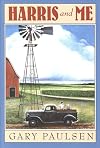
Banned Book Week! Time to read some banned books. First up is this curious little item from the mid-90s, challenged apparently for its language.
A nameless 11-year-old narrator is passed from relative to relative in the 1950s (Probably? Reference is made to a 1949 truck.) because his parents are a pair of hopeless drunks. The latest stop is a farm in Minnesota (Probably? There is reference to someone going 150 miles west to North Dakota.) where we are introduced to Harris, the poster child show more for The Dangerous Book for Boys. The book flap references Tom Sawyer and Huck Finn, and like them, Harris is chock full of mischief, willfulness and life-threatening plans for play that would probably make helicopter parents faint at the mere thought of them. He drops racist references to Japanese people as casually as Huck used the N-word. Harris also uses the word "damn" liberally, which I guess some people find offensive? And there are references to nudie pics.
So, should it be banned? No. Might it be inappropriate for young readers? Um, yeah. If I were reading it to a child, I'd feel obliged to have a lot of side discussions to put a lot of things into context of the historical framework.
But, hey, I'm an adult, and I grew up on a farm that was testosterone heavy with two older brothers, a father and a live-in uncle and had my own share of stupidly dangerous episodes of play and work, as well as exposure to racism, profanity, and pornography, so it was pretty easy to relate.
The hijinks are amusing enough in their boys-will-be-boys way with plenty of groin-injuring slapstick. The ending, like the setting and protagonist's name, seems needlessly vague, but its acceptable enough in its what-do-you-think-happened-next way that depends entirely on if you are in a good or bad mood when you finish the book. show less
A nameless 11-year-old narrator is passed from relative to relative in the 1950s (Probably? Reference is made to a 1949 truck.) because his parents are a pair of hopeless drunks. The latest stop is a farm in Minnesota (Probably? There is reference to someone going 150 miles west to North Dakota.) where we are introduced to Harris, the poster child show more for The Dangerous Book for Boys. The book flap references Tom Sawyer and Huck Finn, and like them, Harris is chock full of mischief, willfulness and life-threatening plans for play that would probably make helicopter parents faint at the mere thought of them. He drops racist references to Japanese people as casually as Huck used the N-word. Harris also uses the word "damn" liberally, which I guess some people find offensive? And there are references to nudie pics.
So, should it be banned? No. Might it be inappropriate for young readers? Um, yeah. If I were reading it to a child, I'd feel obliged to have a lot of side discussions to put a lot of things into context of the historical framework.
But, hey, I'm an adult, and I grew up on a farm that was testosterone heavy with two older brothers, a father and a live-in uncle and had my own share of stupidly dangerous episodes of play and work, as well as exposure to racism, profanity, and pornography, so it was pretty easy to relate.
The hijinks are amusing enough in their boys-will-be-boys way with plenty of groin-injuring slapstick. The ending, like the setting and protagonist's name, seems needlessly vague, but its acceptable enough in its what-do-you-think-happened-next way that depends entirely on if you are in a good or bad mood when you finish the book. show less
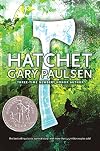
Gary Paulsen’s Hatchet is a classic survival novel that has captivated young readers for decades, and for good reason. On the surface, it’s the thrilling tale of a boy stranded alone in the Canadian wilderness after a devastating plane crash. But beneath the adventure and danger, it’s also a quiet, introspective story of growth, resilience, and transformation.
The novel centers on Brian Robeson, a thirteen-year-old boy whose journey of survival begins abruptly and violently with a bush show more plane crash that leaves him alone, injured, and wildly unprepared. What follows is an intense test of will as Brian battles hunger, wild animals, weather, and his own fear—all with nothing but a hatchet and his wits.
Brian is not a natural-born hero. He is stubborn, frightened, and understandably overwhelmed. But that’s what makes his growth so compelling. As the days stretch into weeks, and then months, we see a boy evolve—not just physically, as he learns how to fish, hunt, and build shelter—but mentally. He begins to think differently, problem-solve, and most importantly, accept the reality of his situation. His initial recklessness is gradually replaced by mindfulness, patience, and a respect for nature.
The novel does a great job of exploring how trauma and isolation can reshape a person. Brian is not just surviving the wilderness—he is also coming to terms with the emotional fallout of his parents’ divorce, which indirectly sets the story in motion. While the crash is dramatic, it’s the subtle, quiet moments of self-realization and adaptation that leave the strongest impact.
However, the novel isn’t without its flaws. One of the more questionable aspects is the resolution. After months of surviving, the sudden and highly convenient arrival of another plane feels more like a narrative shortcut than a well-earned rescue. While it offers readers the relief of closure and confirms that Brian’s efforts were not in vain, it also feels abrupt and unrealistic—especially in contrast to the slow, methodical pacing of the rest of the book.
There are also underlying family dynamics—especially regarding Brian’s distant parents—that are only lightly touched upon, despite being crucial to the story’s emotional foundation. Their neglect and dysfunction are part of what sends Brian on the flight in the first place, and yet, their role in his trauma isn’t deeply explored.
Hatchet succeeds most where it strips away modern distractions and shows the raw power of the human will. Brian’s journey is not just one of survival, but of transformation. While the ending may feel a bit too tidy and the family context somewhat underdeveloped, the novel still delivers an emotionally resonant and engaging tale that speaks to young readers about perseverance, adaptability, and inner strength. show less
The novel centers on Brian Robeson, a thirteen-year-old boy whose journey of survival begins abruptly and violently with a bush show more plane crash that leaves him alone, injured, and wildly unprepared. What follows is an intense test of will as Brian battles hunger, wild animals, weather, and his own fear—all with nothing but a hatchet and his wits.
Brian is not a natural-born hero. He is stubborn, frightened, and understandably overwhelmed. But that’s what makes his growth so compelling. As the days stretch into weeks, and then months, we see a boy evolve—not just physically, as he learns how to fish, hunt, and build shelter—but mentally. He begins to think differently, problem-solve, and most importantly, accept the reality of his situation. His initial recklessness is gradually replaced by mindfulness, patience, and a respect for nature.
The novel does a great job of exploring how trauma and isolation can reshape a person. Brian is not just surviving the wilderness—he is also coming to terms with the emotional fallout of his parents’ divorce, which indirectly sets the story in motion. While the crash is dramatic, it’s the subtle, quiet moments of self-realization and adaptation that leave the strongest impact.
However, the novel isn’t without its flaws. One of the more questionable aspects is the resolution. After months of surviving, the sudden and highly convenient arrival of another plane feels more like a narrative shortcut than a well-earned rescue. While it offers readers the relief of closure and confirms that Brian’s efforts were not in vain, it also feels abrupt and unrealistic—especially in contrast to the slow, methodical pacing of the rest of the book.
There are also underlying family dynamics—especially regarding Brian’s distant parents—that are only lightly touched upon, despite being crucial to the story’s emotional foundation. Their neglect and dysfunction are part of what sends Brian on the flight in the first place, and yet, their role in his trauma isn’t deeply explored.
Hatchet succeeds most where it strips away modern distractions and shows the raw power of the human will. Brian’s journey is not just one of survival, but of transformation. While the ending may feel a bit too tidy and the family context somewhat underdeveloped, the novel still delivers an emotionally resonant and engaging tale that speaks to young readers about perseverance, adaptability, and inner strength. show less
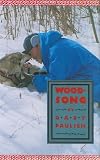
Paulsen writes movingly of his learning to run dogs and training pups for the harness. There are eye-rolling episodes where his ignorance in managing dog sledding had me cringing. Equally, there were laugh-out-loud anecdotes (I especially enjoyed the bantam hen dominating the Paulsen family backyard). The evocative passages of winter beauty and wilderness camping added to my appreciation of Paulsen's writing.
I'm not sure who the target audience really is for this book. It's a memoir of the show more author's early days running dogs, which could certainly appeal to outdoors-oriented readers of any age. But there are also passages of the harsh realities of wolves and deer populations and a squirrel-chipmunk interaction both of which are very graphic. Of course, the younger end of the YA readership might just gloss over these descriptions.
The final chapter of running his first Iditarod was captivating, even though I'd previously read Winterdance. I always come away from reading stories of this famous Alaskan race with amazement at what people will do as an extreme sport and wondering how on earth more dogs and drivers don't die trying to complete this run. In the Woodsong version, the tale of Pualsen's first Iditarod is shortened but still paints an astounding chronicle of the race. show less
I'm not sure who the target audience really is for this book. It's a memoir of the show more author's early days running dogs, which could certainly appeal to outdoors-oriented readers of any age. But there are also passages of the harsh realities of wolves and deer populations and a squirrel-chipmunk interaction both of which are very graphic. Of course, the younger end of the YA readership might just gloss over these descriptions.
The final chapter of running his first Iditarod was captivating, even though I'd previously read Winterdance. I always come away from reading stories of this famous Alaskan race with amazement at what people will do as an extreme sport and wondering how on earth more dogs and drivers don't die trying to complete this run. In the Woodsong version, the tale of Pualsen's first Iditarod is shortened but still paints an astounding chronicle of the race. show less
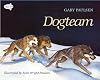
As well as being a stellar writer of children’s literature, Gary Paulsen was a seasoned dog musher, participating three times in the Alaskan Iditarod, the 1000 mile dog sled race. In this poetic picture book, beautifully illustrated in watercolours by his wife, Paulsen describes the sights and particularly the sounds of nighttime dog sledding. “Nothing in running dogs is quite so beautiful as a night run—,” he writes, “the cold is crisper, the dogs run for the pure joy of running, show more and the moon seems to dance on the snow.”
The picture book begins with his hitching up his seven trembling huskies, who sing “small songs of excitement when the harnesses are put on.” Once the run begins, there’s no sound but “the high-soft-shusshh-whine of the runners and the soft jingle of . . . [the dogs’] collars.” The team briefly encounters a pack of wolves, which run with them, and “pace our hearts and our lives.” In time, they find they’ve circled the cabin and have returned to where they began: “the dogs are coated with ice and the snaps on their collars and harness won’t open and their laughing-panting breath freezes on their cheeks and makes them all smiles, dogsmiles, doglaughs.”
As you can see from the above, Paulsen has fun with language here. There are times when I think he goes too far and risks losing the comprehension of his young audience. A couple of sentences are just a bit too abstract and mystical.
Overall, though, this is a lovely book. I’ve never been dog sledding but I certainly know those frigid winter nights when the full moon and the light’s reflection off the blue-white snow make the night so bright “you could read in the dark.” show less
The picture book begins with his hitching up his seven trembling huskies, who sing “small songs of excitement when the harnesses are put on.” Once the run begins, there’s no sound but “the high-soft-shusshh-whine of the runners and the soft jingle of . . . [the dogs’] collars.” The team briefly encounters a pack of wolves, which run with them, and “pace our hearts and our lives.” In time, they find they’ve circled the cabin and have returned to where they began: “the dogs are coated with ice and the snaps on their collars and harness won’t open and their laughing-panting breath freezes on their cheeks and makes them all smiles, dogsmiles, doglaughs.”
As you can see from the above, Paulsen has fun with language here. There are times when I think he goes too far and risks losing the comprehension of his young audience. A couple of sentences are just a bit too abstract and mystical.
Overall, though, this is a lovely book. I’ve never been dog sledding but I certainly know those frigid winter nights when the full moon and the light’s reflection off the blue-white snow make the night so bright “you could read in the dark.” show less
Lists
Ryan's Books (1)
Read in 1999 (1)
Canada (1)
Page Turners (1)
B-B to Get (1)
Great Audiobooks (1)
1980s (1)
Elementary Reads (1)
Newbery Adjacent (2)
Best Young Adult (2)
Sonlight Books (2)
Books About Boys (1)
BitLife (1)
KID BOOKS (1)
6th Grade (1)
Awards


You May Also Like


Associated Authors
Statistics
- Works
- 234
- Also by
- 3
- Members
- 99,889
- Popularity
- #91
- Rating
- 3.8
- Reviews
- 2,038
- ISBNs
- 2,065
- Languages
- 12
- Favorited
- 50

