
Fleur Beale
Author of I Am Not Esther
About the Author
Fleur Beale was born in 1945 in New Zealand. She is a teenage fiction writer. She attended Victoria University and Christchurch Teacher's Training College. She taught at Melville High School from the mid 80s to late 90s in Hamilton, Waikato and in Wellington. Beale's first stories were written for show more the children's radio programme Grandpa's Place. Her first book was a small reader and picture book for young children and she started to write for teenagers in 1993. Her stories often involve troubled adolescents engaged in outdoor activities. Beale was a finalist in the AIM Children's Book Awards and her 1998 novel I Am Not Esther was shortlisted for the senior fiction section of the 1999 New Zealand Post Children's Book Awards. In 1999 she was awarded the Children's Writing Fellowship at Dunedin College of Education and quit teaching to write full-time. Her 2001 novel Ambushed was a finalist for the Junior Fiction section of the 2002 New Zealand Post Children's Book Awards. Her 2004 account of how an indigenous girl discovers how her education can save her tribal lands (My Story A New Song in the Land. The Writings of Atapo, Pahia, received a Notable Book award in 2005 as did Walking Lightly. In 2012, Beale became the last recipient of the Margaret Mahy Award during Margaret Mahy's lifetime In 2015 she won the LIANZA Librarians' Choice Award 2015 with her title I Am Rebecca. Her book's I Am Not Esther and Being Magdalene made the New Zealand Best Seller List in 2015. (Bowker Author Biography) show less
Series
Works by Fleur Beale
Tagged
Common Knowledge
- Birthdate
- 1945-02-22
- Gender
- female
- Education
- Inglewood High School, Inglewood, New Zealand
Christchurch Teachers' College
Victoria University of Wellington, New Zealand - Occupations
- teacher
children's book author - Awards and honors
- Margaret Mahy Medal (2012)
Children's Writing Fellowship, Dunedin College of Education (1999) - Nationality
- New Zealand
- Birthplace
- Inglewood, Taranaki, New Zealand
- Places of residence
- Wellington, New Zealand
Hamilton, Waikato, New Zealand - Associated Place (for map)
- New Zealand
Members
Reviews

I Am Not Esther by New Zealand author Fleur Beale is an engrossing story about a modern girl, Kirby, whose mother leaves her in the care of her strict and pious brother, Caleb, who along with his wife and children are members of a Religious Sect called Children of the Faith. This faith is rigidly traditional. Kirby is immediately renamed Esther and forced to wear her hair tied back in a braid. Her clothes are replaced by long skirts, she is forbidden to use slang or take lord’s name in show more vain. Failure to follow the rules means immediate punishment, which included long hours on her knees and the whole family praying over her. Women were considered to be the property of the men and early marriages were arranged.
Although terribly confused and angry at her mother for leaving her with these people, she does grow very fond of her cousins, and eventually helps the eldest boy, Daniel, make a break with the community. Although her mother was to have gone to Africa to work as a nurse, it is discovered that she never left New Zealand. Kirby needs to find her mother and discover her reasons for leaving and for abandoning her daughter in this way. Kirby also realizes that she needs to get away as she is in danger of losing her own identity.
Well written and mostly believable, I Am Not Esther was an enjoyable YA read. The story flowed easily and although the Children of the Faith are fictional, the ideas and life style they supported seemed real and gave the reader a good idea of how restrictive a cult like this can be. show less
Although terribly confused and angry at her mother for leaving her with these people, she does grow very fond of her cousins, and eventually helps the eldest boy, Daniel, make a break with the community. Although her mother was to have gone to Africa to work as a nurse, it is discovered that she never left New Zealand. Kirby needs to find her mother and discover her reasons for leaving and for abandoning her daughter in this way. Kirby also realizes that she needs to get away as she is in danger of losing her own identity.
Well written and mostly believable, I Am Not Esther was an enjoyable YA read. The story flowed easily and although the Children of the Faith are fictional, the ideas and life style they supported seemed real and gave the reader a good idea of how restrictive a cult like this can be. show less
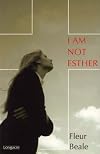
When Ellen, Kirby’s mother, suddenly reveals she’s been accepted to work for a refugee programme, Kirby is stunned. But her world falls apart when she’s told she’ll be going to live with her uncle and his family, who she never even knew existed.
But Ellen has been keeping another secret. She grew up as a member of a Christian sect called the Fellowship of The Children of the Faith. Kirby’s Uncle Caleb is an Elder of the group, and it to his family that Kirby is sent to live.
Almost show more as soon as Kirby arrives, Caleb and Aunt Naomi calmly begin their attempt to indoctrinate Kirby to their way of life. Her name is changed to Esther (because all members of the group have biblical names), there are no mirrors and very limited technology. The clothes are modest and old fashioned; she must speak ‘properly’ without using slang or contracted words. There is no TV, newspaper or books other than the Bible, so that the family’s thoughts may always be directed toward God. Discipline is either being shut up in the under stairs closet to learn Psalms or having the whole family forced to kneel, perhaps for an hour or more, to pray for you.
Under the weight of her mother’s abandonment and the strict life within The Fellowship, Kirby struggles to maintain some sense of herself and her identity. She takes comfort in caring for her young cousin Maggie (Magdalene) who is traumatised from the sudden ‘death’ of her older sister Miriam, and in her frank conversations with her cousin Daniel, who also struggles with the groups dictates.
I found I Am Not Esther very realistic. The use of language was an effective and believable way to distinguish those who are a part of The Fellowship, and those who aren’t. Kirby is a strong, compelling character, as is Daniel, in his own quiet way.
This is a psychological book and explores the effects of abandonment, the importance of an environment that allows questions, and the importance of having your own identity - even when it's something as simple as being called by your own name. It is also about having the inner strength to be who you are, even when the consequences may be far reaching, and potentially lifelong, not just for Kirby but also for her mother and their relatives.
Beale clearly portrays the potential harm to young people living in such circumstances. But in questioning the lifestyle, she doesn’t condemn the people. She portrays the friendships and bonds that develop, even though there are fundamental differences in opinions and beliefs.
This is a wonderful book. It is powerful, heartbreaking, but also has moments of simple joy. I easily read I Am Not Esther in one sitting, and was completely captivated from the first page until the last.
From the back cover: Fleur Beale is a former teacher who was inspired to write I Am Not Esther when one of her students was beaten and expelled from his family for going against their religious beliefs. show less
But Ellen has been keeping another secret. She grew up as a member of a Christian sect called the Fellowship of The Children of the Faith. Kirby’s Uncle Caleb is an Elder of the group, and it to his family that Kirby is sent to live.
Almost show more as soon as Kirby arrives, Caleb and Aunt Naomi calmly begin their attempt to indoctrinate Kirby to their way of life. Her name is changed to Esther (because all members of the group have biblical names), there are no mirrors and very limited technology. The clothes are modest and old fashioned; she must speak ‘properly’ without using slang or contracted words. There is no TV, newspaper or books other than the Bible, so that the family’s thoughts may always be directed toward God. Discipline is either being shut up in the under stairs closet to learn Psalms or having the whole family forced to kneel, perhaps for an hour or more, to pray for you.
Under the weight of her mother’s abandonment and the strict life within The Fellowship, Kirby struggles to maintain some sense of herself and her identity. She takes comfort in caring for her young cousin Maggie (Magdalene) who is traumatised from the sudden ‘death’ of her older sister Miriam, and in her frank conversations with her cousin Daniel, who also struggles with the groups dictates.
I found I Am Not Esther very realistic. The use of language was an effective and believable way to distinguish those who are a part of The Fellowship, and those who aren’t. Kirby is a strong, compelling character, as is Daniel, in his own quiet way.
This is a psychological book and explores the effects of abandonment, the importance of an environment that allows questions, and the importance of having your own identity - even when it's something as simple as being called by your own name. It is also about having the inner strength to be who you are, even when the consequences may be far reaching, and potentially lifelong, not just for Kirby but also for her mother and their relatives.
Beale clearly portrays the potential harm to young people living in such circumstances. But in questioning the lifestyle, she doesn’t condemn the people. She portrays the friendships and bonds that develop, even though there are fundamental differences in opinions and beliefs.
This is a wonderful book. It is powerful, heartbreaking, but also has moments of simple joy. I easily read I Am Not Esther in one sitting, and was completely captivated from the first page until the last.
From the back cover: Fleur Beale is a former teacher who was inspired to write I Am Not Esther when one of her students was beaten and expelled from his family for going against their religious beliefs. show less
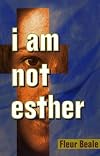
Kirby and her mother have always lived by themselves, and it’s never bothered Kirby that her mother never talks about her childhood or her relations. But Kirby is intensely bothered when her mother decides to go to Africa, leaving Kirby with a religious Uncle she’s never met before. With The Children of the Faith, Kirby must learn to behave in a Godly manner, wear “seemly” clothes, guard her tongue, and accept the Biblical name they have chosen for her.
The standard approach to show more problem-solving in this new environment is through prayer. In times of crisis (such as Kirby’s disobedience to the Rule) the whole family must kneel in Uncle Caleb’s study while he seeks the Lord’s will and asks for forgiveness on their behalf. In addition Kirby spends some time in the separate “discipline room” learning verses of the Bible by heart.
The picture Kirby paints of the life of the Children of the Faith certainly seems an alarming one: people in this community are not allowed to use contractions (that’s aren’t, for example) in their speech, technology is severely limited, and the girls have no idea about the changes puberty will bring to their bodies.
Still, the author does not totally condemn such communities: there are characters in this story who rejoice in the security that their way of life provides for them. Although Kirby is totally anti the lifestyle, she does come to respect many of the people who live that way, and develops affectionate relationships with her aunt and cousins.
In many ways this is a story about family relationships, and perhaps the common tendency to completely trust those we love. Kirby feels so betrayed when her mother leaves her, but after a while in the Faith community Kirby begins to understand how her mother may have been equally betrayed by her own loved ones. There is also the matter of Miriam, apparently deceased just before Kirby becomes part of the Pilgrim family. But they are not above trying to restore broken relationships: indeed, Kirby is horrified to discover that she is a sort of “experiment” to see whether people who have not grown up in the Fellowship can be integrated.
Much of the appeal of this story comes from its realism: the reader feels certain that "that could never really happen", but then again, so did Kirby. Everything that happens to Kirby is just plausible enough to be worrisome for the comfortable reader: what would you do if you had to call an ambulance, but there was no phone in the house? What if you didn’t actually know which part of the country you were living in? And how important is it really for people to call you by the right name? show less
The standard approach to show more problem-solving in this new environment is through prayer. In times of crisis (such as Kirby’s disobedience to the Rule) the whole family must kneel in Uncle Caleb’s study while he seeks the Lord’s will and asks for forgiveness on their behalf. In addition Kirby spends some time in the separate “discipline room” learning verses of the Bible by heart.
The picture Kirby paints of the life of the Children of the Faith certainly seems an alarming one: people in this community are not allowed to use contractions (that’s aren’t, for example) in their speech, technology is severely limited, and the girls have no idea about the changes puberty will bring to their bodies.
Still, the author does not totally condemn such communities: there are characters in this story who rejoice in the security that their way of life provides for them. Although Kirby is totally anti the lifestyle, she does come to respect many of the people who live that way, and develops affectionate relationships with her aunt and cousins.
In many ways this is a story about family relationships, and perhaps the common tendency to completely trust those we love. Kirby feels so betrayed when her mother leaves her, but after a while in the Faith community Kirby begins to understand how her mother may have been equally betrayed by her own loved ones. There is also the matter of Miriam, apparently deceased just before Kirby becomes part of the Pilgrim family. But they are not above trying to restore broken relationships: indeed, Kirby is horrified to discover that she is a sort of “experiment” to see whether people who have not grown up in the Fellowship can be integrated.
Much of the appeal of this story comes from its realism: the reader feels certain that "that could never really happen", but then again, so did Kirby. Everything that happens to Kirby is just plausible enough to be worrisome for the comfortable reader: what would you do if you had to call an ambulance, but there was no phone in the house? What if you didn’t actually know which part of the country you were living in? And how important is it really for people to call you by the right name? show less
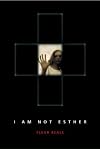
Kirby has always taken care of her mother more than her mother has taken care of her: she does all the bill paying and grocery shopping, and keeps her mom on a budget as best she can. But just before Christmas her mom starts acting strange and nervous, and then suddenly they're packing their belongings and leaving town, with no real explanation. Her mother leaves Kirby with the family she's never met and who belong to a strict Christian cult the lives by The Rule. She's renamed Esther, show more forced to live by the cult's oppressive ways, and finds herself slowly losing her identity even as she fights to maintain it. Will she be able to escape and find her mother? Will she ever be Kirby again?
A good story that keeps the tension without getting too dark, and gives a good look into how harmful such sects can be both physically and mentally. Nicely drawn characters and good pacing. show less
A good story that keeps the tension without getting too dark, and gives a good look into how harmful such sects can be both physically and mentally. Nicely drawn characters and good pacing. show less
Lists
Books with Twins (1)
Cults (1)
Awards


You May Also Like


Associated Authors
Statistics
- Works
- 49
- Members
- 1,205
- Popularity
- #21,314
- Rating
- 3.9
- Reviews
- 52
- ISBNs
- 111
- Languages
- 3
- Favorited
- 5