
Pauline Cartwright
Author of Ben and Sooty
About the Author
Works by Pauline Cartwright
The Wedding 13 copies
Trip with my father ; &, New chum ; The snowstorm ; Gift from Billee Chang ; Letter to Melissa (1997) 11 copies
A string of gold nuggets ; &, How much would you pay me? ; The craftiest trio ; He won't escape us ; English garden (1997) 9 copies
The wiggly jiggly line 3 copies
How Dictionaries Came to Be 2 copies
Ripe Red Tomatoes 2 copies
The cat and mice 2 copies
If I were a bird 2 copies
No Mermaids Here 1 copy
The Wiggly- Jiggly Line 1 copy
The dressing-up box 1 copy
My Imagination 1 copy
Ben y Manchita 1 copy
Where are the Seeds? 1 copy
El baile del albatros 1 copy
Charlie the Pancake Pirate 1 copy
Billy, the Pet Bird 1 copy
Billi, the Pet Bird 1 copy
The Little Mouse 1 copy
Mouse in the House 1 copy
Dogs (Giggling Gertie) 1 copy
fire on the farm 1 copy
Associated Works
Tagged
Common Knowledge
- Birthdate
- 1944
- Gender
- female
- Occupations
- children's book author
- Awards and honors
- Robert Lord Writers Cottage Residency ( [2003])
Choysa Writer's Bursary (1991) - Nationality
- New Zealand
- Places of residence
- Alexandra, Central Otago, New Zealand
- Associated Place (for map)
- Central Otago, New Zealand
Members
Reviews

I picked this book up at some second-hand shop somewhere along the line, thinking it might be one my siblings would enjoy. It’s sat on the shelf, untouched, for several years, and I decided to finally read it for myself, to see if it’s any good. It’s a fun story…but I found it rather annoying in the end. The main character (a cat) thinks more like a human than a cat, knows how to reason things out, and in the end, doesn’t act so much like a cat as like a human in a cat’s body. show more Although it’s a fun adventure story—as the cat gets lost and finds its way home—it isn’t the kind of story my siblings are really interested in, or one I’m interested in reading to them. I’m going to be sending our book on to a new home. show less

A little girl reflects on what she would do "if" she were a witch in this easy reader picture-book from New Zealand. She'd ride her broomstick in jeans, cook her potions in the microwave, and keep her spells on a computer. Most of all though, if she were a witch, she'd make herself into a princes ...
Originally published in 1988 in Wellington, New Zealand, If I Were a Witch was then published in the United States in 1991, as part of a twelve-volume set. I'm not sure if the volumes were ever show more sold separately, or just as a set, but I did manage to track down a copy of this individual title. As someone with a fondness for witchy picture-books - a perennial pet project of mine - I was looking forward to reading it. The initial premise of the book - a young witch who wants to do things in a more modern, less traditional way - was intriguing, and I got a chuckle out of the scene in which the little girl declares she would ride a broom in jeans, as the accompanying illustration shows older witches struggling with long skirts that blow up in the wind, in all kinds of inconvenient ways. Pauline Cartwright's text is very simple - no more than a sentence or two per two-page spread - and Jan van der Voo's brightly-colored cartoon-style artwork, which reminded me a bit of Babette Cole, had plenty of fun witchy details, from potion ingredients to the diverse array of written characters on the little witch's (distinctly vintage) computer screen. All in all, despite the fact that there just isn't much to it, this probably would have been a solidly appealing three-star book for me, were it not for that ending. As a fan of all things witchy, the conclusion just ruined the mood altogether. This is an obscure book, and I would probably never have stumbled across it, were I not ceaselessly on the hunt for new witchy books. Given its scarcity, and my less-than-enthusiastic response, I don't know that I'd particularly recommend it. show less
Originally published in 1988 in Wellington, New Zealand, If I Were a Witch was then published in the United States in 1991, as part of a twelve-volume set. I'm not sure if the volumes were ever show more sold separately, or just as a set, but I did manage to track down a copy of this individual title. As someone with a fondness for witchy picture-books - a perennial pet project of mine - I was looking forward to reading it. The initial premise of the book - a young witch who wants to do things in a more modern, less traditional way - was intriguing, and I got a chuckle out of the scene in which the little girl declares she would ride a broom in jeans, as the accompanying illustration shows older witches struggling with long skirts that blow up in the wind, in all kinds of inconvenient ways. Pauline Cartwright's text is very simple - no more than a sentence or two per two-page spread - and Jan van der Voo's brightly-colored cartoon-style artwork, which reminded me a bit of Babette Cole, had plenty of fun witchy details, from potion ingredients to the diverse array of written characters on the little witch's (distinctly vintage) computer screen. All in all, despite the fact that there just isn't much to it, this probably would have been a solidly appealing three-star book for me, were it not for that ending. As a fan of all things witchy, the conclusion just ruined the mood altogether. This is an obscure book, and I would probably never have stumbled across it, were I not ceaselessly on the hunt for new witchy books. Given its scarcity, and my less-than-enthusiastic response, I don't know that I'd particularly recommend it. show less

This entire series is a wonderful way to learn history or teach it to adolescents. I find today's generations seem to recall more when they learn through other people (pop songs, celebrity gossip, etc.), so what better way to teach history than through someone else's perspective? Yes, "authentic" diaries would be "better", but would the language really hold the modern student's attention? Did the diary writer know what WOULD be important in the context of history? Probably not.
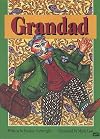
Very short story about a man who comes to live with his daughter and her two sons. One of the sons---the narrator---resents his grandfather's arrival and only gradually comes to realize that the man is friendly, interesting, and not a source of unwelcome change. Told from the boy's point of view, the story lets the reader see how the he slowly comes around to accepting, liking and finally being proud of his grandfather. Deals with a real issue maturely even though it is meant for young readers.
Lists
Awards

You May Also Like


Associated Authors
Statistics
- Works
- 228
- Also by
- 1
- Members
- 2,189
- Popularity
- #11,714
- Rating
- 3.3
- Reviews
- 14
- ISBNs
- 493
- Languages
- 3