
Daniel H. Pink
Author of Drive: The Surprising Truth About What Motivates Us
About the Author
Daniel H. Pink lives in Washington, D.C. (Bowker Author Biography)
Image credit: Daniel Pink, reading at the Annapolis Book Festival, in 2018. By Slowking4 - Own work, GFDL 1.2, https://commons.wikimedia.org/w/index.php?curid=68633865
Works by Daniel H. Pink
A Whole New Mind: Why Right-Brainers Will Rule the Future (2006) — Narrator, some editions — 3,655 copies, 76 reviews
The Adventures of Johnny Bunko: The Last Career Guide You'll Ever Need (2008) — Author — 511 copies, 28 reviews
The Flip Manifesto 2 copies
Test adding on my vm 2 copies
Pohon 1 copy
Drive Daniel Pink, So Good They Cant Ignore You, Life Leverage, How To Be Fcking Awesome 4 Books Collection Set (2019) 1 copy
Folksonomy 1 copy
Pink 1 copy
Associated Works
The Big Moo: Stop Trying to Be Perfect and Start Being Remarkable (2005) — Contributor — 431 copies, 7 reviews
Tagged
Common Knowledge
- Birthdate
- 20th Century
- Gender
- male
- Education
- Northwestern University (BA)
Yale University (JD) - Occupations
- speechwriter
journalist
author - Nationality
- USA
- Places of residence
- Washington, D.C., USA
- Associated Place (for map)
- D.C., USA
Members
Reviews
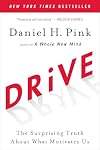
You know how when you watch a movie you liked a lot a second time how maybe it wasn't quite as funny, or as thrilling? I first read this five years ago and called it a paradigm shifter. I had to reread it for a class and there's the "yeah, yeah, I know that already" feel.
But there's a reason for that. When I first read this, I realized that Pink packaged what I knew innately but didn't really know, and even if I did, probably couldn't articulate well with the backup to support it. To say show more I've embraced Motivation 3.0 might be an understatement. I've vocally supported the move away from "pay for performance" (which my employer abandoned). I've advocated continuous feedback in lieu of annual performance appraisals, losing out on that so far. But by far the most important thing I've done to foster empowerment is adopt the four most important words I know. Note, this is me, not Pink, but totally in line with his premises of intrinsic rewards and supportive of autonomy, mastery and purpose.
The four words? "What Do You Think?"
I can be in a design meeting and I'll ask that question around the table...even the architect intern taking notes. (A coworker noticed that I tend to sit next to the people who might be "lower on the totem pole"...I didn't even realize I was doing that!) The follow on key is to listen. I will still make the decisions, but I might go in a different direction than I might have had I been alone. I'll ask one of my staff What Do You Think...? about whatever problem arises. It's a powerful question.
I'm not going to detail this book - others have...well, and not so well... I read a lot of management and leadership books and rare is the one that makes an impact. This did. Read it if you haven't, and read it again if you have. show less
But there's a reason for that. When I first read this, I realized that Pink packaged what I knew innately but didn't really know, and even if I did, probably couldn't articulate well with the backup to support it. To say show more I've embraced Motivation 3.0 might be an understatement. I've vocally supported the move away from "pay for performance" (which my employer abandoned). I've advocated continuous feedback in lieu of annual performance appraisals, losing out on that so far. But by far the most important thing I've done to foster empowerment is adopt the four most important words I know. Note, this is me, not Pink, but totally in line with his premises of intrinsic rewards and supportive of autonomy, mastery and purpose.
The four words? "What Do You Think?"
I can be in a design meeting and I'll ask that question around the table...even the architect intern taking notes. (A coworker noticed that I tend to sit next to the people who might be "lower on the totem pole"...I didn't even realize I was doing that!) The follow on key is to listen. I will still make the decisions, but I might go in a different direction than I might have had I been alone. I'll ask one of my staff What Do You Think...? about whatever problem arises. It's a powerful question.
I'm not going to detail this book - others have...well, and not so well... I read a lot of management and leadership books and rare is the one that makes an impact. This did. Read it if you haven't, and read it again if you have. show less
Much of the business and education world relies on rewards and punishments. Produce more widgets, get a bonus. Meet your reading goal, get a pizza party. Pink shows that these rewards are, in the modern economy, often counterproductive. They turn inherently rewarding activities into work and reduce both creativity and productivity. Pink wants us to be more aware of our intrinsic, rather than extrinsic, motivators: we seek, he says, autonomy, mastery, and purpose in our work.
An optimistic, show more empowering look at how to better structure work and play, though it will make you frustrated that so many things are currently run contrary to science. show less
An optimistic, show more empowering look at how to better structure work and play, though it will make you frustrated that so many things are currently run contrary to science. show less
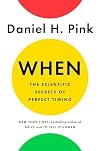
"Shifting our focus - and giving when the same weight as what - won't cure all ills. But it's a good beginning" writes Daniel H. Pink in his bestselling book When: The Scientific Secrets of Perfect Timing. His focus on "when" begins with our body clocks and how our mood and energy shifts throughout the day, then breaks things down into beginnings, middles, and endings, and even gives some focus on synchronizing with others - choir practice, anyone?
Within the chapters, Pink does a great job show more of timing scientific studies with stories and case studies to illustrate his points. You'll find interesting tidbits like for most people, you're going to be better at math and other analytic tasks in the morning but more creative in the afternoon (unless you're a night owl, then it flip flops). He argues pretty strongly that teens' schools should start an hour later than they do so it's more in sync with their biological clocks. After every chapter is a "Time Hacker's Handbook" that gives you practical ways to put what you've learned into practice. Want to start adding breaks to your day? There are plenty of suggestions to get you started. Want to start a new habit? Find out when is the best time for success. A fascinating, informative and even practical read. show less
Within the chapters, Pink does a great job show more of timing scientific studies with stories and case studies to illustrate his points. You'll find interesting tidbits like for most people, you're going to be better at math and other analytic tasks in the morning but more creative in the afternoon (unless you're a night owl, then it flip flops). He argues pretty strongly that teens' schools should start an hour later than they do so it's more in sync with their biological clocks. After every chapter is a "Time Hacker's Handbook" that gives you practical ways to put what you've learned into practice. Want to start adding breaks to your day? There are plenty of suggestions to get you started. Want to start a new habit? Find out when is the best time for success. A fascinating, informative and even practical read. show less
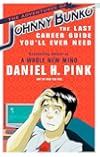
Pink's genius & humor strike again. No kidding. In the opinion of someone suffering from a serious case of post-modern ennui (that'd be me), this is a fantastic career guide. Don't let the manga-style format throw you: this is a serious book. It's also a different book. It is a funny book. It is not a moralizing (or *de*moralizing book).
Here are the 6 Lessons taught by a sassy magic fairy who appears to hapless, confused Johnny Bunko whenever he opens a package of take-out chopsticks (just show more go with it):
1. There is no plan.
2. Think strengths, not weaknesses,
3. It's not about you.
4. Persistence triumphs talent.
5. Make excellent mistakes.
6. Leave an imprint.
But those points won't get you nearly as far as taking the hour or 2 (tops) to actually read the book. It's in the details, here.
(Those with a manga background may appreciate some of the finer humorous points. But I'm pretty sure you could have never picked up a comic book, a graphic novel, or manga and still understand it. Note: it reads L --> R front to back, though, in the Western way, not the Japanese way) show less
Here are the 6 Lessons taught by a sassy magic fairy who appears to hapless, confused Johnny Bunko whenever he opens a package of take-out chopsticks (just show more go with it):
1. There is no plan.
2. Think strengths, not weaknesses,
3. It's not about you.
4. Persistence triumphs talent.
5. Make excellent mistakes.
6. Leave an imprint.
But those points won't get you nearly as far as taking the hour or 2 (tops) to actually read the book. It's in the details, here.
(Those with a manga background may appreciate some of the finer humorous points. But I'm pretty sure you could have never picked up a comic book, a graphic novel, or manga and still understand it. Note: it reads L --> R front to back, though, in the Western way, not the Japanese way) show less
Lists
Awards


You May Also Like


Associated Authors
Statistics
- Works
- 17
- Also by
- 3
- Members
- 11,955
- Popularity
- #1,961
- Rating
- 3.8
- Reviews
- 288
- ISBNs
- 212
- Languages
- 21
- Favorited
- 3

