
Yankev Glatshteyn (1896–1971)
Author of Emil and Karl
About the Author
Born in Lublin, Poland, Glatstein emigrated to the United States in 1914 and lived there until his death. One of the major figures in modern Yiddish poetry, Glatstein cultivated free verse and poetry closely related to the reality of contemporary events and society. A master of the Yiddish show more language, he created poems that became classic expressions of Jewish attitudes and reactions to the tragic events of the Holocaust. He also wrote brilliant prose; especially remarkable are two accounts of a trip to Europe on the eve of World War II. (Bowker Author Biography) show less
Image credit: via Jewish Review of Books
Works by Yankev Glatshteyn
Selected Poems of Yankev Glatshteyn (Jewish Poetry Series) (English and Yiddish Edition) (1973) 39 copies
In tokh genumen 3 copies
Gedenḳlider 2 copies
די פֿרײד פֿון ייִדישן װאָרט 1 copy
Yosl Loksh Fun Chelem 1 copy
אַ ייִד פֿון לובלין 1 copy
פּראָסט און פּשוט 1 copy
פֿון מײַן גאַנצער מי 1 copy
אין דער װעלט מיט ייִדיש 1 copy
װען יאַש איז געפֿאָרן 1 copy
מיט מײַנע פֿאַרטאָגביכער 1 copy
כשיאש נסע 1 copy
I Shall Record 1 copy
מכל עמלי : שירים ופואימות 1 copy
Di Freyd Fun Yidishn Vort 1 copy
In tokh genumen: eseyen, 1948-1956 [Sum and substance: essays, 1948-1956] / אין תוך גענומען : עסייען 1 copy
Di frayd fun yidishn vort 1 copy
Associated Works
A Treasury of Yiddish Stories: Revised and Updated Edition (1958) — Contributor — 388 copies, 1 review
Tagged
Common Knowledge
- Other names
- Glatshteyn, Yankev
יעקב גלאטשטיין - Birthdate
- 1896-08-20
- Date of death
- 1971-11-19
- Gender
- male
- Education
- New York University
- Occupations
- poet
novelist
literary critic - Nationality
- Poland
USA - Birthplace
- Lublin, Poland
- Places of residence
- Lublin, Poland, Russian Empire (birth)
New York, New York, USA (death) - Place of death
- New York, New York, USA
Members
Reviews

As I read Karl and Emil, I kept asking myself "What would I do if I was orphaned with my best friend trying to survive in Vienna at the very beginning of WWII?" As young as Karl and Emil are (9 years old), they are incredibly brave. After both are orphaned, they stay with the janitor and his wife in the basement of Karl's apartment. They are forced to scrub the pavement with their hands with other Jewish people. There they meet an old man who sings a song that calms them. Unfortunately, the show more janitor is taken by the Nazis and the wife must leave. As she is leaving Vienna with the boys, they witness Jewish people being forced to act like animals in the park. A woman talks to the wife and says she will take the boys making it clear that the woman knows that she is on their side. The woman, Matilda, takes the boys to her house by the train tracks and signal station. Matilda lives with a man named Hans who shouts "Heil" randomly and (as she puts it) acts crazy. The man who works in the signal station comes to the house drunk and talks about stealing from Jewish shops. Karl becomes extremely ill and while he is resting, he notices Hans act normal. Matilda leaves for a few days, and upon her return, she tells the boys that Hans used to be a vaudeville actor. He has since grown out his beard as a disguise. He and Matilda have organized a group of people to work underground and distribute pamphlets printed on cigarette paper. They have a meeting with the group that night where they talk about Jewish people being sent away to concentration camps. The next day, Hans is taken by the Nazis after a member of their group betrays them. Matilda comes back to take the boys to her sister-in-law who works for the emigration center. The boys are told they will be sent to England. Matilda sees them before they are put on the train. She is acting like a drunkard on the streets, but she is able to smile at the boys and give each a note from Hans. Heartbreakingly, the boys get separated. Emil gets on the first train. Karl is left to wait for the next train to come in three hours.
This book is incredibly heartbreaking and suspenseful. Glatshteyn wrote Karl and Emil in 1940 and is one of the first books written about the Holocaust. Since it was written in and about the beginning of the war, I found myself so sad for the characters because they do not know what is about to happen. I wonder if he would have changed the ending of the book after knowing that this would not end quickly. This book illustrates how what happened to Jewish Europeans has an impact on everyone. Their future depended on the kindness of and relationships with non-Jewish people. Glatshteyn tells a story about friendship, loyalty, and bravery with a lasting impact long after reading. show less
This book is incredibly heartbreaking and suspenseful. Glatshteyn wrote Karl and Emil in 1940 and is one of the first books written about the Holocaust. Since it was written in and about the beginning of the war, I found myself so sad for the characters because they do not know what is about to happen. I wonder if he would have changed the ending of the book after knowing that this would not end quickly. This book illustrates how what happened to Jewish Europeans has an impact on everyone. Their future depended on the kindness of and relationships with non-Jewish people. Glatshteyn tells a story about friendship, loyalty, and bravery with a lasting impact long after reading. show less
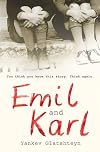
In the early days of the Second World War, Karl and his friend Emil find themselves abandoned in Vienna. Emil's family is Jewish, his father had been killed and his mother so traumatised that she is taken away. Karl's father has already disappeared. He was a Socialist and therefore a threat to the Nazi regime.
This interesting story was first published in 1940, and so preempts some of the more 'familiar' stories about the Holocaust at its height. This is the forerunner of all that.
This interesting story was first published in 1940, and so preempts some of the more 'familiar' stories about the Holocaust at its height. This is the forerunner of all that.

"Emil and Karl" is an ideal companion novel to "The Boy in Striped Pyjamas," "The Book Thief" or "Once" - in fact any of the novels that deal with the awful persecution that occurred during WW2. What makes this book so different to the ones I have mentioned is the fact that it was written in 1940 as the events were unfolding. It tells the story of 2 boys who are both persecuted by the Germans for different reasons - one has a parent who is a Communist, and the other is Jewish. This book show more details their harrowing attempts to escape from a progressively worsening situation. Emil and Karl are protected all the way through their flight by the kindness and charity and above all BRAVERY of adults (mostly complete strangers) who risk their own lives to protect the children. This is an absolutely fascinating story which is only predictable in that it deals with both the best and worst of human nature - a very subtle masterpiece. The part with the schoolteacher is absolutely chilling and goes some way to explaining how ordinary people stood by and let the jews be persecuted because they were so afraid. p.15 -21. show less

Emil and Karl are nine-year-old friends in Vienna. After the Anschluss (1938), the situation becomes graver every day. Karl’s father has already been killed for being a Socialist. The book opens with his mother being dragged away by the authorities. Although a neighbor offers to help him, he runs to Emil’s apartment. Emil’s father has just been killed, and his mother suffers a breakdown while sitting shiva. The two are now on their own in the city—hiding in a basement, relying on show more adults who offer them food and refuge and eventually getting on trains out of Vienna to England with other orphans on the Kinder transport.
The book is a story of friendship, a historical fiction about Vienna, and an exciting and emotional suspense story. Although Karl is not Jewish, he sticks by his Jewish friend Emil. He defends him in school while others are beating him and spitting on him. His teacher secretly tells Karl how proud she is of his behavior, but must berate him in public because everyone is so afraid of the brown shirts. Graphic, vivid descriptions of Jews cleaning the streets and being made to act like animals in public parks are seen through the boys’ eyes. The reader feels their urgency has they run from hiding place to hiding place. They meet adults who are either resisting the Nazis, cooperating with the Nazis, or trying to stay under the radar. As the boys are lining up to get on the trains, they are separated, so it is unclear what happens to them. This leaves the reader with a glimmer of hope that they will reunite and be happy and safe.
While the story of the boys’ friendship and their rapid coming of age are touching, the descriptions of anti-Semitic activities in Vienna may be too vivid for middle grade readers, who could relate to the boys in terms of age and interest. If this book were read by those younger than fourteen, parental directive is strongly encouraged. show less
The book is a story of friendship, a historical fiction about Vienna, and an exciting and emotional suspense story. Although Karl is not Jewish, he sticks by his Jewish friend Emil. He defends him in school while others are beating him and spitting on him. His teacher secretly tells Karl how proud she is of his behavior, but must berate him in public because everyone is so afraid of the brown shirts. Graphic, vivid descriptions of Jews cleaning the streets and being made to act like animals in public parks are seen through the boys’ eyes. The reader feels their urgency has they run from hiding place to hiding place. They meet adults who are either resisting the Nazis, cooperating with the Nazis, or trying to stay under the radar. As the boys are lining up to get on the trains, they are separated, so it is unclear what happens to them. This leaves the reader with a glimmer of hope that they will reunite and be happy and safe.
While the story of the boys’ friendship and their rapid coming of age are touching, the descriptions of anti-Semitic activities in Vienna may be too vivid for middle grade readers, who could relate to the boys in terms of age and interest. If this book were read by those younger than fourteen, parental directive is strongly encouraged. show less
Lists
Awards


You May Also Like


Associated Authors
Statistics
- Works
- 35
- Also by
- 3
- Members
- 544
- Popularity
- #45,826
- Rating
- 3.7
- Reviews
- 10
- ISBNs
- 38
- Languages
- 5
- Favorited
- 1