

Benito Mussolini (1883–1945)
Author of The Political and Social Doctrine of Fascism
About the Author
Image credit: George Grantham Bain Collection, Library of Congress Prints and Photographs Division, Reproduction Number: LC-DIG-ggbain-34899
Works by Benito Mussolini
My Autobiography: With "The Political and Social Doctrine of Fascism" (Dover Books on History, Political and Social Science) (2006) 38 copies, 1 review
L'uomo e la divinità. Dio non esiste — Author — 6 copies
Discorsi 4 copies
Opera omnia di Benito Mussolini 3 copies
The Doctrines of Fascism 3 copies
Scritti Discorsi di Benito Mussolini Edizione Definitiva Dal 1925 al 1926 Ulrico Hoepli Editore Milano 1934 XIII Vol. V — Author — 3 copies, 1 review
Dizionario mussoliniano — Author — 3 copies
Scritti e discorsi di Benito Mussolini Edizione Definitiva Dal 1929 al 1931 Ulrico Hoepli Editore Milano 1934-XII Vol. VII — Author — 2 copies
Scritti e discorsi di Benito Mussolini Edizione Definitiva Dal 1927 al 1928 Ulrico Hoepli Editore Milano 1934-XIII — Author — 2 copies
Mussolini As Revealed in His Political Speeches, (November 1914 - August 1923) (Classic Reprint) (2006) 2 copies
Testimonianze straniere sulla guerra italiana: 1915-1918 — Foreword — 2 copies
Audacia 2 copies
Il popolo d'Italia 1 copy
I discorsi della rivoluzione 1 copy
Fascist Revolution 1 copy
Talks with Mussolini 1 copy
Scritti e discorsi di Benito Mussolini 2: La rivoluzione fascista: (23 marzo 1919-28 ottobre 1922) 1 copy
Mussolini: "Io vi parlo di me": la vita del Duce nei suoi ricordi e nelle sue dichiarazioni — Author — 1 copy
Preludio al Machiavelli — Author — 1 copy
John Huss, the veracious 1 copy
Η αυτοβιογραφία μου 1 copy
Il Nuovo Stato Unitario Italiano — Author — 1 copy
Edition définitive des œuvres et discours T VI Le fascisme au pouvoir, Défense de la lire, L'Italie et l'Allemagne, L — Author — 1 copy
Vita di Sandro e di Arnaldo - Scritti e Discorsi di Arnaldo Mussolini — Author — 1 copy
Doktrina fašizma 1 copy
Discorsi del 1926 — Author — 1 copy
Diuturna. Scritti politici raccolti e ordinati da Arnaldo Mussolini e Dino Grandi, 1914-1922 — Author — 1 copy
Pio Battistini, 7 settembre 1891. Discorso commemorativo, pronunciato nel diciannovesimo anniversario dell'assassinio — Author — 1 copy
La massoneria. Accuse, difese, critiche, pregiudizi — Author — 1 copy
Corrispondenza inedita — Author — 1 copy
The Prince 1 copy
Le Fascisme. Doctrine, institutions — Author — 1 copy
Duce : ecco i diari del mistero : tutte le pagine attribuite a Mussolini — Author — 1 copy, 1 review
I discorsi agl'Italiani — Author — 1 copy
Discorso dell'ascenzione: il regime fascista per la grandezza d'Italia: pronunciato il 26 maggio 1927 alla Camera dei deputati — Author — 1 copy
La parole de Mussolini — Author — 1 copy
Il Trentino veduto da un socialista : note e notizie — Author — 1 copy
Politica estera — Author — 1 copy
Mussolini e La Voce 1 copy
Associated Works
Social and Political Philosophy: Readings From Plato to Gandhi (1963) — Contributor — 275 copies, 1 review
Die Vorbereitungen und die ersten Operationen zur Eroberung Abessiniens — Foreword — 1 copy
Tagged
Common Knowledge
- Canonical name
- Mussolini, Benito
- Legal name
- Mussolini, Benito Amilcare Andrea
- Other names
- Муссолини, Бенито
- Birthdate
- 1883-07-29
- Date of death
- 1945-04-28
- Gender
- male
- Occupations
- fascist
Head of Government of Italy (1925-1943)
Prime Minister of Italy (1922-1943 ∙ Fascist)
Duce of the Italian Social Republic (1943-1945)
First Marshal of the Italian Empire (1938-1943) - Organizations
- National Fascist Party
- Nationality
- Italy
- Birthplace
- Dovia di Predappio, Emilia-Romagna, Italy
- Places of residence
- Rome, Italy
- Place of death
- Giulino di Mezzegra, Lombardy, Italy
- Burial location
- Predappio, Forlì, Italy
- Associated Place (for map)
- Italy
Members
Reviews
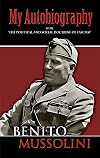
Well, no, Mussolini’s, not mine. It seems to be forgotten sometimes that Mussolini was originally considered a leftist and a number of people with impeccable liberal credentials (for example, H.G. Wells, Lincoln Steffens, W.E.B. DuBois, and Will Rogers) expressed admiration for him. It therefore appears prudent to see what Il Duce actually had to say about Fascism (the book includes an article Mussolini wrote about Fascism for the Encyclopedia Italiana.)
The initial surprise is the Foreword show more and putative authorship. Richard Washburn Childs was the American ambassador to Italy under the Harding administration, and, in the Foreword, states he wrote the book from Mussolini’s notes and dictation. It’s rather difficult to imagine a current American ambassador ghost-writing the autobiography of a foreign dictator. There’s something not quite right with the chronology here; the book was published in 1928; however in his introduction Washburn repeatedly compares Mussolini with Roosevelt (in language complimentary to both). In 1928, though, F.D.R.’s political service had been as a New York state senator, Assistant Secretary of the Navy, and unsuccessful vice-presidential candidate; it would seem therefore that the Foreword was written well after the book was published. It’s full of embarrassingly fulsome praise for Mussolini, who is described as decisive, as having “cat-like” grace, athletic, intelligent, profound – Washburn was putting his thesaurus to work.
There’s nothing very useful here for elucidating what Fascism was about; most of the book is a laudatory history of Mussolini’s life up to the publication date without much commentary on political or social philosophy. The best you can say in Fascism was whatever Mussolini said it was. Mussolini, of course, was originally a prominent Socialist until he was expelled from the Party for advocating Italian participation in World War I, and he states here he is “of the Left”. He once comments he wants Italy to be a “corporate” state; there’s a lot of facile social media commentary seizing on this and claiming it means “controlled by corporations”. Mussolini doesn’t explain further what he means by a “corporate” state but the actual performance of Fascist Italy shows it most certainly doesn’t mean “controlled by corporations”; Web searching suggests the idea was organizing Italian citizens into “corporations” with sort of the meaning of medieval guilds. Mussolini criticizes capitalism a few times but doesn’t go overboard with it; the general feel is more or less like Hitler’s later approach; industries were forced to institute various social policies like minimum wage, health care, and pensions but left more or less alone as long as they did so. Il Duce’s most vehement criticism is not for capitalism, but for Freemasonry, which gives the narration an antiquated feel; he’s also critical of clerical activism and parliamentary democracy, with the distinction that he sees Freemasonry and clerical activism as actual threats to Fascism while parliamentary democracy gets contemptuously dismissed as ineffectual.
It’s a bit frustrating to find that neither in the book proper nor the encyclopedia article is there any actual statement of what the policies of Fascism are; instead it’s all “Fascism is great, Fascism is wonderful, Fascism is the Wave of the Future” without any explanation of what Fascism is actually supposed to do. About all you can say is modern liberals define Fascism as anything they don’t like and actual Fascists defined it as anything they did like.
Short and clearly written; some parts, where Mussolini goes into the details of his early parliamentary maneuvering, are tedious unless you are really interested in (for example) who the Italian Secretary of the Interior was in 1924. Worth it as a reference; the major problem is it stops too early in Mussolini’s career and you have to fill in the events from 1928 to 1945 from elsewhere. show less
The initial surprise is the Foreword show more and putative authorship. Richard Washburn Childs was the American ambassador to Italy under the Harding administration, and, in the Foreword, states he wrote the book from Mussolini’s notes and dictation. It’s rather difficult to imagine a current American ambassador ghost-writing the autobiography of a foreign dictator. There’s something not quite right with the chronology here; the book was published in 1928; however in his introduction Washburn repeatedly compares Mussolini with Roosevelt (in language complimentary to both). In 1928, though, F.D.R.’s political service had been as a New York state senator, Assistant Secretary of the Navy, and unsuccessful vice-presidential candidate; it would seem therefore that the Foreword was written well after the book was published. It’s full of embarrassingly fulsome praise for Mussolini, who is described as decisive, as having “cat-like” grace, athletic, intelligent, profound – Washburn was putting his thesaurus to work.
There’s nothing very useful here for elucidating what Fascism was about; most of the book is a laudatory history of Mussolini’s life up to the publication date without much commentary on political or social philosophy. The best you can say in Fascism was whatever Mussolini said it was. Mussolini, of course, was originally a prominent Socialist until he was expelled from the Party for advocating Italian participation in World War I, and he states here he is “of the Left”. He once comments he wants Italy to be a “corporate” state; there’s a lot of facile social media commentary seizing on this and claiming it means “controlled by corporations”. Mussolini doesn’t explain further what he means by a “corporate” state but the actual performance of Fascist Italy shows it most certainly doesn’t mean “controlled by corporations”; Web searching suggests the idea was organizing Italian citizens into “corporations” with sort of the meaning of medieval guilds. Mussolini criticizes capitalism a few times but doesn’t go overboard with it; the general feel is more or less like Hitler’s later approach; industries were forced to institute various social policies like minimum wage, health care, and pensions but left more or less alone as long as they did so. Il Duce’s most vehement criticism is not for capitalism, but for Freemasonry, which gives the narration an antiquated feel; he’s also critical of clerical activism and parliamentary democracy, with the distinction that he sees Freemasonry and clerical activism as actual threats to Fascism while parliamentary democracy gets contemptuously dismissed as ineffectual.
It’s a bit frustrating to find that neither in the book proper nor the encyclopedia article is there any actual statement of what the policies of Fascism are; instead it’s all “Fascism is great, Fascism is wonderful, Fascism is the Wave of the Future” without any explanation of what Fascism is actually supposed to do. About all you can say is modern liberals define Fascism as anything they don’t like and actual Fascists defined it as anything they did like.
Short and clearly written; some parts, where Mussolini goes into the details of his early parliamentary maneuvering, are tedious unless you are really interested in (for example) who the Italian Secretary of the Interior was in 1924. Worth it as a reference; the major problem is it stops too early in Mussolini’s career and you have to fill in the events from 1928 to 1945 from elsewhere. show less
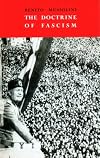
Everyone is talking about Fascism nowadays but nobody knows what it is. This book by Mussolini gives a roundabout definition as best as his little mind could muster. This is a short selection of writings from Mussolini, or attributed to him. These are not consistent writings about Fascism. These are more like ramblings in public comments attempting to unify various contradictory ideas. Basically Mussolini says that Fascism is a system by which a nation adopts a single political party which show more empowers a totalitarian state with a single leader who embodies the will of the people. Like Hitler, Mussolini blamed the woes of Europe on the monopoly corporations who bankrupted nations. Mussolini says that Fascism would not let Robber Barons ruin states since the Fascist state would not bend to 'corporations' at the expense of the "(urban) guilds" and "agriculture." Mussolini says that the purpose of the Fascist state is not to guarantee the material prosperity of the people but to foster the state and the success of political, judicial, and economic organization of the nation. He says the Fascist state guarantees only the external safety of the people. Internally, the state only safeguards the language, faith, and customs of the people. Fascism has a moral code but no principles since the state transcends the brief life spans of the individual citizens. Mussolini says Fascism isn't' Socialism or Marxism but in reality it is actually a form of Socialism. Even though it rejects egalitarianism it does care about the individual. That individual is the leader of the state. We call that person a despot or dictator. Force is used to only transform the state into a Fascist State. Once that is accomplished, no force (i.e., ceaseless fight) is ever allowed to be used again within the State. Mussolini says that Fascism is a system of thought (and a spirituality) but it is merely a rationalization of Kantian categories to create a propaganda edifice around the autocrat. show less
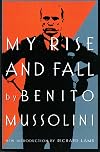
The book was filled with obvious biases, especially once he was deposed, but it provided a fascinating look into the man that was Mussolini. From his hatred of material value and his love of the violin to his conspiratorial look at his fall from grace, the book was quite the interesting read.
Kind of fascinating in a train wreck way. He's completely unreliable on most things, and yet whinges about other people lying. When he's successful, that's proof that he's great, but failure is not proof that he's a loser--it means he's a victim.
Lists
You May Also Like


Associated Authors
Statistics
- Works
- 98
- Also by
- 2
- Members
- 509
- Popularity
- #48,720
- Rating
- 2.8
- Reviews
- 18
- ISBNs
- 58
- Languages
- 6
- Favorited
- 1


