
Harold Begbie (1871–1929)
Author of The Bible in Story and Pictures
About the Author
Image credit: Courtesy of the NYPL Digital Gallery (image use requires permission from the New York Public Library)
Works by Harold Begbie
The political Struwwelpeter 3 copies
Religion and the crisis 2 copies
The day that changed the world, 2 copies
Declension 2 copies
Albert 4th Earl Grey - A Last Word 2 copies
Broken lights 2 copies
Shackleton: a Memory 1 copy
Queen's Net 1 copy
Julius : a novel 1 copy
The Challenge 1 copy
Associated Works
Rosemary — Contributor — 1 copy
Tagged
Common Knowledge
- Other names
- Gentleman with a Duster (pseudonym)
- Birthdate
- 1871
- Date of death
- 1929
- Gender
- male
- Occupations
- journalist
- Nationality
- UK
- Associated Place (for map)
- UK
Members
Reviews

Andrew Latter has trained his mind to see, through his dreams, the resolution to mysterious crimes. In each of these short stories, Latter thinks about an unsolved case before he goes to sleep, views the crime in great detail in his dream, and reports the result to Scotland Yard when he wakes.
The stories certainly highlight the intense interest in spiritualism which abounded in the early twentieth century - the focus is the 'dream world' and Latter's journey through dreams. The stories show more themselves are not terribly exciting. The mystery is resolved as soon as Latter falls asleep and sees what happened.
Jack Adrian's introduction to this edition is far more interesting, detailing Begbie's interests and career. Begbie wrote propaganda during the first World War and appeared to believe stories of angels assisting British troops during battle. I was far more engaged in Adrian's description of the angel controversy than I was in Begbie's stories. show less
The stories certainly highlight the intense interest in spiritualism which abounded in the early twentieth century - the focus is the 'dream world' and Latter's journey through dreams. The stories show more themselves are not terribly exciting. The mystery is resolved as soon as Latter falls asleep and sees what happened.
Jack Adrian's introduction to this edition is far more interesting, detailing Begbie's interests and career. Begbie wrote propaganda during the first World War and appeared to believe stories of angels assisting British troops during battle. I was far more engaged in Adrian's description of the angel controversy than I was in Begbie's stories. show less
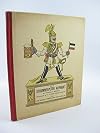
Wonderful satirical verses accompanying colour caricatures of the likes of Buller, German Emperor, Harcourt, John Morley - 'writing books he likes much merely' -, Stead, Rhodes, Salisbury, ending up with Zola.
Twice-Born Men: A Clinic in Regeneration; a Footnote in Narrative to Professor William James's "The Varieties of Religio by Harold Begbie

In 1909 psychologist Harold Begbie goes into a small slum district of London to conduct a research project. Inspired by a book, The Varieties of Religious Experience by William James, Professor of Philosophy at Harvard, Mr. Begbie wants to bring a companion book to James' book to describe the psychological effects of Christian conversion in the "lowest of the low" of the inhabitants of this small section of London. The Salvation Army was in the earliest stages of its work and Mr. Begbie show more enlists their help in finding his subjects. He presents the life stories of nine of the worst drunkards and criminals who had drastic life reformations after walking up to the "penitent form" at the front of a Salvation Army meeting hall. He concludes his study by saying, "When I visit the happy homes and experience the gentleness, kindness and refinement of such people as those whose life-stories appear in this book, and compare them with the squalor and misery of the great majority of homes surrounding them, I am astonished that the world should be so incredulous about religion, and that legislation should be so foolish as to attempt to do laboriously by enactments, clumsy and slow, what might be done instantly and easily by religion, if it had the full force of the community at its back." show less

4847. The Mirrors of Downing Street Some Political Reflections, by A Gentleman with a Duster (Harold Begbie) (read 7 Aug 2011) There are in this book short essays on 15 Englishmen then prominent or recently prominent in English life, including Lloyd George, Kitchener, Grey, Asquith, and Churchill. The comments on most seem reasonable, but the comments on Churchill, indicating that people would not look to him for inspiration, were proven very wrong in 1940.
Lists
Awards

You May Also Like


Associated Authors
Statistics
- Works
- 53
- Also by
- 2
- Members
- 371
- Popularity
- #64,991
- Rating
- 3.6
- Reviews
- 4
- ISBNs
- 37