
Ira Berkow
Author of Hank Greenberg: Hall-of-Fame Slugger
About the Author
Ira Berkow has been a sports columnist and feature writer for the New York Times for more than twenty years.
Works by Ira Berkow
Red: A Biography of Red Smith, The Life & Times of a Great American Writer (1986) 47 copies, 2 reviews
The Gospel According to Casey: Casey Stengel's Inimitable, Instructional, Historical Baseball Book (1992) 20 copies
The Man Who Robbed The Pierre: The Story of Bobby Comfort and the Biggest Hotel Robbery Ever (1987) 12 copies, 1 review
It Happens Every Spring: DiMaggio, Mays, the Splendid Splinter, and a Lifetime at the Ballpark (2017) 9 copies
Associated Works
Neighborhoods Within Neighborhoods: Twentieth Century Life on Chicago's Far North Side (2002) — Contributor — 3 copies
Tagged
Common Knowledge
- Birthdate
- 1940-01-07
- Gender
- male
- Awards and honors
- Pulitzer Prize finalist (Commentary, 1988)
Members
Reviews
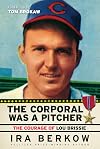
This is a fascinating, well-written book biography. Lou Brissie's story is quite something. A teenage pitching phenom in his native South Carolina in the late 1930s, Brissie interrupted his promising baseball career to enlist in the Army after Pearl Harbor. When he went off to war, he already had a commitment from Connie Mack, the longtime owner/manager of the Philadelphia A's. Mack was going to sign Brissie and then pay for him to go to college for three years, an arrangement that provides show more an idea of how much potential Brissie was seen to have.
But Brissie's leg was shattered during an artillery attack in Italy in 1944 and he had to beg the doctors not to amputate. Luckily for Brissie, he found one Army doctor willing to try to save the leg. Brissie went through multiple operations--his leg bone was essentially fused together from the fragments the exploding artillery shell had left behind--and he had to wear a cumbersome brace to walk, let along pitch in the major leagues. And yet pitch in the major leagues, he did, and quite effectively, despite that leg brace and the essentially constant pain he endured. In fact, Brissie was extremely well known during the post-war years as an inspiration for wounded veterans and kids with handicaps. It's surprising and more than a bit sad that his story has been largely forgotten.
Brissie was comfortable around blacks and happy to be teammates with black ballplayers, not something to be taken for granted in those early days of the integration of Major League Baseball, especially given Brissie's Southern upbringing. During the Depression, Brissie's father, a former daredevil motorcycle rider, had had a cycle repair shop in their small South Carolina town and had a black friend as a full business partner. For this sin, one night the Klan pulled Brissie's father out of their home and beat him severely in their front yard in front of the family, breaking two ribs, then lit a cross ablaze in front of the house. The lessons Brissie took from this was admiration for his father's courage and a hatred of racism.
Brissie was still alive when Berkow was working on the book (the book was published in 2009 and Brissie died in 2013) and sat for extensive interviewing. He comes across as an extremely thoughtful fellow. Berkow, a Pulitzer Prize winning jouralist, is a fine writer who clearly had a strong connection to his subject for this biography. I highly recommend this book for readers with an interest in American history and with even a passing interest in baseball. show less
But Brissie's leg was shattered during an artillery attack in Italy in 1944 and he had to beg the doctors not to amputate. Luckily for Brissie, he found one Army doctor willing to try to save the leg. Brissie went through multiple operations--his leg bone was essentially fused together from the fragments the exploding artillery shell had left behind--and he had to wear a cumbersome brace to walk, let along pitch in the major leagues. And yet pitch in the major leagues, he did, and quite effectively, despite that leg brace and the essentially constant pain he endured. In fact, Brissie was extremely well known during the post-war years as an inspiration for wounded veterans and kids with handicaps. It's surprising and more than a bit sad that his story has been largely forgotten.
Brissie was comfortable around blacks and happy to be teammates with black ballplayers, not something to be taken for granted in those early days of the integration of Major League Baseball, especially given Brissie's Southern upbringing. During the Depression, Brissie's father, a former daredevil motorcycle rider, had had a cycle repair shop in their small South Carolina town and had a black friend as a full business partner. For this sin, one night the Klan pulled Brissie's father out of their home and beat him severely in their front yard in front of the family, breaking two ribs, then lit a cross ablaze in front of the house. The lessons Brissie took from this was admiration for his father's courage and a hatred of racism.
Brissie was still alive when Berkow was working on the book (the book was published in 2009 and Brissie died in 2013) and sat for extensive interviewing. He comes across as an extremely thoughtful fellow. Berkow, a Pulitzer Prize winning jouralist, is a fine writer who clearly had a strong connection to his subject for this biography. I highly recommend this book for readers with an interest in American history and with even a passing interest in baseball. show less

An affectionate and clear-eyed biography of Red Smith, sports columnist, journalist, humorist, wordsmith and all-around fine fellow. Very few could turn a phrase on its ear and wring new meaning out of it like Smith could, and none ever did it with his consistency and longevity. This book doubly satisfies in that it confirms the dearly-held notion that consummate skill and consummate humanness can exist together.

Colorful collection of accounts, mostly personal interviews with people who lived and/or worked in the once-vibrant Maxwell Street area in Chicago. I liked that Berkow mostly lets his subjects talk, allowing their personalities to come through unfiltered, and one still gets a real sense of the place from their reminiscences.
Until I read this book, Lou Brissie was just a name among old Philadelphia Athletics' players. Mr. Berkow's book gave me quite a nice introduction to Lou Brissie, a man who overcame great obstacles to become a major league pitcher and to maintain his pitcher's role. In addition, the description of recovery from a major leg injury suffered in Italy during World War II put me in mind of injuries suffered by soldiers in the current war and those soldiers' struggles to recover. I recommend this show more book. show less
Awards

You May Also Like


Associated Authors
Statistics
- Works
- 24
- Also by
- 5
- Members
- 391
- Popularity
- #61,940
- Rating
- 3.7
- Reviews
- 7
- ISBNs
- 53