
Alexander Broadie
Author of The Cambridge Companion to the Scottish Enlightenment
About the Author
Alexander Broadie holds degrees from the universities of Edinburgh, Oxford, Glasgow and Blaise Pascal (Clermont-Ferrand). He is Honorary Professorial Research Fellow and Emeritus Professor of Logic and Rhetoric at the University of Glasgow. Among his many books are The Circle of John Mair (1985), show more The Scottish Enlightenment (2001) and A History of Scottish Philosophy (Saltire Society Scottish History Book of the Year 2009). For 2010-13 he is the Principal Investigator of a Leverhulme-funded international network 'Scottish philosophers in 17th-century Scotland and France'. show less
Image credit: via Alchetron
Works by Alexander Broadie
Associated Works
History of Jewish Philosophy (Routledge History of World Philosophies) (1997) — Contributor — 38 copies
On time and imagination. Part 2: Introduction and translation (1993) — Translator, some editions — 5 copies
Tagged
Common Knowledge
- Birthdate
- 1942-10-18
- Gender
- male
- Education
- University of Edinburgh
University of Glasgow - Nationality
- UK
- Birthplace
- Edinburgh, Scotland, UK
- Places of residence
- Glasgow, Scotland, UK
- Associated Place (for map)
- Scotland, UK
Members
Reviews
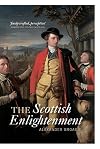
Alexander Broadie is Professor of Logic and Rhetoric at the University of Glasgow, a chair once occupied by Adam Smith. It only seems appropriate that he has penned a history of the Scottish Enlightenment.
While this book styles itself as an introduction to the achievements of the Scottish Enlightenment in science, philosophy, history, economics, etc., it actually reads more like an "apologia," in the most classical literary sense: The author spends less time explaining the Scottish show more Enlightenment than justifying and glorifying it.
I also detected a slight undercurrent of self-congratulation running through the text: A bulk of the author's rhetorical intent seems to be the argument that Scotland was and is to this day an "Enlightened" country. He defines "enlightenment" by the public embracing of values such as tolerance and the free exchange of ideas. The author makes a legitimate point that Scotland was among the places where these values first became mainstream, even though such values are commonplaces of Western self-identity and features, to greater or lesser extent, of most every liberal democracy.
A greater concern is the lack of recognition of the dark realities of the Scottish Enlightenment, which makes this work unbalanced in voice and limited in scope. The author leaves out two important facts:
1) that all the great luminaries of the Enlightenment were men -- the first such mention of which is accompanied by a brief account of the iniquitous social conditions of women who had few if any opportunities to participate in a major intellectual moment; and
2) that the great men of the era liked it this way -- which is not mentioned at all.
Both facts are unfortunate implications of the Scottish Enlightenment’s augmentation of the imperial ideology and practice, i.e., racist ethnography and slave-ownership in the name of "progress". Both certainly deserve a mention, if not an in-depth investigation, when introducing the general reader to such an important historical era.
Despite its flaws, this work remains a readable and accessible introduction to the Enlightenment era in Western intellectual history. The thematic take on the ideas of this period is refreshingly different (exemplified by the absence of hagiography of major figures such as Hutcheson, Hume, and Reid).
One caveat -- this work is decidedly apologetic in tone and fails to note the unsavory realities of the Enlightenment. show less
The Cambridge Companion to the Scottish Enlightenment (Cambridge Companions to Philosophy) by Alexander Broadie
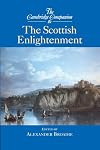
I gave this book away. I totally regret that.
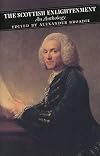
Lists
Awards

You May Also Like


Associated Authors
Statistics
- Works
- 19
- Also by
- 4
- Members
- 381
- Popularity
- #63,386
- Rating
- 3.7
- Reviews
- 3
- ISBNs
- 43
- Languages
- 1