
Eli Gottlieb
Author of Now You See Him
Works by Eli Gottlieb
Nejhodnější chlapec 1 copy
Tagged
Common Knowledge
- Birthdate
- 1969
- Gender
- male
- Education
- Hampshire College
- Occupations
- author
- Nationality
- USA
- Birthplace
- New York, New York, USA
- Associated Place (for map)
- New York, USA
Members
Reviews

Spoilery. Other than as a sensitive depiction of the life and times of an autistic man, I can’t really see the point of the book. Sure, it’s written well and reasonably entertaining, but there is no definitive struggle or clash that needs resolving. Todd suffers the ups and downs of humanity like the rest of us, albeit in some more vulnerable ways than “neurotypicals” have to deal with. There’s a sinister staff member at the group home he resides at and there’s some tension show more there, but it all comes to basically nothing. Ditto with Todd’s brother and the situation about the money. Todd ends up back at the home with no harm done. As a matter of fact the two thorns in his side, the aide and his roommate are gone. He has a new understanding with his sister-in-law and has tangible evidence of how much his mother loved him before she died. The letter was lovely and touching, but I had to put aside my desire for some kind of conflict or point to the book and once I did that it became easier to deal with. I think if I hadn’t listened to this narrated by the incomparable Bronson Pinchot, I might have left it a DNF. All right in its way, but really just a thinly veiled treatise on how we should accept the “neuro-different” and how really they are just like us. Except not. show less
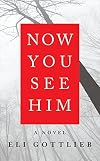
Short on likeable characters. Long on depressed, morose husbands, wives, parents, and friends all at various stages of begrudgingly accepting their place in the world. Neither of these traits make Now You See Him any less engaging of a novel. It may even inspire reluctant moments of introspection by many readers although admittance of this effect may be acknowledged by a much smaller number.
The entire story is told through the voice and eyes of Nick Framingham, a self-acknowledged absent show more husband and father at the end of a long period described by his wife Lucy as spent believing he was, "living in some little tree house of the mind spying out on the world and the world can't see you back." From this tree house Nick is shaken to the ground that is reality by the death of his best friend from childhood, Rob Castor.
Nick struggles to understand what he wants, who he is, and whether he is able to exercise the will necessary to swim parallel to shore, break free, and prove to himself that life is not an inescapable undertow dragging him along for a predictable, regret themed ride. Nick seems to determine he is not in control, that there are no longer choices to be made, simply actions to take. The possibility of eliminating the burden of responsibility can be actualized. While Nick vacillates along the edge of the undertow, he sees those around him making what appear to be choices. Choices that he can interpret as signs the grasp of the undertow can be broken, or, alternately, viewed as further evidence he is merely an interested observer of his own life.
Now You See Him is a book to sit down with and read in an afternoon but also one worth enjoying at a stroll, to absorb and appreciate all the details and complexities Gottlieb packs into 262 pages. "Belinda was built like a beautiful nose tackle, with all her physical features outsized, as if for the anatomically hard of hearing," writes Gottlieb. It is Eli Gottlieb's writing that makes Now You See Him a pleasure to read even if a little empathy is all we can muster for Nick Framingham and the rest of the cast.
More reviews. show less
The entire story is told through the voice and eyes of Nick Framingham, a self-acknowledged absent show more husband and father at the end of a long period described by his wife Lucy as spent believing he was, "living in some little tree house of the mind spying out on the world and the world can't see you back." From this tree house Nick is shaken to the ground that is reality by the death of his best friend from childhood, Rob Castor.
Nick struggles to understand what he wants, who he is, and whether he is able to exercise the will necessary to swim parallel to shore, break free, and prove to himself that life is not an inescapable undertow dragging him along for a predictable, regret themed ride. Nick seems to determine he is not in control, that there are no longer choices to be made, simply actions to take. The possibility of eliminating the burden of responsibility can be actualized. While Nick vacillates along the edge of the undertow, he sees those around him making what appear to be choices. Choices that he can interpret as signs the grasp of the undertow can be broken, or, alternately, viewed as further evidence he is merely an interested observer of his own life.
Now You See Him is a book to sit down with and read in an afternoon but also one worth enjoying at a stroll, to absorb and appreciate all the details and complexities Gottlieb packs into 262 pages. "Belinda was built like a beautiful nose tackle, with all her physical features outsized, as if for the anatomically hard of hearing," writes Gottlieb. It is Eli Gottlieb's writing that makes Now You See Him a pleasure to read even if a little empathy is all we can muster for Nick Framingham and the rest of the cast.
More reviews. show less
 This review was written for LibraryThing Early Reviewers.
A incredible story written from the perspective of a 40ish year old institutuionalized autistic man. I will say that I dearly hope there are places out there like the Payton Living Center from the book. I have a teenage son on the autism spectrum and I can say that the author hit it right with the disconnection and social awkwardness, along with the actions of hurting themselves to take them out of the moment. I truly came to care about Todd and felt the discomfort he felt with the 'Mike show more employee' along with an outrage on my part for the Mike characters actions. I teared up over his longing to go home and missing his mother. Overall, a really good book that draws emotion out of you. show less
Gottlieb did a superb job of imagining the mindset/thought processes of an autistic man. It was realistic, and highly entertaining. I loved how he would weave facts and statistics about autism into the thread of Todd's thoughts. Todd often referenced the encyclopedia, which he referred to as Mr. B. and in his mind, Mr. B had this calm, soothing tone that he used to speak to him - i.e. the voice in Todd's head.
The characters were all well done, from the brother (who was a total jerk, if I do show more say so) to Raykene, as well as Tommy Doon, Todd's roommate who liked to try and give Todd "the volts." Something to think about is how these facilities might be so understaffed they'll take anyone, as in the character, Mike Hinton. He seemed to have no clue at all about how to handle the individuals living there. He tried to drag Todd into his deceitful foray by attempting to blackmail him, as if he could depend on/trust Todd to do what he wanted. Mike "The Apron" (Todd's name for him - which was hilarious) reminded Todd of his father, and I thought the direction of this storyline could have been deployed a bit more.
There were funny parts (the breeze in his pants) and sad parts (his longing for his mother and home). I thought the ending was perfect, and was glad/happy to see how he wrapped it up, giving Todd something special that he'd needed throughout the story. show less
The characters were all well done, from the brother (who was a total jerk, if I do show more say so) to Raykene, as well as Tommy Doon, Todd's roommate who liked to try and give Todd "the volts." Something to think about is how these facilities might be so understaffed they'll take anyone, as in the character, Mike Hinton. He seemed to have no clue at all about how to handle the individuals living there. He tried to drag Todd into his deceitful foray by attempting to blackmail him, as if he could depend on/trust Todd to do what he wanted. Mike "The Apron" (Todd's name for him - which was hilarious) reminded Todd of his father, and I thought the direction of this storyline could have been deployed a bit more.
There were funny parts (the breeze in his pants) and sad parts (his longing for his mother and home). I thought the ending was perfect, and was glad/happy to see how he wrapped it up, giving Todd something special that he'd needed throughout the story. show less
Lists
Awards


You May Also Like


Associated Authors
Statistics
- Works
- 6
- Members
- 857
- Popularity
- #29,858
- Rating
- 3.4
- Reviews
- 63
- ISBNs
- 53
- Languages
- 5
