
John Esslemont (1874–1925)
Author of Baha'u'llah and the New Era: An Introduction to the Baha'i Faith
About the Author
Image credit: By from http://bahai-library.com/personal/huia/leiden/esslemont.jpg, Fair use, https://en.wikipedia.org/w/index.php?curid=34213610
Works by John Esslemont
Baha'u'llah and the New Era: An Introduction to the Baha'i Faith (1970) — Author — 326 copies, 6 reviews
Baha'u'llah and the new era 2 copies
GLI OTTO VELI 1 copy
Bahá u lláh e a nova era 1 copy
El Mensaje de Bahá’u’lláh 1 copy
Bahaullah and tne new era 1 copy
Tagged
Common Knowledge
- Canonical name
- Esslemont, John
- Legal name
- Esslemont, John Ebenezer
- Other names
- ESSLEMONT, John Ebenezer
ESSLEMONT, John E.
ESSLEMONT, J. E.
ESSLEMONT, John - Birthdate
- 1874
- Date of death
- 1925
- Gender
- male
- Education
- University of Aberdeen
- Occupations
- researcher (medical)
author
linguist
translator - Organizations
- Baha'i Faith
- Nationality
- Scotland (birth)
UK
Members
Reviews
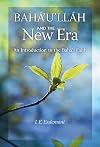
Esslemont became "acquainted" with the Baha'i teachings in 1914. He corresponded with and visited Abdu'l-Baha, the son of Baha'u'llah, in 1919-20. Thereafter he wrote this work, and submitted it to the Baha'i Assembly of England, with Shoghi Effendi's approval.
In the first chapter "Glad Tidings", the "greatest event in History" is announced--that Baha'u'llah -- "The Promised one of all the peoples of the world hath appeared". Citing Abdu'l-Baha. Carlyle's description of the "Great Man" in show more history is quoted, and highlighted with the Prophet who appears "Alone against the world, without a single human being capable of teaching, guiding, of fully understanding Him, or of sharing His responsibility." [4]
Esslemont logically proceeds from the pronouncement to the proofs of Prophethood. He notes that Baha'u'llah asked no one to accept his statements blindly. He proposes the same tests of authenticity as those established by his predecessors. Moses laid down the test of whether the prophesies are accurate in "coming to pass". Jesus appealed to the fruits--"Ye shall know them by their fruits". [10-11]. show less
In the first chapter "Glad Tidings", the "greatest event in History" is announced--that Baha'u'llah -- "The Promised one of all the peoples of the world hath appeared". Citing Abdu'l-Baha. Carlyle's description of the "Great Man" in show more history is quoted, and highlighted with the Prophet who appears "Alone against the world, without a single human being capable of teaching, guiding, of fully understanding Him, or of sharing His responsibility." [4]
Esslemont logically proceeds from the pronouncement to the proofs of Prophethood. He notes that Baha'u'llah asked no one to accept his statements blindly. He proposes the same tests of authenticity as those established by his predecessors. Moses laid down the test of whether the prophesies are accurate in "coming to pass". Jesus appealed to the fruits--"Ye shall know them by their fruits". [10-11]. show less

In this compact work, Esslemont comprehensively yet succinctly sets forth the teachings of Baha'u'llah, the Prophet and Founder of the Baha'i Faith. He outlines the religion's early history; explains its theology; incorporates extracts from Baha'i scripture; and provides information on Baha'i spiritual practices.
About the Author:
J. E. Esslemont (1874-1925) was a prominent Baha'i from Scotland. He trained in medicine at Aberdeen University, graduating in 1898. Tuberculosis forced him to show more abandon a promising career in medical research and to pursue other interests. He was also a linguist, learning six languages including Persian and Arabic. This enabled him to assist in translating a number of important Baha'i works. "Baha'u'llah and the New Era" first appeared in 1923. show less
About the Author:
J. E. Esslemont (1874-1925) was a prominent Baha'i from Scotland. He trained in medicine at Aberdeen University, graduating in 1898. Tuberculosis forced him to show more abandon a promising career in medical research and to pursue other interests. He was also a linguist, learning six languages including Persian and Arabic. This enabled him to assist in translating a number of important Baha'i works. "Baha'u'llah and the New Era" first appeared in 1923. show less
In this compact work, Esslemont comprehensively yet succinctly sets forth the teachings of Baha'u'llah, the Prophet and Founder of the Baha'i Faith. He outlines the religion's early history; explains its theology; incorporates extracts from Baha'i scripture; and provides information on Baha'i spiritual practices.
About the Author:
J. E. Esslemont (1874-1925) was a prominent Baha'i from Scotland. He trained in medicine at Aberdeen University, graduating in 1898. Tuberculosis forced him to show more abandon a promising career in medical research and to pursue other interests. He was also a linguist, learning six languages including Persian and Arabic. This enabled him to assist in translating a number of important Baha'i works. "Baha'u'llah and the New Era" first appeared in 1923. show less
About the Author:
J. E. Esslemont (1874-1925) was a prominent Baha'i from Scotland. He trained in medicine at Aberdeen University, graduating in 1898. Tuberculosis forced him to show more abandon a promising career in medical research and to pursue other interests. He was also a linguist, learning six languages including Persian and Arabic. This enabled him to assist in translating a number of important Baha'i works. "Baha'u'llah and the New Era" first appeared in 1923. show less

Esauriente, minuziosa, autorevole esposizione della Fede bahá’í. L’autore ne espone la storia, ne spiega la teologia, gli insegnamenti e le pratiche spirituali, avvalendosi di molti brani tratti dalle Scritture bahá’í. È un compagno in-sostituibile per chi voglia incominciare a conoscere questa Fede.
You May Also Like


Associated Authors
Statistics
- Works
- 23
- Members
- 355
- Popularity
- #67,467
- Rating
- 3.8
- Reviews
- 7
- ISBNs
- 23
- Languages
- 5
- Favorited
- 1