
Lisa Graff
Author of Absolutely Almost
Works by Lisa Graff
Associated Works
Tagged
Common Knowledge
- Legal name
- Graff, Lisa Colleen
- Other names
- Neal, Isla
- Birthdate
- 1981-01-10
- Gender
- female
- Education
- New School University (MA, Creative Writing)
University of California, Los Angeles - Occupations
- editor
adjunct professor - Organizations
- McDaniel College
- Nationality
- USA
- Places of residence
- Big Bear, California, USA
New York, USA
Pennsylvania, USA - Associated Place (for map)
- USA
Members
Reviews
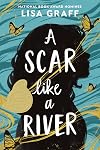
I loved Lost in the Sun by Lisa Graff. This novel takes one of the characters from Lost in the Sun and tells her story.
Fallon has a scar whose resemblance to a river becomes the metaphor for life. You cannot miss her scar, for it covers a large part of her face. Fallon doesn't moan and complain but is pretty realistic about it. She's also very introspective, which is a nice departure from plots revolving around misunderstandings and emotional responses normally seen in middle school books. show more Fallon holds secrets and uses humor and deflect. She's a wonderful actress who can sing, act, and write. We begin the novel with her trying out for the school musical, Hello, Dolly! We also learn at the beginning that her mom isn't well, so Fallon tries to help her mother as well. She also has two close friends who she watches movies with and hangs out with. All seems well.
When her uncle dies, Fallon begins a journey to healing but not without having to air her secrets to her family and finding a future for herself. You learn early on that her uncle cut her with a knife one night. Going to the funeral is not what Fallon wants to do. She hates her uncle, but she never told her family that he was the one who cut her. She plans on telling about him at the funeral so that everyone will know what a horrible man he was. Because she hasn't emotionally dealt with what happened to her, she can't do it. Ironically, her competition in theatre compliments Fallon on her talents, which really throws Fallon off. They strike up a friendship when Fallon has issues with the musical. She feels that Dolly gaslights people. She wants to change the play. In addition, they discover that they have therapy in the same building at the same time. This friendship allows Fallon to be bolder. To say that manipulating people is wrong. Consequences happen, but this friendship and the therapy allow healing to take place.
I really enjoyed the novel. It will trigger any female who has had any form of sexual assault. The scene described is short and appropriate for the age group. Some parents will choose to protect their children and not want them to read this novel. For others, it describes what a child should stand up against and not be manipulated into accepting as normal. Allowing kids to learn what is not okay, also allows them to know that they can and should speak up. It also allows them to understand what others may be dealing with in their lives. Giving people privacy to deal with their trauma is also explained. It has a place in libraries; what happens to little girls or even women shouldn't be hidden as treated as shameful. show less
Fallon has a scar whose resemblance to a river becomes the metaphor for life. You cannot miss her scar, for it covers a large part of her face. Fallon doesn't moan and complain but is pretty realistic about it. She's also very introspective, which is a nice departure from plots revolving around misunderstandings and emotional responses normally seen in middle school books. show more Fallon holds secrets and uses humor and deflect. She's a wonderful actress who can sing, act, and write. We begin the novel with her trying out for the school musical, Hello, Dolly! We also learn at the beginning that her mom isn't well, so Fallon tries to help her mother as well. She also has two close friends who she watches movies with and hangs out with. All seems well.
When her uncle dies, Fallon begins a journey to healing but not without having to air her secrets to her family and finding a future for herself. You learn early on that her uncle cut her with a knife one night. Going to the funeral is not what Fallon wants to do. She hates her uncle, but she never told her family that he was the one who cut her. She plans on telling about him at the funeral so that everyone will know what a horrible man he was. Because she hasn't emotionally dealt with what happened to her, she can't do it. Ironically, her competition in theatre compliments Fallon on her talents, which really throws Fallon off. They strike up a friendship when Fallon has issues with the musical. She feels that Dolly gaslights people. She wants to change the play. In addition, they discover that they have therapy in the same building at the same time. This friendship allows Fallon to be bolder. To say that manipulating people is wrong. Consequences happen, but this friendship and the therapy allow healing to take place.
I really enjoyed the novel. It will trigger any female who has had any form of sexual assault. The scene described is short and appropriate for the age group. Some parents will choose to protect their children and not want them to read this novel. For others, it describes what a child should stand up against and not be manipulated into accepting as normal. Allowing kids to learn what is not okay, also allows them to know that they can and should speak up. It also allows them to understand what others may be dealing with in their lives. Giving people privacy to deal with their trauma is also explained. It has a place in libraries; what happens to little girls or even women shouldn't be hidden as treated as shameful. show less
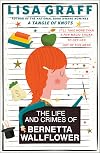
“The Life and Crimes of Bernetta Wallflower” features the eponymous protagonist, a girl who has been kicked out of her private middle school for operating a cheating ring, which was the work of another student, Ashley, who managed to frame Bernetta for the whole thing. As the book opens, clearly Ashley is the villain and Bernetta is the good guy.
But if Bernetta is to return to her private school, she must come up with $9000 tuition over the summer, because her scholarship has been show more revoked and her parents can’t afford it. So she teams up with Gabe, a boy she seemingly meets by chance, to work together as con artists all summer to "earn" the money.
So: Bernetta and Gabe are in fact every bit as repulsive as Ashley, and that’s the problem with this book. It’s well written, and the plot is carefully thought out. But all three main characters are child sociopaths. Sure, in the end, Ashley gets her comeuppance and Bernetta and Gabe decide the life of crime is not for them… but it isn’t enough. Through most of the book, our two main characters are engaging in criminal activity that would put an adult in prison. They go through a whole barrage of scams to steal money from innocent, often very kind, people. (And Graff explains how each scam is done, so there could even be a few readers who decide to try out some of these things, having had a brief lesson in the book.) At the end of the book, none of their victims will get back what was stolen from them, and the two children’s remorse seems more of the “this is too much trouble and too risky” variety than the “what I have done is morally wrong” variety.
The reader who is not familiar with the way a sociopath’s mind works may swallow the conclusion of the book and decide that the children have reformed themselves. But anyone who has read much about the sociopathic condition… or worse, been the victim of a sociopath… will know that children who engage in this type of activity (like adults) are incapable of feeling empathy for their victims and view a moral conscience as a weakness. They will not be reformed, and as soon as Bernetta or Gabe come up short of cash again, as all people do, they will begin stealing from kindhearted strangers again. show less
But if Bernetta is to return to her private school, she must come up with $9000 tuition over the summer, because her scholarship has been show more revoked and her parents can’t afford it. So she teams up with Gabe, a boy she seemingly meets by chance, to work together as con artists all summer to "earn" the money.
So: Bernetta and Gabe are in fact every bit as repulsive as Ashley, and that’s the problem with this book. It’s well written, and the plot is carefully thought out. But all three main characters are child sociopaths. Sure, in the end, Ashley gets her comeuppance and Bernetta and Gabe decide the life of crime is not for them… but it isn’t enough. Through most of the book, our two main characters are engaging in criminal activity that would put an adult in prison. They go through a whole barrage of scams to steal money from innocent, often very kind, people. (And Graff explains how each scam is done, so there could even be a few readers who decide to try out some of these things, having had a brief lesson in the book.) At the end of the book, none of their victims will get back what was stolen from them, and the two children’s remorse seems more of the “this is too much trouble and too risky” variety than the “what I have done is morally wrong” variety.
The reader who is not familiar with the way a sociopath’s mind works may swallow the conclusion of the book and decide that the children have reformed themselves. But anyone who has read much about the sociopathic condition… or worse, been the victim of a sociopath… will know that children who engage in this type of activity (like adults) are incapable of feeling empathy for their victims and view a moral conscience as a weakness. They will not be reformed, and as soon as Bernetta or Gabe come up short of cash again, as all people do, they will begin stealing from kindhearted strangers again. show less
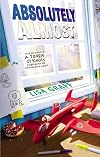
Albie is almost everything, but not quite the best at anything. He’s not all that smart, but he can’t blame his bad grades on a learning disability. He isn’t particularly good at chess, like his friend Erlan, nor does he excel at sports or art. No matter how much he studies, he can’t seem to get more than three or four words right on his spelling test.
Even though he struggles to live up to his parents’ strict expectations and gets bullied at his new school, Albie’s fifth grade show more year is full of new people who encourage him to be fully Albie. An artsy nanny, a girl at school who hardly ever speaks, a best friend whose family stars in a reality show, the owner of a coffee shop, a corny math teacher, and sometimes his own parents…all of them see and love Albie for who he is, even if he’s still trying to figure out who that might be.
It may not sound like much of a story, but this is a really good book. I’m keeping an eye on it for the Newbery.
Grownup portion of review:
The more I think about this book, the more I like it. I've just added a star to my rating after writing the kids' review, in fact.
With Albie as narrator, Graff has circumscribed all the kids who aren't remarkable enough to find themselves in those other books, the ones about supernatural courage or intense tragedy or outrageous talent or inspirational overcoming of a disability. Albie is just regular, maybe a little less smart than the average fifth grader.
But his mother, despite her sometimes oppressive expectations, reminds Albie who he is when she tucks him in: "You are thoughtful and caring and good." And that's Albie's superpower, as it turns out.
This is nothing to sneeze at. In a culture in which kids must be outstanding at something, no matter how inane that something is (case in point: Honey Boo Boo is the best at being a fat smart-ass, and America loves her, and she's rich and famous), Albie gives readers permission to stop clawing for greatness and to be kind above all. Kind above special. (There is a touching moment when Albie's mom fights disappointment over a letter indicating he does not have dyslexia; she was hoping for a special disability to explain away his unremarkable school performance.) Kind above cool. (In a funny but gut-wrenching subplot, the school bully brings Albie into his clique, hoping to get to Albie's TV-famous friend Erlan. Completely oblivious, Albie thinks he has become cool and tries his best to help his outcast friend Betsy be cool as well so that they can still eat lunch together. Outcome? Sorry, no spoilers here.) Kind above skilled. Above smart. Above pretentious. Above first.
One of the most subtle and beautiful aspects of Albie is that he is kind to his parents, looking past their imperfect parenting to see that they are doing the best they can.
Adults (oh yeah, and kids, too) have plenty to learn from Albie's absolute almost-ness. show less
Even though he struggles to live up to his parents’ strict expectations and gets bullied at his new school, Albie’s fifth grade show more year is full of new people who encourage him to be fully Albie. An artsy nanny, a girl at school who hardly ever speaks, a best friend whose family stars in a reality show, the owner of a coffee shop, a corny math teacher, and sometimes his own parents…all of them see and love Albie for who he is, even if he’s still trying to figure out who that might be.
It may not sound like much of a story, but this is a really good book. I’m keeping an eye on it for the Newbery.
Grownup portion of review:
The more I think about this book, the more I like it. I've just added a star to my rating after writing the kids' review, in fact.
With Albie as narrator, Graff has circumscribed all the kids who aren't remarkable enough to find themselves in those other books, the ones about supernatural courage or intense tragedy or outrageous talent or inspirational overcoming of a disability. Albie is just regular, maybe a little less smart than the average fifth grader.
But his mother, despite her sometimes oppressive expectations, reminds Albie who he is when she tucks him in: "You are thoughtful and caring and good." And that's Albie's superpower, as it turns out.
This is nothing to sneeze at. In a culture in which kids must be outstanding at something, no matter how inane that something is (case in point: Honey Boo Boo is the best at being a fat smart-ass, and America loves her, and she's rich and famous), Albie gives readers permission to stop clawing for greatness and to be kind above all. Kind above special. (There is a touching moment when Albie's mom fights disappointment over a letter indicating he does not have dyslexia; she was hoping for a special disability to explain away his unremarkable school performance.) Kind above cool. (In a funny but gut-wrenching subplot, the school bully brings Albie into his clique, hoping to get to Albie's TV-famous friend Erlan. Completely oblivious, Albie thinks he has become cool and tries his best to help his outcast friend Betsy be cool as well so that they can still eat lunch together. Outcome? Sorry, no spoilers here.) Kind above skilled. Above smart. Above pretentious. Above first.
One of the most subtle and beautiful aspects of Albie is that he is kind to his parents, looking past their imperfect parenting to see that they are doing the best they can.
Adults (oh yeah, and kids, too) have plenty to learn from Albie's absolute almost-ness. show less

When Jared Richards died of an undiagnosed heart condition it shattered his younger sister Annie’s world. She lives in a state of constant worry and anxiety where a mosquito bite or an upset stomach signals horrendous and fatal medical conditions. She wears a bike helmet when riding in the car and ace bandages on her ankles to avoid sprains and everyone around her gives her the “dead brother” look when they try to explain that she really is safe. She doesn’t know what safe is anymore show more and she is pretty certain that no one else does either.
This summer with her brother’s birthday looming and her anxiety overshadowing her life, she and her parents must find a way to move forward. With the help of a new neighbor, she may just be able to find a way back to the living.
This book is heartbreaking in so many ways. Annie is desperate to find some control over her world and her friends and family want to help even their own worlds are spiraling out control. I loved the connection between Mrs. Finch and Annie, a bond that could offer healing to both of them. I loved how Annie's friends never gave up on her despite all that had been going on. All the characters in this story were refreshingly authentic. When dealing with a subject such as this, it is always too easy to fall into archetypes and caricatures. I especially loved the use of Charlotte’s Web to make the point of an ever-changing world where life goes on after death.
This book may be a lot to handle for a child who has lost a family member, but it would make for a great discussion tool for most kids ages 5-13. It is a wonderful story. show less
This summer with her brother’s birthday looming and her anxiety overshadowing her life, she and her parents must find a way to move forward. With the help of a new neighbor, she may just be able to find a way back to the living.
This book is heartbreaking in so many ways. Annie is desperate to find some control over her world and her friends and family want to help even their own worlds are spiraling out control. I loved the connection between Mrs. Finch and Annie, a bond that could offer healing to both of them. I loved how Annie's friends never gave up on her despite all that had been going on. All the characters in this story were refreshingly authentic. When dealing with a subject such as this, it is always too easy to fall into archetypes and caricatures. I especially loved the use of Charlotte’s Web to make the point of an ever-changing world where life goes on after death.
This book may be a lot to handle for a child who has lost a family member, but it would make for a great discussion tool for most kids ages 5-13. It is a wonderful story. show less
Lists
Awards


You May Also Like


Associated Authors
Statistics
- Works
- 18
- Also by
- 1
- Members
- 4,425
- Popularity
- #5,661
- Rating
- 3.8
- Reviews
- 179
- ISBNs
- 149
- Languages
- 4
- Favorited
- 2