
Shulamith Levey Oppenheim
Author of The Lily Cupboard
About the Author
Works by Shulamith Levey Oppenheim
Associated Works
Shape Shifters: Fantasy and Science Fiction Tales About Humans Who Can Change Their Shapes (1978) — Contributor — 20 copies, 1 review
Tagged
Common Knowledge
- Birthdate
- 1928-09-02
- Gender
- female
- Nationality
- USA
- Birthplace
- Shaker Heights, Ohio, USA
- Associated Place (for map)
- USA
Members
Reviews

"Where do I end and you begin?" asks a series of creatures and objects to a part of themselves - a cat to its tail, for instance - or to the larger whole of which they are a part - a branch to a tree - in this poetic picture-book. In every case, there is a sense of connection, of smaller parts being integral to the larger whole, and of everything fitting together.
I won't lie: I picked up Where Do I End and You Begin? because of the immensely appealing kitty cat on the cover, hoping, as a show more confirmed cat-lover, that it would be a picture-book celebration of feline charm. I recognized the author's name, of course - Oppenheim wrote a children's fantasy novel many years ago about selkies, a subject of interest to me - although the illustrator - Swiss artist Monique Félix - was unknown to me. Although not what I was expecting, I did find this books appealing, and think that the combination of rhyming text and beautiful artwork would make it an excellent read-aloud selection at bedtime. The concluding passage - "Well, / I know where the sky / meets the end of the sea, / I know where the branch / meets the trunk of the tree, / I know where the flower / meets the buzz of the bee, / And I know, when we hug - / That's the place you meet me!" - leaves the reader and listener with a feeling of connection as well. Recommended to anyone looking for beautifully illustrated picture-books, or for children's poems about belonging, the sense of connection, and everything fitting together into one big whole. show less
I won't lie: I picked up Where Do I End and You Begin? because of the immensely appealing kitty cat on the cover, hoping, as a show more confirmed cat-lover, that it would be a picture-book celebration of feline charm. I recognized the author's name, of course - Oppenheim wrote a children's fantasy novel many years ago about selkies, a subject of interest to me - although the illustrator - Swiss artist Monique Félix - was unknown to me. Although not what I was expecting, I did find this books appealing, and think that the combination of rhyming text and beautiful artwork would make it an excellent read-aloud selection at bedtime. The concluding passage - "Well, / I know where the sky / meets the end of the sea, / I know where the branch / meets the trunk of the tree, / I know where the flower / meets the buzz of the bee, / And I know, when we hug - / That's the place you meet me!" - leaves the reader and listener with a feeling of connection as well. Recommended to anyone looking for beautifully illustrated picture-books, or for children's poems about belonging, the sense of connection, and everything fitting together into one big whole. show less
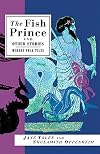
The Boy from the Bottom of the Sea is a Greenland Inuit merman tale, written by Jane Yolan and Shulamith Oppenheimer. A man beat his wife brutally everyday, and everyday she tried to hide from him at a kindly neighbor’s home. Everyday he would find her and drag her home. One day, he hits her with a wooden box, so, even though she is pregnant, she runs away and lives at the bottom of the sea. She gives birth to a merchild, who grows up and wants to return to land. She tells him he may, but show more he must go to the house of his father, look in the window, and make a terrible face. He does, and all of the people inside die. When the neighbors come to see the family, they see only tracks of seaweed and a house full of dead people.
The moral here is obviously, do not beat your wife, or a hideous merchild will come and scare you to death. I have always loved stories of mythical creatures, even the scary ones. However, I am not sure I agree with frightening people with monsters, but it kept even one man from knocking his wife around, GREAT!
The story is short and too the point. I wanted more detail. I am sure if one was telling this while sitting around a fire next to the sea at night, there would be a lot more detail.
Another mermen tale from Chile tells of a widower fisherman named Curi-Cavin. This story is called Rayen-Caven and the Sea Spirit. Unable to raise his young Rayen-Caven becomes a woman due to the training of the Sea Spirit, which comes to her as sea air. A week before her twentieth birthday, she brings home a suitor, Necul-Naqui. They tell her father that they are in love and to be married. The father comes clean, and the suitor promises to fight for his bride.
The day before the wedding, Curi-Cavin goes out fishing. A horrible storm kicks up, and the Sea Spirit descends on the village, killing everyone, while Curi-Caven watches helplessly. He is the only one to survive.
This is a story about being careful about making bargains. It is a good message, although it is rather grim. It teaches children to be careful about making decisions about their loved ones. It also could be used to discuss freedom of choice for everyone. I liked it. show less
The moral here is obviously, do not beat your wife, or a hideous merchild will come and scare you to death. I have always loved stories of mythical creatures, even the scary ones. However, I am not sure I agree with frightening people with monsters, but it kept even one man from knocking his wife around, GREAT!
The story is short and too the point. I wanted more detail. I am sure if one was telling this while sitting around a fire next to the sea at night, there would be a lot more detail.
Another mermen tale from Chile tells of a widower fisherman named Curi-Cavin. This story is called Rayen-Caven and the Sea Spirit. Unable to raise his young Rayen-Caven becomes a woman due to the training of the Sea Spirit, which comes to her as sea air. A week before her twentieth birthday, she brings home a suitor, Necul-Naqui. They tell her father that they are in love and to be married. The father comes clean, and the suitor promises to fight for his bride.
The day before the wedding, Curi-Cavin goes out fishing. A horrible storm kicks up, and the Sea Spirit descends on the village, killing everyone, while Curi-Caven watches helplessly. He is the only one to survive.
This is a story about being careful about making bargains. It is a good message, although it is rather grim. It teaches children to be careful about making decisions about their loved ones. It also could be used to discuss freedom of choice for everyone. I liked it. show less
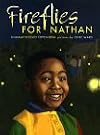
Nathan is a young child who is staying with his grandparents. Like most children, Nathan is curious about his fathers childhood in the house where he now stands. He soon learns that they are alike in very many ways and that his fathers favorite thing at his age was fireflies. Nathan, Nana, and Poppy then set out on an adventure to catch fireflies later that night. With this being Nathan's first firefly adventure, he is very excited and eager to start catching. Finally it is time for the show more three of them to start catching and Nathan is just as excited and eager to look at these new creatures. After a night of firefly catching, Nana and Poppy settle a very happy Nathan into bed. He even tells them, "You can let them out when I'm asleep" just like his father did.
Through this book we see Nathan's resemblance to his father grow and grow. We first see them state that they were the same age, then learn that they were both excited and a tad impatient, and finally learn that they both had a big heart because they wanted them set free. We get to see Nathan be this carefree child who just wanted to catch fireflies and be with his grandparents. This book reminds me entirely of my childhood and I really enjoyed it. show less
Through this book we see Nathan's resemblance to his father grow and grow. We first see them state that they were the same age, then learn that they were both excited and a tad impatient, and finally learn that they both had a big heart because they wanted them set free. We get to see Nathan be this carefree child who just wanted to catch fireflies and be with his grandparents. This book reminds me entirely of my childhood and I really enjoyed it. show less
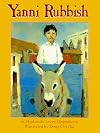
I had mixed feelings about this book, but overall I think it is a good multicultural book. One reason that I liked this book is because it showed a global perspective about what life is like for a child in a Greek village. Yanni, the main character, has to collect trash throughout the village on an old wagon run by a donkey to help support his family. His father is often away working, and his mother also has to work. This sort of job is very uncommon in America due to the technology we have show more today and to the good fortune a lot of children experience, especially at the young age of eight. Not to mention, most of the readers probably have little knowledge of what a poor Greek village looks like, so they are able to understand what it is like there. One reason I didn’t enjoy this book is because of the alternate message that could be taken away from the book. After some of Yanni’s friends made fun of him for collection trash and gave him the nickname of “Yanni Rubbish,” Yanni decides to fix up his wagon in the hope of getting his friends to stop calling him that name. All of his friends are really impressed with his new wagon and want to take a ride in it, and all is well with the friends. I think this sends the message that if you spruce up your material possessions, people who used to bully you will now want to be your friend because you have new cool things, which isn’t the best message to be sent. Overall, I think the biggest idea of this story is that work ethic is a valuable quality to have and that it really pays off to help support your family. show less
Lists
Awards


You May Also Like


Associated Authors
Statistics
- Works
- 17
- Also by
- 3
- Members
- 1,106
- Popularity
- #23,234
- Rating
- 3.6
- Reviews
- 36
- ISBNs
- 55