
Brian Wildsmith (1930–2016)
Author of Squirrels
About the Author
Brian Wildsmith was born on January 22, 1930. He studied at the Slade School of Fine Art, London for three years. He later taught maths at the Royal Military School of Music but left so that he could pursue painting. He began working with Oxford University Press in the late 1950s when he was show more commissioned to illustrate 12 color plates for Tales from the Arabian Nights. He wrote and illustrated more than 80 books during his lifetime including A Christmas Story, Cat on the Mat, and ABC, which won the Kate Greenaway Medal. He died on August 31, 2016 at the age of 86. (Bowker Author Biography) show less
Series
Works by Brian Wildsmith
Associated Works
Myths of the Norsemen: Retold from the Old Norse Poems and Tales (1960) — Illustrator, some editions — 803 copies, 14 reviews
Hunt for the yule log. Illustrated by Brian Wildsmith — Illustrator — 1 copy
Tagged
Common Knowledge
- Birthdate
- 1930-01-22
- Date of death
- 2016-08-31
- Gender
- male
- Education
- De La Salle College for Boys, Sheffield
Slade College of Art - Occupations
- children's book author
illustrator - Awards and honors
- Kate Greenaway Medal (1962)
museum of illustration named for him in Japan
Hans Christian Andersen Medal runner-up (1966)
Hans Christian Andersen Medal runner-up (1968) - Short biography
- interview article online http://www.booktrustchildrensbooks.or...
- Nationality
- UK
- Birthplace
- Penistone, Yorkshire, England, UK
- Places of residence
- Yorkshire, England, UK
south of France - Place of death
- Grasse, France
- Map Location
- England, UK
Members
Reviews
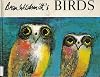
Unfortunately, my copy is smelling a bit musty. It's what you might have to put up with when you buy a book at the Saturday market for a few dollars. But the illustrations are still brilliant. Story? There is no story: "A walk of snipe"; "A wedge of swans"; "A fall of woodcock" and so on. Did he just make these names up or are they real names for numbers of things. Why does English have these strange collective nouns for animals? I just checked out a couple of these and they all seem to be show more legitimate. Wildsmith's style is deceptively erratic. At first glance like a child's scribbles but what an explosion of controlled colour> I constantly find myself asking: "How did he do this?" seems to be a wonderful melange of watercolour, gouche, crayon, spatter, sgraffito....and is there some work there with pen and ink? Not sure.
I recently wrote to the web site devoted to his work and received a delightful letter from his daughter who confirmed that they had no videos of him working ...so pretty difficult to decipher how he actually worked. But the end result is truly a marvel. The siege of bitterns with their beaks pointing up amid a few rough reeds seems to capture the essence of the birds...the colour, the pose, the beady eyes.
He specialised in birds and seems to have been able to effortlessly produce a bird of whatever shape......though I recall him saying somewhere that this effortlessness came of much practice. In his latter years he was apparently annoyed that he hadn't been given the recognition in England that he thought was warranted. (There was museum in Japan devoted to his work and that's where i first came across his work and later sought it out), Sadly, I no longer find his work in print. Maybe by taking himself and family off to France he removed himself from the hurly burly of art and publishing in England and somewhat removed himself from view. But it also attests to the fact that to be successful in Art one needs to also be a great publicist (or have one woking for you). Picasso said the key to success is in having a great agent.
Anyway, despite the lack of recognition....it takes nothing away from the power of the art itself. It's ostensibly directed at children but for me this is art for all ages. Love it. Five stars from me...even if my copy is musty. show less
I recently wrote to the web site devoted to his work and received a delightful letter from his daughter who confirmed that they had no videos of him working ...so pretty difficult to decipher how he actually worked. But the end result is truly a marvel. The siege of bitterns with their beaks pointing up amid a few rough reeds seems to capture the essence of the birds...the colour, the pose, the beady eyes.
He specialised in birds and seems to have been able to effortlessly produce a bird of whatever shape......though I recall him saying somewhere that this effortlessness came of much practice. In his latter years he was apparently annoyed that he hadn't been given the recognition in England that he thought was warranted. (There was museum in Japan devoted to his work and that's where i first came across his work and later sought it out), Sadly, I no longer find his work in print. Maybe by taking himself and family off to France he removed himself from the hurly burly of art and publishing in England and somewhat removed himself from view. But it also attests to the fact that to be successful in Art one needs to also be a great publicist (or have one woking for you). Picasso said the key to success is in having a great agent.
Anyway, despite the lack of recognition....it takes nothing away from the power of the art itself. It's ostensibly directed at children but for me this is art for all ages. Love it. Five stars from me...even if my copy is musty. show less
(Full disclosure: I received a free e-ARC for review through Netgalley.)
-- 4.5 stars, rounded down to 4 where necessary --
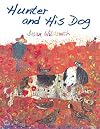
A hunter trains his new pup to retrieve sticks and gently carry eggs in his mouth. Once he's mastered these skills, his human takes him duck hunting. Rather than deliver the injured birds to certain death, the dog hides them on a nearby island and brings his human a stick instead (just like he was trained! cue: malicious compliance). The pup cleans the birds' wounds and show more brings them food stolen from his human's kitchen under the cover of night. When his human catches him in the act, the hunter is immediately shamed by his own behavior. The human gathers all the ducks and brings them home. He nurses them back to health and sets them free once they've recovered.
HUNTER AND HIS DOG is a deceptively simple children's book that fosters compassion and empathy while countering speciesism. The art is a little quirky (the hunter more resembles a clown than anything else lol) but charming nonetheless, especially when it comes to the nonhuman animals.
The only reason it didn't give it a full five stars is because of Dog's origin: he was a purchase, not a rescue and, while it's certainly in keeping with the hunter's pre-enlightenment character, it would have been nice to have seen this practice challenged as well. (Adopt, don't shop!) show less
-- 4.5 stars, rounded down to 4 where necessary --
A hunter trains his new pup to retrieve sticks and gently carry eggs in his mouth. Once he's mastered these skills, his human takes him duck hunting. Rather than deliver the injured birds to certain death, the dog hides them on a nearby island and brings his human a stick instead (just like he was trained! cue: malicious compliance). The pup cleans the birds' wounds and show more brings them food stolen from his human's kitchen under the cover of night. When his human catches him in the act, the hunter is immediately shamed by his own behavior. The human gathers all the ducks and brings them home. He nurses them back to health and sets them free once they've recovered.
HUNTER AND HIS DOG is a deceptively simple children's book that fosters compassion and empathy while countering speciesism. The art is a little quirky (the hunter more resembles a clown than anything else lol) but charming nonetheless, especially when it comes to the nonhuman animals.
The only reason it didn't give it a full five stars is because of Dog's origin: he was a purchase, not a rescue and, while it's certainly in keeping with the hunter's pre-enlightenment character, it would have been nice to have seen this practice challenged as well. (Adopt, don't shop!) show less
One of my favorite books is An Exaltation of Larks by James Lipton. This book claims to be “the ultimate edition” of terms of venery, or as perhaps more commonly known, collective nouns. Many people know a “pride of lions” or a “murder of crows” but there are hundreds of such terms, and most of them have been used since the fifteenth century.
Unfortunately, they are not used so much anymore, which is a shame, because they are such fun. And while many of them refer to groups of show more animals, that is not their only use. Clever descriptions of groups of people include “a wince of dentists,” “a pack of smokers” and “a stud of poker players.” As Lipton points out, origins of terms of venery can be divided into six “families” which he lists as:
Onomatopoeia (example: a gaggle of geese)
Characteristic (example: a leap of leopards)
Appearance (example: a knot of toads)
Habitat (example: a nest of wasps)
Comment (example: a richness of martens)
Error (i.e., an incorrect transcription preserved in corrupted form) (example: a school of fish, originally “shoal”)
It is an endlessly entertaining subject (to me, at any rate), and the author of Animal Gallery guessed it would be to children as well.
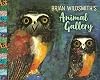
This book, curated by the late author’s family, is actually a compilation of selections from three of his books: Wild Animals, Birds, and Fishes. Each double-page spread (there are a few side-by-side pictures) is devoted to one (animal) term of venery and a gorgeous painting to illustrate it. Thus kids will see a skulk of foxes (skulking, of course), a shrewdness of apes, a party of rainbow fish, a pandemonium of parrots, and so on.
There is no text except for the term of venery, but the book is a visual banquet that will entertain and stimulate readers, and hopefully, send them looking for other information about the animals depicted and sources of other terms of venery. (For adults I recommend an entertaining online introduction to these terms in a Merriam-Webster blog post with the title "A Drudge of Lexicographers Presents: Collective Nouns" online here.)
Evaluation: If children had “coffee table books” this volume would surely quality. It is delightful in every way. If you’re looking for a wonderful and memorable holiday gift, I highly recommend this book. show less
Unfortunately, they are not used so much anymore, which is a shame, because they are such fun. And while many of them refer to groups of show more animals, that is not their only use. Clever descriptions of groups of people include “a wince of dentists,” “a pack of smokers” and “a stud of poker players.” As Lipton points out, origins of terms of venery can be divided into six “families” which he lists as:
Onomatopoeia (example: a gaggle of geese)
Characteristic (example: a leap of leopards)
Appearance (example: a knot of toads)
Habitat (example: a nest of wasps)
Comment (example: a richness of martens)
Error (i.e., an incorrect transcription preserved in corrupted form) (example: a school of fish, originally “shoal”)
It is an endlessly entertaining subject (to me, at any rate), and the author of Animal Gallery guessed it would be to children as well.
This book, curated by the late author’s family, is actually a compilation of selections from three of his books: Wild Animals, Birds, and Fishes. Each double-page spread (there are a few side-by-side pictures) is devoted to one (animal) term of venery and a gorgeous painting to illustrate it. Thus kids will see a skulk of foxes (skulking, of course), a shrewdness of apes, a party of rainbow fish, a pandemonium of parrots, and so on.
There is no text except for the term of venery, but the book is a visual banquet that will entertain and stimulate readers, and hopefully, send them looking for other information about the animals depicted and sources of other terms of venery. (For adults I recommend an entertaining online introduction to these terms in a Merriam-Webster blog post with the title "A Drudge of Lexicographers Presents: Collective Nouns" online here.)
Evaluation: If children had “coffee table books” this volume would surely quality. It is delightful in every way. If you’re looking for a wonderful and memorable holiday gift, I highly recommend this book. show less
 This review was written for LibraryThing Early Reviewers.
Celebrated British children's author and artist Brian Wildsmith turns to the Easter story in this gorgeous picture-book, telling the tale of Easter Week from the perspective of the donkey which bears Jesus into Jerusalem on Palm Sunday. Jesus' actions at the Temple, his Last Supper with the disciples, his betrayal by Judas and trial before Pontius Pilate, all these are covered, as are his Crucifixion, Resurrection and eventual Ascension...
I had hoped to get to The Easter Story before the show more recent holiday, but my library request for this and a few other titles was delayed, and I read it a few days after Easter. It scarcely matters, I suppose, as I think I would have enjoyed it, no matter the time of year. From a visual perspective, I found it an astonishingly beautiful book - the art is simply breathtaking, with vivid colors, brilliant use of gold tones and accents, and wonderfully stylized scenes. I loved pretty much everything about these paintings, from the angels to the landscape depictions of Jerusalem. If judged upon artwork alone, this would easily be a five-star title for me. Unfortunately, I found the narrative a little less appealing. Although I understand the choice to tell this story from the donkey's perspective, as a means of adding child appeal, I don't think it really works here. I recently read two different picture-books about Palm Sunday, specifically - Marni McGee's The Colt and the King and Michelle Medlock Adams's Little Colt's Palm Sunday - in which the story was told from the asinine perspective. It worked in those books, because the donkey does play a central role in Palm Sunday. But here, the presence of the donkey in various scenes - peering in the window at the Last Supper, observing the trial - strained my suspension of disbelief, and made me wish that Wildsmith had chosen a different focus for his retelling. I still would recommend this one, for those seeking children's retellings of the Easter story, but I recommend it more for the artwork and the general story, than for the specific storytelling focus. show less
I had hoped to get to The Easter Story before the show more recent holiday, but my library request for this and a few other titles was delayed, and I read it a few days after Easter. It scarcely matters, I suppose, as I think I would have enjoyed it, no matter the time of year. From a visual perspective, I found it an astonishingly beautiful book - the art is simply breathtaking, with vivid colors, brilliant use of gold tones and accents, and wonderfully stylized scenes. I loved pretty much everything about these paintings, from the angels to the landscape depictions of Jerusalem. If judged upon artwork alone, this would easily be a five-star title for me. Unfortunately, I found the narrative a little less appealing. Although I understand the choice to tell this story from the donkey's perspective, as a means of adding child appeal, I don't think it really works here. I recently read two different picture-books about Palm Sunday, specifically - Marni McGee's The Colt and the King and Michelle Medlock Adams's Little Colt's Palm Sunday - in which the story was told from the asinine perspective. It worked in those books, because the donkey does play a central role in Palm Sunday. But here, the presence of the donkey in various scenes - peering in the window at the Last Supper, observing the trial - strained my suspension of disbelief, and made me wish that Wildsmith had chosen a different focus for his retelling. I still would recommend this one, for those seeking children's retellings of the Easter story, but I recommend it more for the artwork and the general story, than for the specific storytelling focus. show less
Lists
Awards


You May Also Like


Associated Authors
Statistics
- Works
- 100
- Also by
- 20
- Members
- 8,596
- Popularity
- #2,799
- Rating
- 3.9
- Reviews
- 153
- ISBNs
- 484
- Languages
- 23
- Favorited
- 2
