
C. J. Chivers
Author of The Gun
About the Author
Image credit: Author C. J. Chivers at the 2018 Texas Book Festival in Austin, Texas, United States. By Larry D. Moore, CC BY-SA 4.0, https://commons.wikimedia.org/w/index.php?curid=74250504
Works by C. J. Chivers
Associated Works
MHQ: The Quarterly Journal of Military History — Winter 2011 (2010) — Author "Everyman's Gun" — 7 copies
Tagged
Common Knowledge
- Birthdate
- 1964
- Gender
- male
- Education
- Cornell University
United States Army (Ranger Course)
Columbia University (Graduate School of Journalism) - Occupations
- journalist
- Organizations
- United States Marine Corps
The New York Times - Awards and honors
- Livingston Award for International Journalism, 1996
Pulitzer Prize (Feature Writing, 2017) - Nationality
- USA
- Places of residence
- Rhode Island, USA
- Associated Place (for map)
- Rhode Island, USA
Members
Reviews
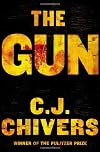
The AK-47 holds almost mythological status in the world. Terrorists, revolutionaries, and insurrectionists all brandish this Russian-made weapon in defiance of those in power. Chivers calls it “a ready equalizer against morally or materially superior foes.” The U.S. decided to be more sophisticated and complicated and outfitted its soldiers with the M-16, a weapon I remember hearing it being loathed by soldiers just returned from Vietnam as chronically unreliable. A theme of the book is show more the United States’ failure to design a gun of similar technical merits to the AK-47. Chivers estimates there are currently over 100 million of these lethal weapons floating around out there, a staggering number., a weapon he describes as “the most lethal instrument of the Cold War.” It was first produced the same year as the Russians detonated their own atomic bomb.
The AK-47 could be considered a form of machine gun, so Chivers spends a considerable portion of the book to the history of machine guns. Ironically invented by a southern slave-holder, Richard Gatling, it was offered by the inventor to Lincoln in 1864 to support the Union cause. His reasons were philanthropic if naive. He reasoned that if one man could control the firepower of several with his Gatling gun, there would be need for fewer soldiers on the battlefield and thus fewer casualties. He was distraught over the number of wounded returning from the front. The US Army purchased the first Gatling guns in 1866. Foreign governments found them particularly useful in destroying native uprisings.even though they were notoriously unreliable. There was nothing worse than to have a machine gun jam while being descended upon by thousands of screaming natives. “The Gatlings jammed and the colonel dead,” was Sir Henry Newbolt’s line in 1897.
Hiram Maxim’s gun (“the most dreadful instrument I have ever seen or imagined,” was the Archduke William of Austria’s comment) took killing to a new level. His gun was much more reliable (he had been born in Maine, then emigrated to the UK) water-cooled and belt-fed design was lighter, requiring not a carriage but merely a tripod and variations remained in use well into the 1960’s. Thinking they had a huge advantage, the British knighted Maxim (his gun was renamed the Vickers) but in German hands it proved to be quite useful in mowing down British soldiers. The British actually mistrusted the machine gun as being extraordinarily wasteful of ammunition. One of the most mind numbing aspects of WW I is the willingness of troops to attack barbed wire emplacements defended by machine guns. It was wholesale slaughter on an unimaginable scale.
The forerunner of the AK-47 and M-16 was the Schmeisser, an assault rifle that entered the war in 1944. The AK-47 was designed by Mikhail Kalashnikov and while his name has always been associated with the gun, Chivers says it was really a product of the Stalinist state. Chivers also asserts that much of what we think we know about Kalashnikov was reworked to fit the requirements of Communist propaganda. The Russians, contrary to those in the west who championed the more accurate rifles, believed in mass assaults and required weapons with high rates of fire. What makes the Kalashnikov so different is the almost loose fitting of the parts. They clank around and rattle but it would work even after being subjected to extremes of the battlefield and weather.
The U.S. decision to ignore the lessons of the Kalashnikov lies at the feet of Robert McNamara who had heard of an incredibly lethal weapon (the lethality tests were conducted on live goats and cadavers imported from India, an extremely sensitive topic) produced by the ArmaLite Company in California. The impact of its bullets was so messy and destructive that the Americans just had to have it for the nascent war in southeast Asia. That it required a different bullet than the standard 7.62 NATO round even though that standardization had been imposed on NATO by the U.S. The M-16’s malfunctions became a scandal during the Vietnam War, but Colt, maker of the gun, blamed the soldiers’ poor cleaning habits. By this time, the top brass had become so linked with the decision to manufacture the weapon, they supported Colt. One soldier when asked by his commander why he carried a captured AK-47 instead of the M-16 simply replied, “because it works.” According to Chivers, the Army in Afghanistan uses the M-4 carbine but the current generation’s platoon has much more firepower in the form of other types of weapons than the Taliban who use the AK-47. Still, he wonders if the unsophisticated IED may yet cause the downfall of the more technologically advanced. Another triumph of the simple over the complex. (See http://www.nytimes.com/2008/01/12/washington/12navy.html for another example.)
A more depressing theme of this book is how American exceptionalism prevents us from connecting to peoples whose motivations are high and technologies unsophisticated, yet in the end, as in Vietnam and elsewhere, manage to beat the more technologically advanced.
Chivers is a former Marine officer and war correspondent. He writes well, if frighteningly, in this fascinating work that details the political and psychic effects of the Cold War on policy and decision-making, often to our detriment. show less
The AK-47 could be considered a form of machine gun, so Chivers spends a considerable portion of the book to the history of machine guns. Ironically invented by a southern slave-holder, Richard Gatling, it was offered by the inventor to Lincoln in 1864 to support the Union cause. His reasons were philanthropic if naive. He reasoned that if one man could control the firepower of several with his Gatling gun, there would be need for fewer soldiers on the battlefield and thus fewer casualties. He was distraught over the number of wounded returning from the front. The US Army purchased the first Gatling guns in 1866. Foreign governments found them particularly useful in destroying native uprisings.even though they were notoriously unreliable. There was nothing worse than to have a machine gun jam while being descended upon by thousands of screaming natives. “The Gatlings jammed and the colonel dead,” was Sir Henry Newbolt’s line in 1897.
Hiram Maxim’s gun (“the most dreadful instrument I have ever seen or imagined,” was the Archduke William of Austria’s comment) took killing to a new level. His gun was much more reliable (he had been born in Maine, then emigrated to the UK) water-cooled and belt-fed design was lighter, requiring not a carriage but merely a tripod and variations remained in use well into the 1960’s. Thinking they had a huge advantage, the British knighted Maxim (his gun was renamed the Vickers) but in German hands it proved to be quite useful in mowing down British soldiers. The British actually mistrusted the machine gun as being extraordinarily wasteful of ammunition. One of the most mind numbing aspects of WW I is the willingness of troops to attack barbed wire emplacements defended by machine guns. It was wholesale slaughter on an unimaginable scale.
The forerunner of the AK-47 and M-16 was the Schmeisser, an assault rifle that entered the war in 1944. The AK-47 was designed by Mikhail Kalashnikov and while his name has always been associated with the gun, Chivers says it was really a product of the Stalinist state. Chivers also asserts that much of what we think we know about Kalashnikov was reworked to fit the requirements of Communist propaganda. The Russians, contrary to those in the west who championed the more accurate rifles, believed in mass assaults and required weapons with high rates of fire. What makes the Kalashnikov so different is the almost loose fitting of the parts. They clank around and rattle but it would work even after being subjected to extremes of the battlefield and weather.
The U.S. decision to ignore the lessons of the Kalashnikov lies at the feet of Robert McNamara who had heard of an incredibly lethal weapon (the lethality tests were conducted on live goats and cadavers imported from India, an extremely sensitive topic) produced by the ArmaLite Company in California. The impact of its bullets was so messy and destructive that the Americans just had to have it for the nascent war in southeast Asia. That it required a different bullet than the standard 7.62 NATO round even though that standardization had been imposed on NATO by the U.S. The M-16’s malfunctions became a scandal during the Vietnam War, but Colt, maker of the gun, blamed the soldiers’ poor cleaning habits. By this time, the top brass had become so linked with the decision to manufacture the weapon, they supported Colt. One soldier when asked by his commander why he carried a captured AK-47 instead of the M-16 simply replied, “because it works.” According to Chivers, the Army in Afghanistan uses the M-4 carbine but the current generation’s platoon has much more firepower in the form of other types of weapons than the Taliban who use the AK-47. Still, he wonders if the unsophisticated IED may yet cause the downfall of the more technologically advanced. Another triumph of the simple over the complex. (See http://www.nytimes.com/2008/01/12/washington/12navy.html for another example.)
A more depressing theme of this book is how American exceptionalism prevents us from connecting to peoples whose motivations are high and technologies unsophisticated, yet in the end, as in Vietnam and elsewhere, manage to beat the more technologically advanced.
Chivers is a former Marine officer and war correspondent. He writes well, if frighteningly, in this fascinating work that details the political and psychic effects of the Cold War on policy and decision-making, often to our detriment. show less
For a book ostensibly about the AK-47, the AK-47 is by far the least interesting subject covered. Chivers taking a looking, elliptical approach to the automatic rifle, starting with the primitive Gatling guns and Maxims of the 19th century, the slaughter of the trenches in WW1, and after 3 or 4 chapters, finally into the AK-47. Mikhail Kalashnikov is painted as an enigmatic figure, a Soviet prodigy who has altered the facts of his life again and again. But what is undoubtable is that the show more rifle that bears his name is the most lethal instrument of the 20th century, a cheap, durable, and compact mass produced weapon that can be used equally well by conscript armies and bands of child soldiers. Chivers treats the AK-47 from a distance, taking it as the most durable part of a mostly invisible network of violence at first sponsored by states, but now completely independent of any effort to control it.
This perspective makes the book approachable for a lay-person, but also glosses over the mechanical and historical details that would be of interest to a serious student of the gun. Chivers aims for comprehensive rather than complete, and hits it, but this book just doesn't do it for me. The most interesting parts are a chapter on the early M16, and its disastrous introduction in Vietnam, and a description of a rapid firefight in Kurdistan in 2003 or so. The AK-47, the gun itself, recedes, leaving just a world of all too easy violence. show less
This perspective makes the book approachable for a lay-person, but also glosses over the mechanical and historical details that would be of interest to a serious student of the gun. Chivers aims for comprehensive rather than complete, and hits it, but this book just doesn't do it for me. The most interesting parts are a chapter on the early M16, and its disastrous introduction in Vietnam, and a description of a rapid firefight in Kurdistan in 2003 or so. The AK-47, the gun itself, recedes, leaving just a world of all too easy violence. show less
I got way more than I bargained for with The Gun by C.J. Chivers.
I'm doing research for a novel, and have been reading up on some famous guns. This book is advertised as a history of the AK-47, and it's by a journalist so I knew it'd be relatively objective. Little did I realize I'd also learn so much about the Soviet Union, early US gun history (including the Gatling and the Tommy Gun) and the atrocity that was the M-16 in the Vietnam War. And that's just to name a few tangents.
No one can show more deny this is a well-researched book with a lot of interesting information. It also does a great job of showing the terrifying consequences of the spread of automatic arms throughout the world. It is, however, by no means a quick or easy read, and I have to admit that I often found myself checking how much I had left to go.
I am glad that I read it, but I am even more ecstatic that I got through it all. Take that as you will. show less
I'm doing research for a novel, and have been reading up on some famous guns. This book is advertised as a history of the AK-47, and it's by a journalist so I knew it'd be relatively objective. Little did I realize I'd also learn so much about the Soviet Union, early US gun history (including the Gatling and the Tommy Gun) and the atrocity that was the M-16 in the Vietnam War. And that's just to name a few tangents.
No one can show more deny this is a well-researched book with a lot of interesting information. It also does a great job of showing the terrifying consequences of the spread of automatic arms throughout the world. It is, however, by no means a quick or easy read, and I have to admit that I often found myself checking how much I had left to go.
I am glad that I read it, but I am even more ecstatic that I got through it all. Take that as you will. show less
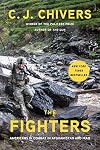
I have read numerous books detailing the wars in Iraq and Afghanistan that were informative and well done. This book is unique in that it follows these wars through the eyes of six combatants. Each story is unique and like the wars themselves, do not always have a happy ending. After reading their stories, one can really get a feel for the true price we have paid in these efforts. This was an amazing look at war, why people fight, what they and those who love them have endured and why we owe show more them so much more than we are doing for them. show less
Lists
Awards


You May Also Like


Associated Authors
Statistics
- Works
- 3
- Also by
- 3
- Members
- 758
- Popularity
- #33,555
- Rating
- 3.9
- Reviews
- 25
- ISBNs
- 24
- Languages
- 1
