
John D. Roth
Author of Choosing Against War: A Christian View
About the Author
John D. Roth is Professor of History at Goshen College, where he also serves as editor of The Mennonite Quarterly Review and director of the Mennonite Historical Library. He is the author of numerous books and articles on subjects related to the Radical Reformation and contemporary Anabaptist and show more Mennonite theology, including Teaching that Transforms: Why Anabaptist-Mennonite Education Matters (2011). show less
Series
Works by John D. Roth
A Mennonite College for Everyone: Goshen College and the Quest for Identity and Inclusion, 1960-2020 2 copies
What Christians could learn from Menno Simons and How He Rescued The Anabaptist Movement 2 copies, 1 review
Teaching That Transform 1 copy
Mennonite Quarterly Review 1 copy
A Cloud of Witnesses 1 copy
O Give Thanks unto the Lord 1 copy
Associated Works
On Moral Medicine: Theological Perspectives in Medical Ethics (2012) — Contributor, some editions — 22 copies, 1 review
Tagged
Common Knowledge
Members
Reviews

By a leading writer and thinker. How might Christians look on the world differently if they actually believed that God's love is indeed stronger than our fears? In fresh, confessional language, Roth shares his convictions about Christian pacifism, inviting others to consider this approach, all the while humbly admitting the difficulties. In the face of violence, are there any options open to the Christian believer other than the "default" impulse toward patriotic unity and a steely show more determination to exact "an eye for an eye"? A must-read for anyone concerned about the endless cycles of wars and violence, and the possibility that God's love is stronger than our society's current answers. - from book cover show less

Summary: A 40-day devotional on what it means to live in Jesus’ footsteps, published for the 500th anniversary of Anabaptism.
This year marks the five hundredth anniversary of the Anabaptist movement. Anabaptism has always been marked by a focus, not on creeds, but following in the footsteps of Jesus. For example, my own congregation, in the Anabaptist tradition describes its mission in this way: We are a group of friends and neighbors with whom you can pursue God’s love, become more like show more Jesus, and build God’s Kingdom through word & deed. Living as disciples of Jesus together, in love of God and neighbor, and living a faith evident in deed as well as word has always been central to Anabaptism.
Footsteps of Faith richly reflects this focus on following Jesus. Editor John D. Roth has collected forty devotional reflections drawn from the gospels. They are written by people in Anabaptist churches throughout the world. The devotionals are grouped in eight sections:
The Promise of a New Creation
Announcing the Kingdom
The Kingdom Taught
The Kingdom Lived
The Upside-Down Kingdom
On the Road to Jerusalem
Resurrection
Walking in the Resurrection
The devotionals are two to three pages in length. Each begins with a biblical text, and a couple verses from that text highlighted. Following the reflection, each writer offers some questions for reflection and a concluding prayer.
Each takes one incident in the life of Jesus. Linda Dibble, for example, considers the anger of Jesus as he cleansed the temple and the place of righteous indignation acted upon when power is abuse, afflicting the marginalized.
Cindy Alpizar, from Costa Rica reflects on Jesus’ encounter with the woman at the well, the deep wells of sadness in our lives, and how Jesus breaks through barriers in beautiful conversation, filling us with living water. Then Desalegn Abebe, from Ethiopia, reflects on Jesus healing of the demon-possessed man. Rather than spiritualize it, he writes of how Jesus delivered him and others from the shackles of demons. Vikal Pravin Rao, from India writes of the reality of how faithfulness to Jesus divides families.
Thus, these testimonies from global believers bring to life passages that seem culturally distant for many of us. In addition, they remind us of both Christ’s great love the cost entailed in following in the footsteps of Jesus. It’s not always a sweet walk in the garden. but it is always worth it!
Finally, the concluding devotion focuses on Jesus’ commission to his disciples. Agos W. Mayanto concludes in a statement that sums up five hundred years of Anabaptist tradition:
“The decision to bind oneself with the missionary God–the Creator, Savior, and Sustainer who reconciles the entire universe with himself–is also the path of discipleship, walking in the way of the Master Teacher Jesus in the midst of the world in full obedience, attentive to his voice, moved by his Spirit, and following his example. The sixteenth-century Anabaptist Hans Denck once said, ‘No one can truly know Christ unless he follows him daily in life.’ Therefore, in the process of discipleship, we must heed the words of the Master Teacher Jesus Christ, ‘teaching them to obey everything that I’ve commanded you” (Matthew 28:20). It is impossible to be a disciple of Christ without a commitment to live in harmony with his will” (p. 193).
This is a rich representation of Anabaptist faith from a global community of writers. It is a wonderful resource that may be used at any time. However, it seems especially fitted for Lent and into Eastertide. And given the communal character of Anabaptists, churches might choose to do this communally.
____________________
Disclosure of Material Connection: I received a complimentary copy of this book from the publisher for review. show less
This year marks the five hundredth anniversary of the Anabaptist movement. Anabaptism has always been marked by a focus, not on creeds, but following in the footsteps of Jesus. For example, my own congregation, in the Anabaptist tradition describes its mission in this way: We are a group of friends and neighbors with whom you can pursue God’s love, become more like show more Jesus, and build God’s Kingdom through word & deed. Living as disciples of Jesus together, in love of God and neighbor, and living a faith evident in deed as well as word has always been central to Anabaptism.
Footsteps of Faith richly reflects this focus on following Jesus. Editor John D. Roth has collected forty devotional reflections drawn from the gospels. They are written by people in Anabaptist churches throughout the world. The devotionals are grouped in eight sections:
The Promise of a New Creation
Announcing the Kingdom
The Kingdom Taught
The Kingdom Lived
The Upside-Down Kingdom
On the Road to Jerusalem
Resurrection
Walking in the Resurrection
The devotionals are two to three pages in length. Each begins with a biblical text, and a couple verses from that text highlighted. Following the reflection, each writer offers some questions for reflection and a concluding prayer.
Each takes one incident in the life of Jesus. Linda Dibble, for example, considers the anger of Jesus as he cleansed the temple and the place of righteous indignation acted upon when power is abuse, afflicting the marginalized.
Cindy Alpizar, from Costa Rica reflects on Jesus’ encounter with the woman at the well, the deep wells of sadness in our lives, and how Jesus breaks through barriers in beautiful conversation, filling us with living water. Then Desalegn Abebe, from Ethiopia, reflects on Jesus healing of the demon-possessed man. Rather than spiritualize it, he writes of how Jesus delivered him and others from the shackles of demons. Vikal Pravin Rao, from India writes of the reality of how faithfulness to Jesus divides families.
Thus, these testimonies from global believers bring to life passages that seem culturally distant for many of us. In addition, they remind us of both Christ’s great love the cost entailed in following in the footsteps of Jesus. It’s not always a sweet walk in the garden. but it is always worth it!
Finally, the concluding devotion focuses on Jesus’ commission to his disciples. Agos W. Mayanto concludes in a statement that sums up five hundred years of Anabaptist tradition:
“The decision to bind oneself with the missionary God–the Creator, Savior, and Sustainer who reconciles the entire universe with himself–is also the path of discipleship, walking in the way of the Master Teacher Jesus in the midst of the world in full obedience, attentive to his voice, moved by his Spirit, and following his example. The sixteenth-century Anabaptist Hans Denck once said, ‘No one can truly know Christ unless he follows him daily in life.’ Therefore, in the process of discipleship, we must heed the words of the Master Teacher Jesus Christ, ‘teaching them to obey everything that I’ve commanded you” (Matthew 28:20). It is impossible to be a disciple of Christ without a commitment to live in harmony with his will” (p. 193).
This is a rich representation of Anabaptist faith from a global community of writers. It is a wonderful resource that may be used at any time. However, it seems especially fitted for Lent and into Eastertide. And given the communal character of Anabaptists, churches might choose to do this communally.
____________________
Disclosure of Material Connection: I received a complimentary copy of this book from the publisher for review. show less
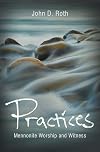
John D. Roth demonstrates in this book a clever knack of melding stories of personal experience into discussions about theology and church practice. Perhaps it’s because he’s a historian being theological, not a theologian being historical. Thus, this book ends up being tolerable reading for people who are not interested in academic treatises.
He starts this book with a problem he has encountered in his own life. He gives readers the impression that his pondering of the encountered show more problem was the impetus that motivated him to write the book. Likewise many of the chapters begin with a story, but not necessarily from personal experience.
At the beginning of the book Roth reflects on a time when, in a search for an experience of spiritual reflection, he started on a hike alone on the Appalachian Trail. The hike “was to be a vision quest—my chance to wrestle with God alone in the wilderness, to discipline the body, and to commune directly with the divine through nature” (15).
Those were noble aspirations, but the hike didn’t go well. Weather and blisters conspired against him and his planned 19-day hike ended after four days. This of course serves as an introduction to his proposal for ongoing renewal through spiritual disciplines. The point here is that practice matters, whether in preparation for a hike for for church life.
I was pessimistic when I saw that one of the early chapters has a subtitle of “Why The Incarnation Matters.” I’ve read enough about early church history to know that there were many needless schisms over disagreements concerning the details of the nature of the incarnation (i.e. humanity vs. divinity of Jesus). I was relieved to learn that his approach to the subject of the incarnation was to see it as a latent aspect of the Spirit of God. A gathering of Christians to form a community of worshipers is an example of incarnation (i.e. the church is the body of Christ). Likewise, God is incarnate in the material world of nature. It follows that the anabaptist view of theology considers the activities of life in this world are worthy of being important in the eyes of the God. This is a metaphorical way of viewing life with which I can feel comfortable.
This heavy dose of theology at the beginning of the book ties into the subject of “Practices” by noting that church practices are our way of rehearsing and reminding ourselves how to live our lives. “By practicing the presence of God in worship we can experience true reconciliation with God, with each other, and with creation. And this is good news” (99).
At the beginning of the chapter titled "Why Worship Matters" Roth tells of a conversation with a college student who had grown up in a Mennonite community, joined the church, and considered himself to be Christian. But the student said he saw no need to attend church services. When asked why he said, "I just don't see the point. After I came to college, I realized that I had been going to church just out of habit, because my parents made me. But when I quite attending, I found that I didn't really miss it all that much." Then he added, "Besides, I feel closer to God taking a walk along the millrace than I ever did in church on Sunday morning." This story sets up the challenge for the following chapter to explain why worship matters.
The book then proceeds with discussions of subjects including, singing, foot washing, fellowship meals, children’s meetings, funerals, family life, mutual help, baptism, marriage, witness, and church architecture. The discussions of these topics aren’t dogmatic, but rather recognize the differences found among different Mennonite and Amish communities. The merits of the different styles are explored in the book's coverage of these subjects. Nothing presented here is radical except to the extent that the Mennonite tradition itself is radical. Included are several references to the Amish experience at Nickel Mines, Pennsylvania, when ten of their children were shot by a demented neighbor. “What stunned the watching world in the days following the shooting was less the reality of the horrific violence than the response of the Amish community” (80).
Roth observes that the Amish have devotional practices such as regular recitation of the Lord’s Prayer with its emphasis on forgiveness. So when the time came to forgive, the Amish were ready. Perhaps it can be mentioned that the Amish have persisted without revivalism, Sunday schools, or a worship band to lead the Sunday morning assembly.
From worship Roth moves to witness, which he develops broadly from our bodies to our families, our communities, and our worship spaces. Like the Amish who pray the Lord’s Prayer regularly, he calls upon us to practice our faith and our traditions advisedly. Keep our eyes open and our heads above water.
The chapter on “Bearing Witness in Our Committees” includes two sorts of anecdotal evidence, one historical and one current. It opens with the determined and futile efforts of Swiss authorities to stamp out Anabaptism: “the Anabaptists . . . were widely known for their moral integrity and their readiness to follow Christ in daily life” (149). As for present witness, he illustrates the dilemma with two experiences from his travels.
On one airplane he met two Germans who were pleased to know that he was a pacifist but had no interest in his Christian faith. On the next plane his seatmate saw him reading his New Testament and was pleased to meet a fellow Christian. But he when he learned that Roth was a Mennonite he became incensed. “‘My son is a Marine. And you guys are a bunch of parasites. It just makes me sick.’ Then he got up, went to the bathroom and returned to another seat” (152).
Roth observes that “peace and justice” on one hand and “evangelical” witness on the other “face a powerful temptation to be relevant to the world according to the world’s criteria. . . . A witness to the gospel of Christ, by contrast, is vulnerable and cruciform” (166).
Near the book's end the subject of "practice" is tied to the words of Jesus with these words. "For those in the Anabaptist-Mennonite tradition, the Sermon on the Mount has often been claimed as a kind of shorthand for Anabaptist ethics: here we find the central themes about loving enemies, practicing generosity, and living simply. But it is surely no accident that in the middle of this call to radical discipleship, Jesus offered his disciples instruction on worship, specifically, a model for how they should pray" (220).
Roth closes the book by saying, "This is a travel report of a pilgrim on the way rather that the pronouncements of a fully mature Christian who has finally arrived." We're invited to join him on this journey.
Note: Portions of the above review are copied from an article written by Daniel Hertzler, Scottdale, Pennsylvania in the Dream Seeker Magazine, Summer 2010, Vol. 10, Number 3. LINK TO HERTZLER'S ARTICLE show less
He starts this book with a problem he has encountered in his own life. He gives readers the impression that his pondering of the encountered show more problem was the impetus that motivated him to write the book. Likewise many of the chapters begin with a story, but not necessarily from personal experience.
At the beginning of the book Roth reflects on a time when, in a search for an experience of spiritual reflection, he started on a hike alone on the Appalachian Trail. The hike “was to be a vision quest—my chance to wrestle with God alone in the wilderness, to discipline the body, and to commune directly with the divine through nature” (15).
Those were noble aspirations, but the hike didn’t go well. Weather and blisters conspired against him and his planned 19-day hike ended after four days. This of course serves as an introduction to his proposal for ongoing renewal through spiritual disciplines. The point here is that practice matters, whether in preparation for a hike for for church life.
I was pessimistic when I saw that one of the early chapters has a subtitle of “Why The Incarnation Matters.” I’ve read enough about early church history to know that there were many needless schisms over disagreements concerning the details of the nature of the incarnation (i.e. humanity vs. divinity of Jesus). I was relieved to learn that his approach to the subject of the incarnation was to see it as a latent aspect of the Spirit of God. A gathering of Christians to form a community of worshipers is an example of incarnation (i.e. the church is the body of Christ). Likewise, God is incarnate in the material world of nature. It follows that the anabaptist view of theology considers the activities of life in this world are worthy of being important in the eyes of the God. This is a metaphorical way of viewing life with which I can feel comfortable.
This heavy dose of theology at the beginning of the book ties into the subject of “Practices” by noting that church practices are our way of rehearsing and reminding ourselves how to live our lives. “By practicing the presence of God in worship we can experience true reconciliation with God, with each other, and with creation. And this is good news” (99).
At the beginning of the chapter titled "Why Worship Matters" Roth tells of a conversation with a college student who had grown up in a Mennonite community, joined the church, and considered himself to be Christian. But the student said he saw no need to attend church services. When asked why he said, "I just don't see the point. After I came to college, I realized that I had been going to church just out of habit, because my parents made me. But when I quite attending, I found that I didn't really miss it all that much." Then he added, "Besides, I feel closer to God taking a walk along the millrace than I ever did in church on Sunday morning." This story sets up the challenge for the following chapter to explain why worship matters.
The book then proceeds with discussions of subjects including, singing, foot washing, fellowship meals, children’s meetings, funerals, family life, mutual help, baptism, marriage, witness, and church architecture. The discussions of these topics aren’t dogmatic, but rather recognize the differences found among different Mennonite and Amish communities. The merits of the different styles are explored in the book's coverage of these subjects. Nothing presented here is radical except to the extent that the Mennonite tradition itself is radical. Included are several references to the Amish experience at Nickel Mines, Pennsylvania, when ten of their children were shot by a demented neighbor. “What stunned the watching world in the days following the shooting was less the reality of the horrific violence than the response of the Amish community” (80).
Roth observes that the Amish have devotional practices such as regular recitation of the Lord’s Prayer with its emphasis on forgiveness. So when the time came to forgive, the Amish were ready. Perhaps it can be mentioned that the Amish have persisted without revivalism, Sunday schools, or a worship band to lead the Sunday morning assembly.
From worship Roth moves to witness, which he develops broadly from our bodies to our families, our communities, and our worship spaces. Like the Amish who pray the Lord’s Prayer regularly, he calls upon us to practice our faith and our traditions advisedly. Keep our eyes open and our heads above water.
The chapter on “Bearing Witness in Our Committees” includes two sorts of anecdotal evidence, one historical and one current. It opens with the determined and futile efforts of Swiss authorities to stamp out Anabaptism: “the Anabaptists . . . were widely known for their moral integrity and their readiness to follow Christ in daily life” (149). As for present witness, he illustrates the dilemma with two experiences from his travels.
On one airplane he met two Germans who were pleased to know that he was a pacifist but had no interest in his Christian faith. On the next plane his seatmate saw him reading his New Testament and was pleased to meet a fellow Christian. But he when he learned that Roth was a Mennonite he became incensed. “‘My son is a Marine. And you guys are a bunch of parasites. It just makes me sick.’ Then he got up, went to the bathroom and returned to another seat” (152).
Roth observes that “peace and justice” on one hand and “evangelical” witness on the other “face a powerful temptation to be relevant to the world according to the world’s criteria. . . . A witness to the gospel of Christ, by contrast, is vulnerable and cruciform” (166).
Near the book's end the subject of "practice" is tied to the words of Jesus with these words. "For those in the Anabaptist-Mennonite tradition, the Sermon on the Mount has often been claimed as a kind of shorthand for Anabaptist ethics: here we find the central themes about loving enemies, practicing generosity, and living simply. But it is surely no accident that in the middle of this call to radical discipleship, Jesus offered his disciples instruction on worship, specifically, a model for how they should pray" (220).
Roth closes the book by saying, "This is a travel report of a pilgrim on the way rather that the pronouncements of a fully mature Christian who has finally arrived." We're invited to join him on this journey.
Note: Portions of the above review are copied from an article written by Daniel Hertzler, Scottdale, Pennsylvania in the Dream Seeker Magazine, Summer 2010, Vol. 10, Number 3. LINK TO HERTZLER'S ARTICLE show less
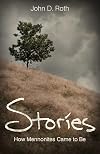
The writing in this book is as reader friendly as a history book can be and still be a credible source of information. The word "history" does not appear in the title presumably in an effort to appear more attractive to prospective readers. Avoidance of the word may also deflect some criticism from professional historians who may regard it to be "history light" with inadequate depth.
I haven't come up with a better title to replace the title "Stories," though that title doesn't seem all that show more descriptive of the contents. Many of the chapters and sections begin with a human interest story to grab the reader's attention prior to moving on to the historical narrative. But most of the book is an overview of Mennonite history starting with the first century Christian church, then covering the Reformation era and continuing on through to the Twenty-first Century.
This book provides an easy way to learn about Mennonite history while illuminating a small segment of history that is often overlooked by broader accounts of history. Presumably the readers most likely to be motivated to read this book will be Mennonites themselves. Nevertheless all readers can learn something from it, whether reading it as refresher course or learning the material for the first time.
I particularly appreciated the author's introductory and closing remarks that discussed the virtues of acquiring knowledge of the past. One of the best ways to know where we're headed is to know where we came from. show less
I haven't come up with a better title to replace the title "Stories," though that title doesn't seem all that show more descriptive of the contents. Many of the chapters and sections begin with a human interest story to grab the reader's attention prior to moving on to the historical narrative. But most of the book is an overview of Mennonite history starting with the first century Christian church, then covering the Reformation era and continuing on through to the Twenty-first Century.
This book provides an easy way to learn about Mennonite history while illuminating a small segment of history that is often overlooked by broader accounts of history. Presumably the readers most likely to be motivated to read this book will be Mennonites themselves. Nevertheless all readers can learn something from it, whether reading it as refresher course or learning the material for the first time.
I particularly appreciated the author's introductory and closing remarks that discussed the virtues of acquiring knowledge of the past. One of the best ways to know where we're headed is to know where we came from. show less
You May Also Like


Associated Authors
Statistics
- Works
- 68
- Also by
- 1
- Members
- 608
- Popularity
- #41,353
- Rating
- 3.4
- Reviews
- 10
- ISBNs
- 22
- Favorited
- 1