
G. E. Kidder Smith (1913–1997)
Author of A pictorial history of architecture in America
About the Author
Disambiguation Notice:
Do not combine this page with that of J. Edward Kidder, Jr.. They are NOT the same person.
Works by G. E. Kidder Smith
Source Book of American Architecture: 500 Notable Buildings from the 10th Century to the Present (1996) 97 copies, 1 review
The Beacon Guide to New England Houses of Worship: An Architectural Companion (1989) 31 copies, 1 review
Italy builds : its modern architecture and native inheritance = L'Italia costruisce (1954) 13 copies
Tagged
Common Knowledge
- Legal name
- Kidder Smith, George Everard
- Birthdate
- 1913
- Date of death
- 1997-10-08
- Gender
- male
- Education
- Princeton University (MFA)
- Occupations
- architecture writer
photographer - Organizations
- U.S. Navy
Museum of Modern Art - Relationships
- Smith, Kidder (son)
- Nationality
- USA
- Birthplace
- Birmingham, Alabama
- Place of death
- Manhattan, New York, USA
- Disambiguation notice
- Do not combine this page with that of J. Edward Kidder, Jr.. They are NOT the same person.
- Associated Place (for map)
- USA
Members
Reviews
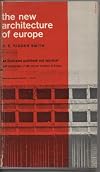
G. E. Kidder Smith wrote many books on architecture, most organized as guides to the contemporary architecture of particular countries, such as Italy, Switzerland, and the United States. Thanks to a Brunner Scholarship from the New York chapter of the AIA, Kidder Smith traveled all over the European continent (Western Europe, at least) to compile this guide to architecture in Europe circa 1960. While the exact dates of the 225 projects aren't provided, all of them come after World War II and show more show architects preoccupied with concrete and glass. Therefore the book serves as an encapsulation of a particular time, when Modernism was still prevalent but was diversifying via Brutalism; this was, after all, Le Corbusier's late period, when Ronchamp landed like a bomb, exploding International Style modernism. Even though the book is quite old, most of the buildings are extant, enough that I used it as a reference for a trip to Switzerland a couple years ago.
A general note on G. E. Kidder Smith's books: Of the few titles I have in my library, it's clear that the author was a capable photographer as well. He photographed most of the buildings in this and his other books (typically he presented one photo per project), and the quality of them is very high, at least as presented in black and white. I admire his ability to do both, creating a strong body of work that, in my opinion at least, has an influence lasting far beyond the usability of most architectural guidebooks. show less
A general note on G. E. Kidder Smith's books: Of the few titles I have in my library, it's clear that the author was a capable photographer as well. He photographed most of the buildings in this and his other books (typically he presented one photo per project), and the quality of them is very high, at least as presented in black and white. I admire his ability to do both, creating a strong body of work that, in my opinion at least, has an influence lasting far beyond the usability of most architectural guidebooks. show less
Source Book of American Architecture: 500 Notable Buildings from the 10th Century to the Present by G. E. Kidder Smith
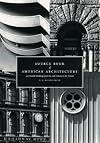
This is one of the many books I obtained for research on my book, 100 Years, 100 Buildings. Although this book says it covers nearly a millennium of notable buildings, I'd say about half of them fall into the 20th century, from the Flatiron (1903) to the Denver International Airport (1995), which made it useful for my book, which covers the years 1916 to 2015. With 500 buildings over 680 pages (636 pages minus the indexes, glossary and other back matter), this doesn't leave much room for show more project descriptions, but Kidder Smith managed to pack a lot of information. Some of this arises from the fairly small type size and the fact most buildings are illustrated by only one photo (most by the Kidder Smith, it should be noted), but most credit should be given to the author for being able to pack so much insightful information into what averages out to just over one page per building. In something aligned with the books I've produced to date, Kidder Smith also includes details on visiting the buildings, with address, opening hours and phone numbers and even references to publications. It's a phenomenal reference even in today's Internet age.
The book was published again in 2000, though from a glance inside the book at Amazon, it looks like the only change is a foreword by Paul Goldberger. Otherwise the 500 buildings and their descriptions and photos are the same. show less
The book was published again in 2000, though from a glance inside the book at Amazon, it looks like the only change is a foreword by Paul Goldberger. Otherwise the 500 buildings and their descriptions and photos are the same. show less

About the author and photographer: G. E. Kidder Smith trained as an architect and received his MFA from Princeton. He served in the U. S. Navy where he had special photographic responsibilities. Source: Wikipedia. About the book: quoting from the work's foreword, ". . .[T]his book breaks important ground in two unexpected directions. First, it really delivers what its title proclaims: houses of worship in New England. . .The religious spectrum is covered as well: Congregational, Unitarian show more Universalist, Episcopal, Roman Catholic, nondenominational, Jewish, Baptist, Shaker, Methodist, Presbyterian, Lutheran, Quaker." This work contains a glossary, a chronology, an index of buildings, an index of architects, and an index of denominations. show less
You May Also Like


Statistics
- Works
- 22
- Members
- 472
- Popularity
- #52,189
- Rating
- 3.7
- Reviews
- 3
- ISBNs
- 18
- Favorited
- 1