
Cecelia Tishy
Author of Life in the Iron Mills [Bedford Cultural Editions]
About the Author
Cecelia Tichi is William R. Kenan Jr. Professor of English at Vanderbilt University. She is author or editor of eleven books and was awarded the 2009 Hubbell Medal for Lifetime Achievement by the American Literature Section of the Modern Language Association.
Disambiguation Notice:
This author uses the name "Tishy" for fiction, and "Tichi" for nonfiction works.
Image credit: Cecilia Tichi (aka Cecilia Tishy)
Series
Works by Cecelia Tishy
What Would Mrs. Astor Do?: The Essential Guide to the Manners and Mores of the Gilded Age (Washington Mews Books, 5) (2018) 44 copies, 3 reviews
Midcentury Cocktails: History, Lore, and Recipes from America's Atomic Age (2022) 19 copies, 1 review
Jazz Age Cocktails: History, Lore, and Recipes from America's Roaring Twenties (Washington Mews Books) (2021) 12 copies, 3 reviews
Gilded Age Cocktails: History, Lore, and Recipes from America's Golden Age (Washington Mews Books) (2021) 8 copies
A Deadly Gilded Free Fall (The Roddy and Val DeVere Gilded Series Book 4) (2022) 2 copies, 2 reviews
Looking Backward 1 copy
Associated Works
Tagged
Common Knowledge
- Legal name
- Tichi, Cecelia
- Other names
- Tichi, Cecelia
- Birthdate
- 1942-04-10
- Gender
- female
- Education
- University of California, Davis (PhD)
Johns Hopkins University (MA) - Occupations
- professor (English)
literary scholar
editor
novelist - Organizations
- Vanderbilt University
Boston University - Nationality
- USA
- Places of residence
- Nashville, Tennessee, USA
- Disambiguation notice
- This author uses the name "Tishy" for fiction, and "Tichi" for nonfiction works.
- Associated Place (for map)
- Tennessee, USA
Members
Reviews
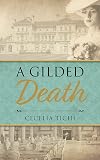
It’s the summer of 1898, and Val and Roddy DeVere, along with much of the rest of New York City Society, are vacationing at their “cottages” in Newport; cottages, of course, being almost as huge and splendid as their city palaces. They are meant to be having a lovely time taking yacht rides, playing golf and tennis, and otherwise comporting themselves at lavish teas and balls every week, but Val and her friend Cassandra are drawn into a mystery when the only daughter of Cassie’s late show more aunt dies suddenly in a slum in New York City. In trying to discover the cause of the woman’s death, they find themselves caught up in a web of inheritance, business dealings and, possibly, the suffrage movement, to Roddy’s dismay; and soon they learn that even Newport is not immune from danger…. “A Gilded Death” is the first in a series of Gilded Age novels, set primarily in New York and featuring the amateur sleuths Roddy (Roderick, scion of a very old and respected New York family) and Valentine (daughter of an Irish immigrant who made a huge fortune in the silver mines out west), along with various friends and servants. I had already read and enjoyed later stories in the series, but wanted to go back to this, the beginning. It is quite delightful, although as it happens I was able to figure out the culprit early on, only because I had read later entries and therefore knew something I shouldn’t have known. As a result, while I definitely recommend this series (and would love to try all the cocktails Roddy invents!), the reader should certainly start with this installment before moving to the next; recommended! show less
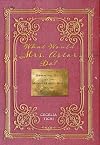
What would Mrs. Astor do? : the essential guide to the manners and mores of the Gilded Age by Cecelia Tichi
Rating: 4* of five
The Publisher Says: This illustrated Gilded Age etiquette guide offers "proof that sliding around the naughty edges of society can be as informative as it is entertaining." (Alida Becker, The New York Times Books Review)
Mark Twain called it the Gilded Age. Between 1870 and 1900, the United States' population doubled, accompanied by an unparalleled industrial expansion and an explosion of wealth. America was the foremost nation of the world, and New York City was its beating show more heart. There, the richest and most influential—Thomas Edison, J. P. Morgan, Edith Wharton, the Vanderbilts, Andrew Carnegie, and more—became icons, whose comings and goings were breathlessly reported in the papers of Joseph Pulitzer and William Randolph Hearst. It was a time of abundance, but also bitter rivalries. The Old Money titans found themselves besieged by a vanguard of New Money interlopers eager to gain entrée into their world. Into this morass of money and desire stepped Caroline Astor.
An Old Money heiress of the first order, Mrs. Astor was convinced that she was uniquely qualified to uphold the manners and mores of 19th century America. "What would Mrs. Astor do?" became the question every social climber sought to answer. This work serves as a guide to manners as well as an insight to Mrs. Astor's personal diary and address book. Ceceilia Tichi invites us on a beautifully illustrated tour of the Gilded Age, transporting readers to New York at its most fashionable.
I RECEIVED A DRC FROM THE PUBLISHER VIA EDELWEISS+. THANK YOU.
My Review: So much beauty and opulence shoved up to the surface by so much greed and theft.
Let's not go there this close to the leanest Yule in many a long year. We're not remotely out of the woods economically, but this book is about a time where the economic situation was far, far worse. It's discussed in here, though not exhaustively. It's a social history, it's about how etiquette came to matter so much, which of course requires we know a bit about how the men, all men, stole...made, sorry...so very much money to support the women's social construct.
the lady herself, in her finery painted for posterity
The very idea of entertaining at home was made aspirational by the "Four Hundred" (the number who could fit in Mrs. Astor's ballroom); as late as the 1960s, the idea was prevalent, and while the means changed, the manners barely did.
my generation certainly heard Emily Post's name, same woman and mostly the same advice
Lina Astor was an insufferable snob. Her ballroom was for "the best people," whose money was so old no one living could remember the hustler who got it. Nouveau riche industrialists' wives need not apply. It was a world she ruled, but it was a reign of terror that had to be agreed to; there was nothing forcing anyone into this restrictive social contract except made-up ideas like prestige.
two robber-baron "homes," Manhattan and Newport
Oh, and money of course. Lots and lots and lots of money.Author Tichi does not bear down heavy on the whole "robber baron" thing. There's no way around the money ocean they swam in. It's rather the point of a beautiful, illustrated book about luxury.
smart excessories...I mean accessories!...for Madame and Sir
It's astonishing what boredom does to a person. This time period, up to then the richest in world history, led to wealth disparities but also to the cementing of the idea that one could live a life not mere have an existence. Vacations to exotic places, to different places than you frequented as usual anyway, and recreational shopping (a Georgian idea embraced effusively by the Astor set) became ordinary for these wealthy folk:
shopping and sitting, two "fun" things
What I enjoyed most about this read was the way Author Tichi left it to me to judge, presenting facts and showing (as you see) examples and artifacts for me to decide what I thought about. We are in a new Gilded Age of wealth disparity, and at an economic crossroads, just like these folk were. We need to think carefully about what we individually do, because that becomes by default collective action.
The gifting season should be replete with beautiful tokens of love and affection; that doesn't mean they can't be thought-provoking, interesting, and relevant, too.
then, a residence; now a museum show less
The Publisher Says: This illustrated Gilded Age etiquette guide offers "proof that sliding around the naughty edges of society can be as informative as it is entertaining." (Alida Becker, The New York Times Books Review)
Mark Twain called it the Gilded Age. Between 1870 and 1900, the United States' population doubled, accompanied by an unparalleled industrial expansion and an explosion of wealth. America was the foremost nation of the world, and New York City was its beating show more heart. There, the richest and most influential—Thomas Edison, J. P. Morgan, Edith Wharton, the Vanderbilts, Andrew Carnegie, and more—became icons, whose comings and goings were breathlessly reported in the papers of Joseph Pulitzer and William Randolph Hearst. It was a time of abundance, but also bitter rivalries. The Old Money titans found themselves besieged by a vanguard of New Money interlopers eager to gain entrée into their world. Into this morass of money and desire stepped Caroline Astor.
An Old Money heiress of the first order, Mrs. Astor was convinced that she was uniquely qualified to uphold the manners and mores of 19th century America. "What would Mrs. Astor do?" became the question every social climber sought to answer. This work serves as a guide to manners as well as an insight to Mrs. Astor's personal diary and address book. Ceceilia Tichi invites us on a beautifully illustrated tour of the Gilded Age, transporting readers to New York at its most fashionable.
I RECEIVED A DRC FROM THE PUBLISHER VIA EDELWEISS+. THANK YOU.
My Review: So much beauty and opulence shoved up to the surface by so much greed and theft.
Let's not go there this close to the leanest Yule in many a long year. We're not remotely out of the woods economically, but this book is about a time where the economic situation was far, far worse. It's discussed in here, though not exhaustively. It's a social history, it's about how etiquette came to matter so much, which of course requires we know a bit about how the men, all men, stole...made, sorry...so very much money to support the women's social construct.
the lady herself, in her finery painted for posterity
The very idea of entertaining at home was made aspirational by the "Four Hundred" (the number who could fit in Mrs. Astor's ballroom); as late as the 1960s, the idea was prevalent, and while the means changed, the manners barely did.
my generation certainly heard Emily Post's name, same woman and mostly the same advice
Lina Astor was an insufferable snob. Her ballroom was for "the best people," whose money was so old no one living could remember the hustler who got it. Nouveau riche industrialists' wives need not apply. It was a world she ruled, but it was a reign of terror that had to be agreed to; there was nothing forcing anyone into this restrictive social contract except made-up ideas like prestige.
two robber-baron "homes," Manhattan and Newport
Oh, and money of course. Lots and lots and lots of money.Author Tichi does not bear down heavy on the whole "robber baron" thing. There's no way around the money ocean they swam in. It's rather the point of a beautiful, illustrated book about luxury.
smart excessories...I mean accessories!...for Madame and Sir
It's astonishing what boredom does to a person. This time period, up to then the richest in world history, led to wealth disparities but also to the cementing of the idea that one could live a life not mere have an existence. Vacations to exotic places, to different places than you frequented as usual anyway, and recreational shopping (a Georgian idea embraced effusively by the Astor set) became ordinary for these wealthy folk:
shopping and sitting, two "fun" things
What I enjoyed most about this read was the way Author Tichi left it to me to judge, presenting facts and showing (as you see) examples and artifacts for me to decide what I thought about. We are in a new Gilded Age of wealth disparity, and at an economic crossroads, just like these folk were. We need to think carefully about what we individually do, because that becomes by default collective action.
The gifting season should be replete with beautiful tokens of love and affection; that doesn't mean they can't be thought-provoking, interesting, and relevant, too.
then, a residence; now a museum show less
Jazz Age Cocktails: History, Lore, and Recipes from America's Roaring Twenties (Washington Mews Books) by Cecelia Tichi
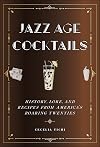
The Publisher Says: How the Prohibition law of 1920 made alcohol, savored in secret, all the more delectable when the cocktail shaker was forced to go “underground”
“Roaring Twenties” America boasted famous firsts: women’s right to vote, jazz music, talking motion pictures, flapper fashions, and wondrous new devices like the safety razor and the electric vacuum cleaner. The privations of the Great War were over, and Wall Street boomed.
The decade opened, nonetheless, with a shock show more when Prohibition became the law of the land on Friday, January 16, 1920, when the Eighteenth Amendment banned “intoxicating liquors.” Decades-long campaigns to demonize alcoholic beverages finally became law, and America officially went “dry.”
American ingenuity promptly rose to its newest challenge. The law, riddled with loopholes, let the 1920s write a new chapter in the nation’s saga of spirits. Men and women spoke knowingly of the speakeasy, the bootlegger, rum-running, black ships, blind pigs, gin mills, and gallon stills. Passwords (“Oscar sent me”) gave entrée to night spots and supper clubs where cocktails abounded, and bartenders became alchemists of timely new drinks like the Making Whoopee, the Petting Party, the Dance the Charleston. A new social event—the cocktail party staged in a private home—smashed the gender barrier that had long forbidden “ladies” from entering into the gentlemen-only barrooms and cafés.
From the author of Gilded Age Cocktails, this book takes a delightful new romp through the cocktail creations of the early twentieth century, transporting readers into the glitz and (illicit) glamour of the 1920s. Spirited and richly illustrated, Jazz Age Cocktails dazzles with tales of temptation and temperance, and features charming cocktail recipes from the time to be recreated and enjoyed.
I RECEIVED A DRC FROM THE PUBLISHER VIA EDELWEISS+. THANK YOU.
My Review: A very interesting social history of the life and times in which the cocktail culture arose. I was most impressed with the beautiful book design and illustrations, starting with the frontispiece and title page:
Handsome, easy to read, and very well presented. I'm always happy when I see this level of attention from a publisher. Of course, this is only the very first thing we'll see and thus might not see this level of attention inside. It does happen.
Not in this book. An example of a recipe spread:
and this is a character illustration spread:
Clearly presented text, charming images, and then there's the content. Author Tichi's erudition really shows in her clear prose (not unexpected from a Vanderbilt University lecturer in US History of the Modern Age) and her research is amply documented. What it isn't is cited in the text itself...not a terrible flaw in a popular history aimed at intelligent and curious laypeople. Had her audience been fellow academics, she has the information in her bibliography so she could have made citations with ease.
The extent of Prohibition was a mere thirteen years from enactment and enforcement to repeal. It changed the US forever. So many things we take for granted now...government licensing of food and drink establishments, police with paramilitary powers, a strong political urge to control peoples' personal lives to "improve" their morals...started or accelerated during Prohibition. Author Tichi's own academic interests are defined by these changes and their cultural concomitants in literature, art, and technology. In her afterword, she shares the personal dimension of her interest in the era. It is a well-written work of social history, focusing on social issues that arose or were centered at that time, and still a lovely object suitable for Yule gifting to your brother or father. They'll enjoy the history. They appreciate the cocktails' charmingly presented methods and presentations.
A hardcover book is very much a gift item in this day and time. We've had a few supply-chain issue years what with the COVID plague. The charm of this affordable book is that it's been out for a year-plus now and is in stock...an order placed will be delivered quite quickly. Not a small consideration.
I recommend this as a good gifting idea on a topic of enduring interest. It's solid value for money. And it's readily available. show less
“Roaring Twenties” America boasted famous firsts: women’s right to vote, jazz music, talking motion pictures, flapper fashions, and wondrous new devices like the safety razor and the electric vacuum cleaner. The privations of the Great War were over, and Wall Street boomed.
The decade opened, nonetheless, with a shock show more when Prohibition became the law of the land on Friday, January 16, 1920, when the Eighteenth Amendment banned “intoxicating liquors.” Decades-long campaigns to demonize alcoholic beverages finally became law, and America officially went “dry.”
American ingenuity promptly rose to its newest challenge. The law, riddled with loopholes, let the 1920s write a new chapter in the nation’s saga of spirits. Men and women spoke knowingly of the speakeasy, the bootlegger, rum-running, black ships, blind pigs, gin mills, and gallon stills. Passwords (“Oscar sent me”) gave entrée to night spots and supper clubs where cocktails abounded, and bartenders became alchemists of timely new drinks like the Making Whoopee, the Petting Party, the Dance the Charleston. A new social event—the cocktail party staged in a private home—smashed the gender barrier that had long forbidden “ladies” from entering into the gentlemen-only barrooms and cafés.
From the author of Gilded Age Cocktails, this book takes a delightful new romp through the cocktail creations of the early twentieth century, transporting readers into the glitz and (illicit) glamour of the 1920s. Spirited and richly illustrated, Jazz Age Cocktails dazzles with tales of temptation and temperance, and features charming cocktail recipes from the time to be recreated and enjoyed.
I RECEIVED A DRC FROM THE PUBLISHER VIA EDELWEISS+. THANK YOU.
My Review: A very interesting social history of the life and times in which the cocktail culture arose. I was most impressed with the beautiful book design and illustrations, starting with the frontispiece and title page:
Handsome, easy to read, and very well presented. I'm always happy when I see this level of attention from a publisher. Of course, this is only the very first thing we'll see and thus might not see this level of attention inside. It does happen.
Not in this book. An example of a recipe spread:
and this is a character illustration spread:
Clearly presented text, charming images, and then there's the content. Author Tichi's erudition really shows in her clear prose (not unexpected from a Vanderbilt University lecturer in US History of the Modern Age) and her research is amply documented. What it isn't is cited in the text itself...not a terrible flaw in a popular history aimed at intelligent and curious laypeople. Had her audience been fellow academics, she has the information in her bibliography so she could have made citations with ease.
The extent of Prohibition was a mere thirteen years from enactment and enforcement to repeal. It changed the US forever. So many things we take for granted now...government licensing of food and drink establishments, police with paramilitary powers, a strong political urge to control peoples' personal lives to "improve" their morals...started or accelerated during Prohibition. Author Tichi's own academic interests are defined by these changes and their cultural concomitants in literature, art, and technology. In her afterword, she shares the personal dimension of her interest in the era. It is a well-written work of social history, focusing on social issues that arose or were centered at that time, and still a lovely object suitable for Yule gifting to your brother or father. They'll enjoy the history. They appreciate the cocktails' charmingly presented methods and presentations.
A hardcover book is very much a gift item in this day and time. We've had a few supply-chain issue years what with the COVID plague. The charm of this affordable book is that it's been out for a year-plus now and is in stock...an order placed will be delivered quite quickly. Not a small consideration.
I recommend this as a good gifting idea on a topic of enduring interest. It's solid value for money. And it's readily available. show less
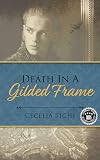
Roderick and Valentine DeVere are spending the summer of 1899 in Newport, Rhode Island, at their 20- or 30-room “cottage,” where an esteemed art gallery is to open for the season, affording Roddy the opportunity to have a “school of Rembrandt” family painting assessed and providing them both with the chance to have Val’s portrait done, an undertaking that Val loathes but that she will endure for Roddy’s sake. However, the art gallery director is soon found stabbed to death, and show more it is Val and Roddy’s misfortune to be the persons who discover the body; worse, Val impulsively picks up the dagger, bloodying her gloves, just in time for the Season’s worst gossip to come across her. Now, Val is being branded a possible murderer and several paintings are missing; she and Roddy must somehow navigate the perilous gossip to uncover the real culprit…. I much enjoy the “Gilded” series from Ms. Tichi, this being the sixth, but had some difficulty getting into this one. Part of it is, I think, perhaps an over-reliance on foreshadowing - there are many instances of “had I but known” type comments made ahead of events - and partly there are some threads that are not followed through on, such as the family painting which is mentioned frequently but about which nothing ever actually happens. That said, I still very much like Roddy and, especially, Val, the Western silver heiress who must learn to cope with exceedingly formal New York Society ways, but I think a reader new to this series should start with the first book, “A Gilded Death,” rather than jumping in here. Nevertheless, I recommend the series as a whole. I received an advance review copy for free, and I am leaving this review voluntarily. show less
Lists
Awards

You May Also Like


Associated Authors
Statistics
- Works
- 27
- Also by
- 1
- Members
- 641
- Popularity
- #39,338
- Rating
- 3.3
- Reviews
- 23
- ISBNs
- 88
- Languages
- 1