
Alfred Uhry
Author of Driving Miss Daisy
About the Author
Image credit: Photo by Carol Rosseg.
Works by Alfred Uhry
The Robber Bridegroom - Original Broadway Cast (1976) - LP — Author — 3 copies
Parade 2 copies
Angel Reapers 1 copy
Associated Works
Tagged
Common Knowledge
- Legal name
- Uhry, Alfred Fox
- Birthdate
- 1936-12-03
- Gender
- male
- Education
- Druid Hills High School
Brown University - Occupations
- playwright
screenwriter - Organizations
- Fellowship of Southern Writers
- Awards and honors
- Pulitzer Prize for Drama
- Nationality
- USA
- Birthplace
- Atlanta, Georgia, USA
- Places of residence
- New York, New York, USA
- Associated Place (for map)
- USA
Members
Reviews
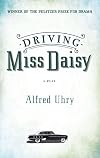
I have had the movie for ages and my mother, and I, watched it at least once a week. Needless t say it soon became one of my favorites. When the library called and said they had obtained a copy of the play and they knew I loved the movie, they asked if I would like to participate in a discussion session for the library patrons. That was equivalent to asking a fish if it would like to swim in the lake...We had 130 people that spent an afternoon watching the movie and discussing the play which show more they had all previously received copies of from the library. Does anyone think that I had a wonderful day?! Driving Miss Daisy was originally one of three plays. In 1989 the plays were translated to the movie screen, with wonderfully talented Jessica Tandy as Miss Daisy and equally talented, Morgan Freeman playing the role of Hoke, her driver. The film was extremely popular, receiving nine Academy Award nominations and winning four: Best Picture, Best Actress, Best Makeup, and Best Adapted Screenplay. It had two separate appearances in London and remains high on the criteria for both university, and community theatre.
Miss Daisy is elderly, often sharp-tongued Jewish lady living in Atlanta, Georgia...the heart of the segregated south in the late 1940s. After one car accident too many, her son insists that she have a chauffeur and hires Hoke for the job...but Miss Daisy is having none of that nonsense. One of her reasonings was that she, as were many people of that era and class...prejudiced against people of color; for another, she looks at Hoke as the end of her independence due to her age. Hoke is equal to Miss Daisy in every way except his place in society. He eventually talks her into allowing him to drive for her by telling her how much money her son had spent to hire him.
Miss Daisy is cranky; but Hoke is always careful to know let her see that he knows "his place" and respects hers. Time passes and a cautious friendship develops between them. Miss Daisy will eventually rethink her prejudices; and Hoke will eventually have the nerve to speak out to her. Time passes and the two characters...especially Miss Daisy, begins to experience the complications of growing older, and by the early 1970s, Miss Daisy's mind is failing, but she realizes an unexpected fact: over the years Hoke has become not just her driver, but her very best friend.
The movie was much milder than the play or the book. In those two mediums Hoke remembers and speaks of things from his younger days that would put off most movie watchers...such as the lynchings that were almost a daily occurrence. Miss Daisy wanted to support the black leaders of the day like Dr. Martin Luther king but dared not do so because of her son and his business that was already receiving threats.
The story is usually thought of as a comedy, but while the movie is toned way down and is funny in parts...there was absolutely nothing funny about the plays. The play and the book do read well...but they read hard and can break your heart. I came away from it knowing that I will never be able to look at the movie in the same way again. show less
Miss Daisy is elderly, often sharp-tongued Jewish lady living in Atlanta, Georgia...the heart of the segregated south in the late 1940s. After one car accident too many, her son insists that she have a chauffeur and hires Hoke for the job...but Miss Daisy is having none of that nonsense. One of her reasonings was that she, as were many people of that era and class...prejudiced against people of color; for another, she looks at Hoke as the end of her independence due to her age. Hoke is equal to Miss Daisy in every way except his place in society. He eventually talks her into allowing him to drive for her by telling her how much money her son had spent to hire him.
Miss Daisy is cranky; but Hoke is always careful to know let her see that he knows "his place" and respects hers. Time passes and a cautious friendship develops between them. Miss Daisy will eventually rethink her prejudices; and Hoke will eventually have the nerve to speak out to her. Time passes and the two characters...especially Miss Daisy, begins to experience the complications of growing older, and by the early 1970s, Miss Daisy's mind is failing, but she realizes an unexpected fact: over the years Hoke has become not just her driver, but her very best friend.
The movie was much milder than the play or the book. In those two mediums Hoke remembers and speaks of things from his younger days that would put off most movie watchers...such as the lynchings that were almost a daily occurrence. Miss Daisy wanted to support the black leaders of the day like Dr. Martin Luther king but dared not do so because of her son and his business that was already receiving threats.
The story is usually thought of as a comedy, but while the movie is toned way down and is funny in parts...there was absolutely nothing funny about the plays. The play and the book do read well...but they read hard and can break your heart. I came away from it knowing that I will never be able to look at the movie in the same way again. show less
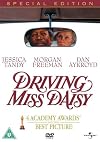
A wonderful, evocative and heart-warming story about an elderly white Jewish widow living in the US state of Georgia in the 1950s, and her driver, brilliantly played by Morgan Freeman. No fast action, but character growth, increased understanding, and a beautifully made film. Some mild humour in places, some poignancy, and plenty to think about.
Very highly recommended.
Longer review here: https://suesdvdreviews.blogspot.com/2020/10/driving-miss-daisy-jessica-tandy-mor...
Very highly recommended.
Longer review here: https://suesdvdreviews.blogspot.com/2020/10/driving-miss-daisy-jessica-tandy-mor...

Finally, my knitting comes in handy!
Being Jewish and social-climbing in the South clashes with the opening night of "Gone With the Wind." There's nary an Israelite for fifty miles, so I join a cast of people who can barely manage southern even though most are from around here or have lived here most of their lives, much less Jewish. It's like that accent expert trying to make Julia Roberts sound like someone from Atlanta when, fercrissake, she is someone from Atlanta. I look up from my show more knitting and wonder what all these goyim are doing around me. Everyone seems to be trying to sound southern and Jewish at the same time in order to convince a theatre full of blue-haired Baptists. God I love the theatre! It's the blessed irony in the dichotomy of reality and fiction. On the whole, though, I don't think the show is much different than, say, "Crossing Delancy." It just has a larger cast and a different set of accents. show less
Being Jewish and social-climbing in the South clashes with the opening night of "Gone With the Wind." There's nary an Israelite for fifty miles, so I join a cast of people who can barely manage southern even though most are from around here or have lived here most of their lives, much less Jewish. It's like that accent expert trying to make Julia Roberts sound like someone from Atlanta when, fercrissake, she is someone from Atlanta. I look up from my show more knitting and wonder what all these goyim are doing around me. Everyone seems to be trying to sound southern and Jewish at the same time in order to convince a theatre full of blue-haired Baptists. God I love the theatre! It's the blessed irony in the dichotomy of reality and fiction. On the whole, though, I don't think the show is much different than, say, "Crossing Delancy." It just has a larger cast and a different set of accents. show less
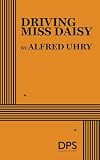
This play spans a few decades and chronicles the budding friendship between an old cranky, Jewish woman, Daisy, and her driver, a black man named Hoke. Over the years their relationship changes from a business one to that of old friends. The dialogue is wonderful and though it is a short play, I quickly felt attached to the characters. I just reread this as an audio performance with James Earl Jones and Angela Lansbury as the two main characters. It was wonderfully done.
Lists
Awards


You May Also Like


Associated Authors
Statistics
- Works
- 10
- Also by
- 2
- Members
- 890
- Popularity
- #28,790
- Rating
- 3.9
- Reviews
- 13
- ISBNs
- 28
- Languages
- 3