
Beth Pattillo
Author of Jane Austen Ruined My Life
About the Author
Beth Pattillo is an ordained minister in the Christian Church (Disciples of Christ) who has served congregations in Missouri and Tennessee. She developed Faith Leader while an associate minister at Woodmont Christian Church in Nashville, and it has guided hundreds of participants to define, design, show more and implement the ministries to which God has called them. show less
Disambiguation Notice:
Also writes under Bethany Brooks
Series
Works by Beth Pattillo
Associated Works
Jane Austen Made Me Do It: Original Stories Inspired by Literature's Most Astute Observer of the Human Heart (2011) — Contributor — 287 copies, 31 reviews
Tagged
Common Knowledge
- Other names
- Brooks, Bethany
- Birthdate
- 20th Century
- Gender
- female
- Education
- Trinity University
Vanderbilt University (MS ∙ Divinity) - Occupations
- minister
novelist - Nationality
- USA
- Birthplace
- Texas, USA
- Places of residence
- Nashville, Tennessee, USA
San Antonio, Texas, USA
Jackson, Tennessee, USA
Kansas City, Missouri, USA - Disambiguation notice
- Also writes under Bethany Brooks
- Associated Place (for map)
- USA
Members
Reviews
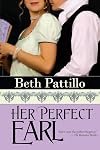
I heart The Sound of Music. Meaning that I had the movie (along with every other R&H) on constantly throughout my formative years. And while Her Perfect Earl definitely borrows some character elements, the book doesn't copy that story in the slightest.
Optimistic governess. Check.
Emotionally removed widower half-engaged to his second wife? Check.
A brood of children who are emotionally distanced from their father? Check.
About the only thing not present is the Nazi/WW2 story line. And singing. show more There is even a scene where the kids put on a play! Though theirs doesn't fare quite as well as the VonTrapp kids did.
For all of that, I liked these characters for themselves. Like I said, even though it blatantly shares elements with TSoM, it doesn't feel like it at all. You really want Esmie to get her school, and for Julian to get his head out of his bum the whole book. It took me a little while to warm up to Julian, but once I did, I quite liked him. However, I did wish there was more depth to their relationship regarding their love for researching and antiquities (we are mostly told this, not shown). It seems like such a big part of why they liked each other to be mostly skipped over. The ending was also a bit... sudden. Yeah... I'll put it like that. Big life changes in a short amount of time. So if that is a trope you don't like, stay far away from this book.
There is apparently an epilogue about the children on the authors site which I plan to look up as well. (EDIT: Here's the epilogue) While Her Perfect Earl wasn't genre-changing or anything, it was quite nice. And all the Sound of Music nostalgia it evoked didn't hurt either.
Note: After having read this, I realized it is a re-release of an older (2005) title by this author. So it's not so much a newly released book, as it is as newly released edition. Just an fyi.
ARC courtesy of Bell Bridge Books, via Netgalley in exchange for an honest review. show less
Optimistic governess. Check.
Emotionally removed widower half-engaged to his second wife? Check.
A brood of children who are emotionally distanced from their father? Check.
About the only thing not present is the Nazi/WW2 story line. And singing. show more There is even a scene where the kids put on a play! Though theirs doesn't fare quite as well as the VonTrapp kids did.
For all of that, I liked these characters for themselves. Like I said, even though it blatantly shares elements with TSoM, it doesn't feel like it at all. You really want Esmie to get her school, and for Julian to get his head out of his bum the whole book. It took me a little while to warm up to Julian, but once I did, I quite liked him. However, I did wish there was more depth to their relationship regarding their love for researching and antiquities (we are mostly told this, not shown). It seems like such a big part of why they liked each other to be mostly skipped over. The ending was also a bit... sudden. Yeah... I'll put it like that. Big life changes in a short amount of time. So if that is a trope you don't like, stay far away from this book.
There is apparently an epilogue about the children on the authors site which I plan to look up as well. (EDIT: Here's the epilogue) While Her Perfect Earl wasn't genre-changing or anything, it was quite nice. And all the Sound of Music nostalgia it evoked didn't hurt either.
Note: After having read this, I realized it is a re-release of an older (2005) title by this author. So it's not so much a newly released book, as it is as newly released edition. Just an fyi.
ARC courtesy of Bell Bridge Books, via Netgalley in exchange for an honest review. show less
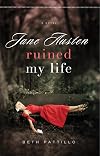
After her husband's betrayal destroys her marriage and her academic career, English professor Emma Douglas flees to London in response to a mysterious invitation. For two centuries the world has believed that Jane Austen's sister Cassandra destroyed most of Jane's letters upon her death. Emma's British correspondent claims to have these letters, and she offers to let Emma see them if she will first carry out some tasks. Emma blames Jane Austen for giving her false hope in happy endings, so show more she is determined to publish a work based on the long secret letters that will show the world that Jane Austen didn't live up to the ideals she espoused in her novels.
Having once lived in North London, I enjoyed reading about Emma's visits to familiar places like Hampstead, Kensington, and Covent Garden. The book held my interest through to the end, but it probably isn't one I will reread. We learn a lot about Emma, who narrates the book, but the other characters are not developed to their potential. It might have worked better as a short story.
Readers who are wary of the Christian fiction genre should not avoid the book for that reason. The book addresses moral and ethical issues without being over simplistic or "preachy". show less
Having once lived in North London, I enjoyed reading about Emma's visits to familiar places like Hampstead, Kensington, and Covent Garden. The book held my interest through to the end, but it probably isn't one I will reread. We learn a lot about Emma, who narrates the book, but the other characters are not developed to their potential. It might have worked better as a short story.
Readers who are wary of the Christian fiction genre should not avoid the book for that reason. The book addresses moral and ethical issues without being over simplistic or "preachy". show less

I found this Jane Austen inspired romance fun to read. Claire's predicament of finding she's lived her whole life for other people and, not surprisingly, discovering how empty she feels is one that I could understand. It's a scary thing to realize that and to begin to face the idea of building one's own life. It was fun to see some familiar characters in the form of The Formidables from Ms. Pattillo's first Jane Austen inspired books.
I thoroughly enjoyed this novel. One thing I really relish, is being able to have an author allow me the luxury of stepping back into academia. Graduate school was one of those experiences that I loved and cherish, and enjoy escaping back into it through the pages of an author's text. In this case, I thought it was fun watching Emma research more about Jane Austen, and although her research tended to be more the "field" type of research, it was still fun to watch her intellectual curiosity show more increase as she learned more. You do get the sense that you know what's going to happen, but in reality, the novel ended much differently than I expected. I can't say that I liked the ending, and would have preferred the one I was expecting (a bit happier), but it still didn't totally detract from my enjoyment of the story as a whole.
Emma's character is one that you connect with, and feel the pain of her broken marriage and job loss. This escape to England seems like a luxury, so it is fun to watch her pick up information about Austen, and then to try to determine how it all ties together. I quickly found myself loving her friend Adam, who was her previous flame. Adam might just be a bit too good to be true, but his role in the novel and in helping Emma to feel appreciated again, are interesting. Told as a sort of mystery, yet with this self-discovery by Emma entwined with it, I just thought it was a fun read. You think you know where the story is going, and you do to a point, but don't be completely deceived; the novel moves off in a direction that might just surprise you! show less
Emma's character is one that you connect with, and feel the pain of her broken marriage and job loss. This escape to England seems like a luxury, so it is fun to watch her pick up information about Austen, and then to try to determine how it all ties together. I quickly found myself loving her friend Adam, who was her previous flame. Adam might just be a bit too good to be true, but his role in the novel and in helping Emma to feel appreciated again, are interesting. Told as a sort of mystery, yet with this self-discovery by Emma entwined with it, I just thought it was a fun read. You think you know where the story is going, and you do to a point, but don't be completely deceived; the novel moves off in a direction that might just surprise you! show less
Lists
Austenland (1)
Awards

You May Also Like


Associated Authors
Statistics
- Works
- 18
- Also by
- 1
- Members
- 1,738
- Popularity
- #14,799
- Rating
- 3.4
- Reviews
- 99
- ISBNs
- 50
- Languages
- 3
- Favorited
- 1
