
Rachel Eliza Griffiths
Author of Promise: A Novel
About the Author
Image credit: Rachel Eliza Griffiths at the 2015 Texas Book Festival By Larry D. Moore, CC BY-SA 4.0, https://commons.wikimedia.org/w/index.php?curid=44702928
Works by Rachel Eliza Griffiths
Associated Works
African American Poetry: 250 Years of Struggle and Song (2020) — Contributor — 235 copies, 4 reviews
Nepantla: An Anthology Dedicated to Queer Poets of Color (2018) — Contributor — 124 copies, 2 reviews
New Daughters of Africa: An International Anthology of Writing by Women of African Descent (2019) — Contributor — 115 copies, 1 review
This Is the Honey: An Anthology of Contemporary Black Poets (2024) — Contributor — 67 copies, 1 review
Tagged
Common Knowledge
- Canonical name
- Griffiths, Rachel Eliza
- Birthdate
- 1978-12-06
- Gender
- female
- Occupations
- dichter
- Nationality
- USA
- Birthplace
- Washington, D.C., USA
Members
Reviews
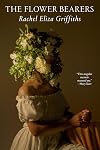
What initially attracted me to this memoir was its connection to Salman Rushdie, an author whose work I admire. Yet its intimate and searching internal monologue and lyrical prose proved to be a most pleasant surprise. Ultimately, the Rushdie connection is only a minor part of a more expansive and thoughtful work. Griffiths does indeed render her relationship to Rushdie with remarkable restraint and tenderness. Her vantage point is not the sensationalized attack Rushdie suffered at the hands show more of a knife-wielding zealot and its aftermath, but expands into the fragile, loving intimacy of their shared life suddenly shattered by violence. Unfortunately, this event becomes just one devastating point around which her internal monologue must reorganize itself. Others include the Covid pandemic and the deaths of her mother and a beloved friend.
The untimely death of her close friend, the poet Kamilah Aisha Moon, deepens the memoir’s meditation on artistic kinship and shared ambition. Its grief is quieter but no less profound than the attack on Rushdie because it captures the particular ache of losing someone who understood her work from the inside and bore witness to her becoming. This loss sharpens the memoir’s sense of isolation, while also underscoring how art is sustained through community as much as solitude.
In her writing, Griffiths is less interested in narrative momentum than in reflection characterized by pauses for moments that carry immense emotional weight for her. Her prose emphasizes the complexity of living with loss and her private negotiations of survival, memory, and meaning. The quiet unfolding of these thought gives the book sizeable force.
Central throughout also is Griffiths’ experience as a Black woman and artist navigating spaces that are often indifferent, if not hostile, to her presence. She captures the quiet exhaustion of having to absorb racial and gendered pressures while sustaining her own artistic integrity. Creative doubt and negotiations between visibility and self-realization inevitably accompany such struggles.
Ultimately, this is a memoir that feels both deeply personal and quietly expansive. It is a testament to artistic survival, shared vulnerability, and the difficult grace of continuing to bear flowers after much challenge. show less
The untimely death of her close friend, the poet Kamilah Aisha Moon, deepens the memoir’s meditation on artistic kinship and shared ambition. Its grief is quieter but no less profound than the attack on Rushdie because it captures the particular ache of losing someone who understood her work from the inside and bore witness to her becoming. This loss sharpens the memoir’s sense of isolation, while also underscoring how art is sustained through community as much as solitude.
In her writing, Griffiths is less interested in narrative momentum than in reflection characterized by pauses for moments that carry immense emotional weight for her. Her prose emphasizes the complexity of living with loss and her private negotiations of survival, memory, and meaning. The quiet unfolding of these thought gives the book sizeable force.
Central throughout also is Griffiths’ experience as a Black woman and artist navigating spaces that are often indifferent, if not hostile, to her presence. She captures the quiet exhaustion of having to absorb racial and gendered pressures while sustaining her own artistic integrity. Creative doubt and negotiations between visibility and self-realization inevitably accompany such struggles.
Ultimately, this is a memoir that feels both deeply personal and quietly expansive. It is a testament to artistic survival, shared vulnerability, and the difficult grace of continuing to bear flowers after much challenge. show less
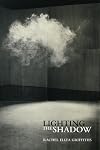
Much beautiful language and stark, vivid imagery contained in this great collection. Griffiths’ light and dark contrasts sets the backdrop for many of the dichotomies in this collection, the personal and the public spaces, the immediate and the historical, the spirit and the physical. Between those opposites lies a murky world containing grief and silence whether its personal loss or a broader issue such as gun violence, the “gristle of imagery” with no easy answers. But with the use show more of light, the poet (who is also a visual artist, excelling at Black and White photography) takes on the role of guide leading us like Virgil through an Inferno of shadows. Not something I would advise for light reading but one of the more important books of poetry I’ve read. show less
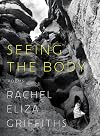
Powerful hybrid collection. The photos and poems act as a guide for the reader, doing what the speaker's mother did for the speaker, 'showing how to follow (the) heart into hard places.' These are places that can't be cordoned off from the rest of one's life and often touch into much larger issues of violence based on race, on gender, based on a place disposed to violence - but also places that can't be cordoned off from community and the people showing these moments of light. This is not an show more easy collection to read but worth the journey. Seeing the Body shows writers learning to tap into the deeply personal, difficult places, that sometimes if you dig deep and honestly enough -- lives begin to touch other lives.
Rachel Eliza Griffiths poems and pictures are a treasure. show less
Rachel Eliza Griffiths poems and pictures are a treasure. show less
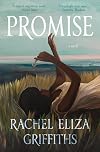
Note: I received free access to this manuscript and am writing this review voluntarily. Thank you netgalley and Random House. Publication Date: July 11, 2023.
A powerful story of racism in 1950 America that starts quite slowly and later turns into an action-packed page turner. Awarded four stars on Goodreads.
Above all, it's a story of the power of family -- regardless of whether that tie is created by blood, chosen with love, or served up by community. In PROMISE, author and poet Rachel Eliza show more Griffiths takes us to a small town in Maine in the mid-1950s, where she introduces us to three families:
• The Kindreds - a Black family of four, full of love and focused on education as the way out and up. Their father is the only Black teacher at the local school. Teenage sisters Ezra and Cinthy are central characters, with the novel written from Cinthy's point of view.
• The Junketts - a second Black family of six. Their father is custodian at the same school.
• The Scaggs - a poor and troubled White family whose only child, Ruby, is friends with Ezra and Cinthy.
As the only two Black families in town, ostracized by the locals, the Kindreds and Junketts are naturally bonded tightly to one other.
At the start, it appears the book will be a coming of age story about three girls. But coming of age, it turns out, is quite a different experience depending on race. Ruby, as a white girl, is expected to grow to maturity, marry, and have a family. But the budding maturing (and beauty) of Ezra (with Cinthy close behind) means the start of unwanted attention from white men, along with new stereotypes about the sexuality of Black women. Both of which make white women VERY uncomfortable. This difference between the two races at puberty has a profound impact on the lives and friendship among Ezra, Cinthy, and Ruby.
Unexpected events and many, many instances of ugly and overt racism soon take the book in surprising directions. And beside becoming a compelling story, I felt privileged to learn all the lovely ways the Black community supports and trusts its own. Within this world, deep belief in God, a strong, almost supernatural connection to long-gone ancestors, and a shared history and experience of the world connect people in a way I've never experienced. And feel envious of.
The author has won several prizes for poetry. So the language she uses in this novel is often poetic. In a few places it felt a bit over the top to me. But that is a minimal criticism compared to the overwhelming positive feelings I am taking away. Especially about the resilience of humans facing extremely difficult circumstances. show less
A powerful story of racism in 1950 America that starts quite slowly and later turns into an action-packed page turner. Awarded four stars on Goodreads.
Above all, it's a story of the power of family -- regardless of whether that tie is created by blood, chosen with love, or served up by community. In PROMISE, author and poet Rachel Eliza show more Griffiths takes us to a small town in Maine in the mid-1950s, where she introduces us to three families:
• The Kindreds - a Black family of four, full of love and focused on education as the way out and up. Their father is the only Black teacher at the local school. Teenage sisters Ezra and Cinthy are central characters, with the novel written from Cinthy's point of view.
• The Junketts - a second Black family of six. Their father is custodian at the same school.
• The Scaggs - a poor and troubled White family whose only child, Ruby, is friends with Ezra and Cinthy.
As the only two Black families in town, ostracized by the locals, the Kindreds and Junketts are naturally bonded tightly to one other.
At the start, it appears the book will be a coming of age story about three girls. But coming of age, it turns out, is quite a different experience depending on race. Ruby, as a white girl, is expected to grow to maturity, marry, and have a family. But the budding maturing (and beauty) of Ezra (with Cinthy close behind) means the start of unwanted attention from white men, along with new stereotypes about the sexuality of Black women. Both of which make white women VERY uncomfortable. This difference between the two races at puberty has a profound impact on the lives and friendship among Ezra, Cinthy, and Ruby.
Unexpected events and many, many instances of ugly and overt racism soon take the book in surprising directions. And beside becoming a compelling story, I felt privileged to learn all the lovely ways the Black community supports and trusts its own. Within this world, deep belief in God, a strong, almost supernatural connection to long-gone ancestors, and a shared history and experience of the world connect people in a way I've never experienced. And feel envious of.
The author has won several prizes for poetry. So the language she uses in this novel is often poetic. In a few places it felt a bit over the top to me. But that is a minimal criticism compared to the overwhelming positive feelings I am taking away. Especially about the resilience of humans facing extremely difficult circumstances. show less
Lists
Awards


You May Also Like
Associated Authors
Statistics
- Works
- 7
- Also by
- 9
- Members
- 172
- Popularity
- #124,307
- Rating
- 4.2
- Reviews
- 6
- ISBNs
- 23
- Languages
- 3