

Duncan Lay
Author of The Wounded Guardian (Dragon Sword Histories)
About the Author
Series
Works by Duncan Lay
The Last Quarrel: The Complete Edition (The Arbalester Trilogy, episodes #1-5) (2015) 18 copies, 5 reviews
Tagged
Common Knowledge
Members
Reviews
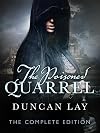
Fallon and Bridgit are reunited and they and their friends are now trying to save Gaelland but the odds seem to be completely stacked against them. Swane is free and plotting to take back the throne with the aid of the nobles and, of course, Zorva; Duchess Dina is at his side manipulating events; Prince Kemal is still imprisoned while his wife seeks aid from his father, the Emperor to free him but Kemal’s ambitious younger brother is determined to prevent it at any cost; thanks to show more rationing and rumours spread by Dina’s minions, Gaelland’s population is fast losing faith in Fallon and seems on the edge of revolt; and the stress of trying to unite this fractured country is causing Fallon and his friends to make some dangerous mistakes. Bridgit is the only one who seems to have a clear vision of what needs to be done but can she convince her husband before it is too late?
The Poisoned Quarrel: The Arbalester Trilogy 3 (Complete Edition) is the final book in author Duncan Lay’s epic fantasy series and all I can say is Wow, this is one wild ride. It is almost non-stop intrigue, betrayal, action, and violence with just a touch of magic and a fair share of hope, friendship (albeit somewhat subdued compared to the first two books), and familial love (again, albeit tested by events). There were, admittedly, some draggy bits in the middle but that was okay because they helped set the story up and, frankly, allowed some much needed breathing space so the reader can be prepared for the final battle which is, indeed, epic. Definitely a fitting end to a very fine fantasy series.
Thanks to Netgalley and Momentum Books for the opportunity to read this book in exchange for an honest review show less
The Poisoned Quarrel: The Arbalester Trilogy 3 (Complete Edition) is the final book in author Duncan Lay’s epic fantasy series and all I can say is Wow, this is one wild ride. It is almost non-stop intrigue, betrayal, action, and violence with just a touch of magic and a fair share of hope, friendship (albeit somewhat subdued compared to the first two books), and familial love (again, albeit tested by events). There were, admittedly, some draggy bits in the middle but that was okay because they helped set the story up and, frankly, allowed some much needed breathing space so the reader can be prepared for the final battle which is, indeed, epic. Definitely a fitting end to a very fine fantasy series.
Thanks to Netgalley and Momentum Books for the opportunity to read this book in exchange for an honest review show less
See the complete review posted on Book Frivolity. Check out other Fantasy and Historical Fiction ruminations there as well! POV's: Multiple
Narrative: Third person subjective
Contains chapters 19 through to 29.
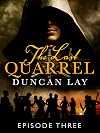
Alright! Now we are thrashing in the quagmire! The Last Quarrel starts hitting it's stride in episode three! The plot, character development and pacing all start ramping up and their off! Bridgit has a good start and is pulling out in front, with Kerrin and Fallon right behind.. It seems show more the Prince has got himself confused and is running around the track in the wrong direction! Look at his stable hand chase him down! What is his brother shouting in the stands? What a ruckus! Hold on!? Who is that mystery horse galloping down the field behind?
Ok, I make a extremely shoddy race caller, but, it's a pretty fun race! This sort of pacing and forward movement works the episodic form to it's best. Quick off the mark, nice strong pace in the middle, bastard of a cliffhanger at the end. The first two episodes lacked that snappy format and I think that's why they seemed weaker, even though there really isn't any difference in Lay's writing style or skill. You can read about my thoughts on them on the links provided above if needs be.
This is a really nice set up for the last two episodes, though how everything will be wrapped up in approximately 280 pages hence, I don't know! A lot of loose threads to plait together!
I do need the next episode you know, I needs it! I am pretty sure who the mystery horse is, but I need confirmation.. I needs it.. show less
Narrative: Third person subjective
Contains chapters 19 through to 29.
Alright! Now we are thrashing in the quagmire! The Last Quarrel starts hitting it's stride in episode three! The plot, character development and pacing all start ramping up and their off! Bridgit has a good start and is pulling out in front, with Kerrin and Fallon right behind.. It seems show more the Prince has got himself confused and is running around the track in the wrong direction! Look at his stable hand chase him down! What is his brother shouting in the stands? What a ruckus! Hold on!? Who is that mystery horse galloping down the field behind?
Ok, I make a extremely shoddy race caller, but, it's a pretty fun race! This sort of pacing and forward movement works the episodic form to it's best. Quick off the mark, nice strong pace in the middle, bastard of a cliffhanger at the end. The first two episodes lacked that snappy format and I think that's why they seemed weaker, even though there really isn't any difference in Lay's writing style or skill. You can read about my thoughts on them on the links provided above if needs be.
This is a really nice set up for the last two episodes, though how everything will be wrapped up in approximately 280 pages hence, I don't know! A lot of loose threads to plait together!
I do need the next episode you know, I needs it! I am pretty sure who the mystery horse is, but I need confirmation.. I needs it.. show less

Bridge of Swords is the first book in Duncan Lay's second trilogy, Empire of Bones. It is set about three hundred years after the Dragon Sword Histories (The Wounded Guardian, The Radiant Child and The Risen Queen), however you definitely need not have read the first series for this one to make sense. Given the large time gap, there are no common characters and in the interim the face of the world has changed significantly so that even those who have read the first series will find it show more relatively unfamiliar at the start.
There are three central characters in Bridge of Swords: Sendatsu the elf, Huw the bard and Rhiannon the dancer. Sendatsu found himself inadvertently at the centre of a conflict among his secluded people and travelled into the human world to help resolve it. Throughout the story, he misses and pines for his young children whom he was forced to leave behind. The focus on the relationship between father and young children is not something that is often a strong element of fantasy writing, perhaps to its detriment — in fact the only other example I can think of is in Lay's Dragon Sword Histories. Lay's writing shows that positive father figure and heroic fighter need not be mutually exclusive characteristics.
Huw, the bard from Vales, travelled to the Forlish king's court to play the lute. While there he became enamoured of the talented dancer Rhiannon and also learnt about the king's plans to subdue and conquer Vales. Compelled to leave court and warn his homeland, he convinces/tricks Rhiannon into coming with him. In the course of events, they team up with Sendatsu and find themselves helping Velsh villages mount defences against the Forlish.
I liked that none of the main characters were perfect people and enjoyed watching them grow throughout the book. As I'm one for moral shades of grey characters, I enjoyed the two men more than Rhiannon. Although she definitely grows during the story, she goes from naïve to more worldly without really doing anything morally ambiguous, unlike the other two.
Something Lay does well is write about the minutiae of battles. I don't mean the blow by blow account — although that's good too — I mean the details of the preparation and organisation. I noted in in the Dragon Sword Histories and it shone through again in Bridge of Swords. I really appreciate the attention to detail and the research that obviously goes into the world-building.
All in all, I definitely recommend Bridge of Swords to fantasy lovers, especially those that enjoy fight scenes. And enjoyable read which left me hanging for the next book — especially after that cliffhanger ending, yeesh.
4.5 / 5 stars
You can read more of my reviews on my blog, Tsana's Reads. show less
There are three central characters in Bridge of Swords: Sendatsu the elf, Huw the bard and Rhiannon the dancer. Sendatsu found himself inadvertently at the centre of a conflict among his secluded people and travelled into the human world to help resolve it. Throughout the story, he misses and pines for his young children whom he was forced to leave behind. The focus on the relationship between father and young children is not something that is often a strong element of fantasy writing, perhaps to its detriment — in fact the only other example I can think of is in Lay's Dragon Sword Histories. Lay's writing shows that positive father figure and heroic fighter need not be mutually exclusive characteristics.
Huw, the bard from Vales, travelled to the Forlish king's court to play the lute. While there he became enamoured of the talented dancer Rhiannon and also learnt about the king's plans to subdue and conquer Vales. Compelled to leave court and warn his homeland, he convinces/tricks Rhiannon into coming with him. In the course of events, they team up with Sendatsu and find themselves helping Velsh villages mount defences against the Forlish.
I liked that none of the main characters were perfect people and enjoyed watching them grow throughout the book. As I'm one for moral shades of grey characters, I enjoyed the two men more than Rhiannon. Although she definitely grows during the story, she goes from naïve to more worldly without really doing anything morally ambiguous, unlike the other two.
Something Lay does well is write about the minutiae of battles. I don't mean the blow by blow account — although that's good too — I mean the details of the preparation and organisation. I noted in in the Dragon Sword Histories and it shone through again in Bridge of Swords. I really appreciate the attention to detail and the research that obviously goes into the world-building.
All in all, I definitely recommend Bridge of Swords to fantasy lovers, especially those that enjoy fight scenes. And enjoyable read which left me hanging for the next book — especially after that cliffhanger ending, yeesh.
4.5 / 5 stars
You can read more of my reviews on my blog, Tsana's Reads. show less

Valley of Shields begins with a heart-pounding battle (remember that cliffhanger from Bridge of Swords?) and the action doesn't let up throughout the novel. Perfectly balanced with secrets and intrigue, romance and familial relationships, it has left me wishing that the third and final volume of this series was already available.
Sendatsu, our quintessential reluctant hero, finally bites the bullet in this book and starts to make decisions himself, instead of watching passively and hoping show more trouble passes him by. I liked getting to know about his old life better, especially the way he lives and his relationship with his children and mother. Huw and Rhiannon are with him every step of the way, trying to convince the 'elves' that they are equal to humans and should live peacefully alongside them. With the main cast all together, it's weird to see Sendatsu, Asami and Gaibun in the same place, considering their love triangle.
I really wanted Asami to have a larger role than previously, and she gets that in this novel, which made me happy. Although much of her and Rhiannon's interactions are based on the men in their lives, they bond over a lot of other things, like magic and defying the traditional roles for women. In my opinion, they spent too long talking about their romances, with Asami even once saying that the politics and battles don't matter, she wanted to hear about "more important things", like Rhiannon and Huw. I also think Asami's character is held back by the love triangle - Gaibun and Sendatsu frequently treat her like a prized possession, rather than a person, and it's infuriating. However, I love that she always knew what she wanted and wasn't afraid to grab it, or confront Sendatsu when he was keeping her away from her dreams. I think the love triangle is handled realistically in this book, especially in comparison to a few others I have read *cough*Jem-Tessa-Will*cough*
Again, the world building in this novel blew me away - everything is so well thought out and explained that I had no trouble imagining it. While Bridge of Swords focussed on showing us the human world, here we were introduced to the elven world, which is every bit as interesting and exotic. I admire the cultural and social differences between the elves and humans, and understood each group's motivations. I love that the author manages to make the readers' sympathies shift with every change in perspective; it takes a clever writer to be able to pull that off consistently.
This series is focussed on physical battles between the humans and elves, but while the previous book had a few small-scale skirmishes in it, and focussed a lot on the training of human troops, Valley of Shields has a few larger battles. These are long, strategic, bloody affairs, but I think the inclusion of so many narrative perspectives works in this case because it never got boring. Each character saw something different, and more importantly, was a part of a different part of the defence/attack, so that they only gave a complete picture of what was happening what taken together. It was enjoyable, and Duncan Lay writes some of the best one-on-one fight scenes I have ever read.
Valley of Shields is a wonderful sequel to Bridge of Swords, and will be enjoyed my many fans of the Fantasy genre. Although somewhat lengthy, it rewards its readers with amazing characters and realistic plot elements. For me, the next book (Wall of Spears), cannot come quickly enough.
A copy of this book was provided by the publisher for review.
You can read more of my reviews at Speculating on SpecFic. show less
Sendatsu, our quintessential reluctant hero, finally bites the bullet in this book and starts to make decisions himself, instead of watching passively and hoping show more trouble passes him by. I liked getting to know about his old life better, especially the way he lives and his relationship with his children and mother. Huw and Rhiannon are with him every step of the way, trying to convince the 'elves' that they are equal to humans and should live peacefully alongside them. With the main cast all together, it's weird to see Sendatsu, Asami and Gaibun in the same place, considering their love triangle.
I really wanted Asami to have a larger role than previously, and she gets that in this novel, which made me happy. Although much of her and Rhiannon's interactions are based on the men in their lives, they bond over a lot of other things, like magic and defying the traditional roles for women. In my opinion, they spent too long talking about their romances, with Asami even once saying that the politics and battles don't matter, she wanted to hear about "more important things", like Rhiannon and Huw. I also think Asami's character is held back by the love triangle - Gaibun and Sendatsu frequently treat her like a prized possession, rather than a person, and it's infuriating. However, I love that she always knew what she wanted and wasn't afraid to grab it, or confront Sendatsu when he was keeping her away from her dreams. I think the love triangle is handled realistically in this book, especially in comparison to a few others I have read *cough*Jem-Tessa-Will*cough*
Again, the world building in this novel blew me away - everything is so well thought out and explained that I had no trouble imagining it. While Bridge of Swords focussed on showing us the human world, here we were introduced to the elven world, which is every bit as interesting and exotic. I admire the cultural and social differences between the elves and humans, and understood each group's motivations. I love that the author manages to make the readers' sympathies shift with every change in perspective; it takes a clever writer to be able to pull that off consistently.
This series is focussed on physical battles between the humans and elves, but while the previous book had a few small-scale skirmishes in it, and focussed a lot on the training of human troops, Valley of Shields has a few larger battles. These are long, strategic, bloody affairs, but I think the inclusion of so many narrative perspectives works in this case because it never got boring. Each character saw something different, and more importantly, was a part of a different part of the defence/attack, so that they only gave a complete picture of what was happening what taken together. It was enjoyable, and Duncan Lay writes some of the best one-on-one fight scenes I have ever read.
Valley of Shields is a wonderful sequel to Bridge of Swords, and will be enjoyed my many fans of the Fantasy genre. Although somewhat lengthy, it rewards its readers with amazing characters and realistic plot elements. For me, the next book (Wall of Spears), cannot come quickly enough.
A copy of this book was provided by the publisher for review.
You can read more of my reviews at Speculating on SpecFic. show less
Statistics
- Works
- 15
- Members
- 169
- Popularity
- #126,056
- Rating
- 3.7
- Reviews
- 22
- ISBNs
- 25
- Languages
- 1
- Favorited
- 2
