
Steve Grove
Author of How I Found Myself in the Midwest: A Memoir of Reinvention
Works by Steve Grove
Associated Works
Exposure — Saxophone — 3 copies
Tagged
Common Knowledge
There is no Common Knowledge data for this author yet. You can help.
Members
Reviews
The Midwest is sometimes disparaged as “flyover country,” ignored by politicians, investors, and venture capital funds. But you’ll find valuable attitudes in a place where “Life’s too short and the winters are too cold to chase something that doesn’t matter.”
At age 40, Steve Grove left his Silicon Valley job to return, with wife and twin babies, to his home state of Minnesota after many years away. Driven, in part, by their desire to be part of a community that felt more rooted show more in purpose, he took a job working for Governor Tim Walz. The transition from private sector to public—leading the agency devoted to employment and economic development—was not easy, nor was it simple to create a new life, despite the presence of extended family. Then COVID hit, followed by George Floyd’s murder which laid bare the racial fault lines that had long existed in Minnesota.
The book’s subtitle—a memoir of reinvention—refers not only to his personal journey but to the broader, urgent need for us all to find ways to bridge urban-rural, racial, and political divides. Chapters focus on how he forged new friendships in mid-life, his marriage, and their IVF journey—and also on the local start-ups and non-profits he showcases as promising examples.
If you’re unfamiliar with the state, you’ll learn more about “Minnesota Nice” and the state’s history of commitment to civic participation, as well as dispelling some of the myths surrounding the Land of 10,000 Lakes. If you’ve ever lived there (as I have), you’ll recognize the physical and political landscape, while also seeing it afresh. Now home to the largest group of Somali immigrants in the nation, along with Native Americans, Southeast Asians, and Black residents, it is more diverse than ever before.
Having worked for both Youtube and Google, Grove is clear-sighted about tech’s shortcomings as well as its promise. He’s starkly aware of the need for reliable news throughout the state (ultimately becoming publisher of its largest newspaper) and he understands why and how government needs to change. Ultimately, he presents a hopeful vision that government might learn to experiment more and respond more speedily, if only voters and bureaucrats alike would tolerate some risk. More importantly, he urges readers to rebuild trust by starting in our own communities, supporting local institutions, getting involved, reaching out to our neighbors. As he writes, “working with people who are different from you is exactly what makes lasting changes in community possible.”
My thanks to Simon & Schuster for the review copy. show less
At age 40, Steve Grove left his Silicon Valley job to return, with wife and twin babies, to his home state of Minnesota after many years away. Driven, in part, by their desire to be part of a community that felt more rooted show more in purpose, he took a job working for Governor Tim Walz. The transition from private sector to public—leading the agency devoted to employment and economic development—was not easy, nor was it simple to create a new life, despite the presence of extended family. Then COVID hit, followed by George Floyd’s murder which laid bare the racial fault lines that had long existed in Minnesota.
The book’s subtitle—a memoir of reinvention—refers not only to his personal journey but to the broader, urgent need for us all to find ways to bridge urban-rural, racial, and political divides. Chapters focus on how he forged new friendships in mid-life, his marriage, and their IVF journey—and also on the local start-ups and non-profits he showcases as promising examples.
If you’re unfamiliar with the state, you’ll learn more about “Minnesota Nice” and the state’s history of commitment to civic participation, as well as dispelling some of the myths surrounding the Land of 10,000 Lakes. If you’ve ever lived there (as I have), you’ll recognize the physical and political landscape, while also seeing it afresh. Now home to the largest group of Somali immigrants in the nation, along with Native Americans, Southeast Asians, and Black residents, it is more diverse than ever before.
Having worked for both Youtube and Google, Grove is clear-sighted about tech’s shortcomings as well as its promise. He’s starkly aware of the need for reliable news throughout the state (ultimately becoming publisher of its largest newspaper) and he understands why and how government needs to change. Ultimately, he presents a hopeful vision that government might learn to experiment more and respond more speedily, if only voters and bureaucrats alike would tolerate some risk. More importantly, he urges readers to rebuild trust by starting in our own communities, supporting local institutions, getting involved, reaching out to our neighbors. As he writes, “working with people who are different from you is exactly what makes lasting changes in community possible.”
My thanks to Simon & Schuster for the review copy. show less
 This review was written for LibraryThing Early Reviewers.
I received this book through the LibraryThing Early Reviewer program. I didn’t realize, when I requested it, who had written it. Steve Grove is the editor of the Minnesota Star Tribune, the main Minneapolis newspaper.
In the acknowledgments, Grove admits his doubts about writing a memoir of his life while only partway through. Having read this book, I’d say those doubts are well-founded. If he had a few more decades, there would be more substance he could use. As it is, the content is show more thin, and the reader grows tired of hearing the (common sense) lessons he learns repeatedly. The book also suffered from a rather ordinary voice, although the clearly chronological structure was good.
Some moments that stuck out as I read this book:
p. 111: “‘ People are dying, Steve!’ she screamed back.” Grove, serving as the head of the business and economy department of the Minnesota state government during COVID, had to be reminded that the pandemic was fatal during a conversation about to what capacity businesses could reopen. Reflecting on the whole book, I don’t recall him talking about a single person who died of COVID, or experienced long COVID, although he talks all the time about business owners who are struggling. For someone who cites learning to work with others as a lesson he’s learned, it’s remarkable that he really only seems to see people as people if they are business owners.
It reminds me of a local news program I listened to a few days ago, when Lisa Demuth (GOP speaker of the Minnesota House and candidate for governor) was talking about the economic harm to the state recently. She seemed to think that businesses were more important than people, and not that businesses existed to provide a living and a life for people. Grove, though presenting himself as a centrist and a Democrat, seems to have the same attitude, though he expresses empathy for others at certain points.
p. 127: “Standing next to a Humvee across the street, two National Guard soldiers held machine guns and scanned the street for danger.” Grove is describing a quiet morning on Lake Street, a center of the protests and riots after George Floyd’s murder, as businesses assess the damage from the riots. This sentence struck me as so strange. Two people, holding powerful war weapons, standing in a city’s business district, but Grove legitimizes their presence and that they are not, themselves, a military force entering a business and residential area, and therefore a source of danger.
p. 133: “The state had drunk the Kool-Aid on our own story, and it was blinding us to the real challenges we faced. … all the top rankings and quality-of-life awards gave the state, at times, a delusional sense of self.” I agree with Grove’s sentiment here, and it’s something I’ve seen in Minnesota too. A sense of Minnesota exceptionalism that prevents change and humility.
p. 143: “I was learning the power of working with people who aren’t just like you.” Shouldn’t he have known this before working as the leader of a state government department? Or, perhaps, before graduating college?
p. 194: “Instead of the Peace Corps, Celia chose Lead for America and returned to Minnesota. It became her own version of ‘America First.’” Grove just seems to completely be unaware of Americorps in this entire section that is about someone creating a new version of Americorps. Plenty of room for more programs like this, I imagine, but weird to pretend there’s nothing domestic that is a parallel of the Peace Corps.
p. 210: “But as white settlers began to move into the area, bad treaties and broken promises shrank the tribe’s land and decimated their way of life. By the end of the nineteenth century, they had been almost completely driven from homes they’d lived in for generations. Even worse, Ojibwe children were stolen from their families and placed in government boarding schools for assimilation, one of the most shameful acts in U.S. government history. Generations of culture, religion, and language were nearly destroyed.” The passive voice is carrying this ENTIRE paragraph. So weird how all this stuff just happened without anyone doing it!
p. 254: Grove says that 70% of the Star Tribune’s revenue comes from print, at the time he’s taking over. As the leader of that paper, Grove closed the local printing plant in the last days of 2025, resulting in dozens of lost jobs, and both the Star Tribune and the St. Paul paper, the Pioneer Press, being printed in Iowa. This diminishes the value of the printed product, since it delays coverage of events which happen later in the afternoon and evening at least until the next day. It feels absurd to strip your company’s capacity to produce a product which provides 70% of your revenue. After he talks about saving jobs and companies throughout the book, knowing that he made this choice makes those earlier sentiments seem hollow.
He seems like he’s a great dad and a great neighbor, but it is too early to say he’s a great author, and he’s certainly not a great newspaper editor. show less
In the acknowledgments, Grove admits his doubts about writing a memoir of his life while only partway through. Having read this book, I’d say those doubts are well-founded. If he had a few more decades, there would be more substance he could use. As it is, the content is show more thin, and the reader grows tired of hearing the (common sense) lessons he learns repeatedly. The book also suffered from a rather ordinary voice, although the clearly chronological structure was good.
Some moments that stuck out as I read this book:
p. 111: “‘ People are dying, Steve!’ she screamed back.” Grove, serving as the head of the business and economy department of the Minnesota state government during COVID, had to be reminded that the pandemic was fatal during a conversation about to what capacity businesses could reopen. Reflecting on the whole book, I don’t recall him talking about a single person who died of COVID, or experienced long COVID, although he talks all the time about business owners who are struggling. For someone who cites learning to work with others as a lesson he’s learned, it’s remarkable that he really only seems to see people as people if they are business owners.
It reminds me of a local news program I listened to a few days ago, when Lisa Demuth (GOP speaker of the Minnesota House and candidate for governor) was talking about the economic harm to the state recently. She seemed to think that businesses were more important than people, and not that businesses existed to provide a living and a life for people. Grove, though presenting himself as a centrist and a Democrat, seems to have the same attitude, though he expresses empathy for others at certain points.
p. 127: “Standing next to a Humvee across the street, two National Guard soldiers held machine guns and scanned the street for danger.” Grove is describing a quiet morning on Lake Street, a center of the protests and riots after George Floyd’s murder, as businesses assess the damage from the riots. This sentence struck me as so strange. Two people, holding powerful war weapons, standing in a city’s business district, but Grove legitimizes their presence and that they are not, themselves, a military force entering a business and residential area, and therefore a source of danger.
p. 133: “The state had drunk the Kool-Aid on our own story, and it was blinding us to the real challenges we faced. … all the top rankings and quality-of-life awards gave the state, at times, a delusional sense of self.” I agree with Grove’s sentiment here, and it’s something I’ve seen in Minnesota too. A sense of Minnesota exceptionalism that prevents change and humility.
p. 143: “I was learning the power of working with people who aren’t just like you.” Shouldn’t he have known this before working as the leader of a state government department? Or, perhaps, before graduating college?
p. 194: “Instead of the Peace Corps, Celia chose Lead for America and returned to Minnesota. It became her own version of ‘America First.’” Grove just seems to completely be unaware of Americorps in this entire section that is about someone creating a new version of Americorps. Plenty of room for more programs like this, I imagine, but weird to pretend there’s nothing domestic that is a parallel of the Peace Corps.
p. 210: “But as white settlers began to move into the area, bad treaties and broken promises shrank the tribe’s land and decimated their way of life. By the end of the nineteenth century, they had been almost completely driven from homes they’d lived in for generations. Even worse, Ojibwe children were stolen from their families and placed in government boarding schools for assimilation, one of the most shameful acts in U.S. government history. Generations of culture, religion, and language were nearly destroyed.” The passive voice is carrying this ENTIRE paragraph. So weird how all this stuff just happened without anyone doing it!
p. 254: Grove says that 70% of the Star Tribune’s revenue comes from print, at the time he’s taking over. As the leader of that paper, Grove closed the local printing plant in the last days of 2025, resulting in dozens of lost jobs, and both the Star Tribune and the St. Paul paper, the Pioneer Press, being printed in Iowa. This diminishes the value of the printed product, since it delays coverage of events which happen later in the afternoon and evening at least until the next day. It feels absurd to strip your company’s capacity to produce a product which provides 70% of your revenue. After he talks about saving jobs and companies throughout the book, knowing that he made this choice makes those earlier sentiments seem hollow.
He seems like he’s a great dad and a great neighbor, but it is too early to say he’s a great author, and he’s certainly not a great newspaper editor. show less
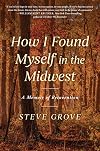
This review was written for LibraryThing Early Reviewers.It has a gorgeous cover of the deep woods which made want to go back to Indiana! Steve Groves was working for Google in the Silicon Valley, then he wanted to go back to Minnesota where he grew up. I shared that yearning but for Southern Indiana.
It was a huge shift from a cushy job with a job that was extremely challenging in Minnesota.. And that is where his parents lived, they could provide support and love for their twins.
He also wanted to give back to community instead of just working for show more company. Also, he had a personal journey with his relationship with his father and how he felt about religion. As a child he did not realize the underlying racism that runs through Minnesota history. As an adult he started to see it in his community, then there was the murder of George Floyd. He decided to do the most that he could to fight racism in his new job. Of course there is more to this book but it is definitely a book that makes you think about many issues that are often poorly or not addressed at all. show less
It was a huge shift from a cushy job with a job that was extremely challenging in Minnesota.. And that is where his parents lived, they could provide support and love for their twins.
He also wanted to give back to community instead of just working for show more company. Also, he had a personal journey with his relationship with his father and how he felt about religion. As a child he did not realize the underlying racism that runs through Minnesota history. As an adult he started to see it in his community, then there was the murder of George Floyd. He decided to do the most that he could to fight racism in his new job. Of course there is more to this book but it is definitely a book that makes you think about many issues that are often poorly or not addressed at all. show less
This review was written for LibraryThing Early Reviewers.In this book, Steve Grove shares his story of returning to the Midwest in search of all sorts of things: having more kids, a faith, more time with extended family, and work he finds meaningful. He grew up in Northfield, Minnesota, a small-ish college town in the southern part of the state. After a high-flying job at YouTube (and then Google) in Silicon Valley, he gets the itch to return to his roots and moves his family to Minneapolis. Not long after, he leaves his now-remote job at Google show more to take a position in state government. Long sections detail his professional and social adjustments in his new situation and he couches most of these as examples that confirm the stereotypes about Minnesotans. By the time I reached the section about his trip to the Boundary Waters with his male family members and the heart-to-heart with his father in which Grove asks if his father believes he will go to hell, I thought ,"of COURSE, now the personal epiphany and the cosmic redemption in the BWCA!" This section was pretty trite and left me wondering what could this guy have possibly done that was so bad? Where is this guilt coming from?
I didn't find it a particularly engaging read in part because although Grove gives a lot of personal detail, he skates past some fairly significant elements. For example, we get a lot of information about fertility treatments but very little about his work in Silicon Valley and the reasons he left it. He makes a short comment about how YouTube and other social media platforms can and are used in ways that negatively affect communities, but there is no reflection on his own role in providing bad actors a platform. Perhaps he feels he had no such role, but it's impossible to tell. In any case, this seeming omission falls a bit flat in 2025 with our understanding of the power of Tech Bros and the algorithms they deploy.
Near the end of the book, Grove wraps things up with earnest advice, a sort of lesson learned from his own experience: get engaged at the local level. This is a bit of a head-scratcher as Grove worked in state government, not local government. His non-profit is a statewide program to give kids exposure to careers in tech. Not long after Grove took the reins as publisher of the Minneapolis Star Tribune, it was rebranded to the Minnesota Star Tribune, a state-wide paper rather than a local one.
There are some valuable sections, including the state government response during the COVID-19 pandemic--something Grove certainly deserves a share of credit for--and the murder of George Floyd. But overall, the book feels like a bit of burnishing and I found myself wondering if the book was written because Grove has a future run for elected office in mind. show less
I didn't find it a particularly engaging read in part because although Grove gives a lot of personal detail, he skates past some fairly significant elements. For example, we get a lot of information about fertility treatments but very little about his work in Silicon Valley and the reasons he left it. He makes a short comment about how YouTube and other social media platforms can and are used in ways that negatively affect communities, but there is no reflection on his own role in providing bad actors a platform. Perhaps he feels he had no such role, but it's impossible to tell. In any case, this seeming omission falls a bit flat in 2025 with our understanding of the power of Tech Bros and the algorithms they deploy.
Near the end of the book, Grove wraps things up with earnest advice, a sort of lesson learned from his own experience: get engaged at the local level. This is a bit of a head-scratcher as Grove worked in state government, not local government. His non-profit is a statewide program to give kids exposure to careers in tech. Not long after Grove took the reins as publisher of the Minneapolis Star Tribune, it was rebranded to the Minnesota Star Tribune, a state-wide paper rather than a local one.
There are some valuable sections, including the state government response during the COVID-19 pandemic--something Grove certainly deserves a share of credit for--and the murder of George Floyd. But overall, the book feels like a bit of burnishing and I found myself wondering if the book was written because Grove has a future run for elected office in mind. show less
This review was written for LibraryThing Early Reviewers.You May Also Like
Associated Authors
Statistics
- Works
- 1
- Also by
- 1
- Members
- 19
- Popularity
- #609,293
- Rating
- 3.4
- Reviews
- 10
- ISBNs
- 2
