
Carol Matas
Author of Daniel's Story
About the Author
Writer Carol Matas was born in Canada in 1949. Matas was an actress and currently teaches writing. Matas is best known for her historical adventures. These often feature young people caught up in the world's problems. "Daniel's Story," about a young Jewish boy in Nazi Germany, was short-listed for show more the 1993 Governor General's Award and the 1994 Ruth Schwartz Award and won the Silver Birch Award. Lisa won the Geoffrey Bilson Award and was a New York Times Book Review Notable of 1989. (Bowker Author Biography) show less
Image credit: Ruth Bonneville
Series
Works by Carol Matas
Cher Journal : Fragments du passé: Rose Rabinowitz, survivante de l'Holocauste , Winnipeg, Manitoba, 1948 (2013) 4 copies
Cher Journal: Des Pas Sur La Neige: Isobel Scott ? La Rivi?re Rouge, Terre de Rupert, 1815 (2006) 3 copies
Dear Canada: A Christmas to Remember: Tales of Comfort and Joy by Carol Matas (October 01,2009) (1657) 1 copy
In enemy's house 1 copy
Freak Trilogy 1 copy
The War Within 1 copy
Associated Works
With All My Heart, With All My Mind: Thirteen Stories About Growing Up Jewish (1999) — Contributor — 62 copies, 1 review
Tagged
Common Knowledge
- Canonical name
- Matas, Carol
- Birthdate
- 1949-11-14
- Gender
- female
- Education
- University of Western Ontario
- Agent
- Lynn Bennett
- Nationality
- Canada
- Birthplace
- Winnipeg, Manitoba, Canada
- Places of residence
- Winnipeg, Manitoba, Canada
- Associated Place (for map)
- Winnipeg, Manitoba, Canada
Members
Reviews

Having re-read this favorite from age 12, now at age 40, I'm pleased by how well it holds up. I would happily offer it to any tween today.
It's a Point Fantasy, which means it's exactly 200 pages, not high literature or anything, but it's a fun adventure and I can see why it appealed to me so much. Of the two main characters, Lenora gets more screen time at first, and she's nearly a caricature of ego-centric, angsty teen moods. She feels smothered by her parents, who are boring and don't let show more her do anything fun. Meanwhile, Coren is an opposite character, but equally adolescent: he feels awkward, is constantly embarrassed by his parents, and just wants them to leave him alone. One is daring, wild, the other hyper-aware of others' gazes and overly cautious.
The main arc of the plot is about these two teens growing a little. Lenora learns to consider people other than herself, and that having her way all the time would be boring, never thrilling for long. Coren gains confidence in himself and stops worrying so much about what everyone else thinks, and to stand up for himself and what is right.
I noticed a lot of similarities with classic children's stories: there's IT and the city it controls in A Wrinkle in Time, the invisible little Monopods from Voyage of the Dawn Treader, and much of the Emerald City and the Great and Wonderful Wizard from the Wizard of Oz. These are all fairly common story tropes, I suppose, and I never noticed in my many re-reads as a teen.
The pacing is a bit wonky, and in the first half, the back-and-forth between the two povs was a bit annoying, because they kept repeating bits I'd already seen in the other pov. But, again, as a teen I didn't notice this, and the 2 povs do emphasize how the same events can look different according to the teller. It picks up in the second half, once the adventure in Grag really gets started, with less time in any one pov before switching, and fewer repeats.
The first half establishes who Lenora and Coren are and sets out the rules for their respective countries of people who can imagine things into reality or people whose imaginations are so strong they can effectively ignore reality and live in their own minds—including visiting and eavesdropping on others' thoughts. Lenora's parents (understandably!) want to get her to stop being so headstrong and wild, so they decide to marry her off at 16, and effectively exile her to a distant island until she grows up a bit. The responsibilities of a husband and children should surely get her to settle down, yes? Coren is the arranged husband, as his family could use the match politically and perhaps monetarily. Neither teen is happy about being forced to marry someone they have never met.
In the second half, Lenora responds to a magic call and is transported to another reality, where everything and everyone is beautiful and happy, and ruled by the most handsome, gracious, wonderful Hevak. Unfortunately, she accidentally brings Coren with her. She's thrilled to be somewhere so great, ready for adventure. He isn't. But when they meet Hevak, this wonderful place starts to show an ugly side, and they must find out how to save themselves and the country of Grag from a despot. Along the way, they realize they actually like each other and share a few kisses. (But it's not a romance, not really. More like another aspect of adolescence.)
So, no, not high literature or anything. But it's a nice enough fantasy story that I, at least, found highly relatable as a teen, re-read many times, and would still offer a tween today. show less
It's a Point Fantasy, which means it's exactly 200 pages, not high literature or anything, but it's a fun adventure and I can see why it appealed to me so much. Of the two main characters, Lenora gets more screen time at first, and she's nearly a caricature of ego-centric, angsty teen moods. She feels smothered by her parents, who are boring and don't let show more her do anything fun. Meanwhile, Coren is an opposite character, but equally adolescent: he feels awkward, is constantly embarrassed by his parents, and just wants them to leave him alone. One is daring, wild, the other hyper-aware of others' gazes and overly cautious.
The main arc of the plot is about these two teens growing a little. Lenora learns to consider people other than herself, and that having her way all the time would be boring, never thrilling for long. Coren gains confidence in himself and stops worrying so much about what everyone else thinks, and to stand up for himself and what is right.
I noticed a lot of similarities with classic children's stories: there's IT and the city it controls in A Wrinkle in Time, the invisible little Monopods from Voyage of the Dawn Treader, and much of the Emerald City and the Great and Wonderful Wizard from the Wizard of Oz. These are all fairly common story tropes, I suppose, and I never noticed in my many re-reads as a teen.
The pacing is a bit wonky, and in the first half, the back-and-forth between the two povs was a bit annoying, because they kept repeating bits I'd already seen in the other pov. But, again, as a teen I didn't notice this, and the 2 povs do emphasize how the same events can look different according to the teller. It picks up in the second half, once the adventure in Grag really gets started, with less time in any one pov before switching, and fewer repeats.
The first half establishes who Lenora and Coren are and sets out the rules for their respective countries of people who can imagine things into reality or people whose imaginations are so strong they can effectively ignore reality and live in their own minds—including visiting and eavesdropping on others' thoughts. Lenora's parents (understandably!) want to get her to stop being so headstrong and wild, so they decide to marry her off at 16, and effectively exile her to a distant island until she grows up a bit. The responsibilities of a husband and children should surely get her to settle down, yes? Coren is the arranged husband, as his family could use the match politically and perhaps monetarily. Neither teen is happy about being forced to marry someone they have never met.
In the second half, Lenora responds to a magic call and is transported to another reality, where everything and everyone is beautiful and happy, and ruled by the most handsome, gracious, wonderful Hevak. Unfortunately, she accidentally brings Coren with her. She's thrilled to be somewhere so great, ready for adventure. He isn't. But when they meet Hevak, this wonderful place starts to show an ugly side, and they must find out how to save themselves and the country of Grag from a despot. Along the way, they realize they actually like each other and share a few kisses. (But it's not a romance, not really. More like another aspect of adolescence.)
So, no, not high literature or anything. But it's a nice enough fantasy story that I, at least, found highly relatable as a teen, re-read many times, and would still offer a tween today. show less
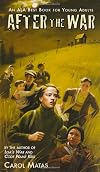
This is a brilliant novel. A great follow - up to Anne Frank type novels set during WW2, this occurs immediately after the war has ended. It tells of what happened to the jewish children who survived - the hardship and prejudice and battles they still faced, both inside their own heads and outside in the real world ( i.e from border guards) as they try to make their way to the homeland Palestine. This is Ruth's story - the only one of 80 family members to survive Auschwitz, death squads, show more forced marches and other methods of extermination. This is a harrowing story based on true accounts - how children were able to survive because they were hidden , they were small, they were resourceful, etc. Ruth must face her own demons as he pretends she is 18 to lead a group of younger children across 5 countries and onto a ship to the Middle east. There are a few serious tissue moments in this book - you have been warned! [Chapter 9 p.67-68 up to "I nod" then p.73 "the next afternoon" - p.77 Ruth must take down the younger children's stories.] show less
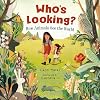
So hard to rate. A strong four stars for quality of text, interesting 'sub-plot,' author's note, overall appeal. Two stars off for illustrations that don't actually convey the topic. I could not appreciate the eagle's eyes as being sharp enough to see the mouse, when the mouse was the size of a terrier. Nor the supposed 'blurriness' that several species were supposedly only seeing. Nor the 'different colors' as shown in scenes dappled irregularly with all sorts of colors. Super disappointing show more art, even though it is 'pretty.'
However, as I mentioned, there is a good author's note. And the subplot is wonderful, about a baby's first year exploring nature with her big sister (who, btw, wears glasses). And the first two pages show the newborn's vision, and the vision of the mildly nearsighted girl... reminding us clearly that humans are animals, of course.
And then there are the last lines. Wow. "What does the world look like? It depends on who's looking. And the wonderful thing is, it takes more than one set of eyes to get a full picture."
That right there. That's five stars.
Recommended.
I will look for more by the creators. show less
However, as I mentioned, there is a good author's note. And the subplot is wonderful, about a baby's first year exploring nature with her big sister (who, btw, wears glasses). And the first two pages show the newborn's vision, and the vision of the mildly nearsighted girl... reminding us clearly that humans are animals, of course.
And then there are the last lines. Wow. "What does the world look like? It depends on who's looking. And the wonderful thing is, it takes more than one set of eyes to get a full picture."
That right there. That's five stars.
Recommended.
I will look for more by the creators. show less
The problem recounting the saga of history is the question of where to end the story. History, of course, doesn't end... or at least it hasn't ended yet. Even if you bring the tale to the present day, all you need to do is wait until tomorrow, then go to the newspaper and find out what happens next. Of course, to be practical, you need to pick a stopping point--a place where events have reached a climax and one of the issues of history, at least, have been resolved. So it is with that bit of show more history we call World War II. To hear the tale of the war, you'll hear of the rise of Hitler and the Nazis, the expansion of German power, the oppression then slaughter of the Jews and others, the opposition of first France and Britain, then the Soviets and Americans. You'll hear of the battles, the strategies, the victories, the losses, the surrender and the liberation. And then they all lived happily ever after.... not. After the War is a tale set, naturally, after World War II. It's the story of a Jewish girl, Ruth, who has been liberated from Buchenwald. She returns to her home in Poland only to find that it's no longer her home. Her family is gone, her former residence is occupied by her uncle's maid, who answers the door wearing Ruth's mother's dress. She finds shelter with some fellow refugees, but finds that the shelter is tenuous at best. There are too many goyim who are only too ready to continue Hitler's agenda of lies and murder. Some of the Jews hold onto the hope of emigrating to Palestine, of founding a Jewish homeland where they can live, thrive and protect themselves. But the British have cut off all immigration there. How could anyone possibly manage to make the journey and get in? Ah, therein lies the tale. It's a well written one, with a depth of character and interesting plot. I found myself a bit torn reading it, sympathizing with the Ruth and her comrades, but also knowing the rest of the story, that an Israeli homeland would not guarantee perfect peace or justice.
--J. show less
--J. show less
Lists
Sonlight Books (1)
Awards


You May Also Like


Associated Authors
Statistics
- Works
- 67
- Also by
- 3
- Members
- 5,556
- Popularity
- #4,476
- Rating
- 3.8
- Reviews
- 71
- ISBNs
- 211
- Languages
- 6
- Favorited
- 3