
Sonia Levitin
Author of Journey to America
About the Author
Image credit: Photo by Rose Eichenbaum
Series
Works by Sonia Levitin
Associated Works
With All My Heart, With All My Mind: Thirteen Stories About Growing Up Jewish (1999) — Contributor — 62 copies, 1 review
Cricket Magazine, Vol. 5, No. 10, June 1978 — Contributor — 3 copies
Tagged
Common Knowledge
- Birthdate
- 1934-08-18
- Gender
- female
- Education
- University of California, Berkeley
University of Pennsylvania - Occupations
- novelist
artist
Holocaust survivor - Short biography
- Sonia Levitin was born in Berlin, Germany. Her father Max Wolff, a prominent clothing designer, escaped Nazi Germany to the USA, settling in New York and then in Los Angeles. At age 3, Sonia, her mother Helene, and two sisters made their way to Switzerland before being reunited with her father in the USA in 1939. She attended the University of California, Berkeley, where she met her future husband, Lloyd Levitin, whom she married in 1953. She then completed a degree in education from the University of Pennsylvania and the couple went to live in the San Francisco Bay area and had two children. She worked as a publicist and columnist for several newspapers until her first children's novel, Journey to America, was published in 1970 to great acclaim and became a bestseller. She is the author of picture books, mysteries, humor, historical adventures, and novels for young adults, many with Jewish themes, that sometimes feature semi-autobiographical characters. Her work has won numerous awards, including the Southern California Council on Literature for Children's Distinguished Body of Work Award. She is also noted as a painter whose artwork was displayed in 2015 for the first time.
- Nationality
- Germany (birth)
USA - Birthplace
- Berlin, Germany
- Places of residence
- Los Angeles, California, USA
- Associated Place (for map)
- Los Angeles, California, USA
Members
Discussions
YA SF Twin/clone boys with powerful Dad in Name that Book (April 2019)
YA fiction, boy doubles up on high school classes to graduate early with help from magical pyramid in Name that Book (October 2013)
Reviews

When the rabbi chooses Jacov, a "fine boy, but slow of speech and a bit clumsy" as the person who will blow the shofar (ram's horn) at Rosh Hashanah and Yom Kippur, the villagers aren't sure what to think. In groups and one by one they visit the rabbi to suggest alternatives, but that wise man only smiles. At first, when Jacov is less than successful at the Rosh Hashanah service, it looks as if the skeptics will be proved right. But then the rabbi takes a surprise trip, returning just in show more time to lead Yom Kippur services, and to teach the congregation an important lesson...
I stumbled across Sonia Levitan's A Sound to Remember quite by accident, while searching for children's books about the Jewish High Holy Days, and am glad I did. The story is poignant, highlighting the importance of compassion, and the idea of everyone having a role to play in the religious community. I was deeply moved when the rabbi said that "love for each other and for God is more important than ritual," as this is something that I too (as a Protestant Christian) have always felt and believed. The accompanying illustrations from Gabriel Lisowski are delicately expressive, and well-suited to the story. Published in 1979 and long out-of-print, this is a book worth tracking down, whether one is looking for children's stories about Rosh Hashanah, or is just a fan of vintage picture-books. show less
I stumbled across Sonia Levitan's A Sound to Remember quite by accident, while searching for children's books about the Jewish High Holy Days, and am glad I did. The story is poignant, highlighting the importance of compassion, and the idea of everyone having a role to play in the religious community. I was deeply moved when the rabbi said that "love for each other and for God is more important than ritual," as this is something that I too (as a Protestant Christian) have always felt and believed. The accompanying illustrations from Gabriel Lisowski are delicately expressive, and well-suited to the story. Published in 1979 and long out-of-print, this is a book worth tracking down, whether one is looking for children's stories about Rosh Hashanah, or is just a fan of vintage picture-books. show less
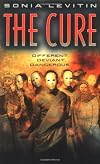
Living While Jewish in the Middle Ages
* Caution: Minor spoilers ahead! *
It is The Year of Tranquility 2047, and humanity has eradicated violence, poverty, and bigotry – at the expense of diversity and emotion. If “diversity begets hostility” and “passion begets evil,” as the United Social Alliance Elders believe, then the only path to utopia is conformity: “Conformity begets Harmony begets Tranquility begets Peace begets Universal Good. (Shout Praises!)” The result is a rather show more sterile society devoid of family, love, intimacy, history, and art, a community in which all members think as one (and indeed, don’t seem to think about much at all).
To achieve this “Universal Good,” years of genetic engineering and selective breeding have made the human brain compliant; standardized, even. Babies are created in batches, each male paired with a female twin with whom he becomes mated for life. Though the siblings live, work, and parent together (if they so choose), sex is prohibited, a relic of the past. Instead, when females turn 16, their eggs are harvested (a mandate euphemistically referred to as “the process”), so that the next generation can be made in a lab. Touching is taboo, and to further emphasize the sense of oneness, citizens wear smooth, featureless masks at all times. Not even twins are allowed to gaze upon one another’s faces.
Disease and sickness have mostly been eradicated, but in lieu of immortality, citizens can choose to be “recycled” (i.e., euthanized) at any time. The maximum allowed lifespan is 120 years, after which time recycling is mandatory. If one is found to be “deviant” – a nonconforming thinker – most likely he or she will be recycled. A select few are offered the option of “The Cure.”
Gemm 16884, with his love of music, vividly imaginative dreams, and a gait out of step with his peers, is one of the few people unlucky enough to exhibit random variations in his genetic makeup. Because his cerebellum is abnormally developed – by United Social Alliance standards, that is – Gemm is “receptive to rhythm and tone.” A difference that’s deemed both deviant and dangerous – and punishable by death.
Gemm’s offered the possibility of “The Cure,” which he readily accepts, if only to spare his twin Gemma 16884 from being recycled as well. (An alternative preferable to being left alone, twins often choose to be recycled along with their siblings.) With a simple download to his brain, Gemm is transported to Strasbourg, Germany, circa 1348 AD. Here he becomes Johannes, a 16-year-old Jewish boy, son of Menachem the moneylender, and an aspiring musician. In a high-tech version of negative reinforcement, the Elders hope to “correct” Gemm’s behavior by paring music with pain – using a real-life example pulled from the pages of history.
As the Black Death tears its way through Europe, the Jews are quickly scapegoated. Rumors spread that the Jews – all Jews – have conspired to poison wells throughout Europe, thus spreading the pestilence. Spurious allegations are quickly confirmed by confessions obtained from suspected Jews under torture. Across the continent, Jews are expelled from town; rounded up and tortured; and, eventually, massacred: burned at the stake like witches.
Fear is only part of it; greed, too, propels gentiles to turn against their Jewish neighbors: “The townspeople – nobles and tradesmen and peasants alike – divide up the spoils: The gentry claim the houses, and the others take what is left […] Everyone is satisfied, the debtors most of all, for when the lender is gone, all debts are canceled.” (page 222) Of course, Christians are prohibited by their religion from lending money, and all the moneylenders in Strasbourg are Jewish. Commerce in Strasbourg is “well regulated”; save for lending, only one practicing Jew per profession is allowed. That means one Jewish doctor, one Jewish butcher, and Jewish leather maker, and so on. With few avenues of employment open to them, many turn to moneylending. Though Johannes’s family is far from rich, they are better off than many. All Jews in Strasbourg are required to pay extra taxes, including a bribery for protection to the Bishop. Yet the bribes pale in comparison to the riches that can be seized from an accused Jew – providing powerful motive for this legalized mob theft.
The story takes Gemm – and the readers – through one year in the life of Johannes. We rejoice with him when he finds love with neighbor Margarite; mourn the passing of his family members; and fear for his safety as the pestilence creeps ever closer to Strasbourg. While his flute is a great source of comfort and joy, it also provides the soundtrack for unimaginable suffering and pain. When his uncle is murdered in a riot at the trade fair, Johannes blames himself – rather than the flagellants rampaging through town, inflaming the masses – for playing his flute on the Sabbath. And when the gentiles of Strasbourg finally turn against their Jewish neighbors, the rabbi’s final request is granted, and the death march to the cemetery scaffolding is attended by musicians.
In The Cure, author Sonia Levitin has created a unique blend of science and historical fiction that’s truly heartbreaking. While many books have concentrated on the oppression of Jews in the 1930s and 40s, The Cure goes back even further, harnessing the fear of the plague and exposing the raw anti-Semitism of the day. Time and again, gentiles ask Jews (with a straight face) where they hide their tails and horns. Jewish citizens are forced to wear special hats to identify themselves – at a time when simply existing as a Jew was a near-criminal offense, punishable by beating or death. While Johannes and his family briefly consider fleeing as the town’s sentiments turn against them, they’ve nowhere to go: their people aren’t welcome anywhere in Europe. Even their few gentile friends offer little help, lest they be tarred and branded as “Jew lovers.”
Even more powerful is the epilogue, which reveals that the events in The Cure are very much rooted in history. On February 14, 1349, the Jews of Strasbourg were rounded up, herded into the cemetery, and burned alive as the town’s musicians “played dancing tunes so that they could enter the presence of God with singing.” The pestilence reached Strasbourg two weeks later, proving the town’s “sacrifice” in vain. Even so, “few expressed remorse or altered their thinking.” Strasbourg was just one of approximately 300 Jewish communities destroyed during this time. Thousand of Jews – including children like Johannes and Rochele, Magarite and Rosa – were murdered by raging mobs.
The only part of the story that leaves something to be desired is the ending, which wraps up rather abruptly and tidily. Two days later, and I still can’t figure out whether I’d call it “satisfying” – which most likely means no.
4.5 stars, rounded up to 5 on Amazon.
http://www.easyvegan.info/2013/10/09/the-cure-by-sonia-levitin/ show less
* Caution: Minor spoilers ahead! *
It is The Year of Tranquility 2047, and humanity has eradicated violence, poverty, and bigotry – at the expense of diversity and emotion. If “diversity begets hostility” and “passion begets evil,” as the United Social Alliance Elders believe, then the only path to utopia is conformity: “Conformity begets Harmony begets Tranquility begets Peace begets Universal Good. (Shout Praises!)” The result is a rather show more sterile society devoid of family, love, intimacy, history, and art, a community in which all members think as one (and indeed, don’t seem to think about much at all).
To achieve this “Universal Good,” years of genetic engineering and selective breeding have made the human brain compliant; standardized, even. Babies are created in batches, each male paired with a female twin with whom he becomes mated for life. Though the siblings live, work, and parent together (if they so choose), sex is prohibited, a relic of the past. Instead, when females turn 16, their eggs are harvested (a mandate euphemistically referred to as “the process”), so that the next generation can be made in a lab. Touching is taboo, and to further emphasize the sense of oneness, citizens wear smooth, featureless masks at all times. Not even twins are allowed to gaze upon one another’s faces.
Disease and sickness have mostly been eradicated, but in lieu of immortality, citizens can choose to be “recycled” (i.e., euthanized) at any time. The maximum allowed lifespan is 120 years, after which time recycling is mandatory. If one is found to be “deviant” – a nonconforming thinker – most likely he or she will be recycled. A select few are offered the option of “The Cure.”
Gemm 16884, with his love of music, vividly imaginative dreams, and a gait out of step with his peers, is one of the few people unlucky enough to exhibit random variations in his genetic makeup. Because his cerebellum is abnormally developed – by United Social Alliance standards, that is – Gemm is “receptive to rhythm and tone.” A difference that’s deemed both deviant and dangerous – and punishable by death.
Gemm’s offered the possibility of “The Cure,” which he readily accepts, if only to spare his twin Gemma 16884 from being recycled as well. (An alternative preferable to being left alone, twins often choose to be recycled along with their siblings.) With a simple download to his brain, Gemm is transported to Strasbourg, Germany, circa 1348 AD. Here he becomes Johannes, a 16-year-old Jewish boy, son of Menachem the moneylender, and an aspiring musician. In a high-tech version of negative reinforcement, the Elders hope to “correct” Gemm’s behavior by paring music with pain – using a real-life example pulled from the pages of history.
As the Black Death tears its way through Europe, the Jews are quickly scapegoated. Rumors spread that the Jews – all Jews – have conspired to poison wells throughout Europe, thus spreading the pestilence. Spurious allegations are quickly confirmed by confessions obtained from suspected Jews under torture. Across the continent, Jews are expelled from town; rounded up and tortured; and, eventually, massacred: burned at the stake like witches.
Fear is only part of it; greed, too, propels gentiles to turn against their Jewish neighbors: “The townspeople – nobles and tradesmen and peasants alike – divide up the spoils: The gentry claim the houses, and the others take what is left […] Everyone is satisfied, the debtors most of all, for when the lender is gone, all debts are canceled.” (page 222) Of course, Christians are prohibited by their religion from lending money, and all the moneylenders in Strasbourg are Jewish. Commerce in Strasbourg is “well regulated”; save for lending, only one practicing Jew per profession is allowed. That means one Jewish doctor, one Jewish butcher, and Jewish leather maker, and so on. With few avenues of employment open to them, many turn to moneylending. Though Johannes’s family is far from rich, they are better off than many. All Jews in Strasbourg are required to pay extra taxes, including a bribery for protection to the Bishop. Yet the bribes pale in comparison to the riches that can be seized from an accused Jew – providing powerful motive for this legalized mob theft.
The story takes Gemm – and the readers – through one year in the life of Johannes. We rejoice with him when he finds love with neighbor Margarite; mourn the passing of his family members; and fear for his safety as the pestilence creeps ever closer to Strasbourg. While his flute is a great source of comfort and joy, it also provides the soundtrack for unimaginable suffering and pain. When his uncle is murdered in a riot at the trade fair, Johannes blames himself – rather than the flagellants rampaging through town, inflaming the masses – for playing his flute on the Sabbath. And when the gentiles of Strasbourg finally turn against their Jewish neighbors, the rabbi’s final request is granted, and the death march to the cemetery scaffolding is attended by musicians.
In The Cure, author Sonia Levitin has created a unique blend of science and historical fiction that’s truly heartbreaking. While many books have concentrated on the oppression of Jews in the 1930s and 40s, The Cure goes back even further, harnessing the fear of the plague and exposing the raw anti-Semitism of the day. Time and again, gentiles ask Jews (with a straight face) where they hide their tails and horns. Jewish citizens are forced to wear special hats to identify themselves – at a time when simply existing as a Jew was a near-criminal offense, punishable by beating or death. While Johannes and his family briefly consider fleeing as the town’s sentiments turn against them, they’ve nowhere to go: their people aren’t welcome anywhere in Europe. Even their few gentile friends offer little help, lest they be tarred and branded as “Jew lovers.”
Even more powerful is the epilogue, which reveals that the events in The Cure are very much rooted in history. On February 14, 1349, the Jews of Strasbourg were rounded up, herded into the cemetery, and burned alive as the town’s musicians “played dancing tunes so that they could enter the presence of God with singing.” The pestilence reached Strasbourg two weeks later, proving the town’s “sacrifice” in vain. Even so, “few expressed remorse or altered their thinking.” Strasbourg was just one of approximately 300 Jewish communities destroyed during this time. Thousand of Jews – including children like Johannes and Rochele, Magarite and Rosa – were murdered by raging mobs.
The only part of the story that leaves something to be desired is the ending, which wraps up rather abruptly and tidily. Two days later, and I still can’t figure out whether I’d call it “satisfying” – which most likely means no.
4.5 stars, rounded up to 5 on Amazon.
http://www.easyvegan.info/2013/10/09/the-cure-by-sonia-levitin/ show less

It's 1938, and Lisa's parents can see that life in Berlin is getting more and more unsafe for Jewish people. Lisa's father makes the journey to America, promising to send for his wife and three daughters as soon as he can. In the meantime, Lisa's mother takes the girls to the relative safety of Switzerland. Because they are able to take only a very limited amount of money out of Germany, they struggle to get by in Switzerland, though eventually they find help from a variety of sources. But show more will Papa ever send for them? Will they truly make it to America, where the family can all be together again?
This novel, based on the author's own experience of fleeing Germany before World War II, is a compelling read. The writing is strong, the characters are the sort that you can easily root for, and the tension and danger of the period comes through in a way that is both vivid and appropriate for young readers. Recommended. show less
This novel, based on the author's own experience of fleeing Germany before World War II, is a compelling read. The writing is strong, the characters are the sort that you can easily root for, and the tension and danger of the period comes through in a way that is both vivid and appropriate for young readers. Recommended. show less
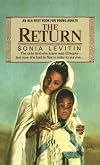
This was a really interesting book. I knew that the Jewish religion was spread over the Middle East, though I always had the impression that Islam was a stronger force in Africa, particularly in NE Africa. So it was really interesting to read about black Jews.
I feel the author did a ice job of capturing how life was. Desta and her family live in a very rural community in the mountains, and I honestly thought the story was set in a earlier period (50's-60's) and it turns out this happened show more during the 1980's! Until her escape from Ethiopia, Desta has never seen a television, and there is no electricity or running whatsoever in her village.
Like in many other countries in the past and now, Desta and her family and friends face discrimination, and even violence simply for being Jewish. It is truly heartbreaking that even the government would endorse this systemic oppression of a group of people who only wish to live in peace. This book has more than one heartbreaking moment, lending to it a stark realism. show less
I feel the author did a ice job of capturing how life was. Desta and her family live in a very rural community in the mountains, and I honestly thought the story was set in a earlier period (50's-60's) and it turns out this happened show more during the 1980's! Until her escape from Ethiopia, Desta has never seen a television, and there is no electricity or running whatsoever in her village.
Like in many other countries in the past and now, Desta and her family and friends face discrimination, and even violence simply for being Jewish. It is truly heartbreaking that even the government would endorse this systemic oppression of a group of people who only wish to live in peace. This book has more than one heartbreaking moment, lending to it a stark realism. show less
Lists
Awards


You May Also Like


Associated Authors
Statistics
- Works
- 42
- Also by
- 3
- Members
- 4,305
- Popularity
- #5,827
- Rating
- 3.7
- Reviews
- 72
- ISBNs
- 151
- Languages
- 1
- Favorited
- 2