
About the Author
Steven E. Runge (DLITT) serves as Scholar-in-Residence for Logos Bible Software, and as a Research Associate for the Department of Ancient Studies University of Stellenbosch. He is the General Editor of the Lexham Discourse Greek New Testament.
Series
Works by Steven Runge
Discourse Grammar of the Greek New Testament: A Practical Introduction for Teaching and Exegesis (English and Greek Edition) (2010) 242 copies, 2 reviews
Discourse Studies and Biblical Interpretation: A Festschrift in Honor of Stephen H. Levinsohn (2012) 13 copies
Galatians 2 copies
Associated Works
Tagged
Common Knowledge
- Gender
- male
Members
Reviews
Discourse Grammar of the Greek New Testament: A Practical Introduction for Teaching and Exegesis by Steven E. Runge
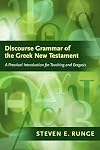
Although difficult in places, this book focuses on the way that different grammatical constructions affect the meaning of a passage. I found it very helpful, and it has helped me to read the text in new ways.

We've all been within earshot of someone having a phone conversation. Our imaginations often work overtime as we wonder what's being said on the other end. Trying to understand Philippians 2:25-30 and the situation with Epaphroditus feels much the same. Apparently, the church sent Epaphroditus to minister to Paul in prison, but somewhere along the way Epaphroditus got sick and nearly died. The Philippians received a report about his illness and sent word to Paul that they were concerned for show more their friend. show less

Logos is pleased to announce another first in the study of the biblical texts: a discourse analysis of the entire New Testament. The Lexham Discourse Greek New Testament Datasets bring the insights of discourse analysis to bear on every verse of the Greek New Testament, giving you instant access to rich discourse data absent from most commentaries and grammars.
Our understanding of the Greek New Testament is based almost entirely on English translations, but how would our understanding of the show more Greek text change if we read it for what it is—as Greek? With the Lexham Discourse Greek New Testament Datasets, we can now get behind the words of the New Testament writers and discover the particular linguistic tasks that inform translation and interpretation. The Lexham Discourse Greek New Testament Datasets identify discourse markers and perform complex discourse analysis of the entire New Testament quickly, easily, and accurately, which makes them one of the most advanced tools for studying the Greek text of the New Testament.
The Lexham Discourse Greek New Testament Datasets includes the entire Greek text of the New Testament marked up with more than twenty discourse devices, making discourse analysis easier than ever! The Lexham Discourse Greek New Testament Datasets come with a general introduction to discourse grammar, where you’ll find an overview of each discourse device and numerous examples from the Greek text of how various New Testament authors used these devices to communicate. The Lexham Discourse Greek New Testament Datasets also include a built-in, easy-to-use glossary. By simply hovering over a discourse device, the glossary appears, allowing you to quickly access information about the device and about the text you’re looking at. With the Lexham Discourse Greek New Testament Datasets, it’s also possible to search for all instances of a particular device, such as all cataphoric references in 1 John or all temporal frames in the Gospels. The search tool aids in discourse analysis of entire books—textual analysis that once took hours can now be.
Mais informações em: https://www.logos.com/product/131520/lexham-discourse-greek-new-testament-datase... show less
Our understanding of the Greek New Testament is based almost entirely on English translations, but how would our understanding of the show more Greek text change if we read it for what it is—as Greek? With the Lexham Discourse Greek New Testament Datasets, we can now get behind the words of the New Testament writers and discover the particular linguistic tasks that inform translation and interpretation. The Lexham Discourse Greek New Testament Datasets identify discourse markers and perform complex discourse analysis of the entire New Testament quickly, easily, and accurately, which makes them one of the most advanced tools for studying the Greek text of the New Testament.
The Lexham Discourse Greek New Testament Datasets includes the entire Greek text of the New Testament marked up with more than twenty discourse devices, making discourse analysis easier than ever! The Lexham Discourse Greek New Testament Datasets come with a general introduction to discourse grammar, where you’ll find an overview of each discourse device and numerous examples from the Greek text of how various New Testament authors used these devices to communicate. The Lexham Discourse Greek New Testament Datasets also include a built-in, easy-to-use glossary. By simply hovering over a discourse device, the glossary appears, allowing you to quickly access information about the device and about the text you’re looking at. With the Lexham Discourse Greek New Testament Datasets, it’s also possible to search for all instances of a particular device, such as all cataphoric references in 1 John or all temporal frames in the Gospels. The search tool aids in discourse analysis of entire books—textual analysis that once took hours can now be.
Mais informações em: https://www.logos.com/product/131520/lexham-discourse-greek-new-testament-datase... show less

STEVEN RUNGE, D.LITT.
General Editor
General Editor
You May Also Like


Associated Authors
Statistics
- Works
- 24
- Also by
- 1
- Members
- 586
- Popularity
- #42,791
- Rating
- 4.1
- Reviews
- 10
- ISBNs
- 10