
Stephen Turnbull
Author of The Book of The Medieval Knight
About the Author
Stephen Turnbull is an Honorary Lecturer at Leeds, a Research Associate at SOAS and Visiting Professor of Japanese Studies at Akita International University. He is a leading expert on the military history of Europe and the Far East and the author of more than fifty books on the subject. His show more expertise was also put to use in helping design the award-winning computer strategy game Shogun Total War, and in 2010 he acted as Historical Adviser to Universal Pictures fro the movie 47 Ronin. show less
Works by Stephen Turnbull
The Art of Renaissance Warfare: From the Fall of Constantinople to the Thirty Years War (2006) 77 copies, 3 reviews
Crusader Castles of the Teutonic Knights, Vol. 2: The Stone Castles of Latvia and Estonia, 1185-1560 (2004) 77 copies, 1 review
Crusader Castles of the Teutonic Knights 1: The Red-Bricked Castles of Prussia, 1230-1466 (2003) 68 copies, 1 review
The Samurai in 100 Objects: The Fascinating World of the Samurai as Seen Through Arms and Armour, Places and Images (2016) 14 copies, 1 review
The Kakure Kirishitan of Japan: A Study of Their Development, Beliefs and Rituals to the Present Day (Japan Library) (1998) 10 copies
47 Ronin 3 copies
Mongolen Krieger 1200-1350 Ill. v. Reynolds, Wayne /McBride, Angus Deutsch zahlr. z.T. farb. Abb. - (2008) 2 copies
Elephants and Gunpowder: Southeast Asian Warfare 1380-1700 (From Retinue to Regiment) (2025) 2 copies
I samurai 1 copy
Book 9791255212119 1 copy
Wojny złotego wieku 1 copy
Le orde di Gengis Khan 1 copy
L'impero della Mezzaluna 1 copy
Associated Works
Desperta Ferro. Los Diádocos:Guerra fraticida por el imperio de Alejandro. — Contributor — 2 copies, 1 review
Desperta Ferro. Talasocracias. — Contributor — 2 copies
Desperta Ferro Moderna. 1813, Napoleón contra Europa. — Contributor — 2 copies
Tagged
Common Knowledge
- Canonical name
- Turnbull, Stephen
- Legal name
- Turnbull, Stephen Richard
- Birthdate
- 1948-02-06
- Gender
- male
- Education
- University of Leeds (MA|1992 - Theology|MA|2005 - Military History|Ph.D|1996)
Downing College, University of Cambridge (BA|1969) - Occupations
- historian
lecturer (Far Eastern Religions) - Organizations
- To-Ken Society of Great Britain
British Association of Japanese Studies
Japan Society of London
University of Leeds
British Samurai Society
Medieval History Magazine (Editorial Board, 2003-2005) - Awards and honors
- Canon Prize (1994)
Japan Festival Literary Award (1998) - Nationality
- UK
- Birthplace
- London, England, UK
- Places of residence
- Leeds, Yorkshire, England, UK
- Associated Place (for map)
- England, UK
Members
Reviews

Lehetséges piaci célcsoportok:
1.Akik be vannak oltva irónia ellen, és imádják a szamurájokat, meg úgy egyáltalán: mindent, ami Japánnal kapcsolatos.
2. Nincsenek beoltva irónia ellen, de szeretnek néhány szabad órát könnyű, szórakoztató történelmi munkákra szánni.
Turnbull könyve egy kedélyes szarkazmussal megírt, rövid, mókás vázlat a szamurájok mindennapjairól a XVII. századig bezárólag. Nem állítom, hogy nincsenek benne releváns információk, mint show more például a páncélzat magunkra aggatásának módja, vagy a TOP14 legkellemesebb öngyilkosság becsületen esett csorba esetén, de túl sok mélységet azért ne várjunk. Az író cserébe az irónia könnyű tintájába mártja tollát, elhumorizálgat finoman a vérkomoly, bushidóba belegárgyult harcosokon – ezzel nyilván elegendő okot adna egy morcosabb szamurájnak, hogy egy lendületes vágással tetőtől talpig kettéhasítsa. Alapvetően megértem (mindkettejüket), mert bár rettenetesen szép és érdekes a korszak Japánja, de azt nem merném álltani, hogy sokkal jobb lett volna a kortárs Európánál. Persze aki szamurájnak született, annak jó (feltéve, ha nem kávés, hanem teás, és bír órákon keresztül lehetetlen pózokban guggolni), de a parasztok és nők sorsa aligha volt sokkal fényesebb, mint nyugati kollégáiké. Meg szép dolog a zen buddhizmus, de komolyan, de ezek a fejgyűjtő harcmániások éppen olyan távol álltak Buddhától, mint Belga-Kongó gyarmatosítói, vagy épp a déli rabszolgatartók Jézustól.
Mindenesetre jót mulattam a könyvön. show less
1.Akik be vannak oltva irónia ellen, és imádják a szamurájokat, meg úgy egyáltalán: mindent, ami Japánnal kapcsolatos.
2. Nincsenek beoltva irónia ellen, de szeretnek néhány szabad órát könnyű, szórakoztató történelmi munkákra szánni.
Turnbull könyve egy kedélyes szarkazmussal megírt, rövid, mókás vázlat a szamurájok mindennapjairól a XVII. századig bezárólag. Nem állítom, hogy nincsenek benne releváns információk, mint show more például a páncélzat magunkra aggatásának módja, vagy a TOP14 legkellemesebb öngyilkosság becsületen esett csorba esetén, de túl sok mélységet azért ne várjunk. Az író cserébe az irónia könnyű tintájába mártja tollát, elhumorizálgat finoman a vérkomoly, bushidóba belegárgyult harcosokon – ezzel nyilván elegendő okot adna egy morcosabb szamurájnak, hogy egy lendületes vágással tetőtől talpig kettéhasítsa. Alapvetően megértem (mindkettejüket), mert bár rettenetesen szép és érdekes a korszak Japánja, de azt nem merném álltani, hogy sokkal jobb lett volna a kortárs Európánál. Persze aki szamurájnak született, annak jó (feltéve, ha nem kávés, hanem teás, és bír órákon keresztül lehetetlen pózokban guggolni), de a parasztok és nők sorsa aligha volt sokkal fényesebb, mint nyugati kollégáiké. Meg szép dolog a zen buddhizmus, de komolyan, de ezek a fejgyűjtő harcmániások éppen olyan távol álltak Buddhától, mint Belga-Kongó gyarmatosítói, vagy épp a déli rabszolgatartók Jézustól.
Mindenesetre jót mulattam a könyvön. show less
The Art of Renaissance Warfare: From the Fall of Constantinople to the Thirty Years War by Stephen Turnbull
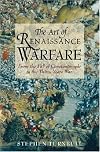
Covering period of little more than 150 years, from fall of Constantinople to Polish-Russian wars, this book gives a very good overview of evolution of military thought and technology. This is by far the best book I read that gives short overview of the events and military evolution of the period (because to be honest for every part of the story there are at least 2 or 3 books of same size for those interested in the full details). Interspersed we find stories about renown names of military show more thought and science at the time, from nobles (like William the Silent) to mercenary captains (like John Smith). Together with this author stresses how cruel and savage wars became, with forces of thousands of soldiers invading countries getting paid by pillaging the countryside, burning and killing off the entire cities. This was time of mercenary captains who would fight one day for one side, next day for the opposition and then come back and be hired by their original employers. Life was cheap and war was perpetual.
We follow how might of artillery and gun-powder slowly changed the front-line landscape but also how proven old methods like use of well drilled cavalry lance charges, infantry organized in "boxes", like Spanish tercios or Swiss pike formations followed by German Landsknechts, proved their value time and time again even when confronted with modern firepower. Book proves that no matter the technological advancements if they are not practical or cannot be put to work en-masse to make a difference (I especially liked the chapters on reiters and cavalry caracole maneuver) it is discipline and drill of soldiers that will always prevail.
I recently read another book, one about the Cataphracts and evolution of this type of heavy cavalry and only comment I had was that book lacked graphical elements - it was well written but without graphics and pictures that would enrich the text.
Here we have no such situation. Book is beautiful, with great color photographs, especially of fortifications that became more and more sophisticated in this period, and black and white contemporary graphics of people, battlefields and fortified cities.
Highly recommended to everyone interested in birth of modern military. Do note that if you seek details, bibliography provided is extremely rich and provides a starting point for further reading.
Excellent book. show less
We follow how might of artillery and gun-powder slowly changed the front-line landscape but also how proven old methods like use of well drilled cavalry lance charges, infantry organized in "boxes", like Spanish tercios or Swiss pike formations followed by German Landsknechts, proved their value time and time again even when confronted with modern firepower. Book proves that no matter the technological advancements if they are not practical or cannot be put to work en-masse to make a difference (I especially liked the chapters on reiters and cavalry caracole maneuver) it is discipline and drill of soldiers that will always prevail.
I recently read another book, one about the Cataphracts and evolution of this type of heavy cavalry and only comment I had was that book lacked graphical elements - it was well written but without graphics and pictures that would enrich the text.
Here we have no such situation. Book is beautiful, with great color photographs, especially of fortifications that became more and more sophisticated in this period, and black and white contemporary graphics of people, battlefields and fortified cities.
Highly recommended to everyone interested in birth of modern military. Do note that if you seek details, bibliography provided is extremely rich and provides a starting point for further reading.
Excellent book. show less

The samurai were the miliar elite of old Japan, and the daimyo were the elite of the samurai. Samurai Warlords documents and describes the life of this group in rich detail for the first time.
These were the samurai who succeeded first as warriors and went on to found petty kingdoms of their own, defended with armes of samurai who owed allegiance to them alone. From these original warlords grew great dynasties of daimyo, who enjoyed a symbiotic existence with the central government of the show more Shogun until all were swept away in the upheavals of the 1850s which gave birth to modern Japan.
Stephen Turnbull enjoys a justified reputation as one of the West's most illuminating writers on Japanese history. Unlike his previous books on the samurai, this work examines separately and in depth each of the roles which the daimyo was required to play: warrior, commander-in-chief, founder of a dynasty, keeper of the peace and patron of the arts. To be a daimyo was to lead a demanding life, and after his death a warlord took on a new role as spiritual family guardian, to be honoured and, if necessary, bloodily revenged.
The popular theory of modern Japanese industrial success is that it is based on loyalty to company and to country, inherited from the loyalty once given to the daimyo. This revealing book shows in dramatic fashion the precise nature of this fierce loyalty-the tradition of self-sacrifice in deference to the needs of the group and identification with a leader that is so relevant to modern Japan.
Stephen Turnbull writes entirely from Japanese sources. The colour potographs are all his own and the black and white illustrations provide fine historical detail. As in his acclaimed Samurai Warriors, a unique grasp of medieval Japan has been translated into colourful reality in James Field's detailed and exciting colour plates.
Anyone interested in the history of Japan by a Western writer should be familiar with the works of Cambridge educated Stephen Turnbull. Having read four of his books on Japanese history I can testify to the clarity and detail he puts into his writing. This book is no exception. The book is about the daimyo, the elite of the samurai who in turn were the elite of the military. So what Turnbull does is give a detailed account of the creme de la creme of the samurai class. Although the book can be a bit tedious for the novice Japanese historian it is complimented by wonderful illustrations, colorful plates by James Field and photographs of exquisite beauty. There is much to see in this book if the details of the military structure get too complicated. It helps to have a basic understanding of the historical periods dicussed, but not essential as Turnbull makes the information easy to understand. He covers two periods, the Sengoku Period(think feudal Japan) and the Edo Period which was the three centuries of peace that followed. The foundation was created for the daimyo during the age of war and carried over into the folowing period that was by contrast almost marked by the total absence of war. The code of conduct and honour of a samuarai, or bushido, is discussed as well as the various relationships to all parts of society. Turnball makes a correlation to the present and shows how allegiance to a group, in this case modern industry, and a leader are part of self- sacrifice for the good of the country. The plates, drawings, photographs and woodcuts are fascinating and spellbinding material for students of Japnese history. While teaching a class I used some of the plates to compliment the subject and found that students were totally captivated by the often graphic nature of the violent war scenes. One plate in particular was inspired by the fabulous film by Kurosawa entitled Ran, where the defeated warlords family commits suicide in a blazing castle. This is an excellent source book for anyone interested in the hisory of Japan, samurai or more specifically, the daimyo. Recommended for teachers and students alike, this book is worth seeking out if this subject interests you, there are few if any better authorites in this field. -Enrique Torres
Nearly every book I own on samurai is written by Mr. Turnbull and this one does not disappoint! It is a beautiful hard back that looks at all the different aspects of a daimyo's life. From calling men to arms, to arts, and even their private lives. The pictures are great, the drawings are lovely and many of the photographs are in color. The only negative I have isn't with in the book itself but it was described as a book about all the indivual warlords from the Sengoku and Edo periods. I thought I was getting a book with a ton of biographies. But still the book will become a valuble resource and join the ranks of all my other favorite Samurai books. -Heather Dixon
As far as I have been able to discern, Dr. Turnbull is the leading expert on Medieval Japan and Japanese military history in general. I have read at least six of his books and am always impressed with his meticulous research and readable style. His generous use of illustrations and remarkably accurate historical paintings by James Field (full and double page) are a hallmark of his works as well. A page without an illustration is rare in his books.
Samurai Warlords examines the history and impact of the samurai class in the social and political history of Japan through the lens of their leaders. The contents include very detailed studies of sex and the samurai, loyalty, death and obedience, the duty of vengeance, peacekeeping, general warrior culture, and five appendices of statistics and biography.
Binding and text are excellent.
Contents
Introduction
Daimyo-othe samurai elite
Focus of loyalty
Commander-in-chief
The cultured warlord
The keeper of the peace
Sex and the samurai
Death and the daimyo
The duty of vengeance
Appendix I The 1559 Hojo Register
Appendix II The 1575 Uesugi Register
Appendix III Takeda Shingen
Appendix IV Hashiba Hideyoshi
Appendix V The li 'Red Devils'
Bibliography
Index show less
These were the samurai who succeeded first as warriors and went on to found petty kingdoms of their own, defended with armes of samurai who owed allegiance to them alone. From these original warlords grew great dynasties of daimyo, who enjoyed a symbiotic existence with the central government of the show more Shogun until all were swept away in the upheavals of the 1850s which gave birth to modern Japan.
Stephen Turnbull enjoys a justified reputation as one of the West's most illuminating writers on Japanese history. Unlike his previous books on the samurai, this work examines separately and in depth each of the roles which the daimyo was required to play: warrior, commander-in-chief, founder of a dynasty, keeper of the peace and patron of the arts. To be a daimyo was to lead a demanding life, and after his death a warlord took on a new role as spiritual family guardian, to be honoured and, if necessary, bloodily revenged.
The popular theory of modern Japanese industrial success is that it is based on loyalty to company and to country, inherited from the loyalty once given to the daimyo. This revealing book shows in dramatic fashion the precise nature of this fierce loyalty-the tradition of self-sacrifice in deference to the needs of the group and identification with a leader that is so relevant to modern Japan.
Stephen Turnbull writes entirely from Japanese sources. The colour potographs are all his own and the black and white illustrations provide fine historical detail. As in his acclaimed Samurai Warriors, a unique grasp of medieval Japan has been translated into colourful reality in James Field's detailed and exciting colour plates.
Anyone interested in the history of Japan by a Western writer should be familiar with the works of Cambridge educated Stephen Turnbull. Having read four of his books on Japanese history I can testify to the clarity and detail he puts into his writing. This book is no exception. The book is about the daimyo, the elite of the samurai who in turn were the elite of the military. So what Turnbull does is give a detailed account of the creme de la creme of the samurai class. Although the book can be a bit tedious for the novice Japanese historian it is complimented by wonderful illustrations, colorful plates by James Field and photographs of exquisite beauty. There is much to see in this book if the details of the military structure get too complicated. It helps to have a basic understanding of the historical periods dicussed, but not essential as Turnbull makes the information easy to understand. He covers two periods, the Sengoku Period(think feudal Japan) and the Edo Period which was the three centuries of peace that followed. The foundation was created for the daimyo during the age of war and carried over into the folowing period that was by contrast almost marked by the total absence of war. The code of conduct and honour of a samuarai, or bushido, is discussed as well as the various relationships to all parts of society. Turnball makes a correlation to the present and shows how allegiance to a group, in this case modern industry, and a leader are part of self- sacrifice for the good of the country. The plates, drawings, photographs and woodcuts are fascinating and spellbinding material for students of Japnese history. While teaching a class I used some of the plates to compliment the subject and found that students were totally captivated by the often graphic nature of the violent war scenes. One plate in particular was inspired by the fabulous film by Kurosawa entitled Ran, where the defeated warlords family commits suicide in a blazing castle. This is an excellent source book for anyone interested in the hisory of Japan, samurai or more specifically, the daimyo. Recommended for teachers and students alike, this book is worth seeking out if this subject interests you, there are few if any better authorites in this field. -Enrique Torres
Nearly every book I own on samurai is written by Mr. Turnbull and this one does not disappoint! It is a beautiful hard back that looks at all the different aspects of a daimyo's life. From calling men to arms, to arts, and even their private lives. The pictures are great, the drawings are lovely and many of the photographs are in color. The only negative I have isn't with in the book itself but it was described as a book about all the indivual warlords from the Sengoku and Edo periods. I thought I was getting a book with a ton of biographies. But still the book will become a valuble resource and join the ranks of all my other favorite Samurai books. -Heather Dixon
As far as I have been able to discern, Dr. Turnbull is the leading expert on Medieval Japan and Japanese military history in general. I have read at least six of his books and am always impressed with his meticulous research and readable style. His generous use of illustrations and remarkably accurate historical paintings by James Field (full and double page) are a hallmark of his works as well. A page without an illustration is rare in his books.
Samurai Warlords examines the history and impact of the samurai class in the social and political history of Japan through the lens of their leaders. The contents include very detailed studies of sex and the samurai, loyalty, death and obedience, the duty of vengeance, peacekeeping, general warrior culture, and five appendices of statistics and biography.
Binding and text are excellent.
Contents
Introduction
Daimyo-othe samurai elite
Focus of loyalty
Commander-in-chief
The cultured warlord
The keeper of the peace
Sex and the samurai
Death and the daimyo
The duty of vengeance
Appendix I The 1559 Hojo Register
Appendix II The 1575 Uesugi Register
Appendix III Takeda Shingen
Appendix IV Hashiba Hideyoshi
Appendix V The li 'Red Devils'
Bibliography
Index show less
The Art of Renaissance Warfare: From the Fall of Constantinople to the Thirty Years War by Stephen Turnbull
The Art of Renaissance Warfare is a light, popular gloss of the title. It's an odd choice for Turnbull, who's written something like 70 books on the military history of pre-modern Japan, to switch continents and focus on Europe, and I think both the detail and analysis suffer.
Intrinsically, though, the 150 years discussed marked a major shift in how war was conducted, from feudal retinues centered around armored knights, to professional mercenary companies where linear formations of show more arquebusers and blocks of pikemen resisted cavalry more often than not. Meanwhile, siege artillery made millennia of vertical stone fortresses obsolete, and gunpowder went from a curiosity to the core of military power.
Turnbull tells engaging stories, ranging from Granada to Constantinople and Antwerp to Moscow, with lots of details of the supreme commander (oh, and great illustrations). But there's little sense of tactics, let alone strategy in this book, or what might make one soldier artful and another a clod. show less
Intrinsically, though, the 150 years discussed marked a major shift in how war was conducted, from feudal retinues centered around armored knights, to professional mercenary companies where linear formations of show more arquebusers and blocks of pikemen resisted cavalry more often than not. Meanwhile, siege artillery made millennia of vertical stone fortresses obsolete, and gunpowder went from a curiosity to the core of military power.
Turnbull tells engaging stories, ranging from Granada to Constantinople and Antwerp to Moscow, with lots of details of the supreme commander (oh, and great illustrations). But there's little sense of tactics, let alone strategy in this book, or what might make one soldier artful and another a clod. show less
Lists
Awards

You May Also Like


Associated Authors
Statistics
- Works
- 113
- Also by
- 7
- Members
- 5,244
- Popularity
- #4,751
- Rating
- 3.7
- Reviews
- 72
- ISBNs
- 271
- Languages
- 13
- Favorited
- 7