
Christopher Gravett
Author of Castle (Eyewitness Books)
About the Author
Image credit: via Kronik Kitap
Series
Works by Christopher Gravett
Ιππότες: Ανακαλύψτε τον κόσμο των ιπποτών του Μεσσαίωνα - από τις μάχες και τα συμπόσια, μέχρι τις… 7 copies
L'auge dei Tudor 1 copy
Cavalieri medievali 1 copy
La battaglia di Hastings 1 copy
Associated Works
Tagged
Common Knowledge
- Canonical name
- Gravett, Christopher
- Birthdate
- 1951
- Gender
- male
- Organizations
- Royal Armouries
- Nationality
- UK
- Associated Place (for map)
- UK
Members
Reviews
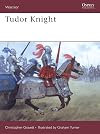
The topic of this booklet does not really merit an Osprey Warrior title. This is not about "history's fighting men". The era of the knights ended in the War of the Roses. The German Emperor Maximilian who was called "the last knight" died in 1519. The Tudor era is not famous for its knights and even experts would be hard pressed to name a single famous one. The blurb says "the Tudor knight was the first line of defence employed by monarchs from Henry VIII to Elizabeth I", an honor more show more justly due to the wooden walls. Thanks to the voluptuous Henry VIII, England managed to stay out of most of the religious civil wars that plagued the 16th century.
Thus, the author mostly showcases the Tower of London collection of courtly display armor. These suits of armor, however, had no use in actual warfare: Like tuned sports cars hardly show up in regular traffic, the primary purpose of these (highly impractical) suits was to impress the ladies and peers. The author seems at times to be aware of this, e.g. when he notes that one set of horse armor is designed for a regular horse instead of a warhorse - without mentioning that in an actual battle situation, the regular horse would collapse under the armor's weight in no time. Unfortunately, many museums and collections fool their audiences and present these display pieces as examples of warfare. (The same is the case with most samurai armor.)
The text is fine as long as art objects are referred to. As soon as he touches military history, mistakes slip in. One example. He wonders why one gentleman chose to hold a pistol in a painting, when he never would have held a crossbow. The answer is easy, if one knows anything about that period's warfare. The pistol was the main weapon of the Reiter, armored cavalry, used in the Caracole. Furthermore, the crossbow was a specialist's weapon, requiring intensive training. Because Osprey eschews the safety net of citations, crashes tend to be especially painful. Overall, a weaker title in the Osprey series. Readers interested in the subject are better off looking for an exhibition catalogue of say the Tower of London with more sumptuous illustrations. show less
Thus, the author mostly showcases the Tower of London collection of courtly display armor. These suits of armor, however, had no use in actual warfare: Like tuned sports cars hardly show up in regular traffic, the primary purpose of these (highly impractical) suits was to impress the ladies and peers. The author seems at times to be aware of this, e.g. when he notes that one set of horse armor is designed for a regular horse instead of a warhorse - without mentioning that in an actual battle situation, the regular horse would collapse under the armor's weight in no time. Unfortunately, many museums and collections fool their audiences and present these display pieces as examples of warfare. (The same is the case with most samurai armor.)
The text is fine as long as art objects are referred to. As soon as he touches military history, mistakes slip in. One example. He wonders why one gentleman chose to hold a pistol in a painting, when he never would have held a crossbow. The answer is easy, if one knows anything about that period's warfare. The pistol was the main weapon of the Reiter, armored cavalry, used in the Caracole. Furthermore, the crossbow was a specialist's weapon, requiring intensive training. Because Osprey eschews the safety net of citations, crashes tend to be especially painful. Overall, a weaker title in the Osprey series. Readers interested in the subject are better off looking for an exhibition catalogue of say the Tower of London with more sumptuous illustrations. show less
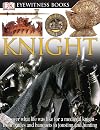
As part of Library Declutter of 2024, I read through this before sending it to my great-nephews. This was one of my son's favorites in elementary school. The whole DK Eyewitness line (more than 10 books so far) is a great way to interest children in history, science, and natural history because of the use of many artefact photographs and graphic images to illustrate the topics thoroughly, like a virtual visit to a museum. Homeschool progams would benefit from them as enrichment. Adults will show more appreciate the visual feast, as well. The books in the series are great gifts for children when they discover a new interest. Even middle schoolers won't feel they are too childish because of the format and aesthetic. show less
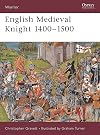
This short and concise guide to the life of the English knight covers chivalry, armour, weapons, battles and their aftermath, and features old illustrations along with some excellent new colour drawings.
Not an exciting read, but very informative and interesting.
Not an exciting read, but very informative and interesting.
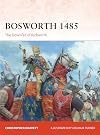
A notable feature of this book is that it contains some of the latest thinking on where the battle took place, and what happened during the battle, based on recently discovered archaeological finds. For this reason alone, I think the book is well worth getting. (I should note, with reference to the other reviews, that this is Osprey Book #360 in the campaign series, an updating of the previous book, #66 in the same series)
Lists
You May Also Like


Associated Authors
Statistics
- Works
- 59
- Also by
- 2
- Members
- 4,505
- Popularity
- #5,565
- Rating
- 3.7
- Reviews
- 60
- ISBNs
- 199
- Languages
- 13
- Favorited
- 1