
Zoe Street Howe
Author of Stevie Nicks: Visions, Dreams & Rumors
About the Author
Works by Zoe Street Howe
Tagged
Common Knowledge
- Gender
- female
Members
Reviews
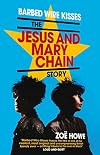
Even though William Reid chose not to be involved in the making of this book, his brother, Jim, did. And so did a lot of other players from the days.
Howe writes the book pretty straight forward, dodging the usual tripe and drunken debauchery that often plagues music biographies by seeming obligatory when it's rarely so. The Mary Chain are described as a lot of moping persons who created music that defined the 1980s somewhat and influenced bands and artists for all time forth, probably.
I wish show more there'd have been pictures in the book - there are none, bar the cover image.
They wanted to sound like the Shangri-Las and Einstürzende Neubauten at the same time, and they somewhat did, while sounding like nothing else out there:
They walked off stage if bored and practically did what they wanted to do, except for cater much to the media. And they didn't like their peers very much:
And yes, they were viewed as different, by all:
And they didn't care much about virtuosity:
Sounds like when Alan McGee thought of John Moore to join The Mary Chain:
...and speaking of drumming:
The band didn't care much for being "correct" with the media:
They loved their fans, who in some cases were as saddening as the band:
On The Smiths:
On picking support acts for their tours:
All in all, the book's a labour of love and doesn't pander to the author's ego, but is about the band. Go read if you're into JAMC. show less
Howe writes the book pretty straight forward, dodging the usual tripe and drunken debauchery that often plagues music biographies by seeming obligatory when it's rarely so. The Mary Chain are described as a lot of moping persons who created music that defined the 1980s somewhat and influenced bands and artists for all time forth, probably.
I wish show more there'd have been pictures in the book - there are none, bar the cover image.
They wanted to sound like the Shangri-Las and Einstürzende Neubauten at the same time, and they somewhat did, while sounding like nothing else out there:
Musically the brothers had a voracious appetite, listening to bands such as the German industrial group Einstürzende Neubauten, The Beatles, The Birthday Party, The Doors, Dr Mix and the Remix, and 1960s girl groups like the Shangri-Las. But if they had to pick one single group who had the most impact on them, it would have been the Velvet Underground. When they brought home the The Velvet Underground And Nico album (famously bearing Andy Warhol’s image of a banana on the cover), what ensued was tantamount to a religious experience. It was sweet and bitter, ‘psycho and candy’, all on one record.
They walked off stage if bored and practically did what they wanted to do, except for cater much to the media. And they didn't like their peers very much:
‘The whole Scottish scene turns our stomach,’ says Jim. ‘The Welsh as well,’ grins William. ‘And the Irish,’ shrugs Douglas, dourly. (from a Sounds interview with Sandy Robertson, 1985)
And yes, they were viewed as different, by all:
Their parents tried to be understanding of their sons’ often insular behaviour – their mother once bought William a key-ring with the inscription ‘I’m not weird, I’m gifted’ written on it, which cheered him immeasurably.
And they didn't care much about virtuosity:
‘I don’t even think we auditioned Bobby,’ Jim Reid admits. ‘We just said, “Can you drum?” “Yeah, a wee bit.” “Right, OK.”’
Sounds like when Alan McGee thought of John Moore to join The Mary Chain:
Jim says of those early meetings: ‘We’d kind of spotted John around the place; he was almost like a weird stalker. At the Sonic Youth gig John came up and said, “I saw you the other night.” I thought, Oh God, is he coming on to me or what? What’s going on? He was a bit of a hustler, you could see that. He’d spotted the drumming spot was vacant and he was going to go for it. It was McGee as well, he said, “There’s this bloke who looks just like William, and he wears leather trousers. I think you should get him.” We’re like, “Can he drum?” “Er . . . oh, I don’t know about that.”’
...and speaking of drumming:
They actually wanted a drummer, but they couldn’t find anyone who was right. ‘We auditioned dozens of drummers,’ says Jim. ‘Purely on ability, we could have got one easily, but we wanted somebody we could spend ten weeks on a tour bus with. We kept getting these guys that started going on about what type of sticks they would use. We didn’t give a fuck what type of sticks they were going to use! It’s a bit of wood, you moron!’
The band didn't care much for being "correct" with the media:
The journalist asked how they felt about being described variously as both the best and worst group in the western hemisphere. William replied, after a contemplative pause, ‘My favourite colour is gold.’
They loved their fans, who in some cases were as saddening as the band:
Douglas Hart says: ‘I loved playing places like that because they were a bit like the places we grew up in. I remember in Preston this kid came up to me, really young, strange-looking guy, and he said, “I’d like to start a band.” I was like, “You should, you should!” And he said, “But I’ve got no friends.” God, what a thing to say. Kind of beautiful. It haunted me. I always wondered what happened to him.’ This poignant exchange must have accessed a part of Douglas that would surely have felt similarly isolated – another outsider from an outsider town – had he and the Reids not found each other in East Kilbride when they did.
On The Smiths:
The other problem for the Mary Chain, Mick observes, was that The Smiths were increasingly stealing the Mary Chain’s thunder as the decade wore on. ‘People began to see The Smiths as the band of the 1980s,’ he explains. ‘But I still think Psychocandy was one of the albums, if not the album, of the 1980s.’
On picking support acts for their tours:
‘I was friends with the label that had just signed Nine Inch Nails, TVT. The guy played me this stuff and I said, “Yes, that sounds like a band that should open for us.” I sent the records to Jim and William. They couldn’t care less: “Hey, you like them? Fine.” Couldn’t give a shit.’
All in all, the book's a labour of love and doesn't pander to the author's ego, but is about the band. Go read if you're into JAMC. show less
It's not a secret that I am pop culture obsessed--I subscribe to People and Entertainment Weekly and pride myself on my ability to name celebrity children. (It's not a good talent, I know, but it's mine.)
So it's no surprise that I loved this book, which details what it's like to grow up the kid of a rock star. As you might imagine, the perks are incredible (Aimee Osbourne got a Corvette when she was little; Lisa Marie Presley got a pony she could ride indoors) but there are also downsides show more (never seeing your famous parent; early exposure to rampant drug use; your dad on TV in skintight pants).
And possibly one of the worst downsides is the fact that you're probably never going to be seen as anything other than your dad's kid. Some people embrace it (Kimberly Stewart comes to mind) and some people fight it and win (Jakob Dylan, for example). And there's the fact that complete strangers will come up to you and talk to you about your famous parent instead of, say, asking about you and what you're doing.
Really fun, interesting book. Recommended. show less
So it's no surprise that I loved this book, which details what it's like to grow up the kid of a rock star. As you might imagine, the perks are incredible (Aimee Osbourne got a Corvette when she was little; Lisa Marie Presley got a pony she could ride indoors) but there are also downsides show more (never seeing your famous parent; early exposure to rampant drug use; your dad on TV in skintight pants).
And possibly one of the worst downsides is the fact that you're probably never going to be seen as anything other than your dad's kid. Some people embrace it (Kimberly Stewart comes to mind) and some people fight it and win (Jakob Dylan, for example). And there's the fact that complete strangers will come up to you and talk to you about your famous parent instead of, say, asking about you and what you're doing.
Really fun, interesting book. Recommended. show less
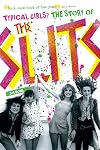
This is a fun and breezy read of an official Slits history contributed to all by all surviving members. With plenty of pictures and first-person recollections, this tells the importnat story of an all-female group that ahead of the curve artistically and business-wise. They successfullt wrangled creative control from Island and helped fuse the early "punky reggae" sound (name-checked by Bob Marley in the original recording of "Punky Reggae Party") with their own music as well as funding show more their tour with Prince Hammer and Don Cherry.
Through their timing and personal connection to the nascent punk scene via Ari Up's mother Nora, The Sex Pistols, and The Clash, as well as others this also makes for a unique view into the birth of English punk rock. show less
Through their timing and personal connection to the nascent punk scene via Ari Up's mother Nora, The Sex Pistols, and The Clash, as well as others this also makes for a unique view into the birth of English punk rock. show less
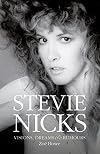
This is a re-release of a book from a few years ago. I received it from NetGalley in exchange for a fair review.
I have always been enthralled, "bewitched", and fascinated by Stevie Nicks. From the first time I listened to Fleetwood Mac in the mid-seventies until today. That voice. That music. And, later, when I would see concert clips of them on The Midnight Special and other shows, the pure enchantment of watching Stevie perform. And, later, to actually seeing them perform in concert in show more person. It would just fill me with a sense of wonder.
And the rumors. Of the drug use. Of the drama. Of the in-fighting. What to believe?
Well, it's pretty much all laid bare in this book. I found that I just could not put it down. And it left me, at age 57, still feeling the same way about Stevie Nicks as I did when I was a teenager. Fascinating! show less
I have always been enthralled, "bewitched", and fascinated by Stevie Nicks. From the first time I listened to Fleetwood Mac in the mid-seventies until today. That voice. That music. And, later, when I would see concert clips of them on The Midnight Special and other shows, the pure enchantment of watching Stevie perform. And, later, to actually seeing them perform in concert in show more person. It would just fill me with a sense of wonder.
And the rumors. Of the drug use. Of the drama. Of the in-fighting. What to believe?
Well, it's pretty much all laid bare in this book. I found that I just could not put it down. And it left me, at age 57, still feeling the same way about Stevie Nicks as I did when I was a teenager. Fascinating! show less
Lists
Awards

Statistics
- Works
- 14
- Members
- 246
- Popularity
- #92,612
- Rating
- 3.9
- Reviews
- 8
- ISBNs
- 32
- Languages
- 1