
Nancy G. Heller
Author of Women Artists: An Illustrated History
About the Author
Nancy G. Heller is a professor of humanities at the University of the Arts in Philadelphia.
Image credit: via Amazon.com
Works by Nancy G. Heller
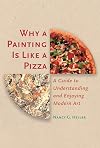
Why a Painting Is Like a Pizza: A Guide to Understanding and Enjoying Modern Art (2002) 67 copies, 2 reviews
Associated Works
Joan Personette: On State and On Canvas — Essay — 1 copy
Tagged
Common Knowledge
- Gender
- female
Members
Reviews
Camille Paglia, University Professor and Professor of Humanities, University of the Art : Nearly a century after the Armory Show, avant-garde art remains misunderstood by mainstream America. In a practical, industrious country where the fine arts have never been deeply rooted, abstract and conceptual artists are still too often dismissed as silly, untalented, or immoral, with art galleries portrayed as snobbish and greedy. This worsening cultural crisis affects private and public funding, show more discourages promising new voices, and threatens America's creative future. Nancy G. Heller's wonderful book arrives in the nick of time. Destined to be a classic of public education, it is lucid, engaging, and ingenious, leading the reader through the difficulties and strategies of avant-garde art. Intended for the general audience, the book is also must reading for teachers throughout the humanities, which have become distracted by jargon and ideology. Heller is an inspiring role model for university scholars, who must recover and renew their central mission of teaching.
Bay Hallowell, Coordinator of Special Projects, Youth, and Family Programs, Philadelphia Museum of Art : This delightful, down-to-earth guide demystifies the act of looking at modern and contemporary art with clarity and humor, drawing upon a diverse and wide-ranging array of artworks, which are abundantly reproduced. It will definitely appeal to novice viewers perplexed by the enigmas of earthworks and the splatters, scrapes, and splashes of non-traditional art, and it just may convince a few skeptics to look for beauty in unexpected places. Why a Painting is Like a Pizza is an ideal book for beginners because Nancy Heller leads us through the basics of analyzing the elements of any work of art while sharing tales of her own, often humorous, peregrinations to museums and galleries. She is an ideal companion---full of fun, facts, genuine enthusiasm, and a healthy respect for viewers abilities and their personal responses.
Susan S. Badder, Curator of Education, Corcoran Gallery of Art, Washington, D.C. : Nancy Heller has wrought a minor miracle. She has written a book about art that is of interest to both the layperson and the professional. Why a Painting Is Like a Pizza is informative and highly entertaining. By exploring the context within which art is made and exhibited, and by probing the criteria for evaluating it, Heller has constructed a useful framework for looking at art meaningfully. Without belittling artists and their work, she has demystified the artistic process. Through her pragmatic, everyday analogies she helps us see that all art is an act of communication and that the visitor's response--whatever it might be--is valid.
Linda Andre, Program Specialist for Teacher Services, The Sylvia Friedberg Nachlas Endowed Chair in Museum Education, Department of Education & Interpretation, The Baltimore Museum of Art : Reading Why a Painting is Like a Pizza is like having a personal guide at your side as you make your way through unfamiliar territory. We feel that we are in a gallery, engaged in an engrossing conversation with somebody who knows a great deal about modern art, but does not pretend to know all the answers, or even believe that answers are always available. While we hear Nancy Heller's highly intelligent and often very witty voice throughout the entire book, we also hear our own, for the author seems to know what we are thinking, wondering, and even resisting before we have been able to put our questions and doubts into words.
A. Richard Turner, author of "Inventing Leonardo" : So much writing on modern art is dessicated intellectualism, jargon laden, and marinated in theory. Here, instead, we have a simple and clear presentation, truly accessible to students, general readers, and museum beginners.
Review
Heller realizes that a painting is not like a pizza. She also knows, however, that this and the other homely analogies that pepper her introduction to modern art are entirely appropriate for an audience of curious and suspicious neophytes venturing into difficult terrain. . . . The emphasis on difficult and controversial works, which are compared to more traditional works, to each other, and to common things, introduces various ways of interpreting and evaluating art in the context of specific examples. . . . [S]hort, pithy, and intelligent.
Book Description
The first time she made a pizza from scratch, art historian Nancy Heller made the observation that led her to write this entertaining guide to contemporary art. Comparing modern art not only to pizzas but also to traditional and children's art, Heller shows us how we can refine analytical tools we already possess to understand and enjoy even the most unfamiliar paintings and sculptures.
How is a painting like a pizza? Both depend on visual balance for much of their overall appeal and, though both can be judged by a set of established standards, pizzas and paintings must ultimately be evaluated in terms of individual taste. By using such commonsense examples and making unexpected connections, this book helps even the most skeptical viewers feel comfortable around contemporary art and see aspects of it they would otherwise miss. Heller discusses how nontraditional works of art are made--and thus how to talk about their composition and formal elements. She also considers why such art is made and what it "means."
At the same time, Heller reassures those of us who have felt uncomfortable around avant-garde art that we don't have to like all--or even any--of it. Yet, if we can relax, we can use the aesthetic awareness developed in everyday life to analyze almost any painting, sculpture, or installation. Heller also gives concise answers to the eight questions she is most frequently asked about contemporary art--from how to tell when an abstract painting is right side up to which works of art belong in a museum.
This book is for anyone who agrees with art critic Clement Greenberg that "All profoundly original art looks ugly at first." It's also for anyone who disagrees. It is for anyone who wants to get more out of a museum or gallery visit and would like to be able to say something more than just "yes" or "no" when asked if they like an artist's work. show less
Bay Hallowell, Coordinator of Special Projects, Youth, and Family Programs, Philadelphia Museum of Art : This delightful, down-to-earth guide demystifies the act of looking at modern and contemporary art with clarity and humor, drawing upon a diverse and wide-ranging array of artworks, which are abundantly reproduced. It will definitely appeal to novice viewers perplexed by the enigmas of earthworks and the splatters, scrapes, and splashes of non-traditional art, and it just may convince a few skeptics to look for beauty in unexpected places. Why a Painting is Like a Pizza is an ideal book for beginners because Nancy Heller leads us through the basics of analyzing the elements of any work of art while sharing tales of her own, often humorous, peregrinations to museums and galleries. She is an ideal companion---full of fun, facts, genuine enthusiasm, and a healthy respect for viewers abilities and their personal responses.
Susan S. Badder, Curator of Education, Corcoran Gallery of Art, Washington, D.C. : Nancy Heller has wrought a minor miracle. She has written a book about art that is of interest to both the layperson and the professional. Why a Painting Is Like a Pizza is informative and highly entertaining. By exploring the context within which art is made and exhibited, and by probing the criteria for evaluating it, Heller has constructed a useful framework for looking at art meaningfully. Without belittling artists and their work, she has demystified the artistic process. Through her pragmatic, everyday analogies she helps us see that all art is an act of communication and that the visitor's response--whatever it might be--is valid.
Linda Andre, Program Specialist for Teacher Services, The Sylvia Friedberg Nachlas Endowed Chair in Museum Education, Department of Education & Interpretation, The Baltimore Museum of Art : Reading Why a Painting is Like a Pizza is like having a personal guide at your side as you make your way through unfamiliar territory. We feel that we are in a gallery, engaged in an engrossing conversation with somebody who knows a great deal about modern art, but does not pretend to know all the answers, or even believe that answers are always available. While we hear Nancy Heller's highly intelligent and often very witty voice throughout the entire book, we also hear our own, for the author seems to know what we are thinking, wondering, and even resisting before we have been able to put our questions and doubts into words.
A. Richard Turner, author of "Inventing Leonardo" : So much writing on modern art is dessicated intellectualism, jargon laden, and marinated in theory. Here, instead, we have a simple and clear presentation, truly accessible to students, general readers, and museum beginners.
Review
Heller realizes that a painting is not like a pizza. She also knows, however, that this and the other homely analogies that pepper her introduction to modern art are entirely appropriate for an audience of curious and suspicious neophytes venturing into difficult terrain. . . . The emphasis on difficult and controversial works, which are compared to more traditional works, to each other, and to common things, introduces various ways of interpreting and evaluating art in the context of specific examples. . . . [S]hort, pithy, and intelligent.
Book Description
The first time she made a pizza from scratch, art historian Nancy Heller made the observation that led her to write this entertaining guide to contemporary art. Comparing modern art not only to pizzas but also to traditional and children's art, Heller shows us how we can refine analytical tools we already possess to understand and enjoy even the most unfamiliar paintings and sculptures.
How is a painting like a pizza? Both depend on visual balance for much of their overall appeal and, though both can be judged by a set of established standards, pizzas and paintings must ultimately be evaluated in terms of individual taste. By using such commonsense examples and making unexpected connections, this book helps even the most skeptical viewers feel comfortable around contemporary art and see aspects of it they would otherwise miss. Heller discusses how nontraditional works of art are made--and thus how to talk about their composition and formal elements. She also considers why such art is made and what it "means."
At the same time, Heller reassures those of us who have felt uncomfortable around avant-garde art that we don't have to like all--or even any--of it. Yet, if we can relax, we can use the aesthetic awareness developed in everyday life to analyze almost any painting, sculpture, or installation. Heller also gives concise answers to the eight questions she is most frequently asked about contemporary art--from how to tell when an abstract painting is right side up to which works of art belong in a museum.
This book is for anyone who agrees with art critic Clement Greenberg that "All profoundly original art looks ugly at first." It's also for anyone who disagrees. It is for anyone who wants to get more out of a museum or gallery visit and would like to be able to say something more than just "yes" or "no" when asked if they like an artist's work. show less

This was delightful to read and to look at. Some of the art is full-page, full color, and really helped me to appreciate how women have always been doing the same thing as men, even in artistic movements we don't associate women with.
Explains well how to look and understand abstract, non representational art.

Fabulous reproductions of works from the 16th century to the present day. A photograph or portrait of each artist is included when available.
Awards

You May Also Like


Associated Authors
Statistics
- Works
- 9
- Also by
- 1
- Members
- 413
- Popularity
- #58,990
- Rating
- 4.2
- Reviews
- 5
- ISBNs
- 16
- Languages
- 1