
Whitney Chadwick
Author of Women, Art, and Society
About the Author
Whitney Chadwick is Professor of Art at San Francisco State University. She has lectured and published widely in the areas of surrealism, feminism, and contemporary art. She lives in San Francisco, California.
Image credit: SF Gate
Works by Whitney Chadwick
Associated Works
In Wonderland: The Surrealist Adventures of Women Artists in Mexico and the United States (2012) — Contributor — 74 copies
Leonor Fini and Her Contemporaries: Surrealism Through the Eyes of Women Artists (2001) — Foreword — 3 copies
Tagged
Common Knowledge
- Canonical name
- Chadwick, Whitney
- Birthdate
- 1943-07-28
- Gender
- female
- Organizations
- The Clark
San Francisco Art Institute (trustee) - Relationships
- Bechtle, Robert (husband)
- Nationality
- USA
- Places of residence
- San Francisco, California, USA
- Associated Place (for map)
- California, USA
Members
Reviews
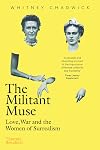
Whitney Chadwick is a well regarded scholar of women in art with a strong interest in Surrealism. 'The Militant Muse' might be regarded as a sequel to her 'Women Artists and the Surrealist Movement'. It is not a straight narrative history but rather a series of essays on a theme.
That theme is less some feminist attempt to recover women's role in Surrealism (although there is that aspect) and more an assertion of uniquely feminine responses to friendship set in a period of artistic change and show more war. It is a humane book but very much one for women about women.
One has to step back a little from the currently fashionable determination to promote female, black or LGBTQ contributions to history. These are enlightening at best but often severely distorting at worst. The Academy as a whole has tended to distort rather than enlighten in recent years.
Finding black relatively minor composers in the eighteenth century or concentrating attention on Artemesia Gentileschi and her castrating art or creating some idea of gayness long before it existed is all very well but has ended up with Jane Austen performed by black actors in a travesty of history.
Chadwick is better than that. She does not make outrageous claims but presents the facts based on the documents and letters that she can get access to. Although we see a tendency to will an interpretation that suits an agenda on occasions, this is a work of history and not ideology.
Nevertheless, we must not be seduced. The gender approach to art history (like the racial and the sexual) is a fashion. It derives in part from the market fact that, as with crime fiction and romance, women are disproportionately interested in art history. There is a drive to validation here.
Looked at more dispassionately, Surrealism did produce some very significant women artists (less so literary figures), notably Leonora Carrington, Leonor Fini, Dorothea Tanning and Remedios Varo although only Meret Oppenheim can claim to be part of the initiating group.
This is more than women being a simple muse although it is equally true that men had the driving thoughts and energy that created the space for these women. Is that simply a matter of a 'patriarchal society' or is it perhaps true that women often do not initiate revolutions but can exploit them?
The master literary and intellectual initiator of Surrealism, Andre Breton, was not accidentally someone who radicalised thought from experience of the front line in World War I. The preceding movements of Futurism and Dada were also related to war (for and against).
Chadwick has something to say here about how war might drive a feminine sensibility under the conditions of the Second World War (and the Spanish Civil War) where violence and disruption affected both genders with far more equality than in the previous war.
Unfortunately her story ends to all intents and purposes in 1945. There is no evidence of some upsurge in new ideas from women outside the contribution to Abstract Expressionism. Similarly Frida Kahlo is not really a Surrealist and neither was Lee Miller, both subjects of Chadwick.
So, the task of capturing Surrealism for feminism does not quite work here but what does work is profound insight into female-to-female relationships (not necessarily but sometimes Lesbian) and the shattering effect of war on mostly very young but not exclusively so, women.
Chadwick does this by taking five sets of interwar friendship broadly chronologically with the 'muse' aspect of women almost inevitably emerging as several of the women are as much known as the wives or lovers of 'great men' (Breton, Ernst, De Rivera and Penrose) as achievers in their own right.
Indeed, one of the emergent themes is that interwar artistic women still tended to domesticity (and nothing wrong that) while trying to carve out an individual artistic expression and some sense of personal autonomy. Cooking and food emerge more than once as solace to no surprise.
The first set is the quasi-Lesbian (or possibly fully Lesbian) romantic friendship of Valentine Penrose (first wife of Roland) and Alice Palen. There is not too much to say about this. It is sweet but reads like a romantic Lesbian novel and seems based on slender material.
The second is the relationship between Leonora Carrington and Leonor Fini which actually says little about the latter but a great deal that is valuable about the former and how her art was formed - and how she coped or did not with the brutal incarceration of her lover Max Ernst during the phony war.
Carrington was almost broken by the experience. The suggestion is that she was supportive and loyal during the temporary incarceration by the French authorities but the relationship did not survive long after. What is interesting is how Surrealism acted for her as psychotherapy through art.
The third set explores the relationships of the surrealist and left-wing circles in which Frida Kahlo lived in Mexico as European political exiles arrived in the 1930s to create a vibrant artistic and cultural centre in Mexico City equal to those of (say) Bloomsbury or Paris.
The central friendship is that of Kahlo (who easily surmounts her role as Diego de Rivera's wife) and Jacqueline Lamba ('Mrs Breton') but the tale is broader than that involving not only artists and surrealists but the circle around Trotsky in exile.
The fourth set is for me the most interesting and powerful - less gossip perhaps and more solid history. It is the story of two long-loving Lesbians, Claude Cahun and Suzanne Malherbe, on the island of Jersey during the war with a rather weak link to 'Mrs Breton' coming for a holiday.
One of the great posturings of the intelligentsia is that 'resistance' is writing a tract or poem against an oppressor or talking about resistance in a cafe and then having it added to one's own CV after others have fought with blood and gold to liberate you.
Cahun and Malherbe's story (Cahun was an interesting surrealist and political actor in her own right duriing the interwar period) looks as if it might head in the same direction and then rapidly shifts into a story of radical action against the German occupiers at enormous personal risk.
The two women, no longer young, become the epitome of a courage, their actions perhaps not changing the course of the war by one jot but demonstrating that even the littlest person can do what they can to destabilise rule by monsters and thugs. These are both true heroines.
They got caught and underwent a terrifying trial and imprisonment escaping death by a hair's breadth and demonstrating that cliche 'the indomitability of the human spirit' to the nth degree. This story should be abstracted from this book and, at the least, made into an inspiring Netflix docudrama.
The final set explores the kindly 'menage a trois' of Roland Penrose, his first divorced wife Valentine in exile from France (returning only once a year to Paris for a Lesbian romance) and Roland's generous and interesting (and war-traumatised) second wife, the renowned photographer Lee Miller.
It is an oddly heart-warming story of dysfunctionality and polyamorous survival that could be happily mangled into some BBC drama. Of course, you do not get Roland's view on his ex-wife and current wife in situ with him on a Sussex farm but one suspects that he was tolerantly happy.
We can add that the book is well illustrated with images that alone make it worth holding in the library. It should comfort female readers. Male readers should not ignore it. These are profound friendships and there are insights here for any man who wants to plumb the mysteries of woman. show less
That theme is less some feminist attempt to recover women's role in Surrealism (although there is that aspect) and more an assertion of uniquely feminine responses to friendship set in a period of artistic change and show more war. It is a humane book but very much one for women about women.
One has to step back a little from the currently fashionable determination to promote female, black or LGBTQ contributions to history. These are enlightening at best but often severely distorting at worst. The Academy as a whole has tended to distort rather than enlighten in recent years.
Finding black relatively minor composers in the eighteenth century or concentrating attention on Artemesia Gentileschi and her castrating art or creating some idea of gayness long before it existed is all very well but has ended up with Jane Austen performed by black actors in a travesty of history.
Chadwick is better than that. She does not make outrageous claims but presents the facts based on the documents and letters that she can get access to. Although we see a tendency to will an interpretation that suits an agenda on occasions, this is a work of history and not ideology.
Nevertheless, we must not be seduced. The gender approach to art history (like the racial and the sexual) is a fashion. It derives in part from the market fact that, as with crime fiction and romance, women are disproportionately interested in art history. There is a drive to validation here.
Looked at more dispassionately, Surrealism did produce some very significant women artists (less so literary figures), notably Leonora Carrington, Leonor Fini, Dorothea Tanning and Remedios Varo although only Meret Oppenheim can claim to be part of the initiating group.
This is more than women being a simple muse although it is equally true that men had the driving thoughts and energy that created the space for these women. Is that simply a matter of a 'patriarchal society' or is it perhaps true that women often do not initiate revolutions but can exploit them?
The master literary and intellectual initiator of Surrealism, Andre Breton, was not accidentally someone who radicalised thought from experience of the front line in World War I. The preceding movements of Futurism and Dada were also related to war (for and against).
Chadwick has something to say here about how war might drive a feminine sensibility under the conditions of the Second World War (and the Spanish Civil War) where violence and disruption affected both genders with far more equality than in the previous war.
Unfortunately her story ends to all intents and purposes in 1945. There is no evidence of some upsurge in new ideas from women outside the contribution to Abstract Expressionism. Similarly Frida Kahlo is not really a Surrealist and neither was Lee Miller, both subjects of Chadwick.
So, the task of capturing Surrealism for feminism does not quite work here but what does work is profound insight into female-to-female relationships (not necessarily but sometimes Lesbian) and the shattering effect of war on mostly very young but not exclusively so, women.
Chadwick does this by taking five sets of interwar friendship broadly chronologically with the 'muse' aspect of women almost inevitably emerging as several of the women are as much known as the wives or lovers of 'great men' (Breton, Ernst, De Rivera and Penrose) as achievers in their own right.
Indeed, one of the emergent themes is that interwar artistic women still tended to domesticity (and nothing wrong that) while trying to carve out an individual artistic expression and some sense of personal autonomy. Cooking and food emerge more than once as solace to no surprise.
The first set is the quasi-Lesbian (or possibly fully Lesbian) romantic friendship of Valentine Penrose (first wife of Roland) and Alice Palen. There is not too much to say about this. It is sweet but reads like a romantic Lesbian novel and seems based on slender material.
The second is the relationship between Leonora Carrington and Leonor Fini which actually says little about the latter but a great deal that is valuable about the former and how her art was formed - and how she coped or did not with the brutal incarceration of her lover Max Ernst during the phony war.
Carrington was almost broken by the experience. The suggestion is that she was supportive and loyal during the temporary incarceration by the French authorities but the relationship did not survive long after. What is interesting is how Surrealism acted for her as psychotherapy through art.
The third set explores the relationships of the surrealist and left-wing circles in which Frida Kahlo lived in Mexico as European political exiles arrived in the 1930s to create a vibrant artistic and cultural centre in Mexico City equal to those of (say) Bloomsbury or Paris.
The central friendship is that of Kahlo (who easily surmounts her role as Diego de Rivera's wife) and Jacqueline Lamba ('Mrs Breton') but the tale is broader than that involving not only artists and surrealists but the circle around Trotsky in exile.
The fourth set is for me the most interesting and powerful - less gossip perhaps and more solid history. It is the story of two long-loving Lesbians, Claude Cahun and Suzanne Malherbe, on the island of Jersey during the war with a rather weak link to 'Mrs Breton' coming for a holiday.
One of the great posturings of the intelligentsia is that 'resistance' is writing a tract or poem against an oppressor or talking about resistance in a cafe and then having it added to one's own CV after others have fought with blood and gold to liberate you.
Cahun and Malherbe's story (Cahun was an interesting surrealist and political actor in her own right duriing the interwar period) looks as if it might head in the same direction and then rapidly shifts into a story of radical action against the German occupiers at enormous personal risk.
The two women, no longer young, become the epitome of a courage, their actions perhaps not changing the course of the war by one jot but demonstrating that even the littlest person can do what they can to destabilise rule by monsters and thugs. These are both true heroines.
They got caught and underwent a terrifying trial and imprisonment escaping death by a hair's breadth and demonstrating that cliche 'the indomitability of the human spirit' to the nth degree. This story should be abstracted from this book and, at the least, made into an inspiring Netflix docudrama.
The final set explores the kindly 'menage a trois' of Roland Penrose, his first divorced wife Valentine in exile from France (returning only once a year to Paris for a Lesbian romance) and Roland's generous and interesting (and war-traumatised) second wife, the renowned photographer Lee Miller.
It is an oddly heart-warming story of dysfunctionality and polyamorous survival that could be happily mangled into some BBC drama. Of course, you do not get Roland's view on his ex-wife and current wife in situ with him on a Sussex farm but one suspects that he was tolerantly happy.
We can add that the book is well illustrated with images that alone make it worth holding in the library. It should comfort female readers. Male readers should not ignore it. These are profound friendships and there are insights here for any man who wants to plumb the mysteries of woman. show less
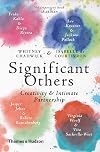
Lots of people are famous, but much fewer people are famous and have famous partners. How do two famous people get together? How does the relationship affect their craft? This book examines some of the most important creative couples of the last 125 years or so. This book is an underappreciated gem. If people haven't read about it or heard about it, then they should. The fact that many movies have been made about these couples makes me wonder if screenwriters used this book as a referral.
The show more book is very diverse. It includes straight, gay male, and lesbian couplings. It includes writers, painters, and sculptors. It speaks of cross-generational couples and interracial couples. Most importantly, it doesn't imply that all these couples lasted forever. Sometimes, it emphasizes divorce and break-ups in its analyses. The book has few male authors; so in terms of subject and writers, it's in many ways a women's studies text.
The book is thick but that is because of the huge endnotes and reprint permissions. The work is rigorous, but it doesn't take long to read individual chapters. I just can't believe I never heard of this text before. It's simply precious, and almost priceless. show less
The show more book is very diverse. It includes straight, gay male, and lesbian couplings. It includes writers, painters, and sculptors. It speaks of cross-generational couples and interracial couples. Most importantly, it doesn't imply that all these couples lasted forever. Sometimes, it emphasizes divorce and break-ups in its analyses. The book has few male authors; so in terms of subject and writers, it's in many ways a women's studies text.
The book is thick but that is because of the huge endnotes and reprint permissions. The work is rigorous, but it doesn't take long to read individual chapters. I just can't believe I never heard of this text before. It's simply precious, and almost priceless. show less

Examination of the work of women artists from the middle ages to postmodern art. Discussion of art history's approach and how patriarchal worldviews have formed most of the discourse about art created by women. Fresh approaches to the examination of art produced by women are enriched by feminist scholarship re-examinations of history and art. Color and black and white images.
Lists
Awards

You May Also Like


Associated Authors
Statistics
- Works
- 23
- Also by
- 3
- Members
- 1,564
- Popularity
- #16,492
- Rating
- 4.0
- Reviews
- 6
- ISBNs
- 49
- Languages
- 5