
Mary Ann Caws
Author of Surrealist Love Poems
About the Author
Mary Ann Caws is Distinguished Professor of English, French, and Comparative Literature at the Graduate School of the City University of New York
Image credit: Blogger
Works by Mary Ann Caws
The Inner Theatre of Recent French Poetry: Cendrars, Tzara, Peret, Artaud, Bonnefoy (Essays in European & Comparative Literature) (1972) 6 copies
Surrealism and the Literary Imagination: A Study of Breton and Bachelard (Studies in French Literature) (1966) 5 copies
The Reception of Virginia Woolf in Europe (Reception of British Authors in Europe) (2002) — Editor — 3 copies
Dada/Surrealism No. 15 — Editor — 2 copies
The Edinburgh Companion to the Prose Poem (Edinburgh Companions to Literature and the Humanities) (2021) 2 copies
Jon Schueler's Song 1 copy
Mad Love 1 copy
Marcel Proust 1 copy
How Vita matters 1 copy
Associated Works
Artistic Relations: Literature and the Visual Arts in Nineteenth-Century France (1994) — Contributor — 13 copies
Tagged
Common Knowledge
- Birthdate
- 1933
- Gender
- female
- Education
- University of Kansas (PhD)
Yale University (MA)
Bryn Mawr College (BA)
National Cathedral School - Occupations
- author
art historian
literary critic
distinguished professor emerita (English, French and Comparative Literature)
translator - Organizations
- City University of New York (Graduate Center)
Henri Peyre French Institute (Co-Director, 1980-2002) - Awards and honors
- American Academy of Arts and Sciences (Fellow)
Union College (Honorary Doctorate) - Relationships
- Caws, Peter (ex-husband)
- Nationality
- USA
- Birthplace
- Wilmington, North Carolina, USA
- Associated Place (for map)
- North Carolina, USA
Members
Reviews
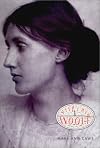
I'd give the pictures (which are a huge part of the book) five stars, but the text itself is pretty slight and doesn't give you a very cohesive look at Woolf's life. The author is obviously well-informed and has written several books on Bloomsbury folks, but here that translates into asides and shortcuts that give Woolf and her writing the short end of the stick. She also has some odd turns of phrase, particularly when describing mental illness and sexual abuse, that don't do the narrative show more any favors. The book itself is nicely printed with lots of space devoted to the often rare photographs of Woolf, her family, and her friends. Maybe just look at the pictures and enjoy the captions for this one, but go elsewhere for your Virginia Woolf insights. show less
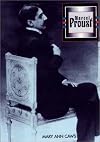
The genius of Marcel Proust strains the limits of a visually oriented capsule biography. But in the latest addition to Overlook's Illustrated Lives series, Caws manages to capture the greatest novelist of the twentieth century in just over 100 pages of revealing episodes and haunting photographs. With lucid economy, Caws situates Proust--"the little man with the great eyes"--in the complex social world that he transmuted into the luminous artistry of A la recherche du temps perdu. A few show more shrewdly detailed scenes serve to contrast the many selves that coalesced--simultaneously or successively-- in Proust's multifaceted personality: the elegant socialite who dwindled into invalidism; the bold duelist who curried favor with political foes; the homosexual sensualist who platonically entranced beautiful women; the wealthy aesthete who hoped to write for the masses. At the integrative center of this baffling life, Caws locates a powerful imagination obsessed with the capacity of memory to transcend and redeem time's losses. A little book sure to draw readers into much bigger ones: the fuller Proust studies listed in Caws' bibliography--and, of course, Proust's own masterpiece. Bryce Christensen
The Overlook Illustrated Lives series offers visual literary biographies, incisively and informatively written by leading experts, accompanied by photographs and illustrations that bring to life the author's world. Coinciding with the publication of the first all-new English translation of Proust's great work in more than seventy years, Marcel Proust vividly captures Proust's solitary genius and life of passionate observation, from his daily routines to the elite social circle that fascinated his youth.
The more than one hundred photos and illustrations, some previously unpublished, enable readers to share the celebrated author's sight-and how others saw him: Proust's favorite paintings, portraits of the people he was close to, sources for his fictional characterizations, copious illustrations of the theatrical events and exhibitions Proust attended with such enthusiasm, scores of the music he loved, his manuscripts, sketches, and the places dear to him and central to the great novel that was his life's work. show less
The Overlook Illustrated Lives series offers visual literary biographies, incisively and informatively written by leading experts, accompanied by photographs and illustrations that bring to life the author's world. Coinciding with the publication of the first all-new English translation of Proust's great work in more than seventy years, Marcel Proust vividly captures Proust's solitary genius and life of passionate observation, from his daily routines to the elite social circle that fascinated his youth.
The more than one hundred photos and illustrations, some previously unpublished, enable readers to share the celebrated author's sight-and how others saw him: Proust's favorite paintings, portraits of the people he was close to, sources for his fictional characterizations, copious illustrations of the theatrical events and exhibitions Proust attended with such enthusiasm, scores of the music he loved, his manuscripts, sketches, and the places dear to him and central to the great novel that was his life's work. show less
This book provides an excellent first introduction to the life of Virginia Woolf. It introduces in an accessible manner the rough outline of Woolf's life and the major events which have provided so much food for thought in other more extensive biographies (death of mother, sexual abuse, relation with Vita Sackville-West etc.). In only 136 pages Mary Ann Caws succeeds in painting a picture of Virginia Woolf as an artist who manages to turn the mental illness which always haunted her into a show more vehicle for artistic achievement (an achievement impressive and often overlooked because of her suicide). The biographer has a keen eye for selecting those quotations which shed a clear light on Woolf's personality and which speak most directly to us. It speaks for Caws that she refuses to end the biography with Woolf's suicide, but concludes with Woolf's own statement on her mission as an author: "Observe perpetually. Observe the oncome of age. Observe my own despondency. By that means it becomes serviceable. Or so I hope. I insist upon spending this time to the best advantage. I will go down with my colours flying."
On a final note, it is the photographs which truly make this book a wonderful acquisition, pictures of Virginia Woolf, her family, her friends, all those who circled in and around the Bloomsbury group. It is these photographs which allow us a very close look into Woolf's life. show less
On a final note, it is the photographs which truly make this book a wonderful acquisition, pictures of Virginia Woolf, her family, her friends, all those who circled in and around the Bloomsbury group. It is these photographs which allow us a very close look into Woolf's life. show less
The first anthology of its kind, Manifesto features over two hundred artistic and cultural manifestos from a wide range of countries. The manifesto, a public statement that sets forth the tenets of a forthcoming, existing, or potential movement or "ism"--or that plays on the idea of one--became in various modernisms a crucial and forceful vehicle for artists, writers, and other intellectuals to express their ideas about the direction of aesthetics and society. Included in this collection are show more texts ranging from Kurt Schwitters's Cow Manifesto to those written in the name of well-known movements--imagism, cubism, surrealism, symbolism, vorticism, projectivism--and less well-known ones--lettrism, acmeism, concretism, rayonism. Also covered are expressionist, Dada, and futurist movements from French, Italian, Russian, Spanish, and Latin American perspectives, as well as local movements, such as Brazilian hallucinism. Influential, startling, unsettling, amusing, and continually engaging, these modernist manifestos give voice to a fascinating array of ideas and opinions that will prove invaluable to scholars and students of nineteenth and twentieth-century art, literature, and culture. show less
Awards

You May Also Like


Associated Authors
Statistics
- Works
- 77
- Also by
- 11
- Members
- 1,399
- Popularity
- #18,363
- Rating
- 3.8
- Reviews
- 12
- ISBNs
- 130
- Languages
- 7