
Linda Nochlin (1931–2017)
Author of Realism
About the Author
Linda Nochlin was born Linda Natalie Weinberg in Brooklyn, New York on January 30, 1931. She graduated from Vassar College in 1951 with a major in philosophy and a double minor in Greek and art history. She received a master's degree in 17th-century English literature at Columbia University and a show more doctorate at the New York University Institute of Fine Arts. She went on to teach at Vassar College, the Graduate Center in Manhattan, Stanford University, Williams College, Yale University, and New York University Institute of Fine Arts, where she taught from 1992 until retiring in 2013. Nochlin was an art historian whose feminist approach permanently altered her field. She wrote several books including Realism, Gustave Courbet: A Study of Style and Society, and Misère: Representations of Misery in 19th-Century Art. She spent lots of time writing essays for magazines including The Art Bulletin, Art in America, and ARTnews. Her essay collections included The Politics of Vision: Essays on Nineteenth Century Art and Society; Women, Art and Power; and Representing Women. She also co-edited books including Woman as Sex Object: Studies in Erotic Art, 1730-1970 with Thomas B. Hess and The Jew in the Text: Modernity and the Construction of Identity with Tamar Garb. She died from cancer on October 29, 2017 at the age of 86. (Bowker Author Biography) show less
Works by Linda Nochlin
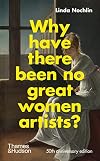
Why have there been no great women artists?: 50th anniversary edition (1971) — Author — 96 copies, 1 review
Associated Works
Tagged
Common Knowledge
- Canonical name
- Nochlin, Linda
- Legal name
- Nochlin, Linda Natalie Weinberg
- Birthdate
- 1931-01-30
- Date of death
- 2017-10-29
- Gender
- female
- Education
- Brooklyn Ethical Cultural School
Vassar College (B.A.|1951)
Columbia University (M.A.|1952)
New York University Institute of Fine Arts (Ph.D|1963) - Occupations
- art historian
Professor Emerita of Modern Art - Organizations
- New York University Institute of Fine Arts
City University of New York Graduate Center - Awards and honors
- Fellow, American Philosphical Society (2004)
Fellow American Academy of Arts and Sciences (1992)
Frank Jewett Mather Prize for Critical Writing (1977)
Chales Eliot Norton Lectures (2004) - Relationships
- Nochlin, Philip H. (husband 1953-60)
Pommer, Richard (husband 1968-92) - Short biography
- One of the most important and influential art historians of the later twentieth century, Linda Nochlin was a pioneer in the feminist approach to art history. Functioning both as a scholar and as a role model for younger art historians, Dr. Nochlin conducted important research in the field of late nineteenth and early twentieth century French art. Her writings on Courbet are essential to the bibliography on this important painter, and in a series of important essays she explored with erudition and great eloquence questions of the relationship between art and power, particularly in the areas of politics and gender. Deeply versed in theoretical approaches to the field, Dr. Nochlin's work is informed by a profound humanity and generosity of spirit, qualities which have made her an inspiring teacher and mentor to many students and younger scholars. She was the Lila Acheson Wallace Professor of Modern Art at New York University's Institute of Fine Arts. Dr. Nochlin has also taught at Yale University (1990-92), Vassar College (1963-80) and the City University of New York (1980-90). She is the author of books including Realism (1972); Gustave Courbet: A Study of Style and Society (1976); Art and Architecture in the Service of Politics (1978); Courbet Reconsidered (1988); Women, Art, Power & Other Essays (1988); and The Politics of Vision (1990). Linda Nochlin died October 29, 2017, at the age of 86 in Manhattan.
- Nationality
- USA
- Birthplace
- New York, New York, USA
- Places of residence
- New York, New York, USA
- Place of death
- New York, New York, USA
- Associated Place (for map)
- New York, New York, USA
Members
Reviews
”…feminist art history is there to make trouble, to call into question, to ruffle feathers in the patriarchal dovecotes.”
I saw this book at a modern art gallery and felt that it had to come home with me. (The title!)
I was not familiar with Linda Nochlin’s famous essay published in 1971, so it was a nice discovery. This 50th anniversary edition also included an article taking a look at “30 years later”.
This essay is not about saying “look, here is woman artist A, here is woman show more artist B”, but about challenging ingrained ways of thinking – assumptions that lie behind the title question, the ideas of genius and Great Artist (male, of course.) It is also about structures in society and the view of reality they impose on us. I am glad I read this.
”But in actuality, as we all know, things as they are and as they have been, in the arts as in hundred other areas, are stultifying, oppressive and discouraging to all those, women among them, who did not have the good fortune to be born white, preferably middle class and above all, male.”
”The fault, dear brothers, lies not in our stars, not in our hormones, our menstrual cycles or our empty internal spaces, but in our institutions and our education – education understood to include everything that happens to us from the moment we enter this world of meaningful symbols, signs and signals.” show less
I saw this book at a modern art gallery and felt that it had to come home with me. (The title!)
I was not familiar with Linda Nochlin’s famous essay published in 1971, so it was a nice discovery. This 50th anniversary edition also included an article taking a look at “30 years later”.
This essay is not about saying “look, here is woman artist A, here is woman show more artist B”, but about challenging ingrained ways of thinking – assumptions that lie behind the title question, the ideas of genius and Great Artist (male, of course.) It is also about structures in society and the view of reality they impose on us. I am glad I read this.
”But in actuality, as we all know, things as they are and as they have been, in the arts as in hundred other areas, are stultifying, oppressive and discouraging to all those, women among them, who did not have the good fortune to be born white, preferably middle class and above all, male.”
”The fault, dear brothers, lies not in our stars, not in our hormones, our menstrual cycles or our empty internal spaces, but in our institutions and our education – education understood to include everything that happens to us from the moment we enter this world of meaningful symbols, signs and signals.” show less

Libro minuscolo, ma testo di enorme importanza per gli studi di critica femminista della storia dell'arte e non solo. Nochlin dimostra in poche pagine l'insensatezza di tutte le rivendicazioni da "quote rosa" o (in ambito aziendale) "leadership al femminile" se non accompagnate da una consapevolezza storica delle condizioni sociali ed economiche che possono spiegare, come recita il titolo "perché non ci sono state grandi artiste". Lettura fondamentale per capire la differenza di genere, non show more solo nell'arte. show less
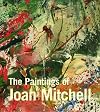
Joan Mitchell (1926-1992) was one of the few women among the first-rank Abstract Expressionist painters. She outpaced all but a handful of her male mentors and counterparts, while only Lee Krasner stands as a possible rival among her female counterparts. Although well regarded by critics, fellow artists, and the general public, Mitchell's achievement has never received full recognition; her work has not been shown in New York for more than twenty-five years. This exquisitely illustrated show more volume and the exhibition that it accompanies restore the artist to her rightful place in the history of American painting. Spanning Mitchell's entire career, from early works of 1951 until the year of her death, The Paintings of Joan Mitchell includes a wealth of breathtaking paintings, both intimate and grand in scale, that reveal Mitchell's fierce dedication to her art and reflect both the struggles and the artistic triumphs she achieved with her distinctive vision of Abstract Expressionism.
Jane Livingston draws on the artist's personal papers, including her journals and extensive correspondence, to provide an illuminating interpretation of the artist and her work. Linda Nochlin, who was a friend of Mitchell, discusses the artist's experience working in a field dominated by men. A third text by Whitney Curator Yvette Lee explores a distinctive and little-known suite of paintings entitled La Grande Vallée, created in 1983-84. Mounted with the full cooperation of the estate of Joan Mitchell, the exhibition contains many paintings rarely seen before--and in some cases never publicly exhibited. This book includes an exhibition history; an extensive artist bibliography of related monographs, reviews, and filmed interviews; and color plates and listing of all the works appearing in the exhibition. show less
Jane Livingston draws on the artist's personal papers, including her journals and extensive correspondence, to provide an illuminating interpretation of the artist and her work. Linda Nochlin, who was a friend of Mitchell, discusses the artist's experience working in a field dominated by men. A third text by Whitney Curator Yvette Lee explores a distinctive and little-known suite of paintings entitled La Grande Vallée, created in 1983-84. Mounted with the full cooperation of the estate of Joan Mitchell, the exhibition contains many paintings rarely seen before--and in some cases never publicly exhibited. This book includes an exhibition history; an extensive artist bibliography of related monographs, reviews, and filmed interviews; and color plates and listing of all the works appearing in the exhibition. show less

Being contributed papers dealing with the depiction of women in art (mostly French painting) from the late eighteenth century onward. This 1973 book is a product of its time in its physical production, with sparse use of color illustration, so it is not for browsers or seekers of aesthetic gratification. Most of the essays are insightful enough, but unfortunately, it's difficult for one's primary memory not to be a bad one: the book's longest essay (by far): a yawner on corsetry.
Lists
Awards


You May Also Like


Associated Authors
Statistics
- Works
- 45
- Also by
- 6
- Members
- 1,872
- Popularity
- #13,755
- Rating
- 4.0
- Reviews
- 16
- ISBNs
- 79
- Languages
- 8
- Favorited
- 2
