
Simson Garfinkel
Author of Practical UNIX and Internet Security
About the Author
Simson L. Garfinkel is a freelance writer, computer entrepreneur, and columnist for the Boston Globe. His articles have appeared in more than fifty publications, including ComputerWorld, Forbes, the New York Times, and Technology Review. Hal Abelson is Class of 1922 Professor in the Department of show more Electrical Engineering and Computer Science at the Massachusetts Institute of Technology. show less
Image credit: Photo taken by Simson Garfinkel at Harvard University
Works by Simson Garfinkel
The Computer Book: From the Abacus to Artificial Intelligence, 250 Milestones in the History of Computer Science (Sterling Milestones) (2018) 70 copies, 2 reviews
Architects of the Information Society: Thirty-Five Years of the Laboratory for Computer Science at MIT (1999) 28 copies, 1 review
Clean Delete 1 copy
Stopping Spam 1 copy
Tagged
Common Knowledge
- Birthdate
- 1965-07-12
- Gender
- male
- Education
- Massachusetts Institute of Technology
Columbia University - Occupations
- high-tech entrepreneur
journalist - Organizations
- ACM (Fellow, 2012)
- Nationality
- USA
- Places of residence
- Cambridge, Massachusetts, USA
- Associated Place (for map)
- Massachusetts, USA
Members
Reviews
The UNIX Hater's Handbook: The Best of UNIX-Haters On-line Mailing Reveals Why UNIX Must Die! by Simson L. Garfinkel

The UNIX Hater's Handbook is definitely a historical piece. It's got a lot of interesting perspectives, but when you start off by talking about how your copy of Emacs didn't work with the mouse and how much easier it would have been to hack in that feature on the Lisp Machine, or complaints about Motif, or how your Unix box needs to be rebooted all the time, it just doesn't mesh with the rest of the world.
It was always a humor work, but it's still a little grating to start the section on show more Sendmail with "Before Unix, electronic mail simply worked." and then admit that Sendmail was created to deal with three different email standards. Uncommented bitching about how Latin-1 using 8 bits is silly because the Roman alphabet has 26 letters (I don't know if it would have been better or worse if the author had written in monocase.) There is no system that you can't bitch about the security on, because strong security gets circumvented and complex security gets mishandled and it's always "obvious" how you could do better until you have experience with how your plans work. Or the dogging on Unix for not having journaling filesystems when the first commercially available journaling filesystem was on IBM's Unix OS called Aix.
Ultimately, few of these statements name an alternate operating system, and those that do name ones that are long dead. Unix lovers maintain four distinct Unix systems, System V, Linux, BSD and Minix, with a number of OSes/distributions based on the first three. I would love (completely honestly) for there to be an option besides Unix and Windows out there, but not one of these people maintains TOPS-20 or ITS or Multics or a Lisp Machine-style OS as a usable OS in the modern world. show less
It was always a humor work, but it's still a little grating to start the section on show more Sendmail with "Before Unix, electronic mail simply worked." and then admit that Sendmail was created to deal with three different email standards. Uncommented bitching about how Latin-1 using 8 bits is silly because the Roman alphabet has 26 letters (I don't know if it would have been better or worse if the author had written in monocase.) There is no system that you can't bitch about the security on, because strong security gets circumvented and complex security gets mishandled and it's always "obvious" how you could do better until you have experience with how your plans work. Or the dogging on Unix for not having journaling filesystems when the first commercially available journaling filesystem was on IBM's Unix OS called Aix.
Ultimately, few of these statements name an alternate operating system, and those that do name ones that are long dead. Unix lovers maintain four distinct Unix systems, System V, Linux, BSD and Minix, with a number of OSes/distributions based on the first three. I would love (completely honestly) for there to be an option besides Unix and Windows out there, but not one of these people maintains TOPS-20 or ITS or Multics or a Lisp Machine-style OS as a usable OS in the modern world. show less
The UNIX Hater's Handbook: The Best of UNIX-Haters On-line Mailing Reveals Why UNIX Must Die! by Simson L. Garfinkel
This book was, among other things, a good history lesson. I learned more about the history of UNIX and computers / computer science from this book than in the past three years of studying computer science. It also made me aware of some rather horrible design choices in both the old UNIXes and the modern Linux, to some extent.
The hating on UNIX going on in this book is written in a highly amusing way, and I found myself chuckling about finding the things that annoy me today in this book from show more 1994, almost 20 years ago. Appearently, no one was interested in fixing inconsistencies between programs, yet another proof of the theory that, by releasing a program, you make a temporary design choice into a standard (although this still does not explain the discrepancies between git commit -S and git tag -s, if you know what I mean).
All in all, I would recommend this book to people interested in the history of UNIX and bad design choices. show less
The hating on UNIX going on in this book is written in a highly amusing way, and I found myself chuckling about finding the things that annoy me today in this book from show more 1994, almost 20 years ago. Appearently, no one was interested in fixing inconsistencies between programs, yet another proof of the theory that, by releasing a program, you make a temporary design choice into a standard (although this still does not explain the discrepancies between git commit -S and git tag -s, if you know what I mean).
All in all, I would recommend this book to people interested in the history of UNIX and bad design choices. show less
The premise of this book is that UNIX is a bad operating system. It has survived since its introduction in 1960 because all other operating systems since then are worse. Nevertheless, UNIX is a bad operating system that has generated a love-hate relationship with its users.
The Preface has a subtitle: "Things Are Going to Get a Lot Worse Before Things Get Worse."
The chapters that follow speak of users' hatred for UNIX documentation, mail system, clunky terminals, X-Windows graphics, pipes, show more shells, C++, sysadmin nightmares, security holes, and file corruption.
The writers insist that they do not secretly love UNIX. They really do hate it. Theirs is not a love-hate relationship. It is purely hate.
I did a double-take when I saw who wrote this book's Anti-Foreword -- none other than Dennis Ritchie, a key developer of the UNIX operating system and the creator of the C programming language.
And, yes, there really is a Barf Bag glued to the inside of the back cover of the book -- just like the ones I used to see in airplanes. show less
The Preface has a subtitle: "Things Are Going to Get a Lot Worse Before Things Get Worse."
The chapters that follow speak of users' hatred for UNIX documentation, mail system, clunky terminals, X-Windows graphics, pipes, show more shells, C++, sysadmin nightmares, security holes, and file corruption.
The writers insist that they do not secretly love UNIX. They really do hate it. Theirs is not a love-hate relationship. It is purely hate.
I did a double-take when I saw who wrote this book's Anti-Foreword -- none other than Dennis Ritchie, a key developer of the UNIX operating system and the creator of the C programming language.
And, yes, there really is a Barf Bag glued to the inside of the back cover of the book -- just like the ones I used to see in airplanes. show less
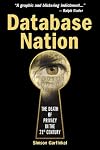
An interesting overview of what data is collected about you and how it is used. The book is a bit dated in sections, it was written pre-9/11 so the chapter on Terrorism is of course way out of date. But, the chapter on Terrorism is also eerily prescient. The most fascinating chapters were the ones on video surveillance and shopping loyalty programs. There are parts of the book that mention data collection on the Internet, and as this book is pre-Google and pre-Cloud, there are some obvious show more holes in that section. But, the gist of the book is that data is being collected, sifted, and used by companies to influence your actions every day. I recommend this book. show less
Lists
Computer Go Brrr (1)
You May Also Like


Associated Authors
Statistics
- Works
- 17
- Members
- 1,571
- Popularity
- #16,432
- Rating
- 3.8
- Reviews
- 10
- ISBNs
- 43
- Languages
- 6
- Favorited
- 1