

J. W. Mackail (1859–1945)
Author of Latin Literature
About the Author
Image credit: Platinum print photographic portrait of Bowyer Nichols, J. W. Mackail, and H. C. Beeching, c. 1882
Works by J. W. Mackail
The springs of Helicon: A study in the progress of English poetry from Chaucer to Milton (A Bison book) (1909) 4 copies
Largeness in literature 3 copies
William Morris: An address delivered the XIth November MDCCCC at Kelmscott House, Hammersmith, before the Hammersmith Socialist Society (2018) 3 copies
The parting of the ways: An address 2 copies
William Morris; an Address Delivered the XIth November MDCCCC at Kelmscott House, Hammersmith, Befor (2023) 1 copy
Two Epigrams : To a Mockingbird [sic] Singing; The Swallow and the Grasshopper : From the Greek Anthology 1 copy, 1 review
William Morris 1 copy
The Progress of Poesy ; an Inaugural Lecture Delivered in the Sheldonian Theatre on the 10Th March 1906 (2013) 1 copy
VIRGILIO Y SU INFLUENCIA 1 copy
Associated Works
Catullus, Tibullus, Pervigilium Veneris (Loeb Classical Library No. 6) (1988) — Translator, some editions — 351 copies, 1 review
Tagged
Common Knowledge
- Legal name
- Mackail, John William
- Birthdate
- 1859-08-26
- Date of death
- 1945-12-13
- Gender
- male
- Education
- Ayr Academy
University of Edinburgh
University of Oxford (Balliol College) - Occupations
- scholar
literary historian
poet
biographer
professor (Poetry) - Organizations
- Ministry of Education
British Academy (President)
University of Oxford - Awards and honors
- Order of Merit (1935)
- Relationships
- Burne-Jones, Margaret (wife)
Thirkell, Angela (daughter)
Mackail, Denis (son)
MacInnes, Colin (grandson)
Burne-Jones, Edward Coley (father-in-law) - Nationality
- Scotland
UK - Birthplace
- Ascog, Isle of Bute, Strathclyde, Scotland
- Place of death
- London, England, UK
- Associated Place (for map)
- Ascog, Isle of Bute, Strathclyde, Scotland
Members
Reviews
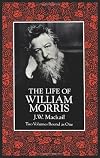
On the western banks of the Mississippi River, southwest of Baton Rouge and northwest of New Orleans, stands a stunning and truly awe-inspiring Greek and Italianate style “White Castle”. This is Nottoway Plantation, the South’s largest antebellum mansion, and now a resort. Completed in 1859, when William Morris was 26. Relating to Morris' age is easy since this massive biography ( The Life of William Morris Volume 1 & The Life of William Morris; Volume 2 ) in one volume ) includes the show more year and his age at the top of every page; a feature every such thorough life story should have. It does this with the grapheme Æ, short for "ætate" ("at the age of"). This quaint if helpful antique feature is also a symptom of the antiquity of the typesetting. I think modern readers will find this a plow to get through, physically, because of that and such features as the ligature for ct, etc.
Anyway, a few years back I stayed at Nottoway and enjoyed very much their William Morris Woodpecker Tapestry.
‘I once a king and chief now am the tree bark’s thief
ever twixt trunk and leaf chasing the prey’. (1885)
This piece was designed by William Morris. The image was inspired by the Roman poet Ovid's story of Picus; an Italian King that was turned into a woodpecker by a sorceress after refusing to become her lover. I know of the Morris chair then - a mere footnote in this accomplished life I have now learned - and I was fascinated by the breadth of talent and execution suggested by the tapestry and chair. Now I have read of this life where the opportunity to freedom given by an inherited copper mine Morris took to indulge in education, literature, poetry, language, writing, designing, building preservation, font design, Socialist rabble-rousing, and more.
This life is told largely through "Topsy"'s own words and those of his intimates through correspondence and other primary sources. The passion of his belief in the quality of life enabled by functional art comes through in his own voice: "Time was when everybody that made anything made a work of art besides a useful piece of goods, and it gave them pleasure to make it. Whatever I doubt, I have no doubt of that." (1881)
In his "Antiscrape" movement he sought to preserve buildings, etc. as they were - not with the adulteration of "restoration". Here again, he waxes eloquent as well as fervent:
It [Westminster Abbey] was the work of the inseparable will of a body of men, who worked as they lived, because they could do no otherwise, and unless you can bring those men back from the dead, you cannot "restore" one verse of their epic. Rewrite the lost trilogies of Aeschylus, put a beginning and end to the "Fight at Finsbury," finish the Squire's tale for Chaucer, even if you cannot
"call up him that left half-told
The story of Cambuscan bold,"
and if you can succeed in that, you may then "restore" Westminster Abbey. This quote is preserved up at Marxists.org as also a testament to his ardent socialism that he promoted and poured so much of his energy into.
In his "Antiscrape" movement he sought to preserve buildings, etc. as they were - not with the adulteration of "restoration". It was not only historical monuments that aroused his intensity. His biographer tells us of his passionate philosophy of the home: "To him the House Beautiful represented the visible form of life itself. Not only as a craftsman and manufacturer, a worker in dyed stuffs and textiles and glass, a pattern designer and decorator, but throughout the whole range of life, he was from first to last the architect, the master-craftsman, whose range of work was so phenomenal and his sudden transitions from one to another form of productive energy so swift and perplexing because, himself secure in the centre, he struck outwards to any point on the circumference with equal directness, with equal precision, unperplexed by artificial subdivisions of art, and untrammelled by any limiting rules of professional custom."
This view and his considered station in life wedded with his socialistic concern for the working man: "Over and over again have I asked myself why should not my lot be the common lot. My work is simple work enough; much of it, nor that the least, pleasant, any man of decent intelligence could do. ... Indeed I hae been ashamed when I have thought of the contrast between my happy working hours and the unpraised, unrewarded, monotonous drudgery which most men are condemned to. Nothing shall convince me that such laour as this is good or necessary to civilization.”
A philosopher-king of art and design. show less
Anyway, a few years back I stayed at Nottoway and enjoyed very much their William Morris Woodpecker Tapestry.
‘I once a king and chief now am the tree bark’s thief
ever twixt trunk and leaf chasing the prey’. (1885)
This piece was designed by William Morris. The image was inspired by the Roman poet Ovid's story of Picus; an Italian King that was turned into a woodpecker by a sorceress after refusing to become her lover. I know of the Morris chair then - a mere footnote in this accomplished life I have now learned - and I was fascinated by the breadth of talent and execution suggested by the tapestry and chair. Now I have read of this life where the opportunity to freedom given by an inherited copper mine Morris took to indulge in education, literature, poetry, language, writing, designing, building preservation, font design, Socialist rabble-rousing, and more.
This life is told largely through "Topsy"'s own words and those of his intimates through correspondence and other primary sources. The passion of his belief in the quality of life enabled by functional art comes through in his own voice: "Time was when everybody that made anything made a work of art besides a useful piece of goods, and it gave them pleasure to make it. Whatever I doubt, I have no doubt of that." (1881)
In his "Antiscrape" movement he sought to preserve buildings, etc. as they were - not with the adulteration of "restoration". Here again, he waxes eloquent as well as fervent:
It [Westminster Abbey] was the work of the inseparable will of a body of men, who worked as they lived, because they could do no otherwise, and unless you can bring those men back from the dead, you cannot "restore" one verse of their epic. Rewrite the lost trilogies of Aeschylus, put a beginning and end to the "Fight at Finsbury," finish the Squire's tale for Chaucer, even if you cannot
"call up him that left half-told
The story of Cambuscan bold,"
and if you can succeed in that, you may then "restore" Westminster Abbey. This quote is preserved up at Marxists.org as also a testament to his ardent socialism that he promoted and poured so much of his energy into.
In his "Antiscrape" movement he sought to preserve buildings, etc. as they were - not with the adulteration of "restoration". It was not only historical monuments that aroused his intensity. His biographer tells us of his passionate philosophy of the home: "To him the House Beautiful represented the visible form of life itself. Not only as a craftsman and manufacturer, a worker in dyed stuffs and textiles and glass, a pattern designer and decorator, but throughout the whole range of life, he was from first to last the architect, the master-craftsman, whose range of work was so phenomenal and his sudden transitions from one to another form of productive energy so swift and perplexing because, himself secure in the centre, he struck outwards to any point on the circumference with equal directness, with equal precision, unperplexed by artificial subdivisions of art, and untrammelled by any limiting rules of professional custom."
This view and his considered station in life wedded with his socialistic concern for the working man: "Over and over again have I asked myself why should not my lot be the common lot. My work is simple work enough; much of it, nor that the least, pleasant, any man of decent intelligence could do. ... Indeed I hae been ashamed when I have thought of the contrast between my happy working hours and the unpraised, unrewarded, monotonous drudgery which most men are condemned to. Nothing shall convince me that such laour as this is good or necessary to civilization.”
A philosopher-king of art and design. show less
Two Epigrams : To a Mockingbird [sic] Singing; The Swallow and the Grasshopper : From the Greek Anthology by John William (1859-1945) translator Mackail

According to the Answers.com dictionary, an epigram is a short, polished, pithy saying, usually in verse, often with a satiric or paradoxical twist at the end. The term was originally applied by the Greeks to the inscriptions on stones. The title is printed in black and gilt and some of the tiny illustrations are hand-colored. The title of the first epigram is 'To a blackbird singing (cf. caption, p. [7]), ' / Marcus Argentarius and was selected from the prose translations of Professor J.W. show more Mackail (1890). The Swallow and the Grasshopper is attributed to Euenus / " …printed letterpress in an edition of fifty."--Colophon. This is copy #39, signed by Rachel Barahal. This work has a jewel-like quality and is cited in R.C. Bradbury’s “20th century U.S. miniature books,âÂ? p. 191, no. 2. Gift of Esther Beamer. show less

Edition: // Descr: x, 159 p. 19 cm. // Series: Our Debt to Greece and Rome Call No. { 873.09 V81vm-D } Series Edited by George Depue Hadzsits and David Moore Robinson Contains Notes and Bibliography. // //

Original Greek text with English translations
You May Also Like


Associated Authors
Statistics
- Works
- 41
- Also by
- 5
- Members
- 316
- Popularity
- #74,770
- Rating
- 3.8
- Reviews
- 4
- ISBNs
- 46