
Guy Halsall
Author of Worlds of Arthur: Facts and Fictions of the Dark Ages
About the Author
Guy Halsall is Professor of History at the University of York.
Image credit: Guy Halsall
Works by Guy Halsall
Humour, History and Politics in Late Antiquity and the Early Middle Ages (2002) — Editor — 26 copies
Early Medieval Cemeteries: An Introduction to Burial Archaeology in the Post-Roman West (New Light on the Dark Ages) (1995) 9 copies
Associated Works
Towns in Transition: Urban Evolution in Late Antiquity and the Early Middle Ages (1996) — Contributor — 4 copies
Desperta Ferro Especiales. La legión romana (VII) El ocaso del Imperio (2020) — Contributor — 3 copies
Desperta Ferro. El rey Arturo — Contributor — 2 copies
Tagged
Common Knowledge
- Canonical name
- Halsall, Guy
- Legal name
- Halsall, Guy Richard William
- Birthdate
- 1964-08-31
- Gender
- male
- Education
- University of York
- Occupations
- historian
lecturer - Organizations
- Birkbeck College of the University of London
University of York - Nationality
- UK
- Associated Place (for map)
- UK
Members
Reviews
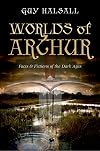
Worlds of Arthur: Facts and Fictions of the Dark Ages, by Guy Halsall, is about the legendary King Arthur, where by "about" I mean "not about".
One could be forgiven for thinking "about" means "about". After all, there's Arthur's name right there in the title. In the blurb on Amazon, Arthur's name appears nine times along with "Lancelot, Guinevere, Galahad and Gawain, Merlin, Excalibur, the Lady in the Lake, the Sword in the Stone, Camelot, the Round Table." The introduction talks a lot about show more Arthur, as do the first few chapters.
So there's the first problem with the book, or at least with the title and the marketing of the book as well as its first pages: They lead you to expect an entirely different book than what this is. It is not about Arthur. Having counted occurrences of Arthur's name in the promotional material, now let's count it in Chapter 9 of the book: Twice. In Chapter 10, not at all. By the end of Chapter 11, we've seen his name infrequently enough that it's no surprise to read, "Indeed, whether or not one of the post-imperial British kings was called Arthur is probably the least interesting question that one can ask about this important period."
So what is the book about? Having read it... I'm not sure I know. I mean, if there's a cogent, 1-sentence theme of the book, I'm not sure I can come up with it. What Halsall does in the book is to discuss the evidence regarding post-imperial Britain — written accounts from that time and soon after, and archaeological evidence; he summarizes some of the ideas people have had about this place and period in history, and the evolution of those ideas; and he gives his own views on what is and is not known, and interpretations he believes are plausible.
(I am no historian nor much of a student of history, so keep that in mind.)
Halsall argues that much that has been believed is based on bad assumptions, misinterpretation of the evidence, and wishful thinking. The arrival of the Saxons in Britain, for example, has been claimed to have occurred in the year 449, "a date as evidently precise and important as 1066" but for which there is no real evidence. The usual picture is of a wholesale Saxon invasion, pushing the British natives along a front moving east to west until Angeln was emptied and England was Saxon. There apparently has recently been a contrary view claiming that the Saxon migration never happened at all. (In this view the English language's Germanic forebear was spoken in Britain from a much earlier time.) Halsall dismisses the latter as ridiculous, but spends much more time arguing against the former and in favor of a scenario where the Saxon migration began, perhaps as mercenaries for Magnus Maximus, in the late 4th century, and gradually continued over the following decades, not in a simple east-to-west moving front, not simply as a British-versus-Saxon conflict, but as something more subtle and complex than that. In fact, he argues, it is likely that many of the Saxons were British: that is, people who had Saxon names, spoke the Saxon language, and kept Saxon customs, but who were the descendants of British forebears. Ethnic identity, that is, is to some degree changeable and chooseable.
I wouldn't say Halsall changed my mind about anything, because I didn't know enough about post-imperial Britain to change. I have a slightly better grasp of the facts now, and my cautious and skeptical self appreciates that Halsall seems to treat the subject even-handedly, being careful to point out where facts are lacking (and they are lacking to a great degree) and where unfounded assumptions have been made. So his picture of the period, which he acknowledges is plausible but not to be regarded as proven, seems to make some sense. Given that, I suspect Worlds of Arthur may be the best available book on the subject today — though, again, I am no expert, and I haven't read any others, so really I'm only guessing.
It's a shame, then, that the book isn't written better. Structurally it's a mess. Halsall keeps coming back to topics he's discussed before, trying to make some sort of a new point or come at it from a new angle, the result being that what he has to say on the subject gets fragmented into shards scattered through the book, complete with forward and backward cross references, and he has to resort to howlers like this: "The Chronicle's authors were thus doing something rather similar to what in Chapter 8 I will suggest the author of the Historia Brittonum might have been doing a couple of generations previously." (That is, "I'm not going to tell you the point of what I just said, because it's too similar to the point I'm going to make later about something that occurred earlier.")
I appreciate that Halsall is careful not to jump to conclusions and assign "obvious" meanings to things that in fact could have meant something entirely different. Such is the nature of inquiry in progress, and too often popularizations and pseudo-scholarly books try to pull certainty out of an empty hat. The problem is, though, that this kind of caution can make for rather confusing and un-compelling reading: "In the current state of play it is difficult to know what these forts represent, or which sort of site is the more typical... It is possible that early, large sites like Burghead represent an earlier phase of large, but perhaps quite weak, kingdoms and that the small sites represent the domination of smaller areas". So? Too many caveats and too few firm conclusions make for a problematic book; it's hard to know how to overcome that, other than perhaps by deciding it's not time to write a book on the subject yet. In that unfortunate sense, Worlds of Arthur may be ahead of its time. show less
One could be forgiven for thinking "about" means "about". After all, there's Arthur's name right there in the title. In the blurb on Amazon, Arthur's name appears nine times along with "Lancelot, Guinevere, Galahad and Gawain, Merlin, Excalibur, the Lady in the Lake, the Sword in the Stone, Camelot, the Round Table." The introduction talks a lot about show more Arthur, as do the first few chapters.
So there's the first problem with the book, or at least with the title and the marketing of the book as well as its first pages: They lead you to expect an entirely different book than what this is. It is not about Arthur. Having counted occurrences of Arthur's name in the promotional material, now let's count it in Chapter 9 of the book: Twice. In Chapter 10, not at all. By the end of Chapter 11, we've seen his name infrequently enough that it's no surprise to read, "Indeed, whether or not one of the post-imperial British kings was called Arthur is probably the least interesting question that one can ask about this important period."
So what is the book about? Having read it... I'm not sure I know. I mean, if there's a cogent, 1-sentence theme of the book, I'm not sure I can come up with it. What Halsall does in the book is to discuss the evidence regarding post-imperial Britain — written accounts from that time and soon after, and archaeological evidence; he summarizes some of the ideas people have had about this place and period in history, and the evolution of those ideas; and he gives his own views on what is and is not known, and interpretations he believes are plausible.
(I am no historian nor much of a student of history, so keep that in mind.)
Halsall argues that much that has been believed is based on bad assumptions, misinterpretation of the evidence, and wishful thinking. The arrival of the Saxons in Britain, for example, has been claimed to have occurred in the year 449, "a date as evidently precise and important as 1066" but for which there is no real evidence. The usual picture is of a wholesale Saxon invasion, pushing the British natives along a front moving east to west until Angeln was emptied and England was Saxon. There apparently has recently been a contrary view claiming that the Saxon migration never happened at all. (In this view the English language's Germanic forebear was spoken in Britain from a much earlier time.) Halsall dismisses the latter as ridiculous, but spends much more time arguing against the former and in favor of a scenario where the Saxon migration began, perhaps as mercenaries for Magnus Maximus, in the late 4th century, and gradually continued over the following decades, not in a simple east-to-west moving front, not simply as a British-versus-Saxon conflict, but as something more subtle and complex than that. In fact, he argues, it is likely that many of the Saxons were British: that is, people who had Saxon names, spoke the Saxon language, and kept Saxon customs, but who were the descendants of British forebears. Ethnic identity, that is, is to some degree changeable and chooseable.
I wouldn't say Halsall changed my mind about anything, because I didn't know enough about post-imperial Britain to change. I have a slightly better grasp of the facts now, and my cautious and skeptical self appreciates that Halsall seems to treat the subject even-handedly, being careful to point out where facts are lacking (and they are lacking to a great degree) and where unfounded assumptions have been made. So his picture of the period, which he acknowledges is plausible but not to be regarded as proven, seems to make some sense. Given that, I suspect Worlds of Arthur may be the best available book on the subject today — though, again, I am no expert, and I haven't read any others, so really I'm only guessing.
It's a shame, then, that the book isn't written better. Structurally it's a mess. Halsall keeps coming back to topics he's discussed before, trying to make some sort of a new point or come at it from a new angle, the result being that what he has to say on the subject gets fragmented into shards scattered through the book, complete with forward and backward cross references, and he has to resort to howlers like this: "The Chronicle's authors were thus doing something rather similar to what in Chapter 8 I will suggest the author of the Historia Brittonum might have been doing a couple of generations previously." (That is, "I'm not going to tell you the point of what I just said, because it's too similar to the point I'm going to make later about something that occurred earlier.")
I appreciate that Halsall is careful not to jump to conclusions and assign "obvious" meanings to things that in fact could have meant something entirely different. Such is the nature of inquiry in progress, and too often popularizations and pseudo-scholarly books try to pull certainty out of an empty hat. The problem is, though, that this kind of caution can make for rather confusing and un-compelling reading: "In the current state of play it is difficult to know what these forts represent, or which sort of site is the more typical... It is possible that early, large sites like Burghead represent an earlier phase of large, but perhaps quite weak, kingdoms and that the small sites represent the domination of smaller areas". So? Too many caveats and too few firm conclusions make for a problematic book; it's hard to know how to overcome that, other than perhaps by deciding it's not time to write a book on the subject yet. In that unfortunate sense, Worlds of Arthur may be ahead of its time. show less
 This review was written for LibraryThing Early Reviewers.
This is one of those books were I find it hard to say if I liked it or not. On the one hand, I disagree with some of Halsall's major conclusions (and in at least one case I'd say subsequent genetic work has proven him wrong and me right), on the other it was certainly an interesting read, making me think and discuss the subject with fellow mil-hist enthusiasts. I'm definitely happy to have read it.
So I guess it's a book to read if you want something thought-provoking rather than something show more definitive. (Not that I think there is something definitive to read on the subject.) show less
So I guess it's a book to read if you want something thought-provoking rather than something show more definitive. (Not that I think there is something definitive to read on the subject.) show less
How to get your doctorate in Arthuriana (I prefer Arthurology) in one amazing book. This book is not for the faint of heart or the casual Arthurian reader. If you love King Arthur and the history and myth surrounding him, you will find no better reference book. Broken into four distinct sections and subdivided therein to help you move around the book, if need be, this book is an extremely well written in depth study of one of Great Britain's most illustrated knights. This includes both real show more or fictional characters. Legends, the stories behind the legends and variations of the legends can be found in these pages. The Song of Roland was a great story, Homer's Iliad and Odyssesy were epic poems and this is an epic work just waiting for true Arthurian lovers to read, chew over, and banter about with other likewise lovers. You can always use this book as a reference, but don't attempt a full read of this book unless you really mean it. Like Tolkien's Silmarillion with his in depth study of Middle Earth, Worlds of Arthur by Guy Halsall is a full blown thesis into the world of King Arthur. I loved it!! show less
This review was written for LibraryThing Early Reviewers.There is a lot of good information in this book, but I'm afraid it doesn't do what it sets out to do, and I'm afraid it is aimed at entirely the wrong audience.
Halsall states in the introduction that his goal is to write a book for non-academics that debunks the ideas found in most books about Arthur that are aimed at a popular audience. Bookstores are full of books that claim to tell the truth about the historical Arthur, and many of them claim to have uncovered new and exciting show more information. The book that Halsall says he is going to write needs to be written: we need a book for a popular audience that explains how little we know about King Arthur and explains why those other books are wrong.
Unfortunately, this is not that book.
I should point out that I am not part of Halsall's intended audience: I have an academic background, and my PhD dissertation uses a lot of the same sources that Halsall uses in this book. So it is quite possible that I am underestimating Halsall's intended audience.
Having said that, I think Halsall's intended audience is going to be very disappointed with this book, primarily because the title gives the wrong impression. In the first chapters, Halsall describes all of the sources we have for this period, and points out that they say basically nothing about Arthur. Then, for the rest of the book, he talks about new interpretations of the late Roman/early Anglo-Saxon period in Britain.
Since the book is titled "The Worlds of Arthur", and since he claims that he is going to provide information for Arthurian enthusiasts, people are going to expect some information about Arthur in this book, when there is none. Halsall's point is a very important one to make: his point is that the historical sources say absolutely nothing reliable about Arthur, and the quest for a historical Arthur is futile. It is very important to make that point to a popular audience, and Halsall makes it well.... but if this is going to be an Arthurian book, then the rest of the book should really talk about why people continue to search for a historical Arthur, or offer more detailed refutations of other books that claim to have found a historical Arthur.
Another major problem with this book is that Halsall assumes that his audience has read enough about Arthur to know that if there was a historical Arthur, he existed in the 5th or 6th century. I don't think that's a safe assumption. When most people think of Arthur, they think of the high Middle Ages, with shining armor and jousting. I think a lot of readers will have absolutely no clue why Halsall is going on about the 5th century. He also provides no historical background: the straw man he is fighting for most of the book is the idea that Britain was heavily Romanized, that Anglo-Saxons came in from the east and fought their way west, and that Britain became English instead of Roman. However, he never provides that background: readers who don't already have some knowledge of Dark Age Britain will have no idea what Halsall is arguing against.
I also wish Halsall would engage more directly with some of the books he argues against in his first chapters. He is refuting claims made by those who think they have found the historical Arthur, yet he never mentions any of these authors or books by name. It's very polite of him to be so circumspect about the people he is lambasting, but I'm not sure that his audience will understand the subtlety.
Finally, I think most of this book will be of far more interest to budding academics than to a popular audience, so Halsall does his readers a disservice by not providing footnotes and other apparatus that will be useful to his academic audience.
I really wanted to like this book. But I think it's a classic example of the giant rift between academic history and popular history. We need more academics writing popular history: a lot of the history books written for a general audience are just bad history. But academics don't seem to know how to write for a popular audience, and this book shows exactly what happens when they try. Halsall starts with a topic that will be exciting to a popular audience, and then proceeds to bore them to death by not providing enough background material, and by not doing what he promises to do in the opening pages. show less
Halsall states in the introduction that his goal is to write a book for non-academics that debunks the ideas found in most books about Arthur that are aimed at a popular audience. Bookstores are full of books that claim to tell the truth about the historical Arthur, and many of them claim to have uncovered new and exciting show more information. The book that Halsall says he is going to write needs to be written: we need a book for a popular audience that explains how little we know about King Arthur and explains why those other books are wrong.
Unfortunately, this is not that book.
I should point out that I am not part of Halsall's intended audience: I have an academic background, and my PhD dissertation uses a lot of the same sources that Halsall uses in this book. So it is quite possible that I am underestimating Halsall's intended audience.
Having said that, I think Halsall's intended audience is going to be very disappointed with this book, primarily because the title gives the wrong impression. In the first chapters, Halsall describes all of the sources we have for this period, and points out that they say basically nothing about Arthur. Then, for the rest of the book, he talks about new interpretations of the late Roman/early Anglo-Saxon period in Britain.
Since the book is titled "The Worlds of Arthur", and since he claims that he is going to provide information for Arthurian enthusiasts, people are going to expect some information about Arthur in this book, when there is none. Halsall's point is a very important one to make: his point is that the historical sources say absolutely nothing reliable about Arthur, and the quest for a historical Arthur is futile. It is very important to make that point to a popular audience, and Halsall makes it well.... but if this is going to be an Arthurian book, then the rest of the book should really talk about why people continue to search for a historical Arthur, or offer more detailed refutations of other books that claim to have found a historical Arthur.
Another major problem with this book is that Halsall assumes that his audience has read enough about Arthur to know that if there was a historical Arthur, he existed in the 5th or 6th century. I don't think that's a safe assumption. When most people think of Arthur, they think of the high Middle Ages, with shining armor and jousting. I think a lot of readers will have absolutely no clue why Halsall is going on about the 5th century. He also provides no historical background: the straw man he is fighting for most of the book is the idea that Britain was heavily Romanized, that Anglo-Saxons came in from the east and fought their way west, and that Britain became English instead of Roman. However, he never provides that background: readers who don't already have some knowledge of Dark Age Britain will have no idea what Halsall is arguing against.
I also wish Halsall would engage more directly with some of the books he argues against in his first chapters. He is refuting claims made by those who think they have found the historical Arthur, yet he never mentions any of these authors or books by name. It's very polite of him to be so circumspect about the people he is lambasting, but I'm not sure that his audience will understand the subtlety.
Finally, I think most of this book will be of far more interest to budding academics than to a popular audience, so Halsall does his readers a disservice by not providing footnotes and other apparatus that will be useful to his academic audience.
I really wanted to like this book. But I think it's a classic example of the giant rift between academic history and popular history. We need more academics writing popular history: a lot of the history books written for a general audience are just bad history. But academics don't seem to know how to write for a popular audience, and this book shows exactly what happens when they try. Halsall starts with a topic that will be exciting to a popular audience, and then proceeds to bore them to death by not providing enough background material, and by not doing what he promises to do in the opening pages. show less
This review was written for LibraryThing Early Reviewers.Lists
Awards
You May Also Like


Associated Authors
Statistics
- Works
- 9
- Also by
- 8
- Members
- 417
- Popularity
- #58,442
- Rating
- 4.0
- Reviews
- 13
- ISBNs
- 37
- Languages
- 1

