
Roger Collins (1) (1949–)
Author of Early Medieval Europe, 300-1000
For other authors named Roger Collins, see the disambiguation page.
About the Author
Roger Collins is Honorary Fellow in History at the University of Edinburgh.
Works by Roger Collins
Charlemagne's Heir: New Perspectives on the Reign of Louis the Pious (814-840) (1990) — Editor — 6 copies
Associated Works
The Cambridge Ancient History, Vol. 14: Late Antiquity: Empire and Successors, A.D. 425–600 (2001) — Contributor — 91 copies, 1 review
Papers of the Liverpool Latin Seminar, Vol 4, 1983 (Arca, 11) (v. 4) (1984) — Contributor — 2 copies
Tagged
Common Knowledge
- Birthdate
- 1949-09-02
- Gender
- male
- Awards and honors
- Honorary Fellow in history, University of Edinburgh
- Nationality
- UK
- Associated Place (for map)
- UK
Members
Reviews

This is an unusual book in that it covers the first century of the Arab conquest and occupation of Spain (8th Century) and draws on both Christian and Arab sources.
It leans to the academic side with the advantage that the reader can have confidence in the events, but the disadvantage that progress can be slow, as the author balances the different sources and assesses their reliability. The general picture is that Arab sources considerably distorted facts in favour of good show more storytelling/propaganda and Christian sources are very few and far between since the Peninsula was under Arab domination - although there is the valuable Visigothic Chronicle 754.
An astonishing fact is that what started as little more than Arab raids in 711 (after their rapid subjugation of Christian North Africa) turned into an invasion, and 12 years later the occupation of the whole of Spain apart from the Basque country and Asturias in the mountainous north. In fact 10 years after their arrival, most of their campaigns were on the other side of the Pyrenees in southern Aquitaine and Provence, with a small force estimated at not more than 15.000 men (Syrians & Berbers).
The book shows that after their first defeats, in what is now the south of France, the Christian-Islamic border stabilized on the Pyrenees and the Arabs turned to organizing their new territories. They used the North African model and Al-Andalus became politically a dependency of Ifriqiya (North Africa) and was ruled from Kairouan (Cairo).
Taxes were not levied on Arabs, but Christians were obliged to provide an annual per capita quantity of produce such as grains, olives, honey etc. and a gold coin, but interestingly Christianity and Latin were not eliminated from the Peninsula in the way they had been in North Africa. Collins suggests that this may have been because of the initial small number of Arabs and Berbers, and because they only instituted direct rule by governors in some towns while leaving the Christian leadership in place in others while exacting tribute.
In any event, they settled on a fortress system particularly in the south and centre of the country manned by Arabs and Berbers and without the assimilation with the local population that had been a characteristic of the Visigothic rulers.
The author interestingly shows that the course of the following centuries of Arab occupation was set in 750 with far away events in Syria, at the centre of the Islamic Empire. The Umayyad dynasty was successfully challenged by the Abbasids. Most of the Umayyads were killed but the grandson of Caliph Hirsham escaped ( in a much repeated romantic story), to North Africa where he was sheltered by Berber tribesmen. By 756 he was in Spain and gained support from Syrian troops in the South-East provinces who were sympathetic to the Umayyads.
To cut a long story short his revolt was successful and Spain became an Umayyad anomaly in an Abbasid Empire - breaking links with North Africa and Syria and becoming a de facto independent Arab state. Collins shows Abd ar-Rahman gradually extending his power throughout the Peninsula and as he says, "On the other hand, there also takes place a genuine tidying up of the participants. Some of the losers in the game of the 8th century disappear. Messianic Berbers, Arab factions deriving from ever more distant rivalries in the vanished Syria of the Umayyad Caliphate, the partisans of Yusuf al-Fihri, and secret Abbasid governors all vanish or cease to loom large in the record of events. The reader may regret their passing, but their contemporaries probably did not." show less
It leans to the academic side with the advantage that the reader can have confidence in the events, but the disadvantage that progress can be slow, as the author balances the different sources and assesses their reliability. The general picture is that Arab sources considerably distorted facts in favour of good show more storytelling/propaganda and Christian sources are very few and far between since the Peninsula was under Arab domination - although there is the valuable Visigothic Chronicle 754.
An astonishing fact is that what started as little more than Arab raids in 711 (after their rapid subjugation of Christian North Africa) turned into an invasion, and 12 years later the occupation of the whole of Spain apart from the Basque country and Asturias in the mountainous north. In fact 10 years after their arrival, most of their campaigns were on the other side of the Pyrenees in southern Aquitaine and Provence, with a small force estimated at not more than 15.000 men (Syrians & Berbers).
The book shows that after their first defeats, in what is now the south of France, the Christian-Islamic border stabilized on the Pyrenees and the Arabs turned to organizing their new territories. They used the North African model and Al-Andalus became politically a dependency of Ifriqiya (North Africa) and was ruled from Kairouan (Cairo).
Taxes were not levied on Arabs, but Christians were obliged to provide an annual per capita quantity of produce such as grains, olives, honey etc. and a gold coin, but interestingly Christianity and Latin were not eliminated from the Peninsula in the way they had been in North Africa. Collins suggests that this may have been because of the initial small number of Arabs and Berbers, and because they only instituted direct rule by governors in some towns while leaving the Christian leadership in place in others while exacting tribute.
In any event, they settled on a fortress system particularly in the south and centre of the country manned by Arabs and Berbers and without the assimilation with the local population that had been a characteristic of the Visigothic rulers.
The author interestingly shows that the course of the following centuries of Arab occupation was set in 750 with far away events in Syria, at the centre of the Islamic Empire. The Umayyad dynasty was successfully challenged by the Abbasids. Most of the Umayyads were killed but the grandson of Caliph Hirsham escaped ( in a much repeated romantic story), to North Africa where he was sheltered by Berber tribesmen. By 756 he was in Spain and gained support from Syrian troops in the South-East provinces who were sympathetic to the Umayyads.
To cut a long story short his revolt was successful and Spain became an Umayyad anomaly in an Abbasid Empire - breaking links with North Africa and Syria and becoming a de facto independent Arab state. Collins shows Abd ar-Rahman gradually extending his power throughout the Peninsula and as he says, "On the other hand, there also takes place a genuine tidying up of the participants. Some of the losers in the game of the 8th century disappear. Messianic Berbers, Arab factions deriving from ever more distant rivalries in the vanished Syria of the Umayyad Caliphate, the partisans of Yusuf al-Fihri, and secret Abbasid governors all vanish or cease to loom large in the record of events. The reader may regret their passing, but their contemporaries probably did not." show less
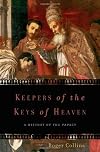
4559. Keepers of the Keys A History of the Papacy, by Roger Collins (read 16 Apr 2009) This tells the story pretty straightforwardly, with no undue ideological bias. He is probably overly dismissive of the early Popes, being unwilling to give the fragmentary records on them as much credence as other historians do. His assessment of some Popes often denigrated, e.g., John XII, is not as condemnatory as is usual with papal historians. I much enjoyed reading this book even though there are sad show more parts in the Church's history and the author does not gloss over such. A rather surprising error is on page 480 where he says Pope Pius XII's second and last consistory was in 1956. It was actually held in 1953, and the announcement of it was about Dec 1, 1952--I remember because I was much interested and it was hard to get information about the men named to be Cardinals at Jacksonville Naval Air Station, where I was then stationed. show less
Good Read. Well written and easy to read. By no means a complete history (obviously impossible in one volume) but it doesn't try to be. The first few chapters are more honest than most, acknowledging facts like...There was no such office as "bishop" in the first few centuries. However, it doesn't suggest our faith, belief, history are wrong. They may require a vocabulary shift, though.
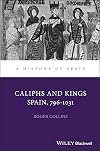
This was a confusing period and I'm not sure I understand all of the players on this crowded stage.
None the less I appreciate the information in this even if I'm unsure of all of the conclusions reached.
None the less I appreciate the information in this even if I'm unsure of all of the conclusions reached.
Lists
You May Also Like


Associated Authors
Statistics
- Works
- 14
- Also by
- 8
- Members
- 1,042
- Popularity
- #24,714
- Rating
- 3.7
- Reviews
- 8
- ISBNs
- 72
- Languages
- 4