
María Rosa Menocal (1953–2012)
Author of The Ornament of the World: How Muslims, Jews and Christians Created a Culture of Tolerance in Medieval Spain
About the Author
Maria Rosa Menocal is R. Selden Rose Professor of Spanish and Portuguese and head of the Whitney Humanities Center at Yale University. She lives in New Haven, CT.
Works by María Rosa Menocal
The Ornament of the World: How Muslims, Jews and Christians Created a Culture of Tolerance in Medieval Spain (2002) 1,212 copies, 20 reviews
The Arts of Intimacy: Christians, Jews, and Muslims in the Making of Castilian Culture (2008) 136 copies, 3 reviews
Writing Without Footnotes: The Role of the Medievalist in Contemporary Intellectual Life (2001) 2 copies
Associated Works
Tagged
Common Knowledge
- Canonical name
- Menocal, María Rosa
- Legal name
- Menocal, María Rosa
- Birthdate
- 1953-04-09
- Date of death
- 2012-10-15
- Gender
- female
- Education
- University of Pennsylvania (PhD)
- Occupations
- Professor of Humanities
- Organizations
- Yale University
- Awards and honors
- Medieval Academy of America (Fellow, 2011)
- Short biography
- Maria Rosa Menocal is Sterling Professor of the Humanities at Yale University, where she is Director of the Whitney Humanities Center. She is author of The Ornament of the World: How Muslims, Jews, and Christians Created a Culture of Tolerance in Medieval Spain and Shards of Love: Exile and the Origins of the Lyric.
- Nationality
- Cuba (birth)
- Birthplace
- Cuba
- Place of death
- Killingworth, Connecticut, Etats-Unis
- Associated Place (for map)
- Cuba
Members
Discussions
Group Read - Ornament of the World - Science Religion History in 75 Books Challenge for 2014 (August 2014)
Reviews
The Ornament of the World: How Muslims, Jews and Christians Created a Culture of Tolerance in Medieval Spain by María Rosa Menocal
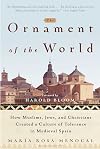
Definitely recommend this well-organized and well-told account of the history of what might be called “the Moorish years” of Andalusian history.
What I most appreciated about the book is that Menocal doesn’t just make this about wars, borders, plagues, and religious conflict, as so many other histories do. She’s more interested in telling the story of how certain attributes of Moorish culture –their ability to assimilate into different cultures, their robust language, their elegant show more architecture, their intellectual curiosity, their storytelling traditions, their social egalitarianism, their respect for fellow “Peoples of the Book” – created a brief window of opportunity for people representing a variety of different cultures, religions and languages not just to coexist, but to cross-pollinate: genetically, ethnically, linguistically, intellectually.
And now that I’ve seen it, I can’t unsee it: the linguistic traces of Arabic in modern Spanish language, the Arabic foods and ingredients absorbed into European culinary traditions, the Arabic architecture of Christian churches and Jewish synagogues, the critical contributions of Arabic scientists and mathematicians, the influence of as Ibn Rushd/Averrios on Thomas Aquinas, the influence of A Thousand and One Nights on Bocaccio, on Chaucer, on Cervantes ….
Which is not intended to imply that Menocal's choice to focus on culture in any way undermines the value of this book as a history of the years ~750-1450. The author most definitely knows her period and how to present the rapid succession of leaders, countries, empires, and religions as a clear and compelling narrative. Her particular gift: selecting anecdotes that don’t merely repeat information she’s already presented, but that add additional context and depth.
The book works as a history but also as an elegy, a reflection upon a brief moment in time when political, racial, and religious intolerance relented long enough to provide a glimpse of what the world might have looked like without them. Recommended without any caveats or conditions. show less
What I most appreciated about the book is that Menocal doesn’t just make this about wars, borders, plagues, and religious conflict, as so many other histories do. She’s more interested in telling the story of how certain attributes of Moorish culture –their ability to assimilate into different cultures, their robust language, their elegant show more architecture, their intellectual curiosity, their storytelling traditions, their social egalitarianism, their respect for fellow “Peoples of the Book” – created a brief window of opportunity for people representing a variety of different cultures, religions and languages not just to coexist, but to cross-pollinate: genetically, ethnically, linguistically, intellectually.
And now that I’ve seen it, I can’t unsee it: the linguistic traces of Arabic in modern Spanish language, the Arabic foods and ingredients absorbed into European culinary traditions, the Arabic architecture of Christian churches and Jewish synagogues, the critical contributions of Arabic scientists and mathematicians, the influence of as Ibn Rushd/Averrios on Thomas Aquinas, the influence of A Thousand and One Nights on Bocaccio, on Chaucer, on Cervantes ….
Which is not intended to imply that Menocal's choice to focus on culture in any way undermines the value of this book as a history of the years ~750-1450. The author most definitely knows her period and how to present the rapid succession of leaders, countries, empires, and religions as a clear and compelling narrative. Her particular gift: selecting anecdotes that don’t merely repeat information she’s already presented, but that add additional context and depth.
The book works as a history but also as an elegy, a reflection upon a brief moment in time when political, racial, and religious intolerance relented long enough to provide a glimpse of what the world might have looked like without them. Recommended without any caveats or conditions. show less
The ornament of the world : how Muslims, Jews, and Christians created a culture of tolerance in medieval Spain by María Rosa Menocal
A well-written and interesting history of Spain from the eighth to the seventeenth century with a focus on the multi-ethnic, multi-faith states in the Iberian peninsula under Muslim (and Christian) rule. After a concise, detailed history of the Caliphate and Visigothic Spain, she gives a sort of chronological episodic history of the next seven centuries, often focusing on particular individuals and their works. While these episodes feature an individual or two, she uses them to give a show more snapshot of the history and culture at that particular moment, with examples of philosophy, Kaballah, poetry, and music. At times I felt that she was being hagiographic, playing up the talents of specific men and the tolerance of a particular ruler or era, downplaying some of the intolerance that was going on, sometimes only making passing references to things like anti-Jewish rioting that resulted in massacres. I still appreciate her arguments that this was an extraordinary period with a confluence of circumstances, personalities, geography, and religious cultures. Highly recommended for those with an interest in the history of Islam, Christianity, the Middle Ages, and Spain (in fact, now I want to go back to Spain and see these Alhambras, cathedrals, and tombs!). show less
The Ornament of the World: How Muslims, Jews and Christians Created a Culture of Tolerance in Medieval Spain by María Rosa Menocal
This is a delightful romp through almost a thousand years of the Spanish history. It doesn't attempt to be comprehensive, but instead is a series of snapshots, with enough connections sketched in to keep the story coherent. The main theme is the notion of a first-class mind, from F. Scott Fitzgerald, applied here to cultures. There are four streams entangled - the three Abrahamic faiths along with the Greeks, mostly Aristotle.
I've seen references to the richness of Andalusian culture. This show more was a splendid way to dive in a little deeper. It leaves me with too many threads to follow! Never to be bored!
It was a strange enough coincidence that this book was written just before the attacks of 9/11/2001. That we seem to be getting trapped more tightly in battles over ideological purity is really sad. show less
I've seen references to the richness of Andalusian culture. This show more was a splendid way to dive in a little deeper. It leaves me with too many threads to follow! Never to be bored!
It was a strange enough coincidence that this book was written just before the attacks of 9/11/2001. That we seem to be getting trapped more tightly in battles over ideological purity is really sad. show less
The Arts of Intimacy: Christians, Jews, and Muslims in the Making of Castilian Culture by Jerrilynn D. Dodds
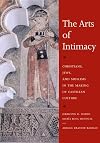
This may be the single most stunningly beautiful book in my library. The authors collect a wide range of artistic, architectural, literary, and geographic images, rendered by brush, lens and word, and paint the history of early Castile through these images. It is a deeply interconnected and vivid set of tableaus that bring the land alive.
This is a scholarly work worthy of Gerard of Cremona.
This is a scholarly work worthy of Gerard of Cremona.
Lists
Awards


You May Also Like


Associated Authors
Statistics
- Works
- 14
- Also by
- 2
- Members
- 1,512
- Popularity
- #17,009
- Rating
- 3.9
- Reviews
- 24
- ISBNs
- 34
- Languages
- 8
- Favorited
- 5